

The journey of measuring the weight of Rhesus Monkey (preparation) - thinking about the scale
December 23, 2025
Inokashira Park Zoo currently houses 13 rhesus Rhesus Monkey, all of which are captured every November for health management such as vaccinations and weight measurement. One of the monkeys, Shimobukure (female), is 27 years old and has been gradually losing weight, weighing in at 5.5 kg in 2022, 4.9 kg in 2023, and 4.1 kg in 2024.
So, I wanted to keep track of my weight gain and loss more frequently and use it to manage my health. I will introduce Shimobukure's efforts to measure my weight in two parts: "Preparation" and "Practice."
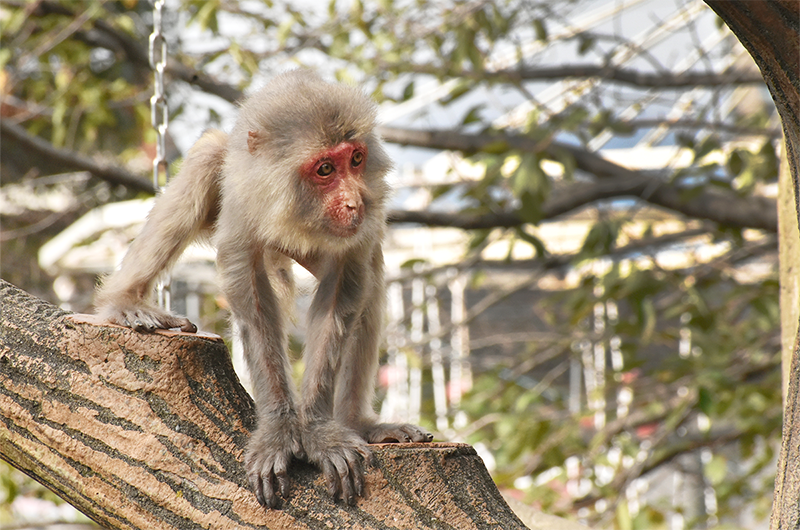
When starting this project, we noticed that Shimobukure was less wary of people than the other individuals. When feeding, food is distributed to the entire group, but most Rhesus Monkey are wary and do not approach animal keeper. However, Shimobukure alone had a tendency to approach. Based on this, we thought that if only Shimobukure stepped onto the scale during feeding time and was fed, we could measure its weight.
First, I started by choosing a scale to use. There are a few points to consider when choosing one.
The first is durability. We wanted something as sturdy as possible because there is a risk that parts could come off and break the scale if it is hit or swallowed by an animal during weighing.
The second factor was portability. If the scale were permanently installed in the playground, the monkeys might play with it or it might get wet in the rain and break, so we decided to set it up only when measurements were required. Therefore, we thought that if the scale was as light and thin as possible, it would be easy to carry and the monkeys would be less wary of it.
Third, we looked for a model with a wireless display so that we could check the weight from a distance. Even though Shimobukure is a creature that approaches people, we didn't think it would immediately step on a new scale while animal keeper were watching closely. So, to make it a little more comfortable for it to step on the scale, we made the display wireless, so that we could check its weight while watching from a distance.
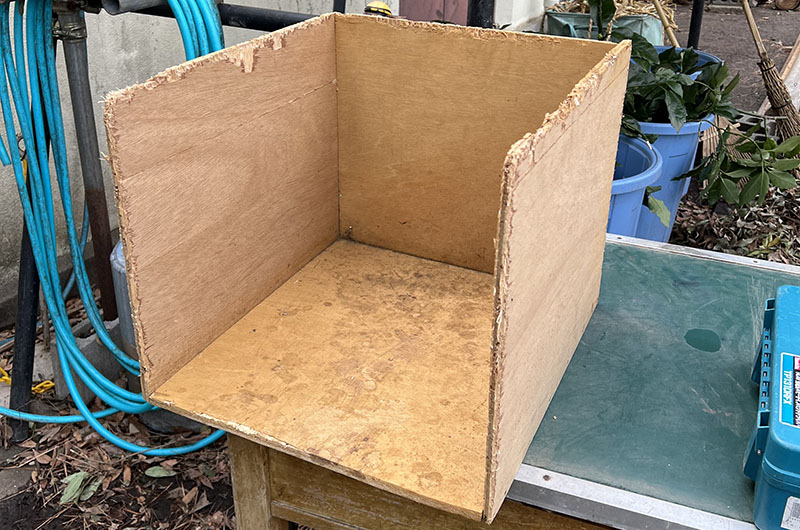
Next, we created a wooden box-shaped feeding tray to prevent any monkeys other than Shimobukure from stepping onto the scale. To allow the monkeys to get used to it, we decided to first set up just the feeding tray in Monkey Mountain for a month, and then place food there during feeding times to observe Shimobukure's reaction.
Instead of its usual food, we used bite-sized pieces of bread, which is Shimobukure's favorite food. When we first set it up, Shimobukure was wary and would come and touch the platform, checking the situation and then leaving, but after a few days, he gradually became less wary and started spending more time near the platform.
However, something unexpected happened. Instead of climbing onto the food tray, Shimobukure began to reach out and take away only the slices of bread. Furthermore, when threatened by other monkeys, Shimobukure became startled and dropped the bread, causing it to be stolen.
So, as our next strategy, we decided to place the bamboo tray with the food in it at the back where it would be difficult to reach even if you stretched your hand out from the outside. By using the bamboo tray, the food would be hard to see from the outside and difficult to take.
As a result, we were able to observe him standing firmly on the food tray with his whole body, even if it was only for a short time. However, this was still too short a time for us to measure his weight, and there was some variation, with some days he didn't even stand on the tray at all (we could measure his weight if he was able to stand on the tray for about 10 seconds).
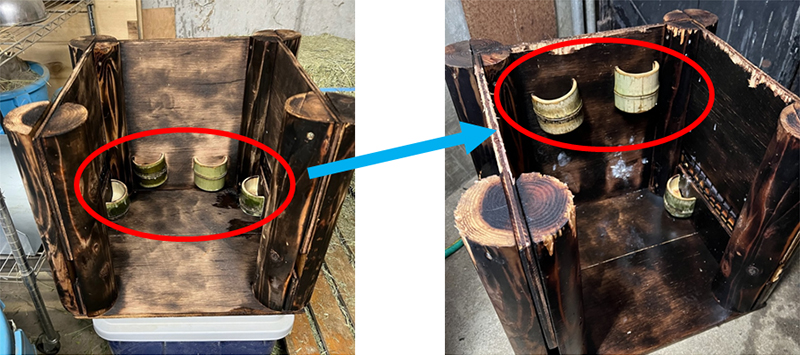
To encourage Shimobukure to stay on the feeder more reliably and for longer periods of time, we repositioned the bamboo tray at the back of the front of the feeder higher than Shimobukure's eye level. As a result, we observed Shimobukure entering the feeder to look for hard-to-see food, staying on it for longer periods of time than before, and even standing up inside the tray to peer into the tray. We also observed Shimobukure accumulating slices of bread in his cheek pouches inside the feeder, perhaps realizing that if he entered the feeder while people were nearby, other individuals would not take the food.
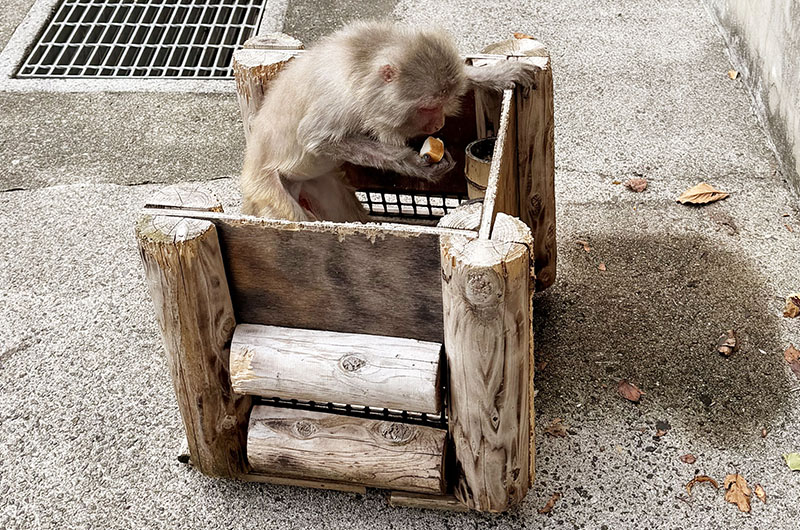
Now that he was able to stand firmly on the feeding tray, I finally attached Velcro tape between the scale and the box-shaped feeding tray to prevent the scale from shifting during measurement, causing the feeding tray to fall over or rattle and make it difficult to measure properly.
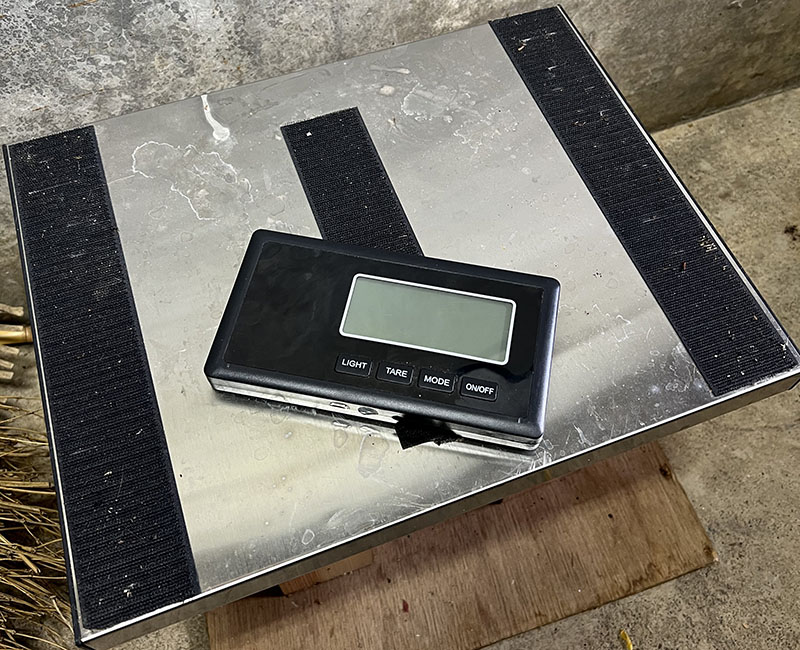
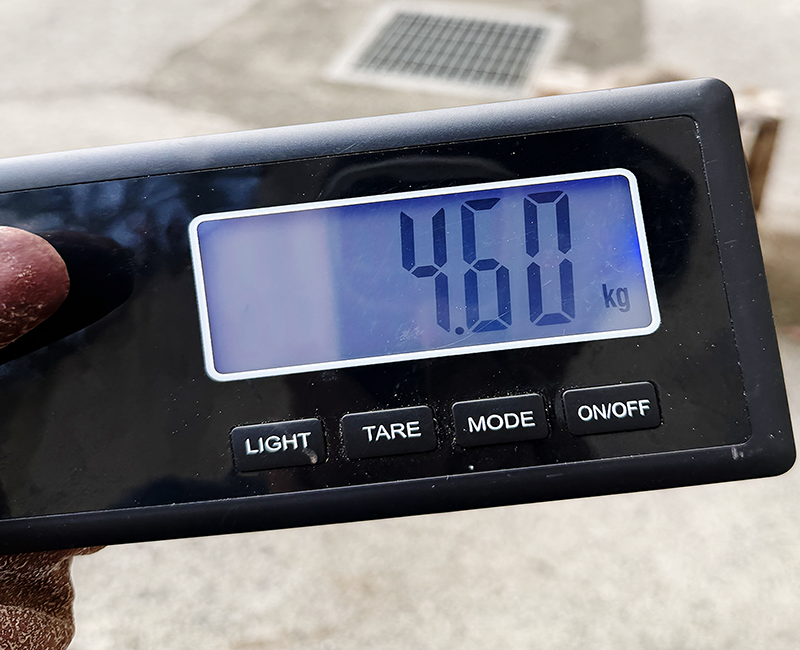
Now we are finally ready to start weighing. In the next practical article, we will introduce the regular weight measurements we took and the animal care we implemented based on the results.
[Inokashira Park Zoo Animal Care and Exhibition Section]