

Zoo Stock Species and the Red List
Zoo Stock Species and the Red List
Zoo Stock
This indicates that the species is included in the Second Zoo Stock Plan, which was formulated by the Tokyo Metropolitan Government in 2018. The plan sets goals for the next 10 years in three areas: "species conservation," "contribution to wildlife conservation," and "environmental education and conservation awareness." 124 animal species are included.
What is the Red List?
Based on scientific research, this is a list of wildlife classified by rank (category) indicating the degree of risk of extinction.
Livng Things Encyclopedia shows the categories (mainland and islands) assessed by the IUCN (International Union for Conservation of Nature) at the global level, the Ministry of the Environment for Japan, and the Tokyo Metropolitan Government for Tokyo.
The higher the category in each table, the higher the risk of extinction, and CR, EN, and VU are the three categories known as "endangered species." In Tokyo, species that are not at the NT (near threatened) level but are relatively rare are considered "species of concern."
|
IUCN categories |
|
|---|---|
|
EX |
extinction |
|
EW |
Extinction in the wild |
|
CR+EN |
— |
|
CR |
Serious crisis |
|
EN |
crisis |
|
VU |
emergency |
|
NT |
Near Threatened |
|
LC・○ |
Low Concern |
|
DD |
Data shortage |
|
LP |
— |
|
Japan (Ministry of the Environment) Category |
|
|---|---|
|
EX |
extinction |
|
EW |
Extinction in the wild |
|
CR+EN |
Endangered species |
|
CR |
Critically Endangered |
|
EN |
Endangered species |
|
VU |
Endangered species |
|
NT |
Near Threatened |
|
LC・○ |
— |
|
DD |
Lack of information |
|
LP |
Endangered |
|
Tokyo Category |
|
|---|---|
|
EX |
extinction |
|
EW |
Extinction in the wild |
|
CR+EN |
Endangered species |
|
CR |
Critically Endangered |
|
EN |
Endangered species |
|
VU |
Endangered species |
|
NT |
Near Threatened |
|
LC・○ |
Unranked |
|
DD |
Lack of information |
|
LP |
Endangered |
Creatures at Tokyo Sea Life Park
Creatures at Tokyo Sea Life Park
Yellowfin Goby
Yellowfin Goby
Acanthogobius flavimanus
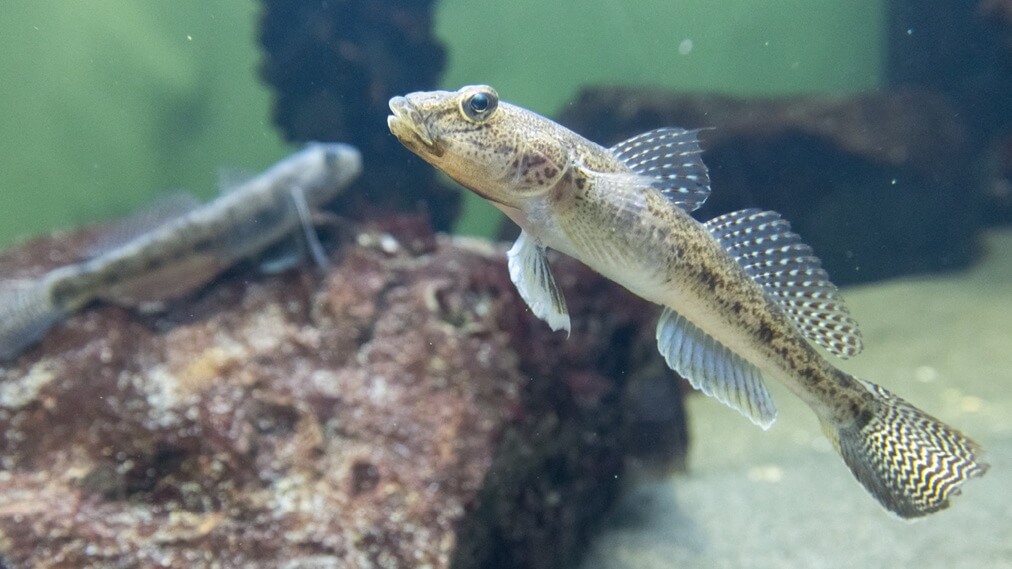
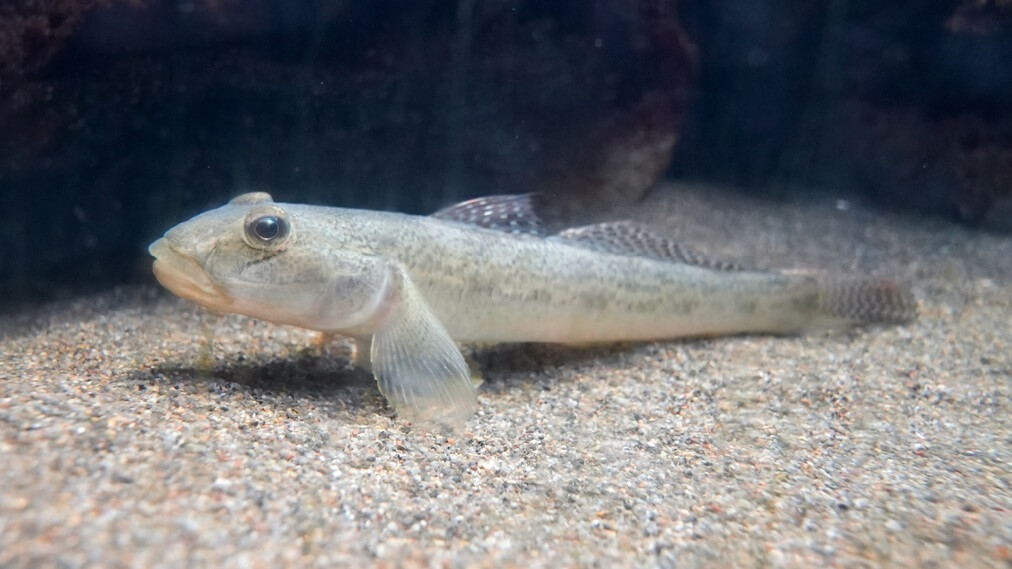
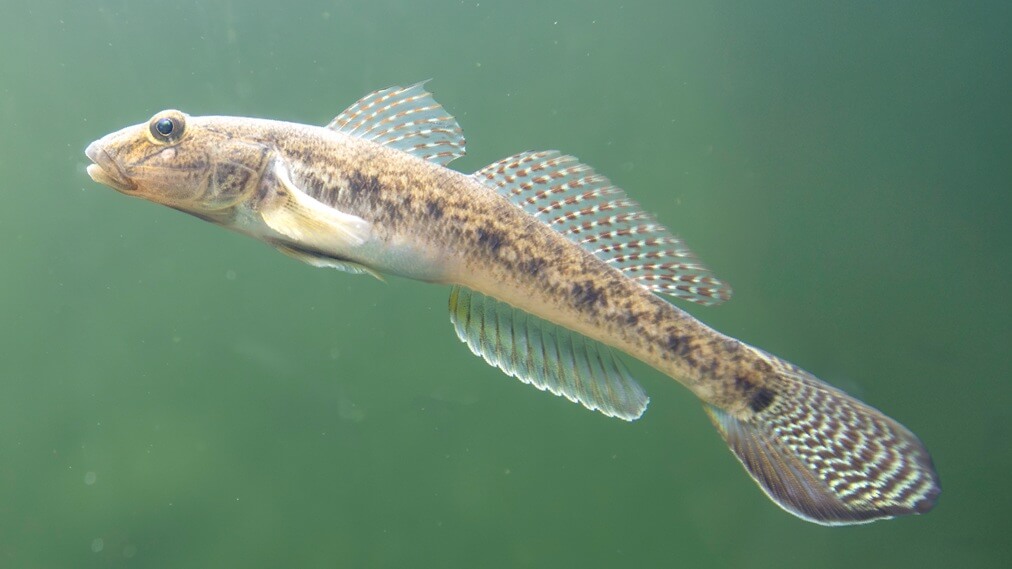
This is the most common type of goby found in calm bays, estuaries, and the lower reaches of rivers. It is a popular choice for beginners who want to try fishing for gobies, and goby fishing is a common sight in Tokyo Bay. Its pelvic fins are shaped like suction cups, allowing it to cling to rocks and other surfaces. It has a relatively large mouth for its size and feeds on small crustaceans, polychaetes, and other creatures that live on the seabed.
| classification | Actinopterygii, Perciformes, Gobiidae |
|---|---|
| English name | Yellowfin Goby |
| distribution | From Hokkaido to Kagoshima Prefecture (Tanegashima), the Chugoku coast |
| Residence | Sandy and muddy bottom from the river mouth to the inner bay |
| Size |
Total length: 15cm
|
| food | Crustaceans, worms, etc. |
| Red List |
IUCN: LC (Least Concern)
|
The life of Yellowfin Goby
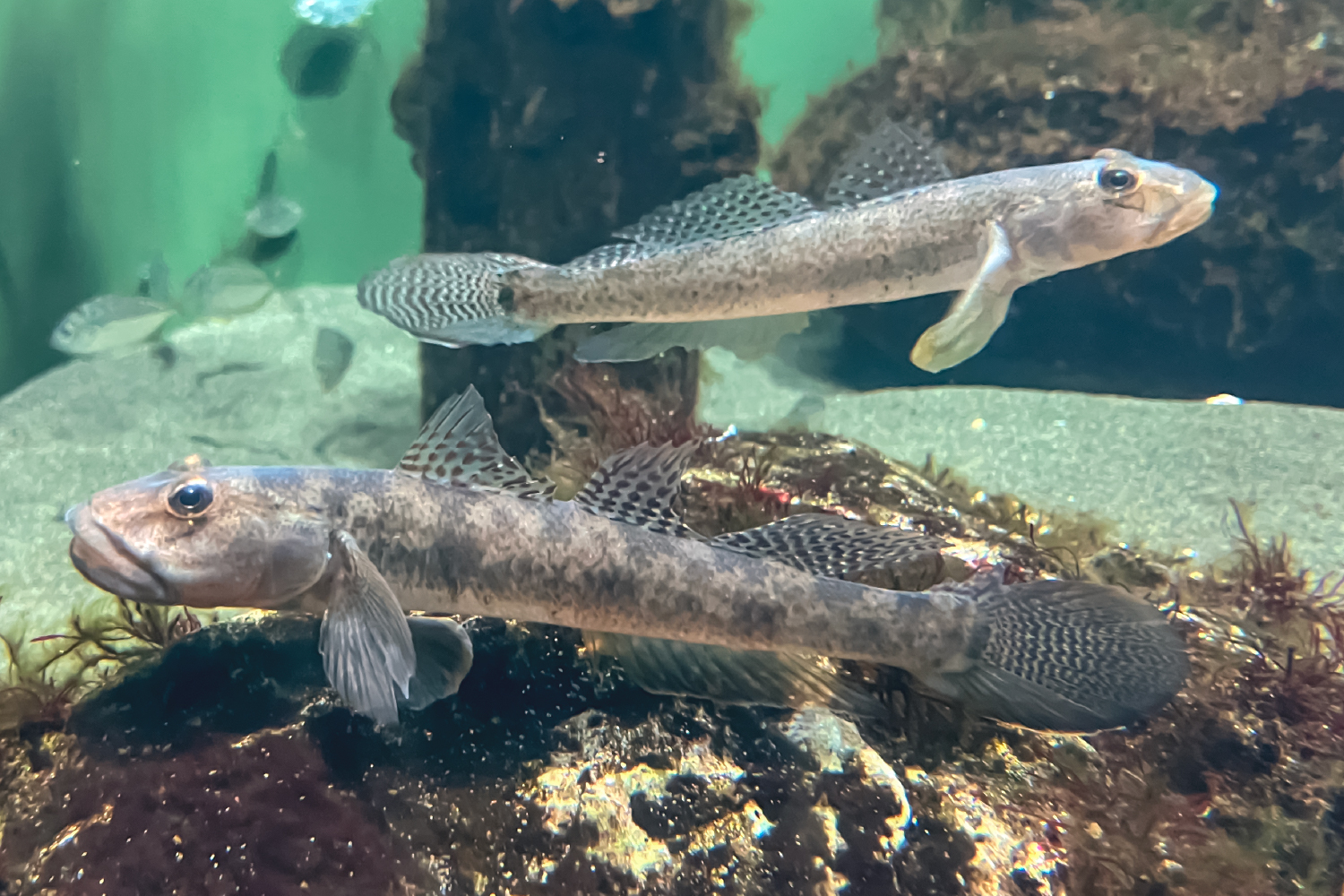
The artificial tidal flat in front of the aquarium, "Nishi-nagisa," is a breeding ground for Yellowfin Goby. In spring, you can see many baby Yellowfin Goby. From autumn to winter, they move to slightly deeper waters, where the males dig burrows in the seabed and the females lay their eggs inside. Their lifespan is basically one year, but those that survive the winter and into the following year grow to over 20 cm in length and are called "hinehaze."