

Zoo Stock Species and the Red List
Zoo Stock Species and the Red List
Zoo Stock
This indicates that the species is included in the Second Zoo Stock Plan, which was formulated by the Tokyo Metropolitan Government in 2018. The plan sets goals for the next 10 years in three areas: "species conservation," "contribution to wildlife conservation," and "environmental education and conservation awareness." 124 animal species are included.
What is the Red List?
Based on scientific research, this is a list of wildlife classified by rank (category) indicating the degree of risk of extinction.
Livng Things Encyclopedia shows the categories (mainland and islands) assessed by the IUCN (International Union for Conservation of Nature) at the global level, the Ministry of the Environment for Japan, and the Tokyo Metropolitan Government for Tokyo.
The higher the category in each table, the higher the risk of extinction, and CR, EN, and VU are the three categories known as "endangered species." In Tokyo, species that are not at the NT (near threatened) level but are relatively rare are considered "species of concern."
|
IUCN categories |
|
|---|---|
|
EX |
extinction |
|
EW |
Extinction in the wild |
|
CR+EN |
— |
|
CR |
Serious crisis |
|
EN |
crisis |
|
VU |
emergency |
|
NT |
Near Threatened |
|
LC・○ |
Low Concern |
|
DD |
Data shortage |
|
LP |
— |
|
Japan (Ministry of the Environment) Category |
|
|---|---|
|
EX |
extinction |
|
EW |
Extinction in the wild |
|
CR+EN |
Endangered species |
|
CR |
Critically Endangered |
|
EN |
Endangered species |
|
VU |
Endangered species |
|
NT |
Near Threatened |
|
LC・○ |
— |
|
DD |
Lack of information |
|
LP |
Endangered |
|
Tokyo Category |
|
|---|---|
|
EX |
extinction |
|
EW |
Extinction in the wild |
|
CR+EN |
Endangered species |
|
CR |
Critically Endangered |
|
EN |
Endangered species |
|
VU |
Endangered species |
|
NT |
Near Threatened |
|
LC・○ |
Unranked |
|
DD |
Lack of information |
|
LP |
Endangered |
Creatures at Tokyo Sea Life Park
Creatures at Tokyo Sea Life Park
Whitespotted Conger
Whitespotted Conger
Conger myriaster
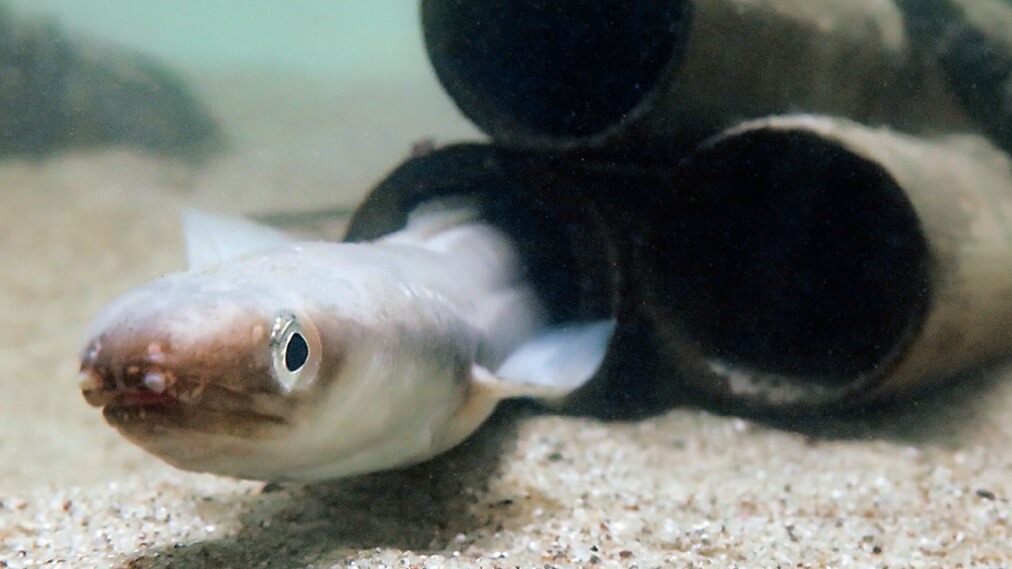
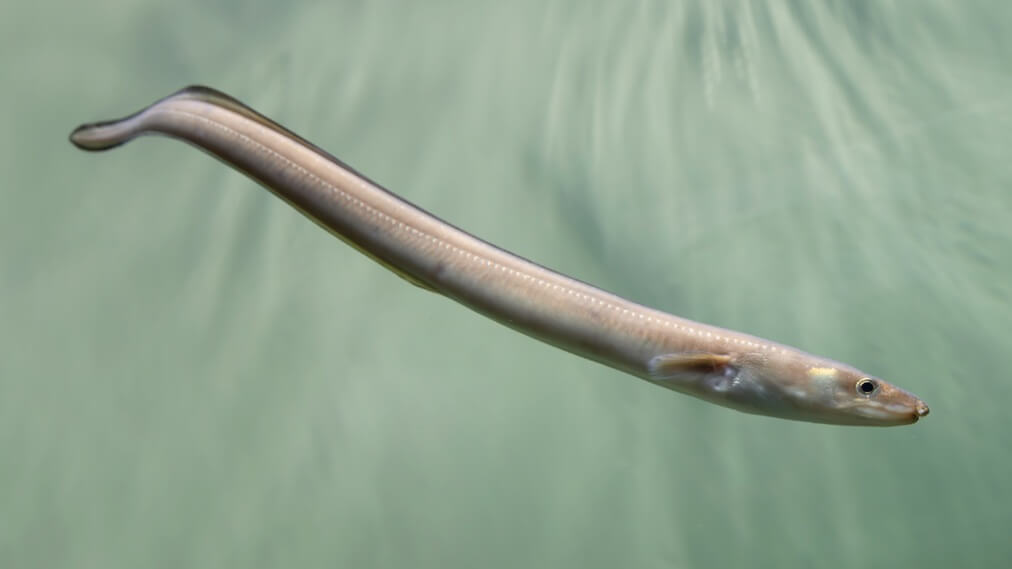
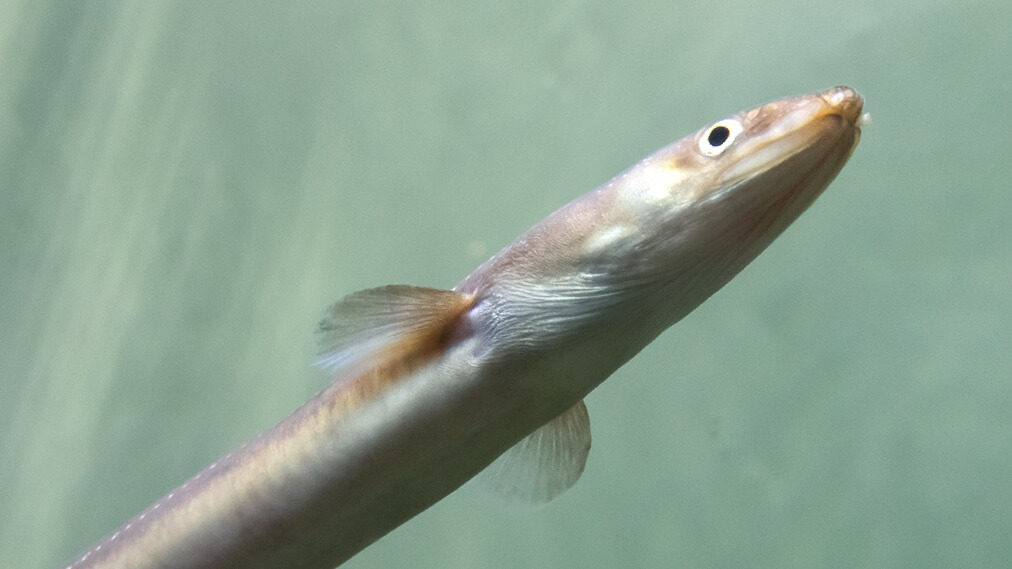
This fish is very popular as food, used in dishes like sushi and conger eel rice bowls. Its slender shape resembles that of an eel, but it can be distinguished by its upper jaw protruding further than its lower jaw, the presence of white spots on its body, and the tapered tip of its tail fin. It swims by undulating its long, slender body. It is nocturnal, coming out of its burrow at night to feed.
| classification | Actinopterygii, Anguilliformes, Conger eels |
|---|---|
| English name | Whitespotted Conger |
| distribution | From Hokkaido to the coast of Kyushu, and the East China Sea |
| Residence | Shallow sandy mud bottom |
| Size |
Total length: male 40cm, female 100cm
|
| food | Crustaceans, worms, shellfish, fish, etc. |
| Red List |
IUCN: LC (Least Concern)
|
What will happen? Edomae Whitespotted Conger
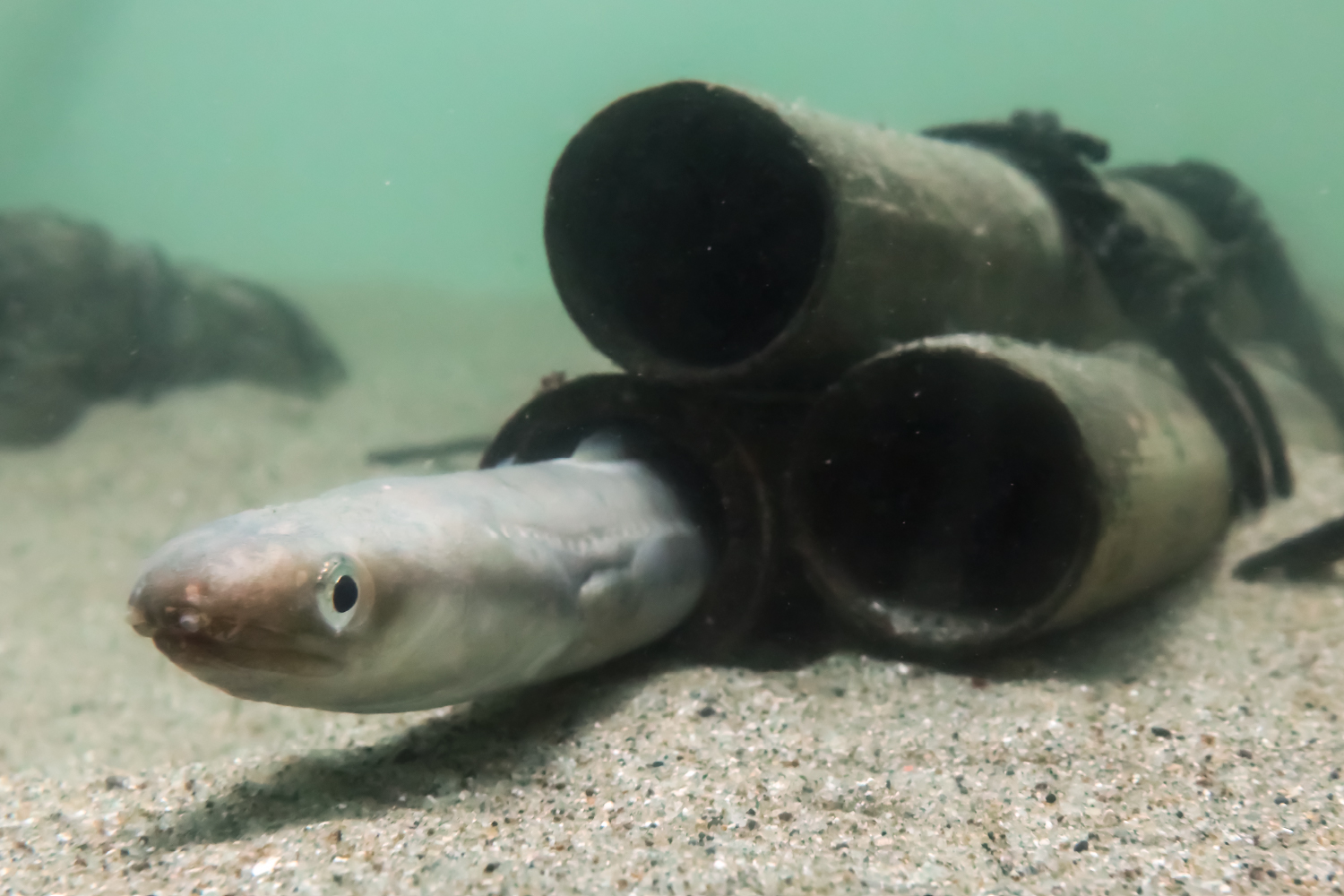
Whitespotted Conger are a popular fish representative of the Edomae style, eaten in tempura and sushi. Tokyo Bay is famous for its "conger eel tube fishing," in which conger eels are caught using bait such as sardines or squid placed in a long tube. However, in recent years, the number of Whitespotted Conger in Tokyo Bay has been declining dramatically. To ensure that Whitespotted Conger can continue to be caught in Tokyo Bay, fishermen are conducting voluntary resource management, including the protection of small fish.