

Zoo Stock Species and the Red List
Zoo Stock Species and the Red List
Zoo Stock
This indicates that the species is included in the Second Zoo Stock Plan, which was formulated by the Tokyo Metropolitan Government in 2018. The plan sets goals for the next 10 years in three areas: "species conservation," "contribution to wildlife conservation," and "environmental education and conservation awareness." 124 animal species are included.
What is the Red List?
Based on scientific research, this is a list of wildlife classified by rank (category) indicating the degree of risk of extinction.
Livng Things Encyclopedia shows the categories (mainland and islands) assessed by the IUCN (International Union for Conservation of Nature) at the global level, the Ministry of the Environment for Japan, and the Tokyo Metropolitan Government for Tokyo.
The higher the category in each table, the higher the risk of extinction, and CR, EN, and VU are the three categories known as "endangered species." In Tokyo, species that are not at the NT (near threatened) level but are relatively rare are considered "species of concern."
|
IUCN categories |
|
|---|---|
|
EX |
extinction |
|
EW |
Extinction in the wild |
|
CR+EN |
— |
|
CR |
Serious crisis |
|
EN |
crisis |
|
VU |
emergency |
|
NT |
Near Threatened |
|
LC・○ |
Low Concern |
|
DD |
Data shortage |
|
LP |
— |
|
Japan (Ministry of the Environment) Category |
|
|---|---|
|
EX |
extinction |
|
EW |
Extinction in the wild |
|
CR+EN |
Endangered species |
|
CR |
Critically Endangered |
|
EN |
Endangered species |
|
VU |
Endangered species |
|
NT |
Near Threatened |
|
LC・○ |
— |
|
DD |
Lack of information |
|
LP |
Endangered |
|
Tokyo Category |
|
|---|---|
|
EX |
extinction |
|
EW |
Extinction in the wild |
|
CR+EN |
Endangered species |
|
CR |
Critically Endangered |
|
EN |
Endangered species |
|
VU |
Endangered species |
|
NT |
Near Threatened |
|
LC・○ |
Unranked |
|
DD |
Lack of information |
|
LP |
Endangered |
Creatures at Tokyo Sea Life Park
Creatures at Tokyo Sea Life Park
Striped Eel Catfish
Striped Eel Catfish
Plotosus japonicus
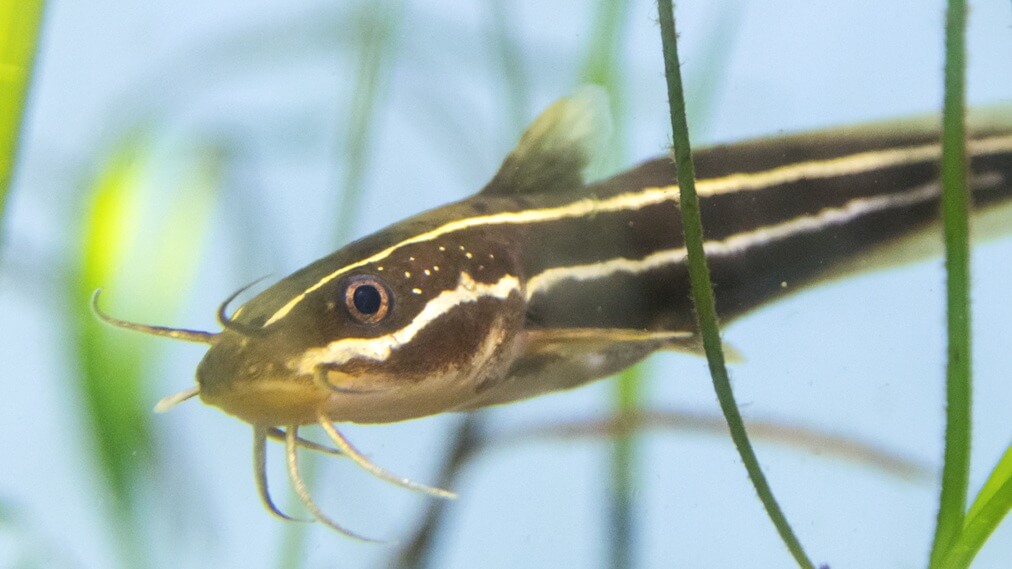
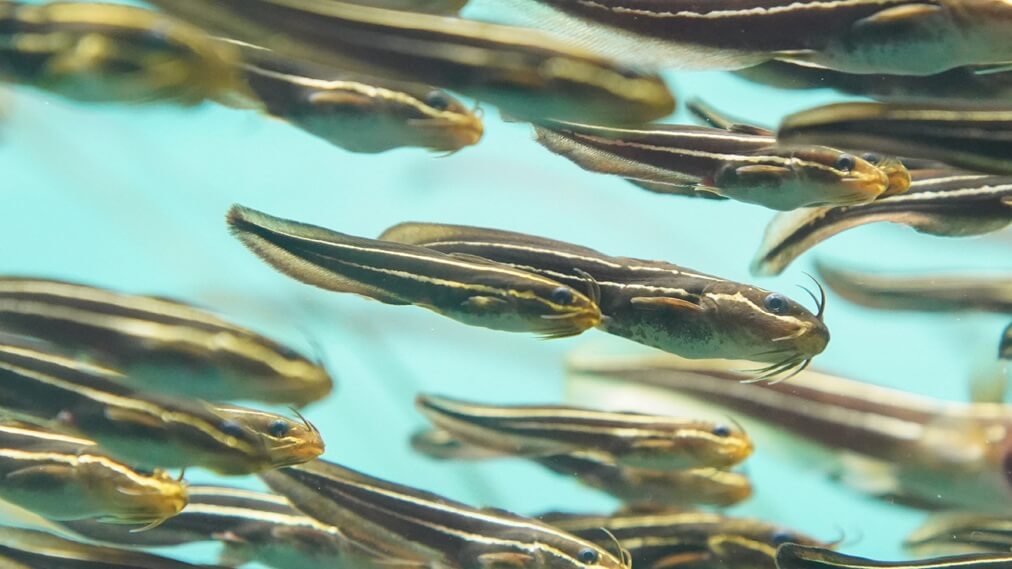
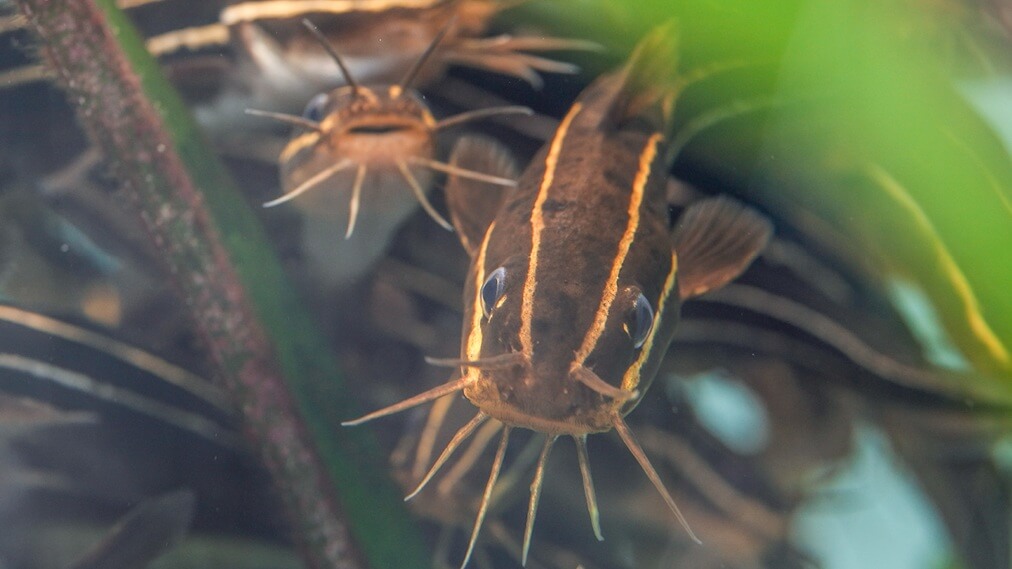
This catfish has four pairs of eight whiskers around its mouth. Like other catfish, it hides in the shade during the day, but at night it swims around actively in search of food. When they swim in dense schools called Striped Eel Catfish balls," they look just like large fish.
| classification | Actinopterygii, Siluriformes, Striped Eel Catfish |
|---|---|
| English name | Striped Eel Catfish |
| distribution | Western Pacific Ocean south of central Honshu |
| Residence | Shallow waters near the coast |
| Size |
Total length: 30cm
|
| food | Small shrimp, crabs, fish, etc. |
| Red List |
Unrated
|
Striped Eel Catfish ball
Striped Eel Catfish are known to gather together in dense, ball-like schools of similar size. When observed in an aquarium, these ball-like schools can look like amoeba-like creatures changing shape as they move. The general advantage of schooling is that when fish of the same size and shape gather together, it is difficult for predators to target them. However, Striped Eel Catfish schools seem to have an additional protective effect, appearing as "one large creature."
Watch out for thorns!
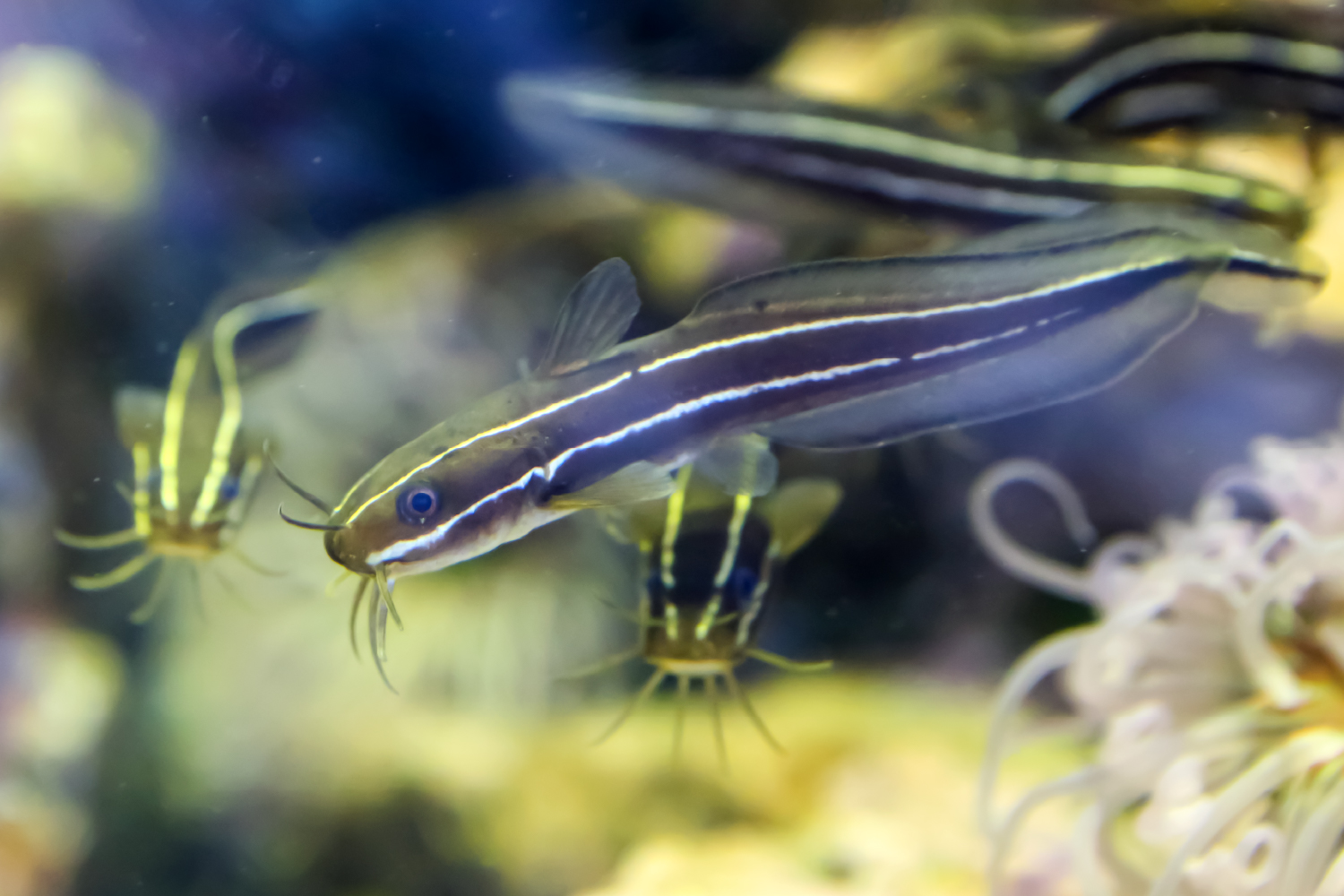
Striped Eel Catfish have sharp, venomous spines on their dorsal and pectoral fins for self-defense. It is dangerous to touch them unnecessarily. Being stung is extremely painful. This venom remains even after Striped Eel Catfish dies, so if you find Striped Eel Catfish that has been caught and discarded, do not touch it with your hands.