

Zoo Stock Species and the Red List
Zoo Stock Species and the Red List
Zoo Stock
This indicates that the species is included in the Second Zoo Stock Plan, which was formulated by the Tokyo Metropolitan Government in 2018. The plan sets goals for the next 10 years in three areas: "species conservation," "contribution to wildlife conservation," and "environmental education and conservation awareness." 124 animal species are included.
What is the Red List?
Based on scientific research, this is a list of wildlife classified by rank (category) indicating the degree of risk of extinction.
Livng Things Encyclopedia shows the categories (mainland and islands) assessed by the IUCN (International Union for Conservation of Nature) at the global level, the Ministry of the Environment for Japan, and the Tokyo Metropolitan Government for Tokyo.
The higher the category in each table, the higher the risk of extinction, and CR, EN, and VU are the three categories known as "endangered species." In Tokyo, species that are not at the NT (near threatened) level but are relatively rare are considered "species of concern."
|
IUCN categories |
|
|---|---|
|
EX |
extinction |
|
EW |
Extinction in the wild |
|
CR+EN |
— |
|
CR |
Serious crisis |
|
EN |
crisis |
|
VU |
emergency |
|
NT |
Near Threatened |
|
LC・○ |
Low Concern |
|
DD |
Data shortage |
|
LP |
— |
|
Japan (Ministry of the Environment) Category |
|
|---|---|
|
EX |
extinction |
|
EW |
Extinction in the wild |
|
CR+EN |
Endangered species |
|
CR |
Critically Endangered |
|
EN |
Endangered species |
|
VU |
Endangered species |
|
NT |
Near Threatened |
|
LC・○ |
— |
|
DD |
Lack of information |
|
LP |
Endangered |
|
Tokyo Category |
|
|---|---|
|
EX |
extinction |
|
EW |
Extinction in the wild |
|
CR+EN |
Endangered species |
|
CR |
Critically Endangered |
|
EN |
Endangered species |
|
VU |
Endangered species |
|
NT |
Near Threatened |
|
LC・○ |
Unranked |
|
DD |
Lack of information |
|
LP |
Endangered |
Creatures at Tokyo Sea Life Park
Creatures at Tokyo Sea Life Park
Striped Boarfish
Striped Boarfish
Evistias acutirostris
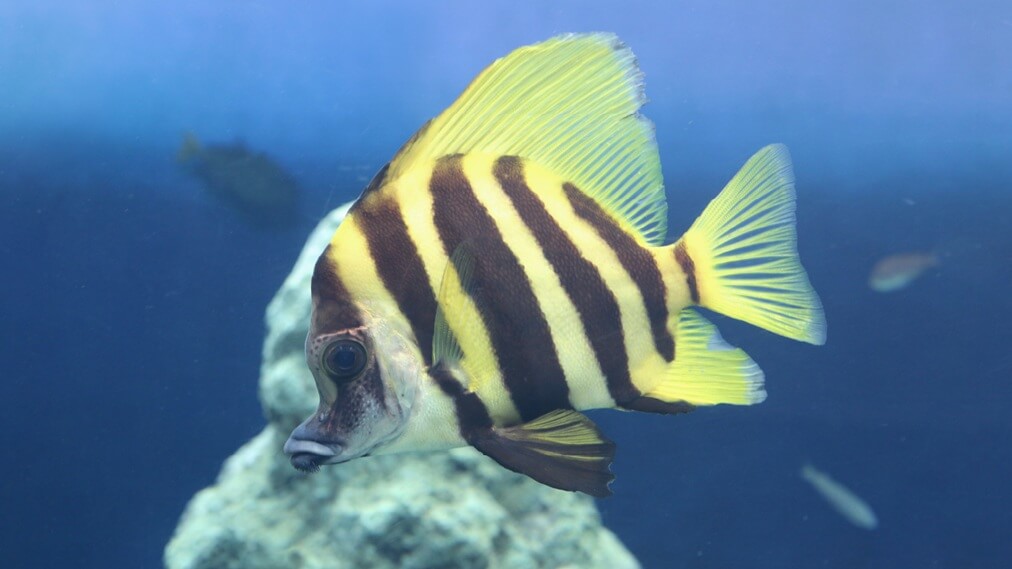
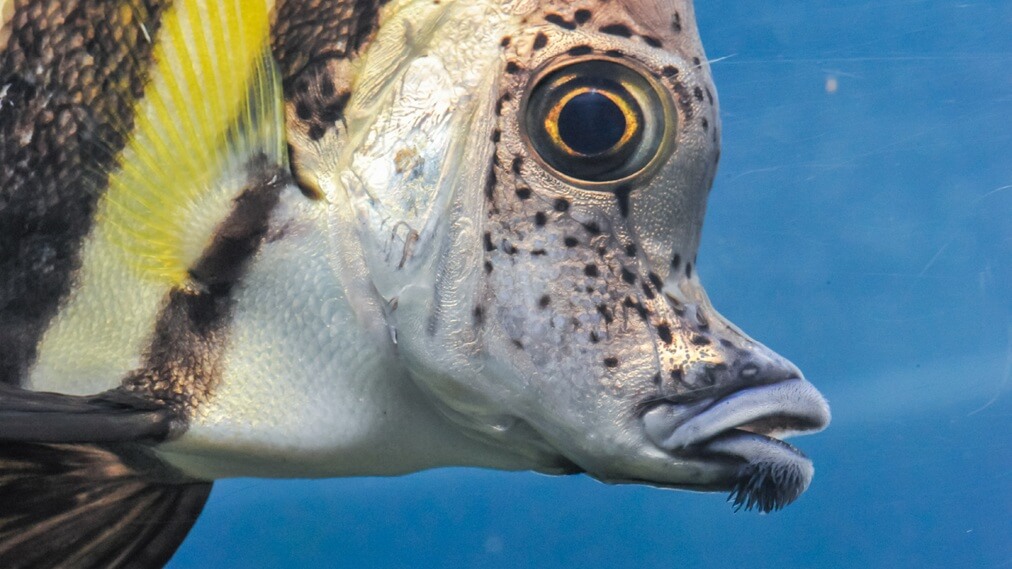
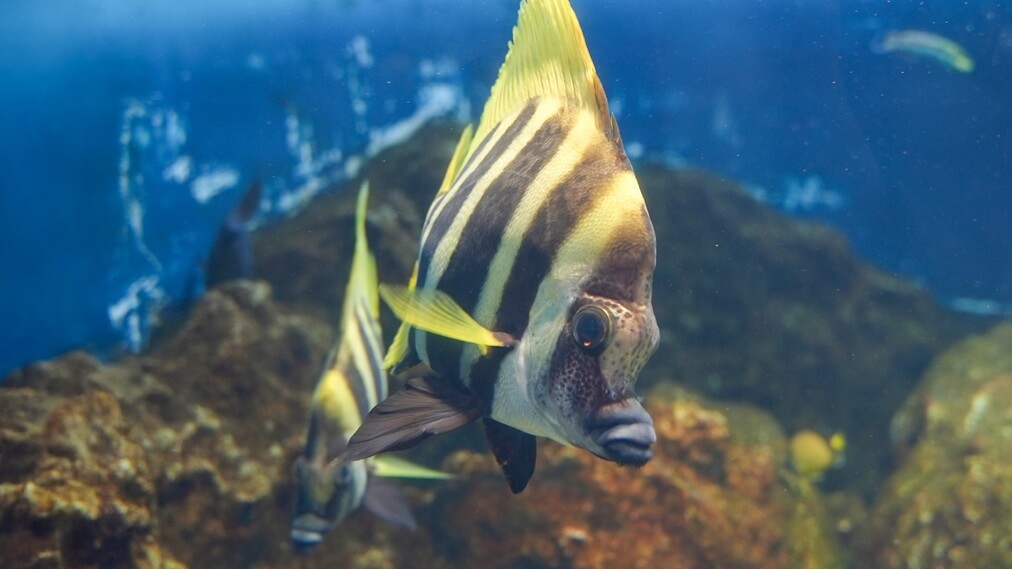
This fish is beautiful with the contrast between its black stripes and bright yellow fins. Its mouth protrudes forward like a tengu's nose, and it has many short whiskers on the underside of its chin. It is popular with divers because it can only be found in limited seas such as the Izu Islands, and because of its beautiful appearance. It forms small schools near the seabed of rocky areas at depths of 10 to 250 meters.
| classification | Actinopterygii, Perciformes, Carcharhinidae |
|---|---|
| English name | Striped Boarfish |
| distribution | From central Honshu to Kyushu, the Ogasawara Islands, the Hawaiian Islands, and southeastern Australia. |
| Residence | Near the rocky seabed at depths of 10 to 250 meters |
| Size |
Total length: 50cm
|
| food | Small animals on the seabed, such as brittle stars |
| Red List |
IUCN: LC (Least Concern)
|
They use their whiskers to find food.
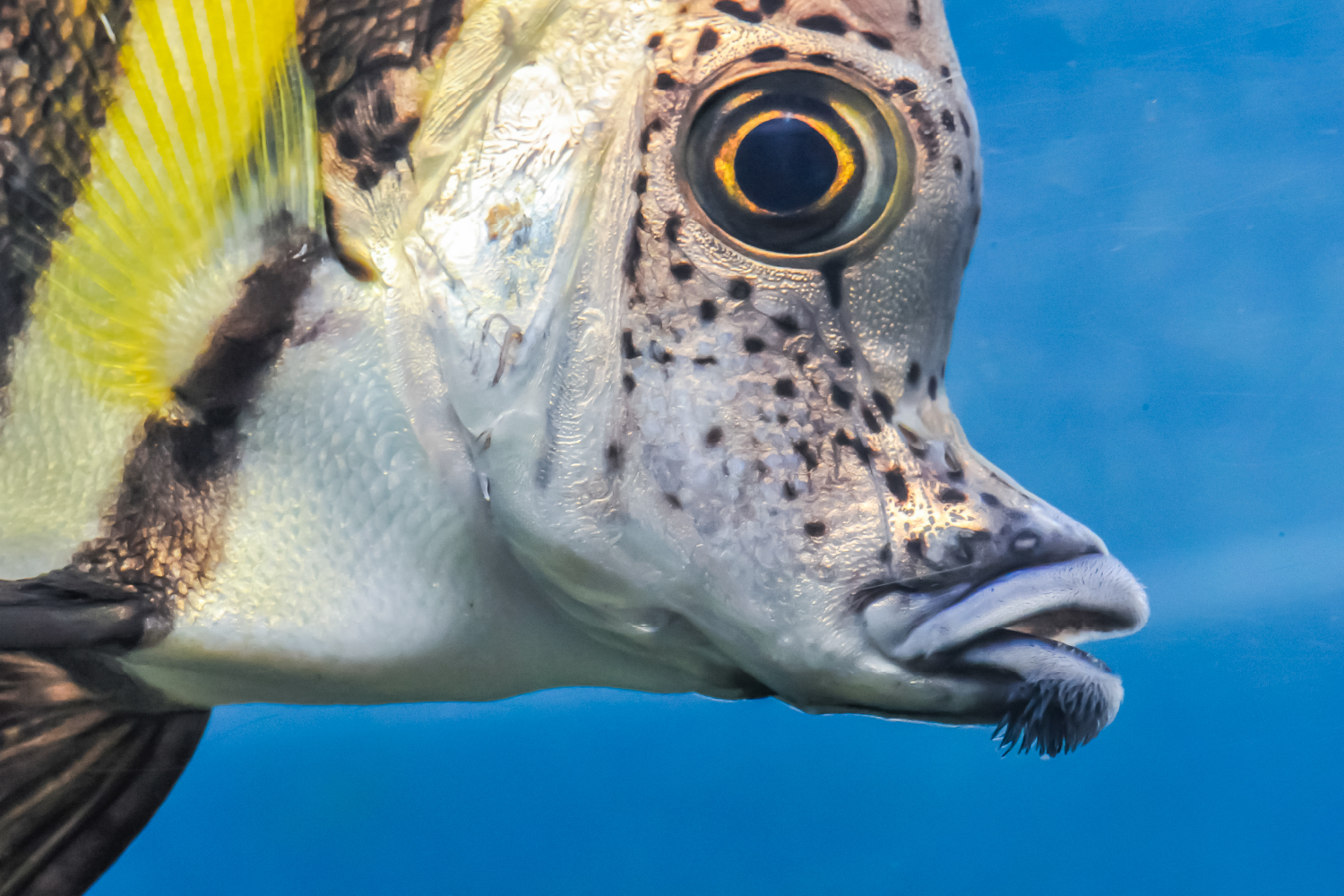
Observe the many short whiskers on the underside of its chin. It uses these whiskers to find and eat small creatures on the seabed. It is said to particularly favor brittle stars.
A fish that only those in the know are aware of, and that tastes delicious.
Because it's not a fish that's caught in large quantities, it's rarely found in the market. Therefore, few people may have tried it, but it's actually a delicious white fish. It can be enjoyed in various ways, such as sashimi or simmered dishes.