

Zoo Stock Species and the Red List
Zoo Stock Species and the Red List
Zoo Stock

This indicates that the species is included in the Second Zoo Stock Plan, which was formulated by the Tokyo Metropolitan Government in 2018. The plan sets goals for the next 10 years in three areas: "species conservation," "contribution to wildlife conservation," and "environmental education and conservation awareness." 124 animal species are included.
What is the Red List?
Based on scientific research, this is a list of wildlife classified by rank (category) indicating the degree of risk of extinction.
Livng Things Encyclopedia shows the categories (mainland and islands) assessed by the IUCN (International Union for Conservation of Nature) at the global level, the Ministry of the Environment for Japan, and the Tokyo Metropolitan Government for Tokyo.
The higher the category in each table, the higher the risk of extinction, and CR, EN, and VU are the three categories known as "endangered species." In Tokyo, species that are not at the NT (near threatened) level but are relatively rare are considered "species of concern."
|
IUCN categories |
|
|---|---|
|
EX |
extinction |
|
EW |
Extinction in the wild |
|
CR+EN |
— |
|
CR |
Serious crisis |
|
EN |
crisis |
|
VU |
emergency |
|
NT |
Near Threatened |
|
LC・○ |
Low Concern |
|
DD |
Data shortage |
|
LP |
— |
|
Japan (Ministry of the Environment) Category |
|
|---|---|
|
EX |
extinction |
|
EW |
Extinction in the wild |
|
CR+EN |
Endangered species |
|
CR |
Critically Endangered |
|
EN |
Endangered species |
|
VU |
Endangered species |
|
NT |
Near Threatened |
|
LC・○ |
— |
|
DD |
Lack of information |
|
LP |
Endangered |
|
Tokyo Category |
|
|---|---|
|
EX |
extinction |
|
EW |
Extinction in the wild |
|
CR+EN |
Endangered species |
|
CR |
Critically Endangered |
|
EN |
Endangered species |
|
VU |
Endangered species |
|
NT |
Near Threatened |
|
LC・○ |
Unranked |
|
DD |
Lack of information |
|
LP |
Endangered |
Creatures at Tokyo Sea Life Park
Creatures at Tokyo Sea Life Park
Spotnape Cardinalfish
Spotnape Cardinalfish
Ostorhinchus notatus
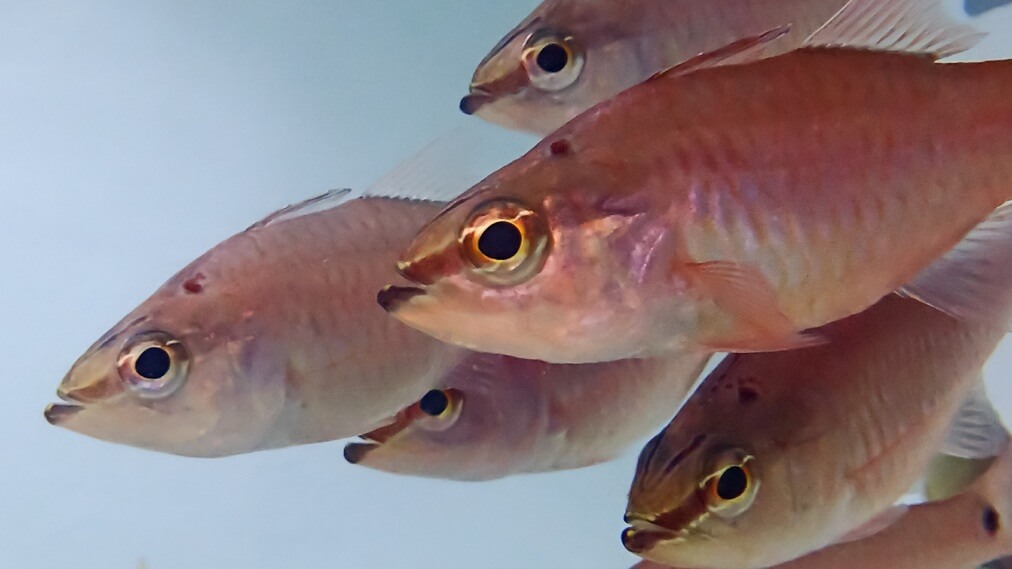
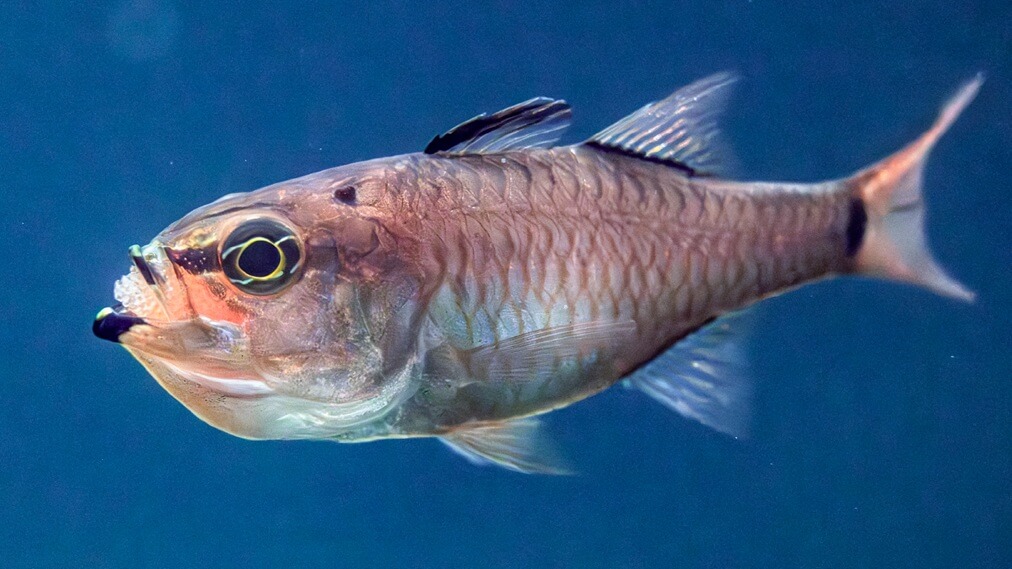
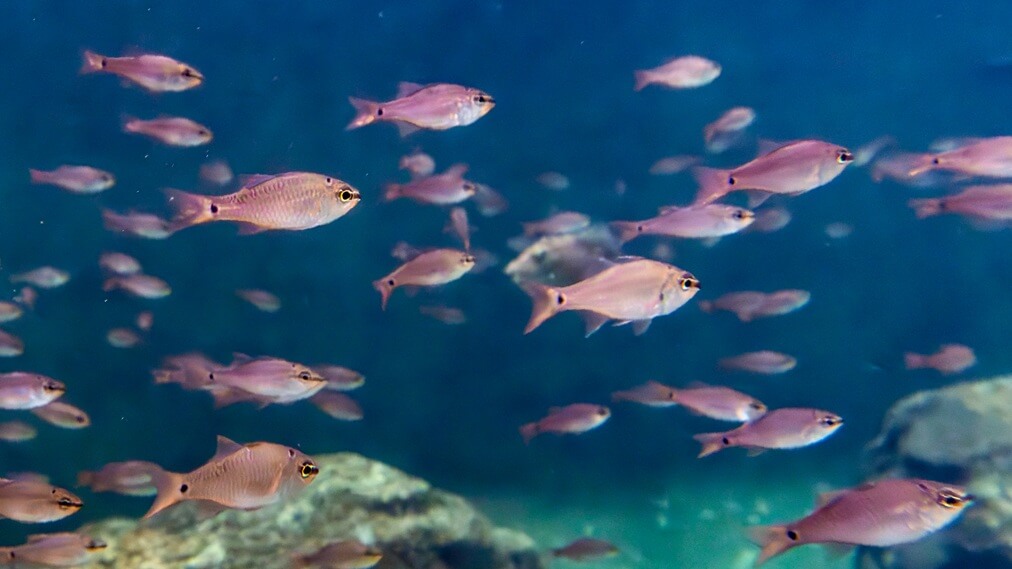
This is a type of cardinalfish that lives in schools in shallow, rocky coastal areas. Sometimes they form large schools of several hundred individuals. They are a common bycatch when fishing from breakwaters. During the breeding season, males and females form pairs. The male protects the eggs laid by the female in its mouth, a practice known as mouthbrooding.
| classification | Actinopterygii, Perciformes, Apogonidae |
|---|---|
| English name | Spotnape Cardinalfish |
| distribution | South of central Honshu, western Pacific Ocean |
| Residence | reef |
| Size |
Total length: 10cm
|
| food | Small crustaceans and fish |
| Red List |
Unrated
|
Find the pair!
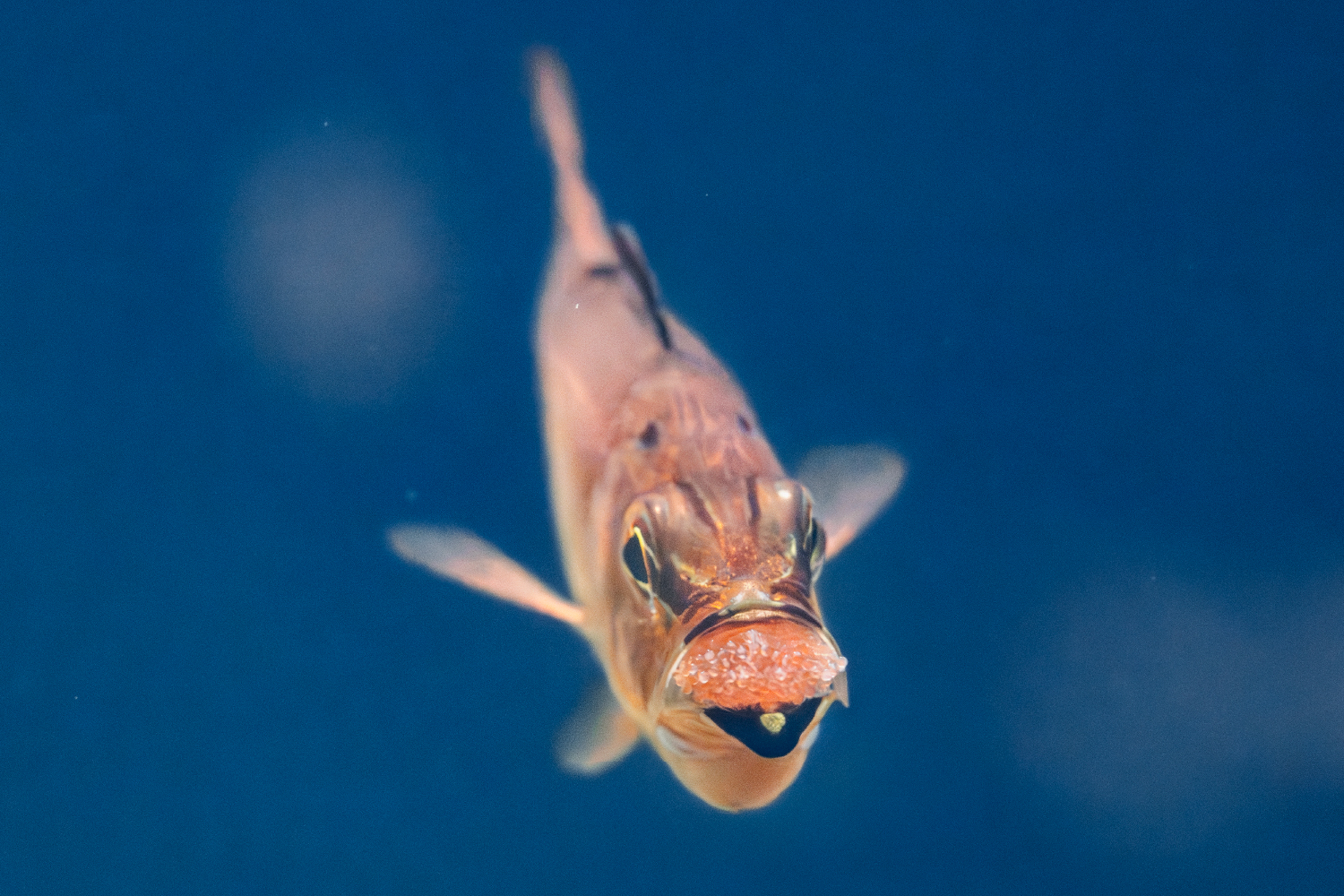
Spotnape Cardinalfish form large schools in aquariums, but try looking for a pair that is a little distance away from the group. If you find one, then pay attention to its jaw! If it is slightly swollen, the male may be guarding the eggs. The male will move its mouth to ensure that fresh seawater reaches the egg mass and will take good care of it until it hatches. If you observe carefully, you may even see the egg mass peeking out from its mouth.