

Zoo Stock Species and the Red List
Zoo Stock Species and the Red List
Zoo Stock
This indicates that the species is included in the Second Zoo Stock Plan, which was formulated by the Tokyo Metropolitan Government in 2018. The plan sets goals for the next 10 years in three areas: "species conservation," "contribution to wildlife conservation," and "environmental education and conservation awareness." 124 animal species are included.
What is the Red List?
Based on scientific research, this is a list of wildlife classified by rank (category) indicating the degree of risk of extinction.
Livng Things Encyclopedia shows the categories (mainland and islands) assessed by the IUCN (International Union for Conservation of Nature) at the global level, the Ministry of the Environment for Japan, and the Tokyo Metropolitan Government for Tokyo.
The higher the category in each table, the higher the risk of extinction, and CR, EN, and VU are the three categories known as "endangered species." In Tokyo, species that are not at the NT (near threatened) level but are relatively rare are considered "species of concern."
|
IUCN categories |
|
|---|---|
|
EX |
extinction |
|
EW |
Extinction in the wild |
|
CR+EN |
— |
|
CR |
Serious crisis |
|
EN |
crisis |
|
VU |
emergency |
|
NT |
Near Threatened |
|
LC・○ |
Low Concern |
|
DD |
Data shortage |
|
LP |
— |
|
Japan (Ministry of the Environment) Category |
|
|---|---|
|
EX |
extinction |
|
EW |
Extinction in the wild |
|
CR+EN |
Endangered species |
|
CR |
Critically Endangered |
|
EN |
Endangered species |
|
VU |
Endangered species |
|
NT |
Near Threatened |
|
LC・○ |
— |
|
DD |
Lack of information |
|
LP |
Endangered |
|
Tokyo Category |
|
|---|---|
|
EX |
extinction |
|
EW |
Extinction in the wild |
|
CR+EN |
Endangered species |
|
CR |
Critically Endangered |
|
EN |
Endangered species |
|
VU |
Endangered species |
|
NT |
Near Threatened |
|
LC・○ |
Unranked |
|
DD |
Lack of information |
|
LP |
Endangered |
Creatures at Tokyo Sea Life Park
Creatures at Tokyo Sea Life Park
Sea Toad
Sea Toad
Chaunax abei
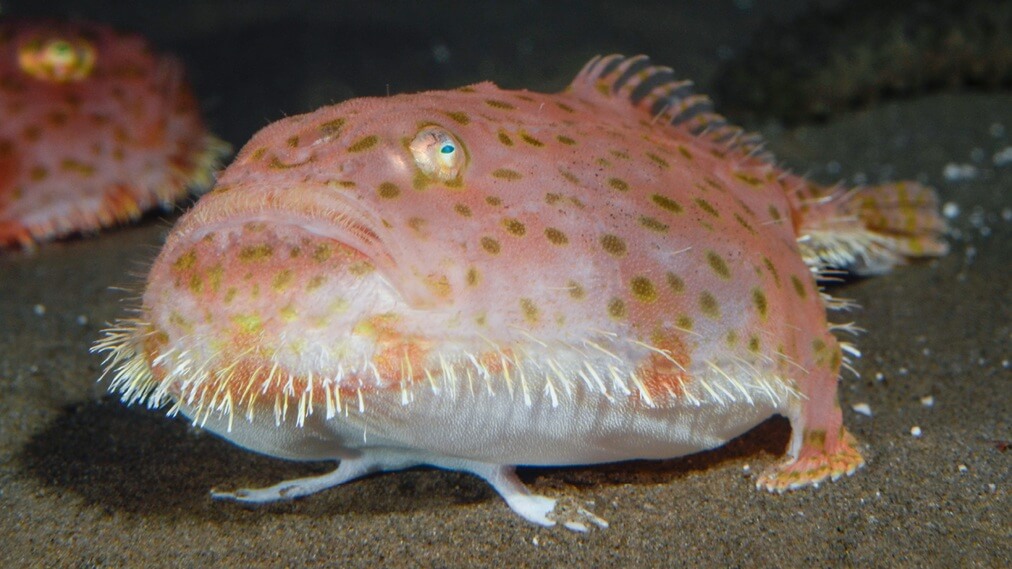
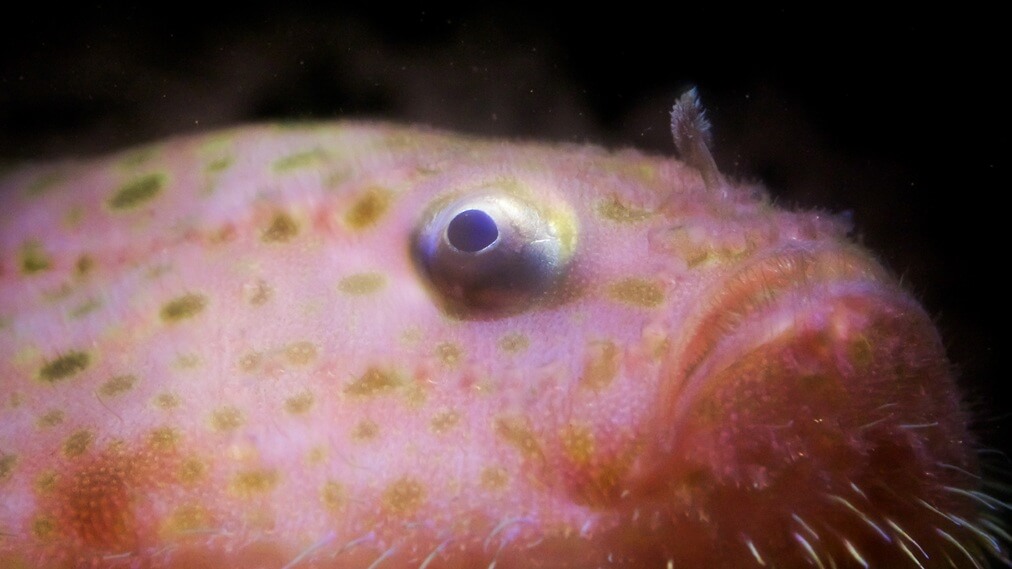
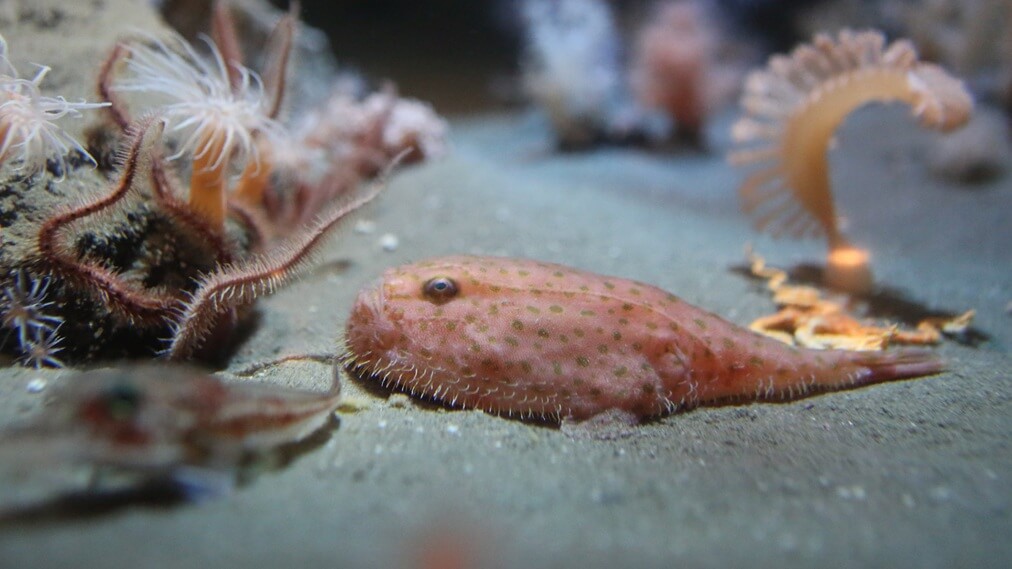
They live on the sandy or muddy seabeds of deep oceans. They remain still on the ocean floor and hardly move. Their eyes and large mouth face upwards. This is so they can ambush and catch shrimp and small fish that come near, their prey, in an instant. Just above their mouths is a lure-like projection, similar to those found in anglerfish. It's like a fishing rod that attracts prey, but the one on Sea Toad is small and inconspicuous.
| classification | Actinopterygii, Order Anglerfish, Family Pycnonotidae |
|---|---|
| English name | Sea Toad |
| distribution | From southern Japan to the East China Sea, the Korean Peninsula, and Taiwan |
| Residence | Sandy and muddy seabed at depths of 150-300m |
| Size |
Total length: 30cm
|
| food | Shrimp and small fish |
| Red List |
IUCN: LC (Least Concern)
|
Arm-like pectoral fins
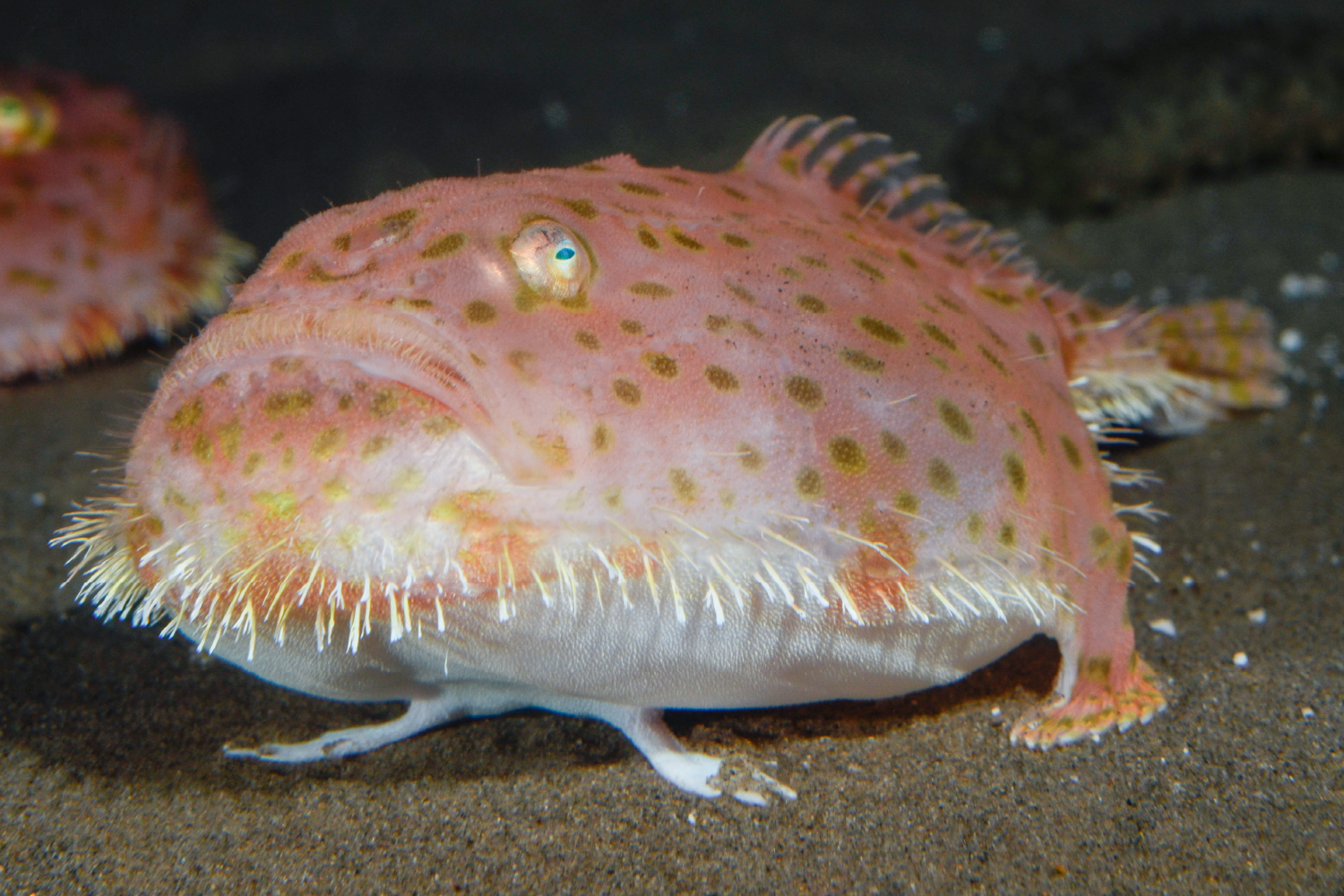
Sea Toad usually stay still at the bottom of the tank, but they can also move by crawling along the seabed using their pectoral fins. Occasionally, they will drink water and inflate themselves like pufferfish.
Lure your prey with a fishing rod!?
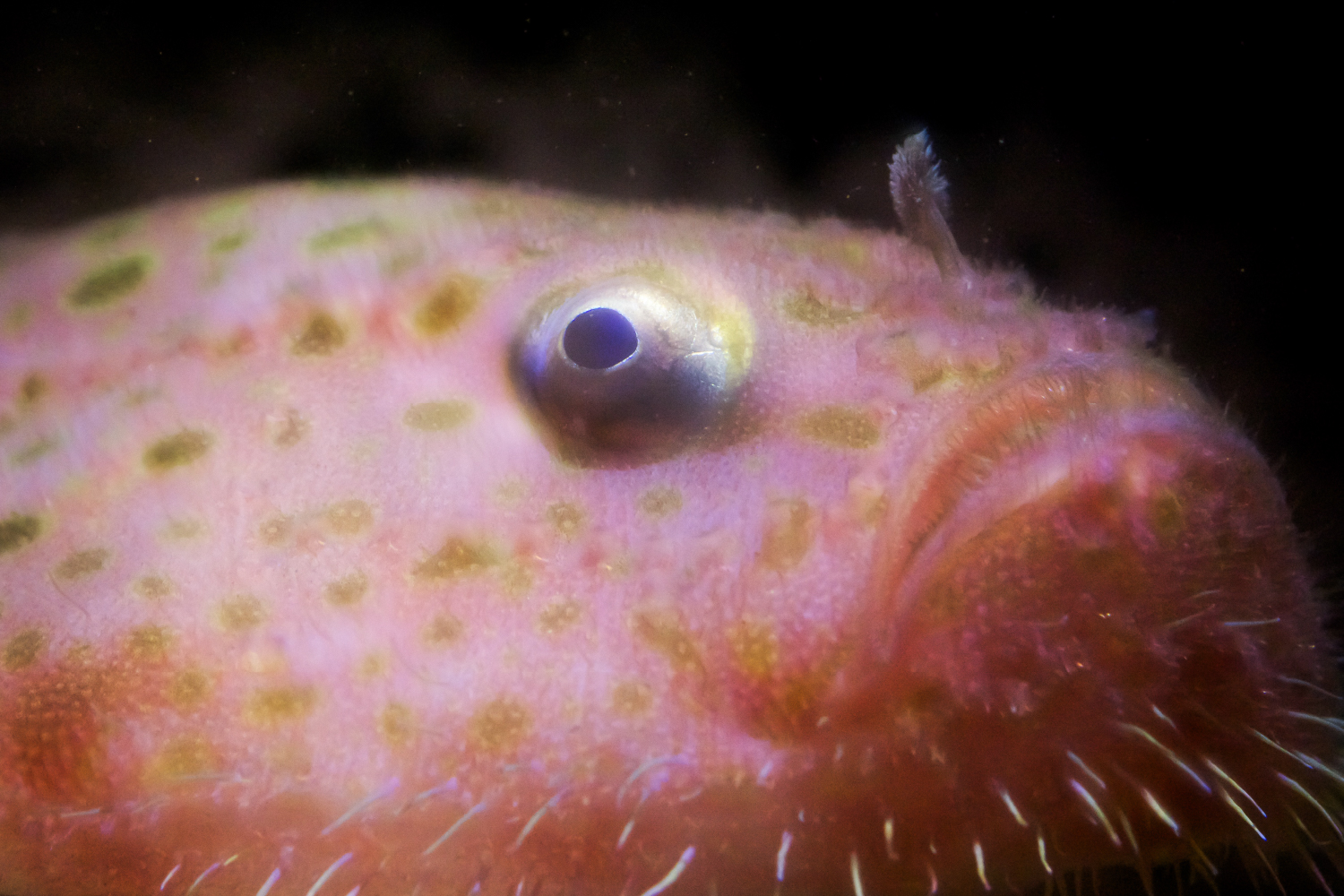
Anglerfish have a modified dorsal fin, called a lure projection, on the tip of their snout. They use this projection to attract prey, and when the prey comes in, they swallow it whole with their large mouths.