

Zoo Stock Species and the Red List
Zoo Stock Species and the Red List
Zoo Stock
This indicates that the species is included in the Second Zoo Stock Plan, which was formulated by the Tokyo Metropolitan Government in 2018. The plan sets goals for the next 10 years in three areas: "species conservation," "contribution to wildlife conservation," and "environmental education and conservation awareness." 124 animal species are included.
What is the Red List?
Based on scientific research, this is a list of wildlife classified by rank (category) indicating the degree of risk of extinction.
Livng Things Encyclopedia shows the categories (mainland and islands) assessed by the IUCN (International Union for Conservation of Nature) at the global level, the Ministry of the Environment for Japan, and the Tokyo Metropolitan Government for Tokyo.
The higher the category in each table, the higher the risk of extinction, and CR, EN, and VU are the three categories known as "endangered species." In Tokyo, species that are not at the NT (near threatened) level but are relatively rare are considered "species of concern."
|
IUCN categories |
|
|---|---|
|
EX |
extinction |
|
EW |
Extinction in the wild |
|
CR+EN |
— |
|
CR |
Serious crisis |
|
EN |
crisis |
|
VU |
emergency |
|
NT |
Near Threatened |
|
LC・○ |
Low Concern |
|
DD |
Data shortage |
|
LP |
— |
|
Japan (Ministry of the Environment) Category |
|
|---|---|
|
EX |
extinction |
|
EW |
Extinction in the wild |
|
CR+EN |
Endangered species |
|
CR |
Critically Endangered |
|
EN |
Endangered species |
|
VU |
Endangered species |
|
NT |
Near Threatened |
|
LC・○ |
— |
|
DD |
Lack of information |
|
LP |
Endangered |
|
Tokyo Category |
|
|---|---|
|
EX |
extinction |
|
EW |
Extinction in the wild |
|
CR+EN |
Endangered species |
|
CR |
Critically Endangered |
|
EN |
Endangered species |
|
VU |
Endangered species |
|
NT |
Near Threatened |
|
LC・○ |
Unranked |
|
DD |
Lack of information |
|
LP |
Endangered |
Creatures at Tokyo Sea Life Park
Creatures at Tokyo Sea Life Park
Sea Goldie
Sea Goldie
Pseudanthias squamipinnis
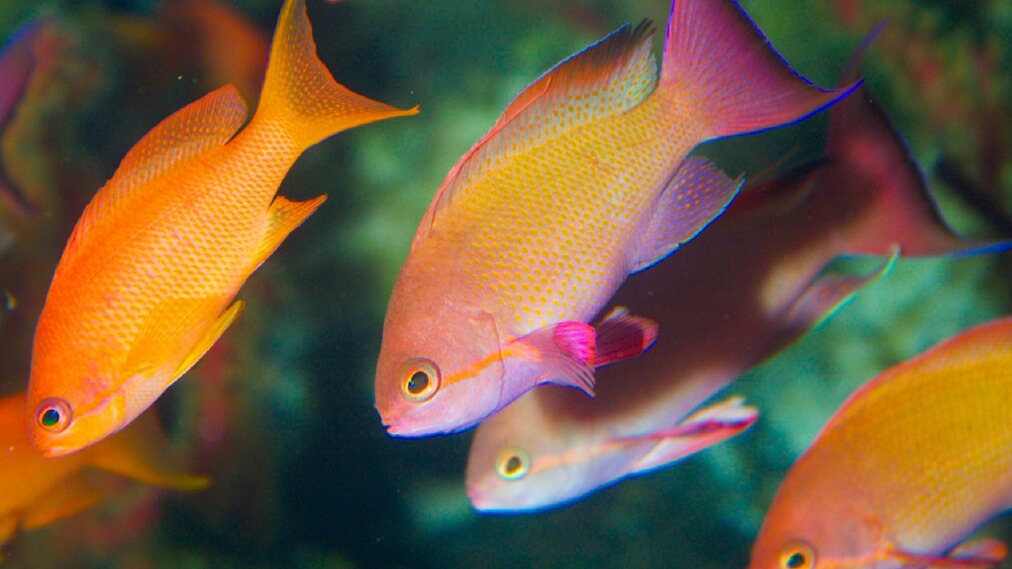
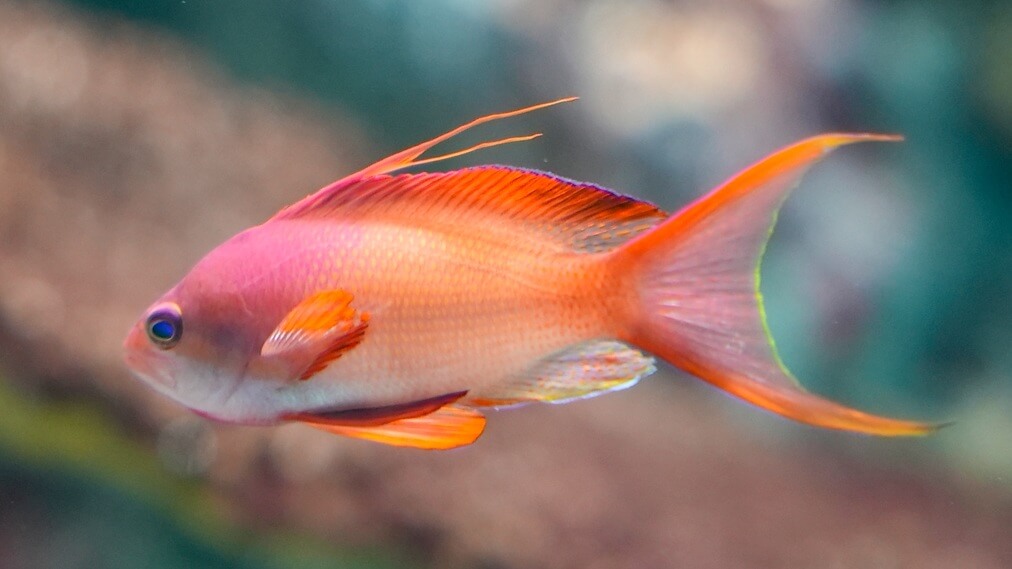
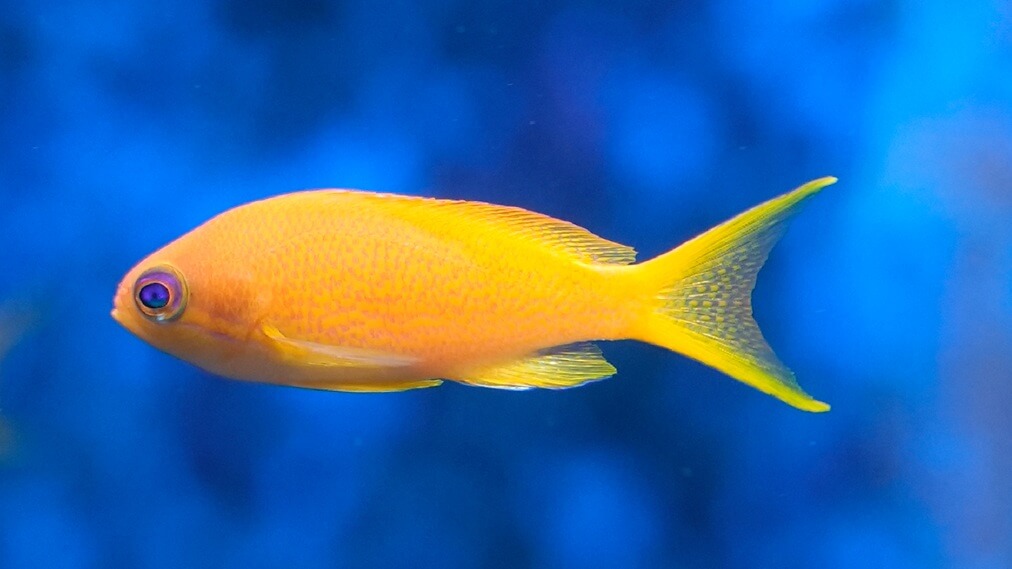
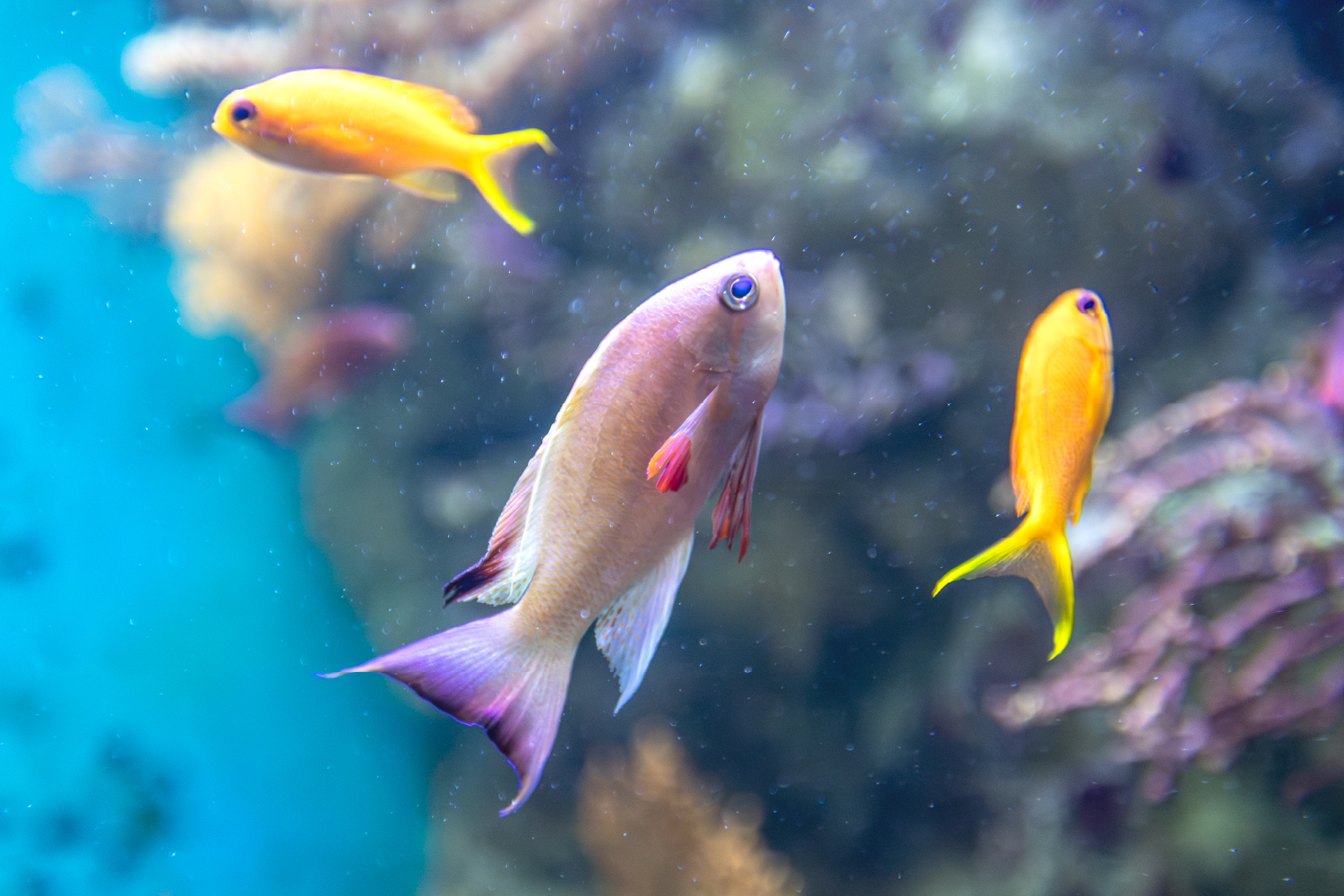
This is a type of anthias that lives in schools on rocky and coral reefs in warm oceans. Its beautiful red and orange body colors seen in an aquarium appear bluish at depths of several dozen meters where Sea Goldie lives. It feeds by pecking at small plankton that drifts along in areas with good tidal currents. It forms harems consisting of many orange-colored females and one to several reddish-purple-colored males.
| classification | Actinopterygii, Perciformes, Grouper family |
|---|---|
| English name | Sea Goldie |
| distribution | Pacific Ocean, Indian Ocean, Red Sea |
| Residence | reef |
| Size |
Total length: 10cm
|
| food | Small plankton and crustaceans |
| Red List |
IUCN: LC (Least Concern)
|
Which one is male? Which one is female?
Among the schooling Sea Goldie swimming, try to find which are males and which are females. The ones with orange bodies and many females are females, while the ones with a reddish-purple body and only one or a few males are. Males are larger than females and form harems. Furthermore, Sea Goldie are a fish that change sex from female to male, and the larger ones in the school become males and breed with many females. You may even find an individual in the process of changing from female to male.
Big males are popular!?
From spring to autumn, Sea Goldie spawn with one male and several females. At night, the male swims in a zigzag pattern to attract the female, and together they swim close to the surface, where the male wraps around the female and releases sperm and eggs. The male pairs with different females one after another, and spawns multiple times.