

Zoo Stock Species and the Red List
Zoo Stock Species and the Red List
Zoo Stock
This indicates that the species is included in the Second Zoo Stock Plan, which was formulated by the Tokyo Metropolitan Government in 2018. The plan sets goals for the next 10 years in three areas: "species conservation," "contribution to wildlife conservation," and "environmental education and conservation awareness." 124 animal species are included.
What is the Red List?
Based on scientific research, this is a list of wildlife classified by rank (category) indicating the degree of risk of extinction.
Livng Things Encyclopedia shows the categories (mainland and islands) assessed by the IUCN (International Union for Conservation of Nature) at the global level, the Ministry of the Environment for Japan, and the Tokyo Metropolitan Government for Tokyo.
The higher the category in each table, the higher the risk of extinction, and CR, EN, and VU are the three categories known as "endangered species." In Tokyo, species that are not at the NT (near threatened) level but are relatively rare are considered "species of concern."
|
IUCN categories |
|
|---|---|
|
EX |
extinction |
|
EW |
Extinction in the wild |
|
CR+EN |
— |
|
CR |
Serious crisis |
|
EN |
crisis |
|
VU |
emergency |
|
NT |
Near Threatened |
|
LC・○ |
Low Concern |
|
DD |
Data shortage |
|
LP |
— |
|
Japan (Ministry of the Environment) Category |
|
|---|---|
|
EX |
extinction |
|
EW |
Extinction in the wild |
|
CR+EN |
Endangered species |
|
CR |
Critically Endangered |
|
EN |
Endangered species |
|
VU |
Endangered species |
|
NT |
Near Threatened |
|
LC・○ |
— |
|
DD |
Lack of information |
|
LP |
Endangered |
|
Tokyo Category |
|
|---|---|
|
EX |
extinction |
|
EW |
Extinction in the wild |
|
CR+EN |
Endangered species |
|
CR |
Critically Endangered |
|
EN |
Endangered species |
|
VU |
Endangered species |
|
NT |
Near Threatened |
|
LC・○ |
Unranked |
|
DD |
Lack of information |
|
LP |
Endangered |
Creatures at Tokyo Sea Life Park
Creatures at Tokyo Sea Life Park
Longnose Hawkfish
Longnose Hawkfish
Oxycirrhites typus
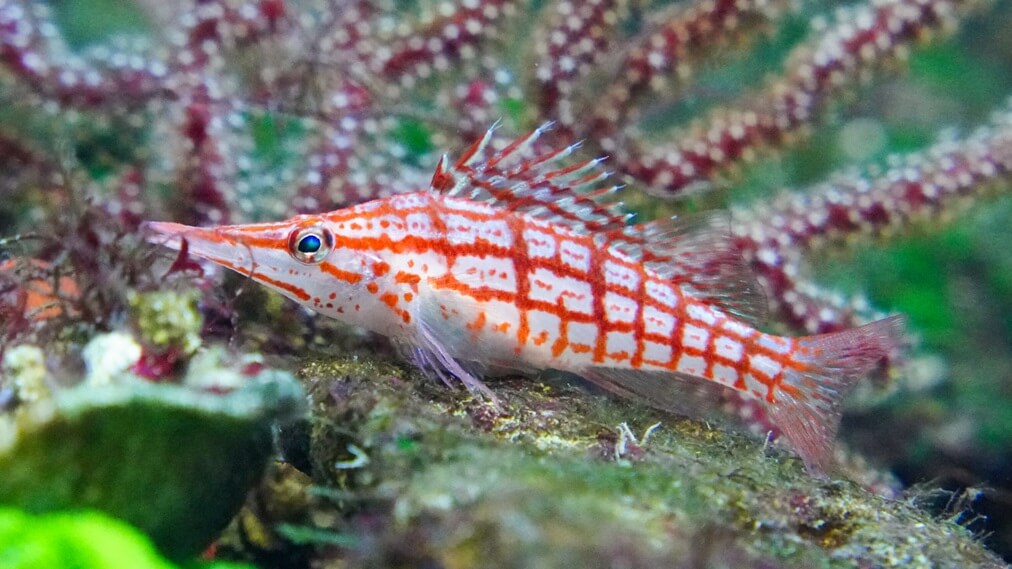
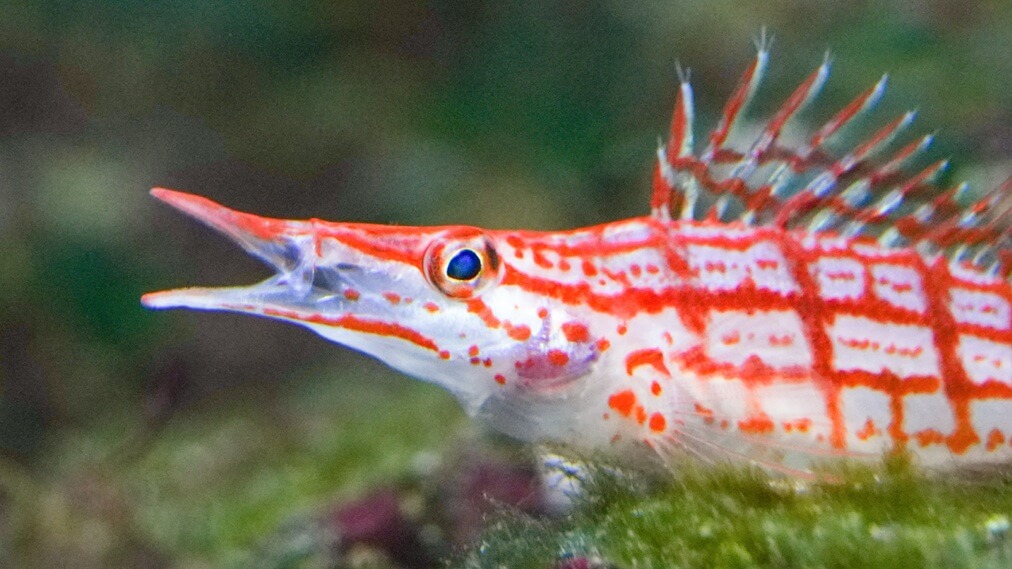
With its long, protruding mouth and slender body with an adorable red checkered pattern, this fish is popular with divers. Its appearance as it rests motionless on coral branches and Goat like bodies makes it appear as if it is using its pectoral fins to stay still. It feeds on benthic organisms and small crustaceans floating in the sea.
| classification | Actinopterygii, Perciformes, Hawkfish family |
|---|---|
| English name | Longnose Hawkfish |
| distribution | From central Honshu southward to the Pacific Ocean, tropical regions of the Indian Ocean, and the coast of California |
| Residence | Coastal reefs |
| Size |
Total length: 13cm (maximum)
|
| food | Benthic organisms and small crustaceans that float in the ocean |
| Red List |
IUCN: LC (Least Concern)
|
In English it is called Hawkfish
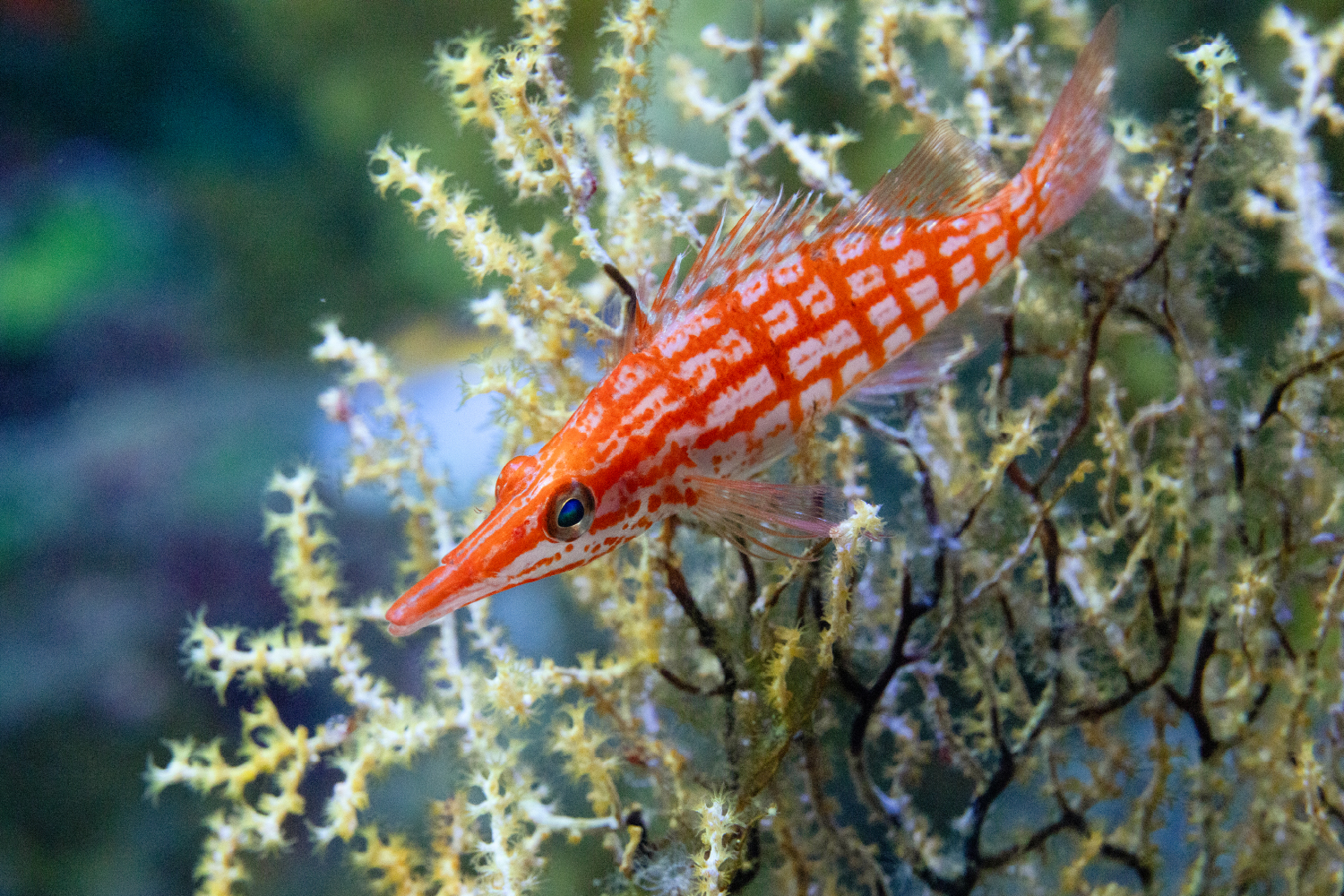
Longnose Hawkfish are a type of long-tailed hawkfish. Hawkfish are called hawkfish in English. They were given this name because they stand high up in corals and rocky areas, carefully scanning their surroundings without moving, before swimming quickly, resembling a hawk. Longnose Hawkfish in aquariums are often found perched on top of Goat-like tree branches, so try to find them.
What's that fluffy stuff on the back?
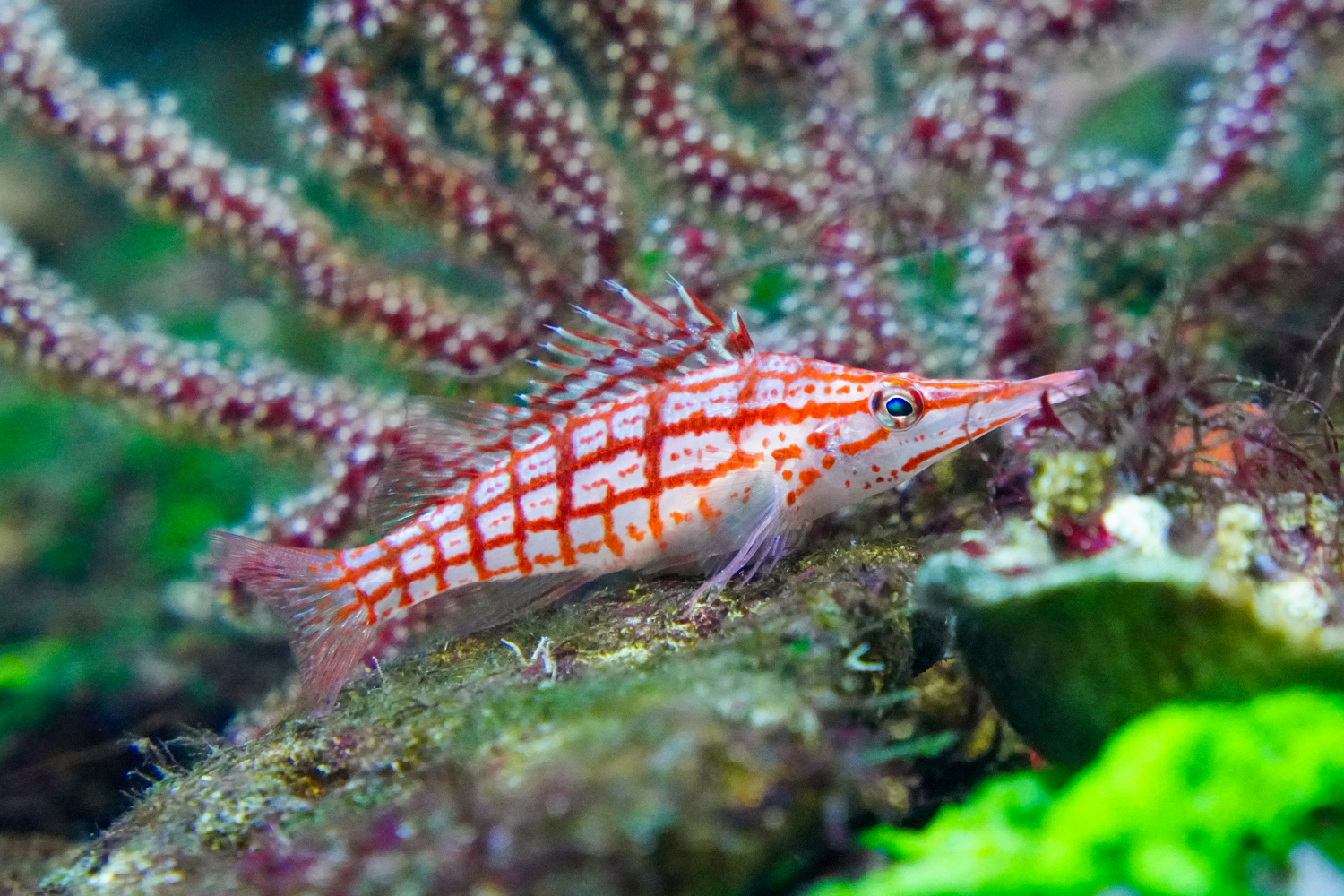
When Longnose Hawkfish stands upright, you can see a bushy thread-like protrusion at the end of the spine. This is a common feature among fish in the Hawkfish family, but its purpose is not fully understood. To humans, it looks "stylish," but... This protrusion is not easily visible when the dorsal fin is folded, so take a good look at it when it is standing upright.