

Zoo Stock Species and the Red List
Zoo Stock Species and the Red List
Zoo Stock

This indicates that the species is included in the Second Zoo Stock Plan, which was formulated by the Tokyo Metropolitan Government in 2018. The plan sets goals for the next 10 years in three areas: "species conservation," "contribution to wildlife conservation," and "environmental education and conservation awareness." 124 animal species are included.
What is the Red List?
Based on scientific research, this is a list of wildlife classified by rank (category) indicating the degree of risk of extinction.
Livng Things Encyclopedia shows the categories (mainland and islands) assessed by the IUCN (International Union for Conservation of Nature) at the global level, the Ministry of the Environment for Japan, and the Tokyo Metropolitan Government for Tokyo.
The higher the category in each table, the higher the risk of extinction, and CR, EN, and VU are the three categories known as "endangered species." In Tokyo, species that are not at the NT (near threatened) level but are relatively rare are considered "species of concern."
|
IUCN categories |
|
|---|---|
|
EX |
extinction |
|
EW |
Extinction in the wild |
|
CR+EN |
— |
|
CR |
Serious crisis |
|
EN |
crisis |
|
VU |
emergency |
|
NT |
Near Threatened |
|
LC・○ |
Low Concern |
|
DD |
Data shortage |
|
LP |
— |
|
Japan (Ministry of the Environment) Category |
|
|---|---|
|
EX |
extinction |
|
EW |
Extinction in the wild |
|
CR+EN |
Endangered species |
|
CR |
Critically Endangered |
|
EN |
Endangered species |
|
VU |
Endangered species |
|
NT |
Near Threatened |
|
LC・○ |
— |
|
DD |
Lack of information |
|
LP |
Endangered |
|
Tokyo Category |
|
|---|---|
|
EX |
extinction |
|
EW |
Extinction in the wild |
|
CR+EN |
Endangered species |
|
CR |
Critically Endangered |
|
EN |
Endangered species |
|
VU |
Endangered species |
|
NT |
Near Threatened |
|
LC・○ |
Unranked |
|
DD |
Lack of information |
|
LP |
Endangered |
Creatures at Tokyo Sea Life Park
Creatures at Tokyo Sea Life Park
Japanese Jack Mackerel
Japanese Jack Mackerel
Trachurus japonicus
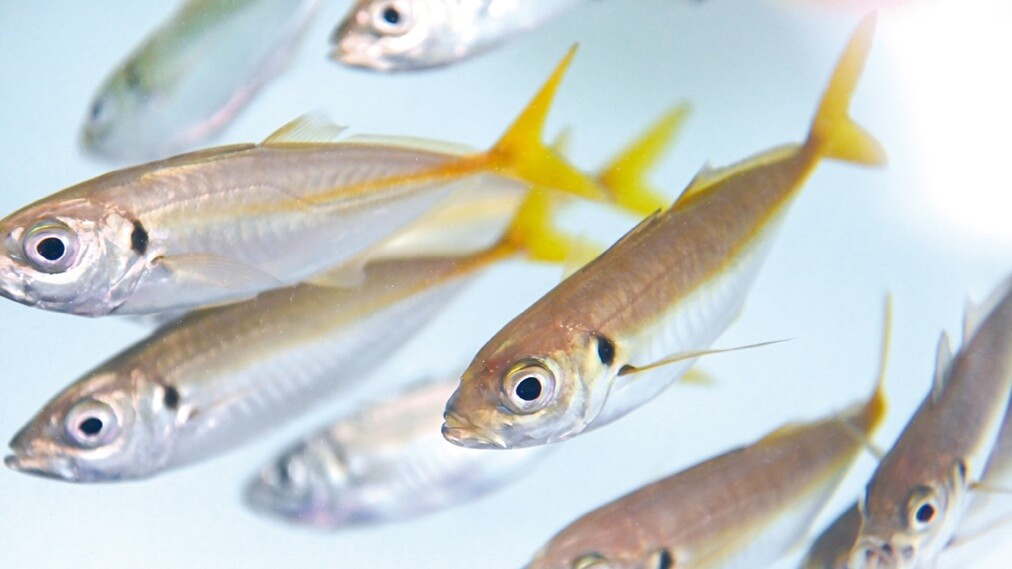
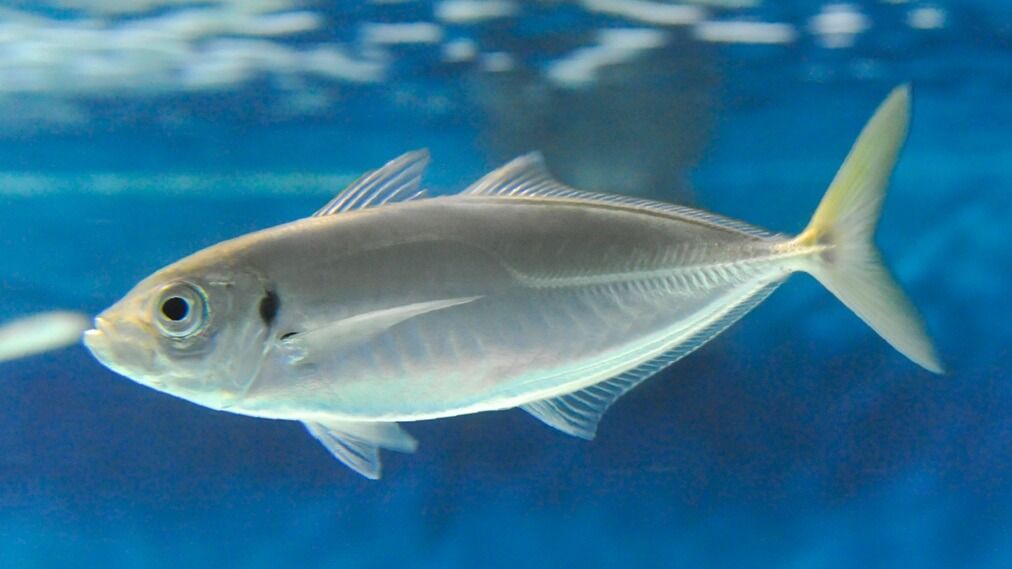
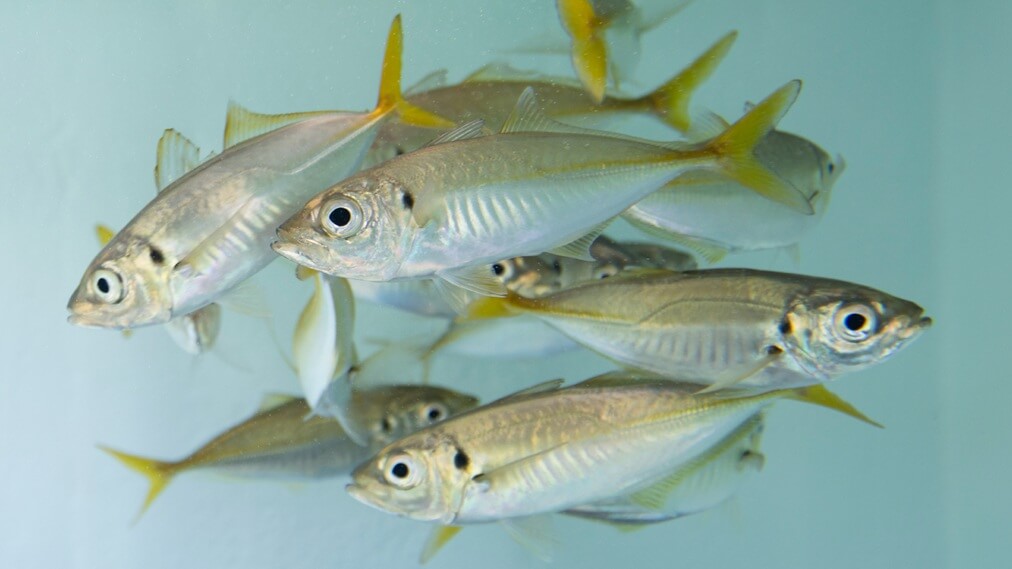
The fish commonly called "aji" in Japan is usually the Japanese horse mackerel (Japanese Jack Mackerel). They live in schools and migrate from near the shore to offshore waters. Some settle near the shore, and their bodies are more yellowish than those that live offshore. They mainly feed on sardines, squid, and krill. Dried horse mackerel and horse mackerel sashimi are familiar dishes in the Japanese diet.
| classification | Actinopterygii, Perciformes, Carangidae |
|---|---|
| English name | Jack Mackerel |
| distribution | The Sea of Japan and Pacific coastal areas south of Hokkaido, the East China Sea, and the area around the Korean Peninsula |
| Residence | Mid to lower layers from the coast to offshore |
| Size |
Total length: 50cm
|
| food | Sardines, krill, squid |
| Red List |
IUCN: NT (Near Threatened)
|
What are some of the characteristics of horse mackerel?
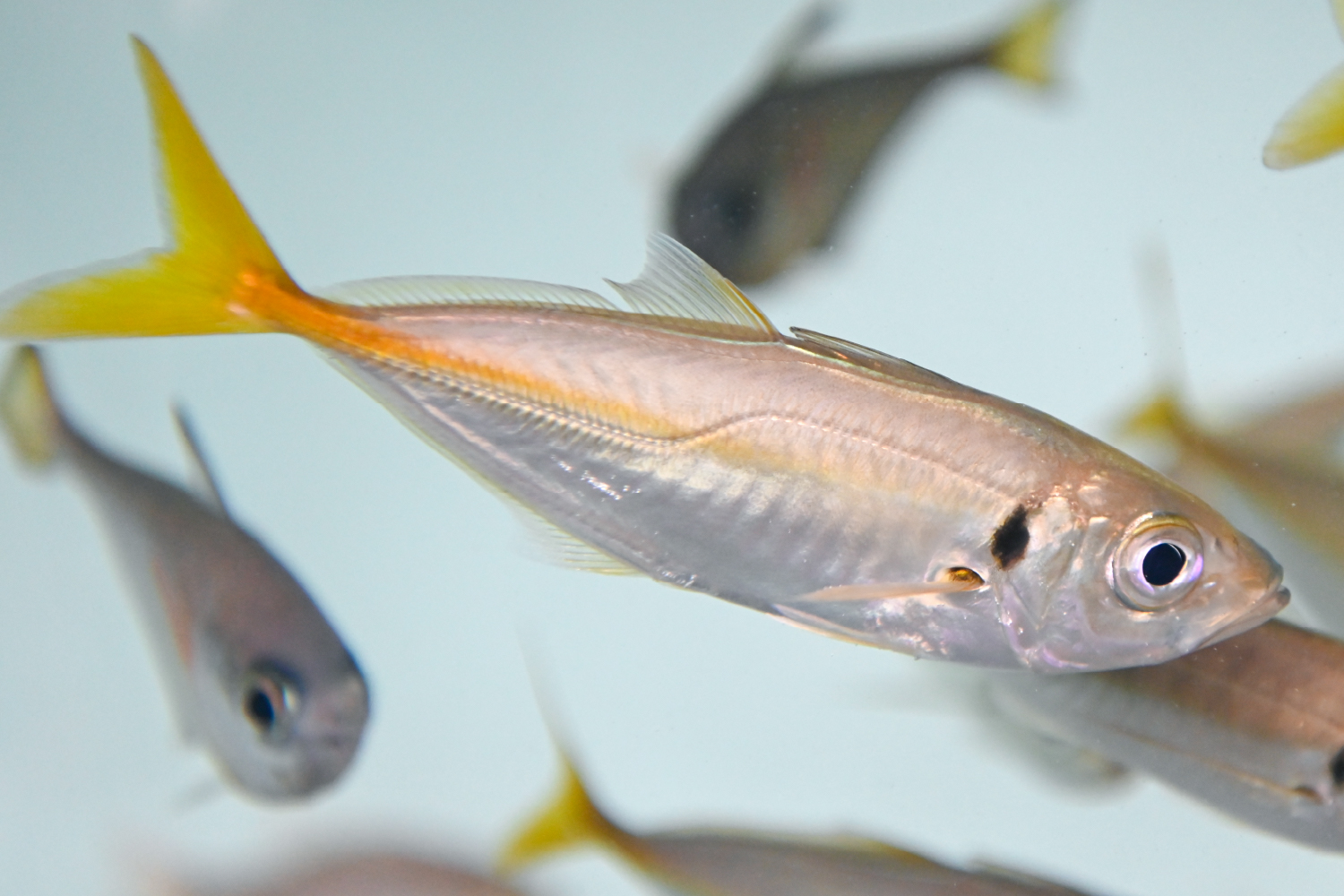
Horse mackerel and their relatives have distinctive features that make them easily identifiable. They have a row of sharp, spine-like structures along both sides of their bodies that are painful to the touch. These structures also curve midway, which is another characteristic. These are modified scales, known as "zengo" or "zeigo." Next time you eat dried horse mackerel, try to find them!
Delicious fish that are a friend to the common people
Japanese Jack Mackerel is one of the most common and popular fish in Japan, with a large supply and a wide range of uses. It is widely used both fresh and in processed products. Because it is readily available, aquariums feed it to Pacific Bluefin Tuna and penguins.
Brand horse mackerel
Japanese Jack Mackerel are increasingly being branded according to the sea areas they inhabit and the fishing methods they use. Famous examples include "Seki horse mackerel," which is caught in the Bungo Channel and line-fished, and "Setsuke horse mackerel," which does not migrate within the bay and accumulates fat. These are traded at higher prices than Japanese Jack Mackerel normally distributed, and are treated as luxury fish.