

Zoo Stock Species and the Red List
Zoo Stock Species and the Red List
Zoo Stock
This indicates that the species is included in the Second Zoo Stock Plan, which was formulated by the Tokyo Metropolitan Government in 2018. The plan sets goals for the next 10 years in three areas: "species conservation," "contribution to wildlife conservation," and "environmental education and conservation awareness." 124 animal species are included.
What is the Red List?
Based on scientific research, this is a list of wildlife classified by rank (category) indicating the degree of risk of extinction.
Livng Things Encyclopedia shows the categories (mainland and islands) assessed by the IUCN (International Union for Conservation of Nature) at the global level, the Ministry of the Environment for Japan, and the Tokyo Metropolitan Government for Tokyo.
The higher the category in each table, the higher the risk of extinction, and CR, EN, and VU are the three categories known as "endangered species." In Tokyo, species that are not at the NT (near threatened) level but are relatively rare are considered "species of concern."
|
IUCN categories |
|
|---|---|
|
EX |
extinction |
|
EW |
Extinction in the wild |
|
CR+EN |
— |
|
CR |
Serious crisis |
|
EN |
crisis |
|
VU |
emergency |
|
NT |
Near Threatened |
|
LC・○ |
Low Concern |
|
DD |
Data shortage |
|
LP |
— |
|
Japan (Ministry of the Environment) Category |
|
|---|---|
|
EX |
extinction |
|
EW |
Extinction in the wild |
|
CR+EN |
Endangered species |
|
CR |
Critically Endangered |
|
EN |
Endangered species |
|
VU |
Endangered species |
|
NT |
Near Threatened |
|
LC・○ |
— |
|
DD |
Lack of information |
|
LP |
Endangered |
|
Tokyo Category |
|
|---|---|
|
EX |
extinction |
|
EW |
Extinction in the wild |
|
CR+EN |
Endangered species |
|
CR |
Critically Endangered |
|
EN |
Endangered species |
|
VU |
Endangered species |
|
NT |
Near Threatened |
|
LC・○ |
Unranked |
|
DD |
Lack of information |
|
LP |
Endangered |
Creatures at Tokyo Sea Life Park
Creatures at Tokyo Sea Life Park
Crab
Crab
Ilyoplax pusilla
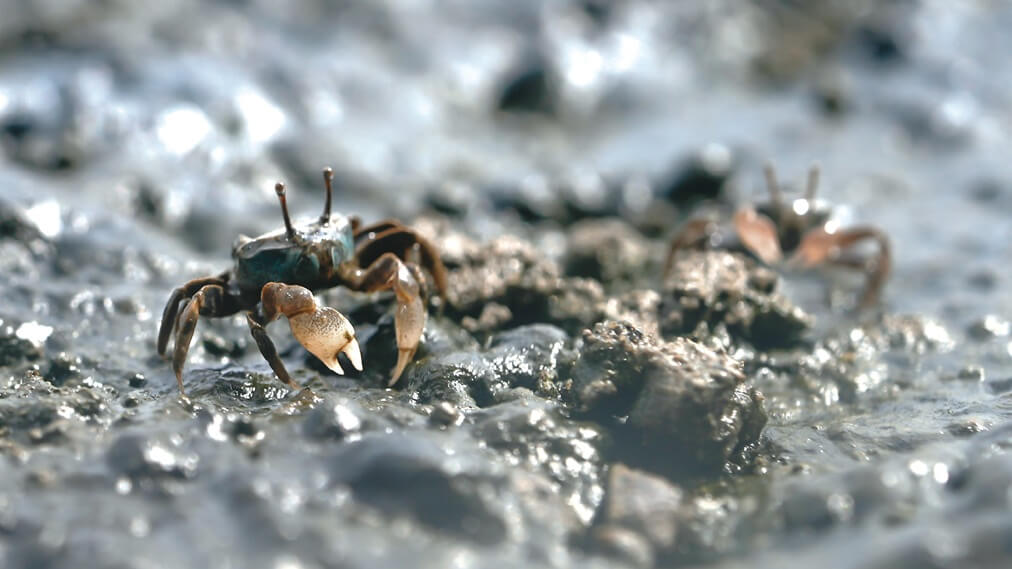
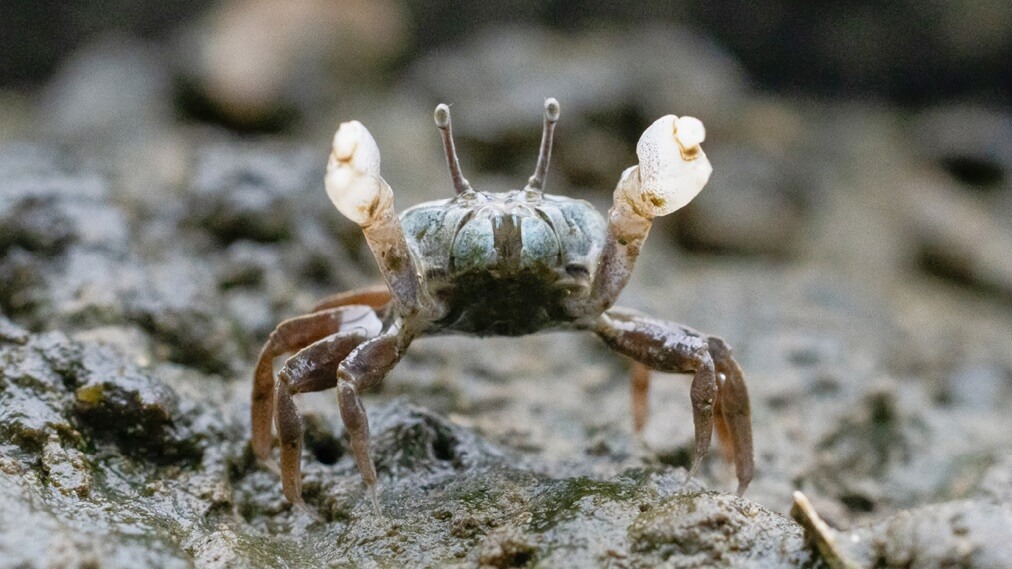
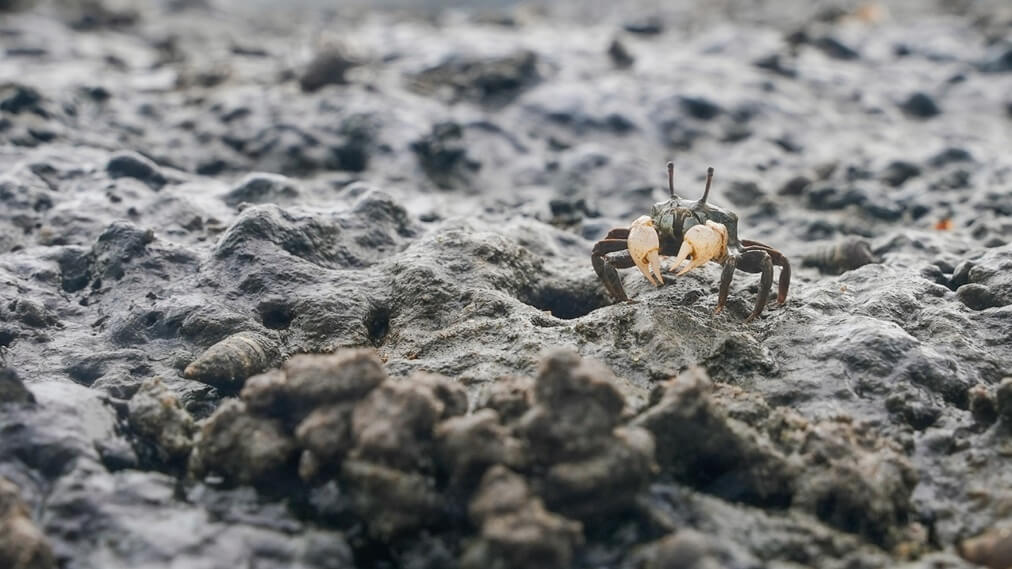
This is a type of sand crab that lives in burrows in the muddy tidal flats at river mouths. When the tide goes out, they all come out onto the mud at once and begin to feed. Their food consists of organic matter attached to the mud, which they eat by filtering it out. A behavior called waving, in which they raise and lower their two claws, is mainly seen in males. It is fascinating to watch their white claws wave in unison.
| classification | Malacostraca, Decapoda, Ocypodidae |
|---|---|
| English name | Crab |
| distribution | The Pacific coast of Honshu south of Sendai Bay, Shikoku, Kyushu, the Nansei Islands, and the southern coastal areas of the Korean Peninsula |
| Residence | Sandy muddy bottom near the river mouth or muddy tidal flats |
| Size |
Shell width: about 1cm
|
| food | Organic matter contained in mud from tidal flats |
| Red List |
IUCN: Not rated
- Tokyo: Species of note |
Waving to attract females
When the tide recedes and the mudflats become visible, the males perform a waving (courtship dance), rhythmically swinging their equally sized white claws up and down. This is thought to be a way of courting females and displaying their territory to other males. Let's observe the waving in an aquarium.
vigilance and group behavior
Crab are very timid and will hide in their burrows en masse if they sense a human presence or vibration. Their biggest enemy is birds, and they are sensitive to attacks from above. Also, in tidal flats, they act in groups, waving in unison, and foraging and moving as a whole group. This collective behavior is thought to be a strategy for being vigilant against enemies and for attracting more females.
Tidal flat cleaner
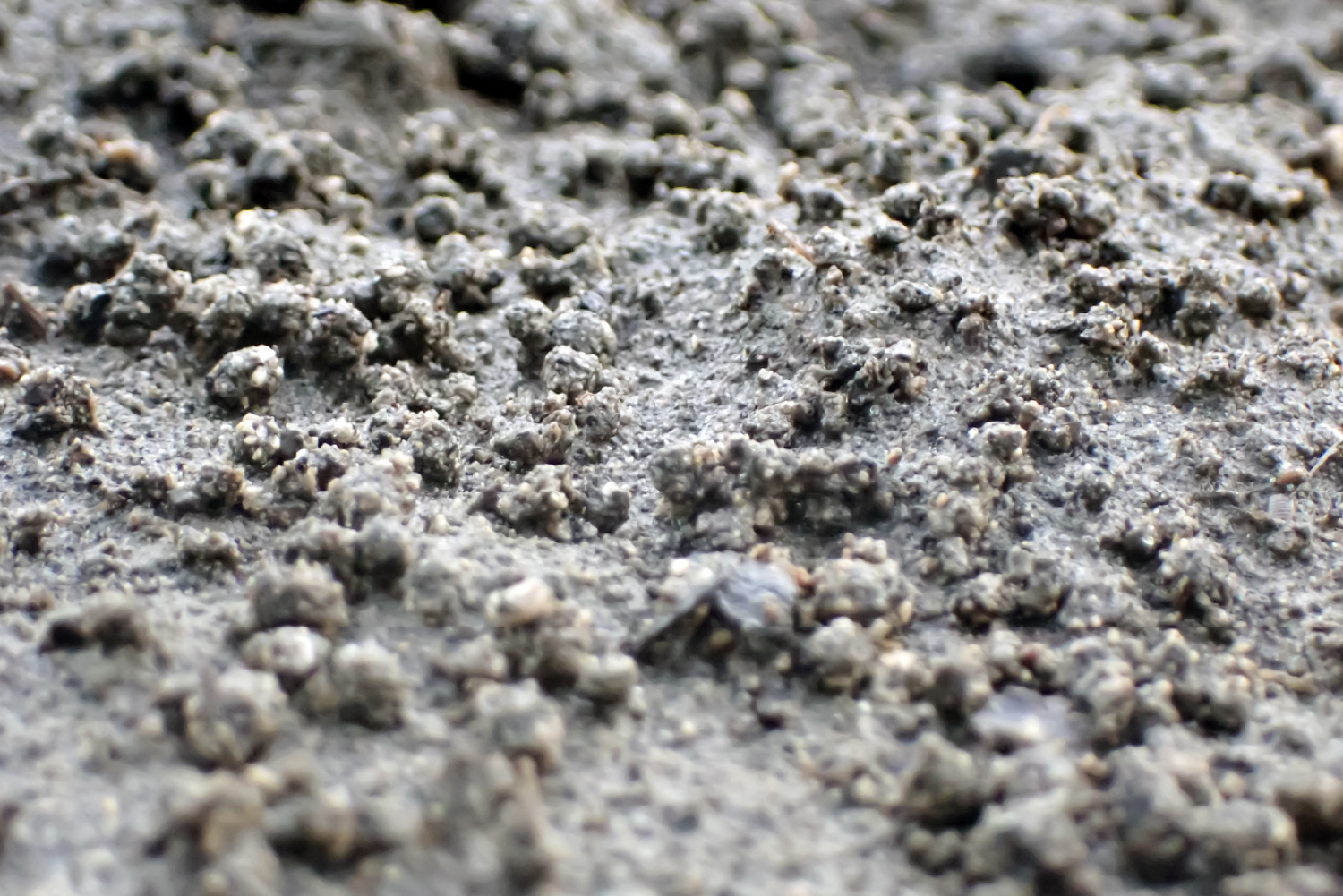
Crab uses its claws to grab mud from the tidal flats, brings it to its mouth, and filters out the fine algae and organic matter contained within the mud. After it has finished eating, it places the remaining mud in small balls around its burrow. In a sense, Crab is a cleaner that keeps the mud clean.