

Zoo Stock Species and the Red List
Zoo Stock Species and the Red List
Zoo Stock
This indicates that the species is included in the Second Zoo Stock Plan, which was formulated by the Tokyo Metropolitan Government in 2018. The plan sets goals for the next 10 years in three areas: "species conservation," "contribution to wildlife conservation," and "environmental education and conservation awareness." 124 animal species are included.
What is the Red List?
Based on scientific research, this is a list of wildlife classified by rank (category) indicating the degree of risk of extinction.
Livng Things Encyclopedia shows the categories (mainland and islands) assessed by the IUCN (International Union for Conservation of Nature) at the global level, the Ministry of the Environment for Japan, and the Tokyo Metropolitan Government for Tokyo.
The higher the category in each table, the higher the risk of extinction, and CR, EN, and VU are the three categories known as "endangered species." In Tokyo, species that are not at the NT (near threatened) level but are relatively rare are considered "species of concern."
|
IUCN categories |
|
|---|---|
|
EX |
extinction |
|
EW |
Extinction in the wild |
|
CR+EN |
— |
|
CR |
Serious crisis |
|
EN |
crisis |
|
VU |
emergency |
|
NT |
Near Threatened |
|
LC・○ |
Low Concern |
|
DD |
Data shortage |
|
LP |
— |
|
Japan (Ministry of the Environment) Category |
|
|---|---|
|
EX |
extinction |
|
EW |
Extinction in the wild |
|
CR+EN |
Endangered species |
|
CR |
Critically Endangered |
|
EN |
Endangered species |
|
VU |
Endangered species |
|
NT |
Near Threatened |
|
LC・○ |
— |
|
DD |
Lack of information |
|
LP |
Endangered |
|
Tokyo Category |
|
|---|---|
|
EX |
extinction |
|
EW |
Extinction in the wild |
|
CR+EN |
Endangered species |
|
CR |
Critically Endangered |
|
EN |
Endangered species |
|
VU |
Endangered species |
|
NT |
Near Threatened |
|
LC・○ |
Unranked |
|
DD |
Lack of information |
|
LP |
Endangered |
Creatures at Tokyo Sea Life Park
Creatures at Tokyo Sea Life Park
Blenny
Blenny
Alticus orientalis
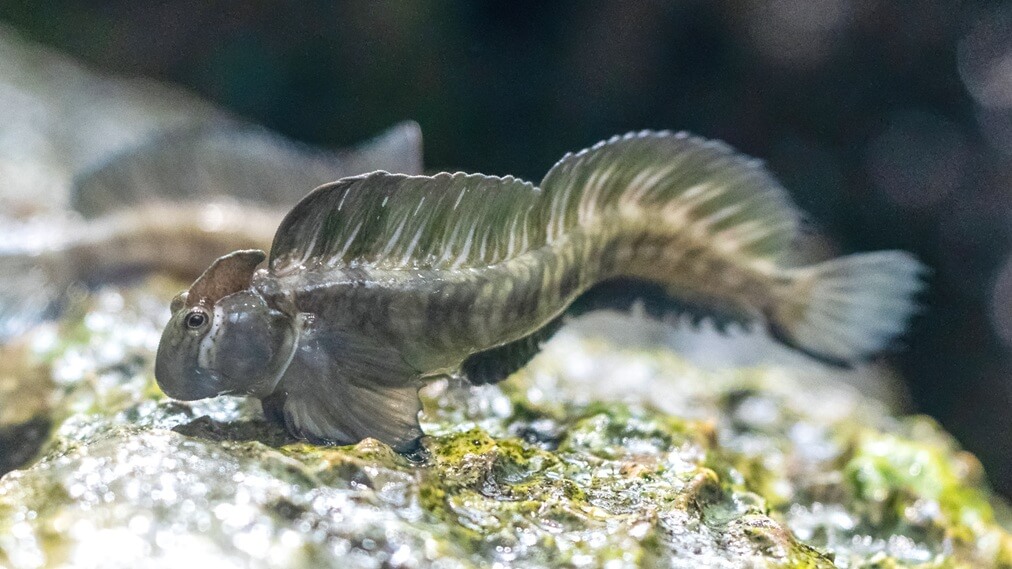
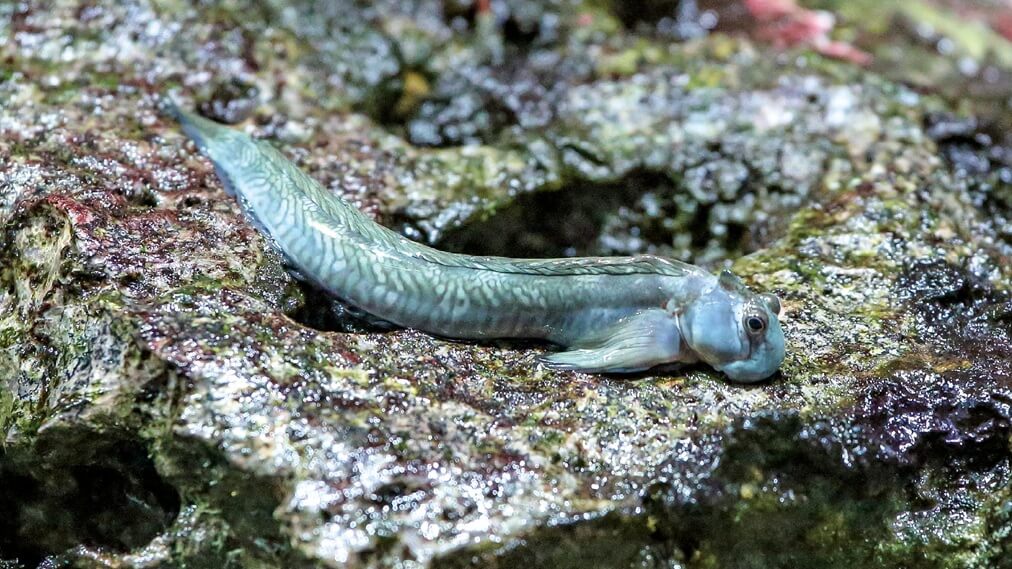
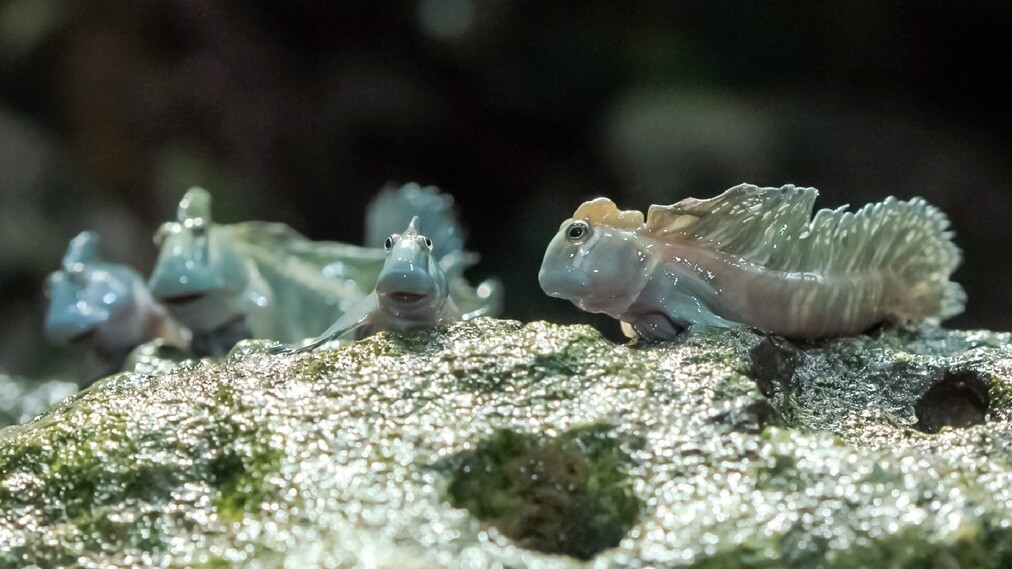
They can be seen on rocks where rough waves crash, such as on Hachijojima Island and the Ogasawara Islands. Despite being fish, they rarely enter the water. On the contrary, if waves splash onto their bodies, they jump and leap across the rocks or the water's surface to escape. They can breathe through their skin even outside of the water.
| classification | Actinopterygii, Perciformes, Blenniidae |
|---|---|
| English name | Blenny |
| distribution | Hachijojima and the Ogasawara Islands |
| Residence | Rough waves crashing on the rocks |
| Size |
Total length: approx. 12cm
|
| food | Algae on rocks |
| Red List |
IUCN: LC (Least Concern)
|
How to eat
Let's observe Blenny on the rock. It appears to be nibbling on the rock surface with its downward-facing mouth. It has comb-like teeth in its mouth, and it eats by scraping off the algae growing on the rock.
How to tell the difference between males and females
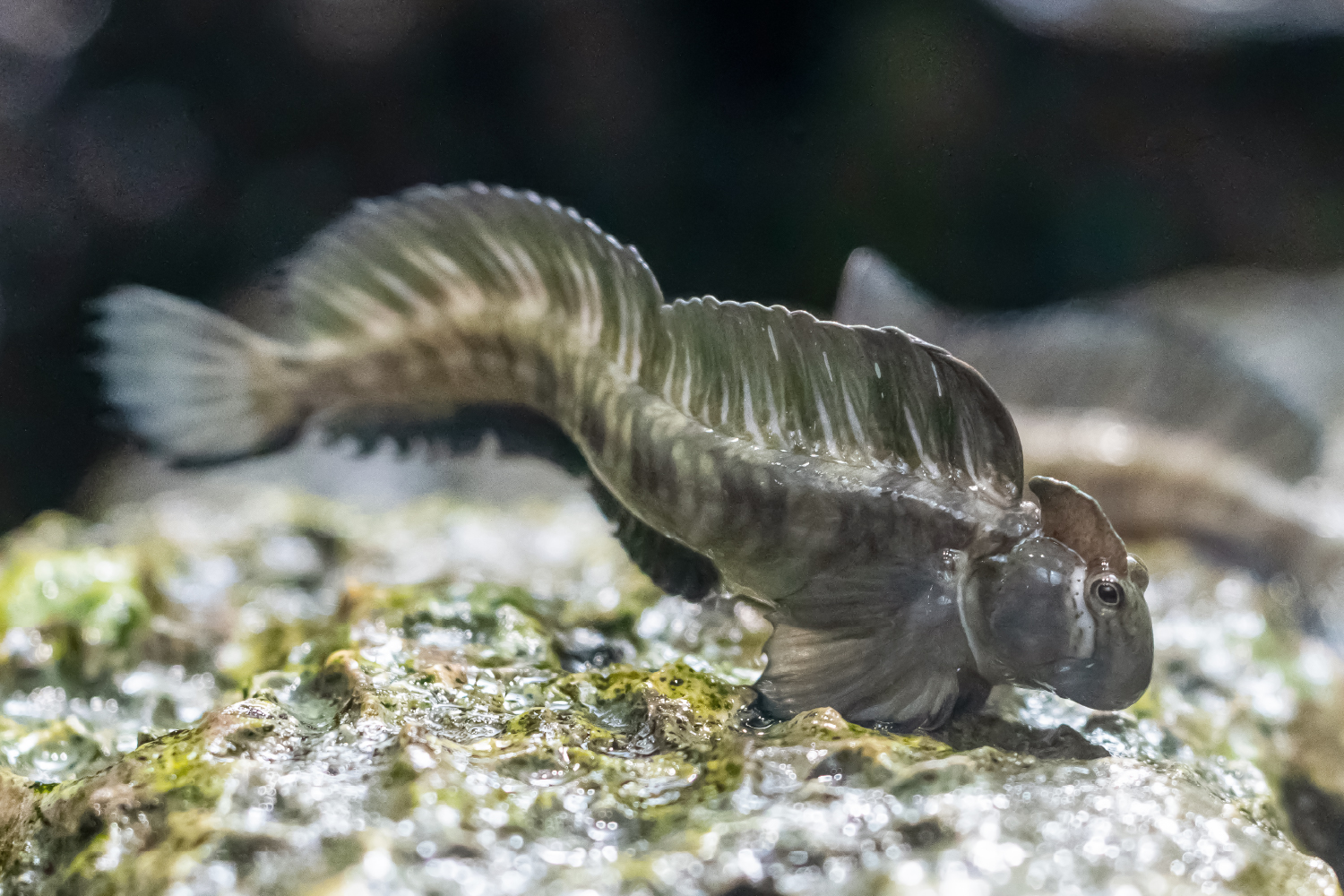
You can tell by looking at their heads. Males have a triangular crest on top of their heads, while females do not. Males raise their crests and dorsal fins and shake their heads vigorously towards nearby females to court them.
Male guarding the eggs
Blenny lays its eggs in crevices and holes in rocks. Females who accept the male's courtship follow him into the hole and lay their eggs. The male then stays in or near the hole, guarding the eggs until they hatch. If you see a male peeking its head out of a hole and observing the outside, it may be guarding the eggs.