

Is this also coral? Its name is "Sea Cucumber."
July 24, 2026
Have you read our previous articles about the "Coral Reef Sea" tank at Tokyo Sea Life Park?
In addition to the corals brought in in 2025, we received more corals from Nishinoomote City, Kagoshima Prefecture, this June, adding to the exhibit and making it even more lively. This time, we'd like to introduce some corals with a rather unusual appearance.
Corals belong to the same phylum Cnidaria as Moon Jellyfish, and are made up of many small polyps that come together to form a large mass. They receive energy from photosynthesis produced by symbiotic zooxanthellae within their bodies, and they also possess plant-like functions, such as extending tentacles from their polyps to prey on small plankton and bacteria.
First, please take a look at this photo.
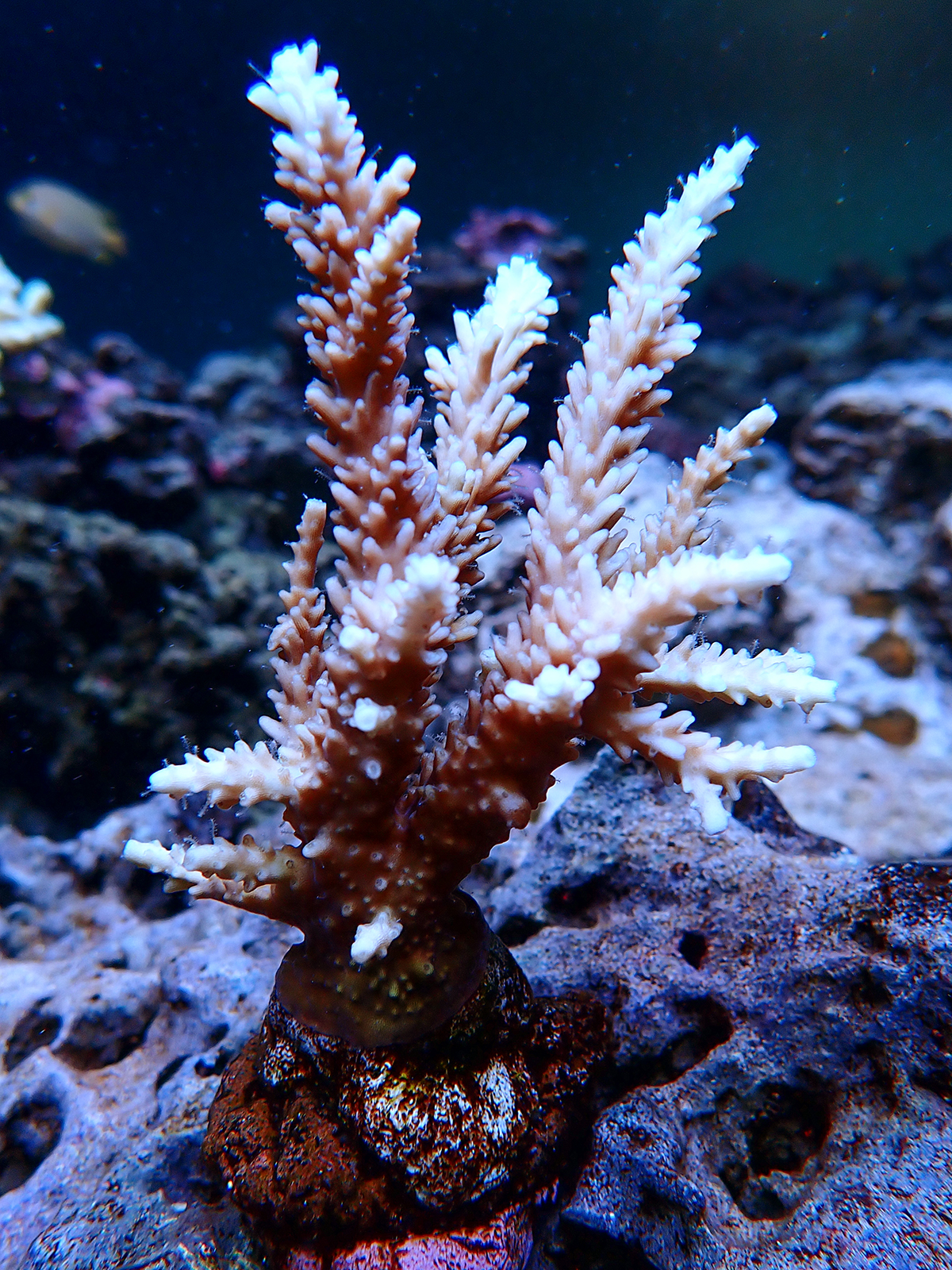
When people think of coral, they often picture branches that extend outwards or round, table-like shapes. However, there are also corals that look nothing like them.
Here it is.
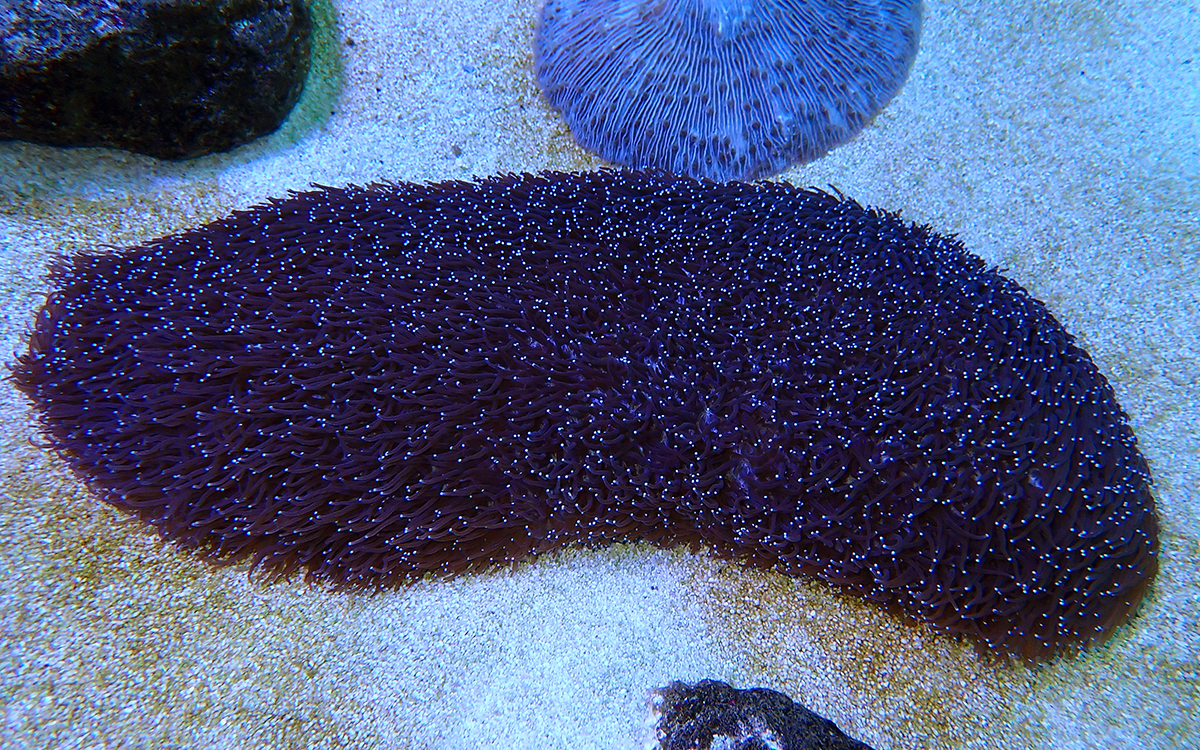
What is this? Is it a sea cucumber...? No, it's actually a type of coral!
This is a type of coral called "stone sea cucumber," which can be observed on the sand. During the day, it extends its long tentacles, which completely cover the hard calcium skeleton beneath.
And this sea cucumber can actually walk! While most corals spend their entire lives attached to rocks, the sea cucumber moves to places that are suitable for its habitat. More precisely, it doesn't walk like a human, but rather moves by crawling, filling and deflating its polyps with water. It moves only a little, but it seems to move about 1 cm a day even in an aquarium.
The "stone sea cucumber" defies conventional understanding of coral. Be sure to observe its fascinating form at Tokyo Sea Life Park.
[Kanna Hirota, Animal Care and Exhibition Staff, Kasai Tokyo Sea Life Park]