Australia's Great Barrier Reef is famous for its vast coral colonies. Tokyo Sea Life Park has a tank themed around this area, displaying a large number of corals. Corals come in various shapes, such as table-shaped, branch-shaped, and broccoli-shaped, resembling rocks or plants, but they are actually living animals.
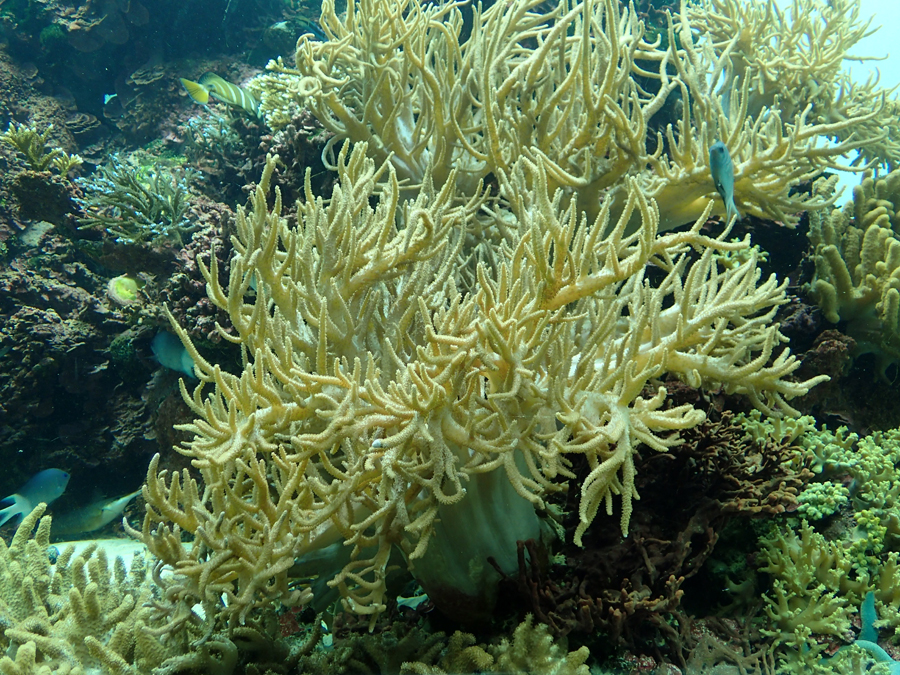 | | 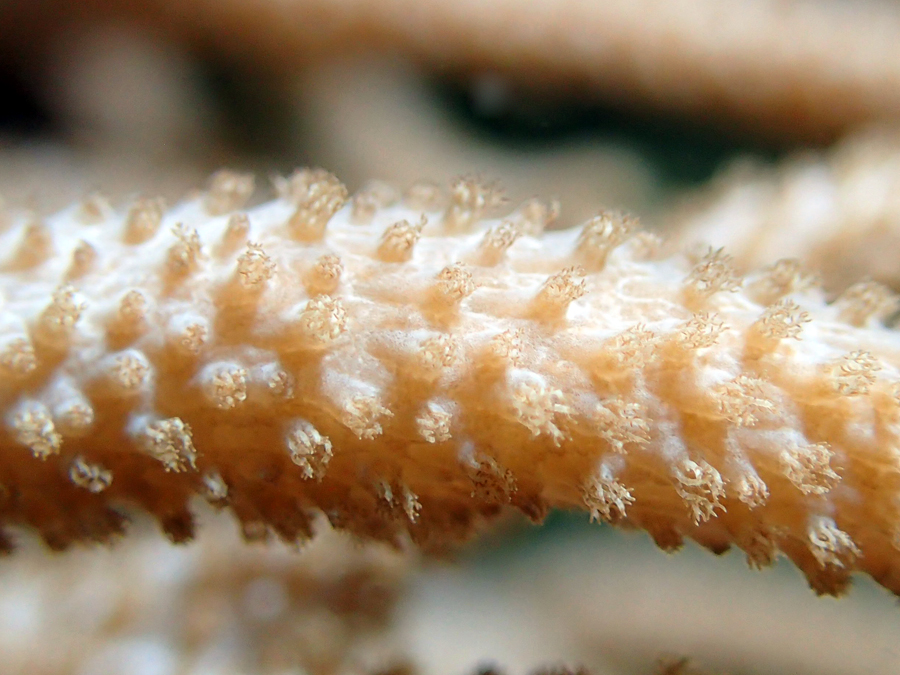 |
| Willow-leaved tortoiseshell | Polyps of the soft coral (Sarcophyton) |
If you look closely at the coral in your aquarium, you'll notice that it's made up of dense clusters of tiny, anemone-like structures called "polyps." Most corals are formed from these polyps that repeatedly divide and divide to create large clumps (colonies).
Corals need nutrients to grow. While they can capture plankton with their polyp tentacles, many corals have symbiotic relationships with algae called zooxanthellae, which absorb nutrients produced by photosynthesis.
To keep corals healthy, it's necessary to provide the right amount and quality of light, water flow, and water quality. For example, special equipment is used to adjust water quality by adding calcium necessary for growth to the aquarium water. Also, since corals attach themselves to rocks and other surfaces, they cannot move to their preferred location within the aquarium. Whether or not they can be kept in a good environment depends entirely on animal keeper.
By carefully observing and regularly adjusting the environment, you can see firsthand that the corals in your aquarium are growing large and healthy.
However, we can't be complacent just because they're growing. If corals get too close to each other, they may stop growing or even attack each other. Therefore, when a growing coral gets close to touching surrounding corals, we change its position or trim it.
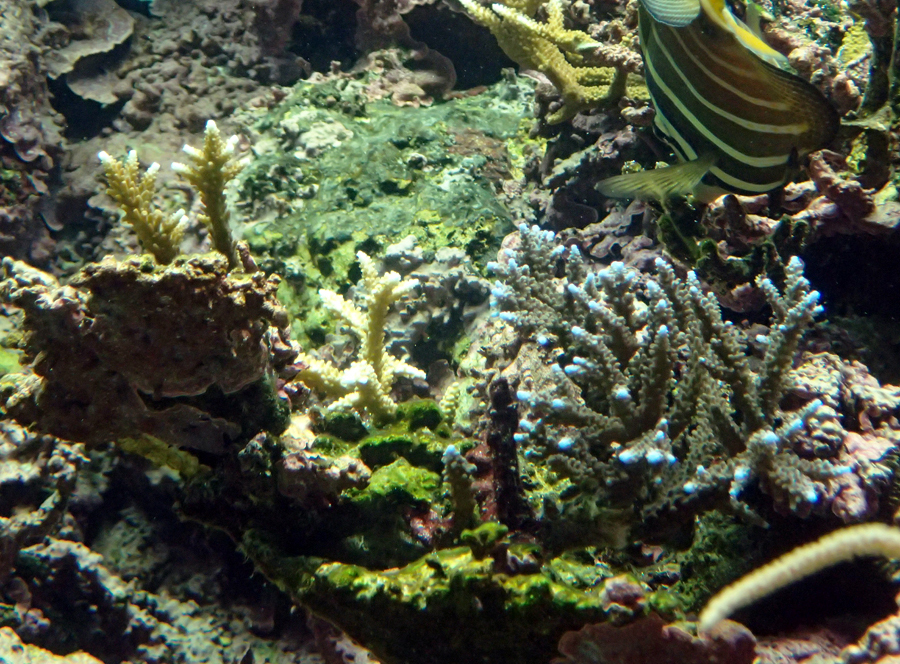 | | 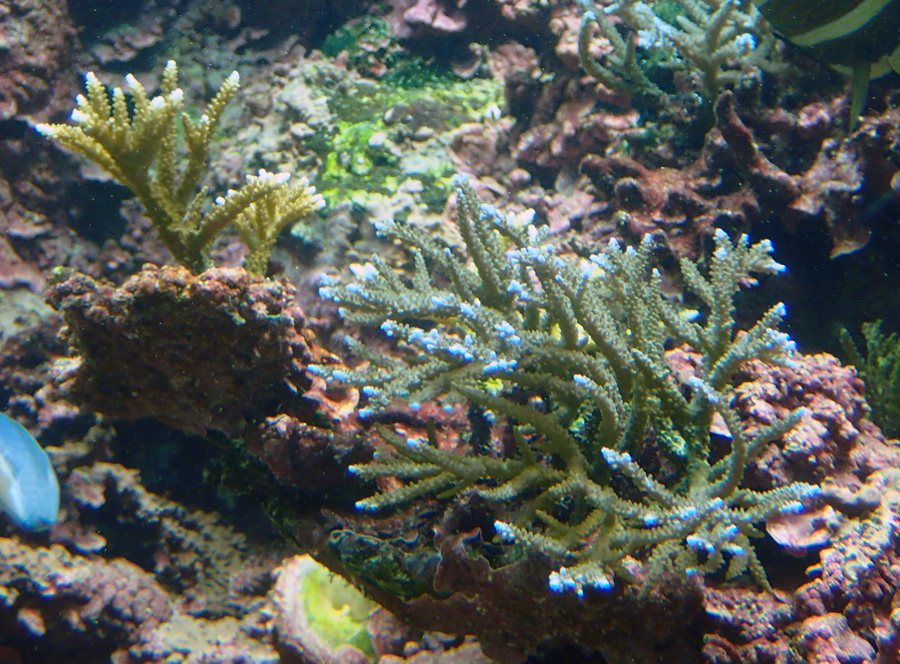 |
| Growing Staghorn Coral: Left: July 2017, Right: March 2018 |
At the beginning of February, I noticed that a soft coral (Sarcophyton) was about to touch a cedar Staghorn Coral.), so I removed a portion of it with a utility knife. When I placed the cut piece in the other tank, it was initially shriveled, but now the cut surface has started to attach to the rock, and the polyps are fully open. I was impressed by the resilience of these creatures.
Coral is often seen as part of the aquarium's scenery, but please also take the time to appreciate that it is a living creature.
[Tokyo Sea Life Park]
(April 5, 2018)