

To "create" a specimen
May 22, 2026
In a previous aquarium newsletter, we mentioned that "the specimens displayed in Information Desk at Tokyo Sea Life Park are changed regularly."
Actually, many of the specimens in Information Desk at Tokyo Sea Life Park are handmade by our staff. I'd like to explain how we make these specimens, including the methods we use and the things we pay attention to when making them, using a recently made dried specimen of a giant porgy as an example.
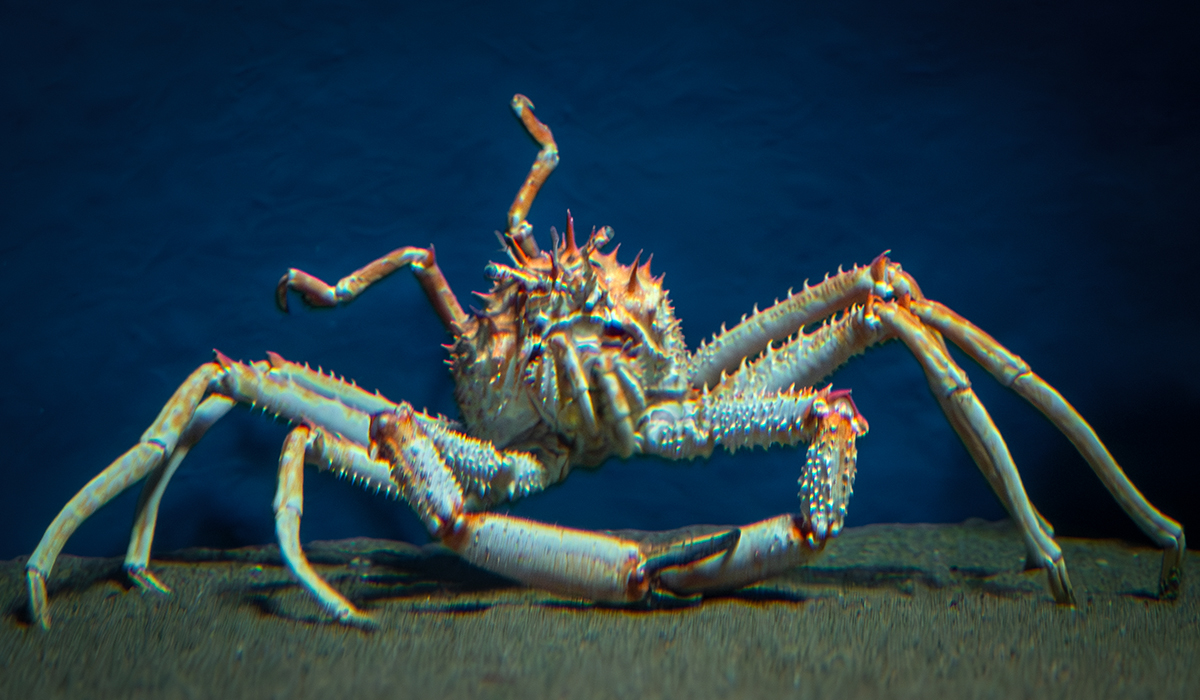
The giant pygmy crab (Oohomara) is a type of crab that lives in the deep sea and is currently on display in the "Deep Sea Creatures 4" tank. The other day, I received a call from animal keeper saying that the giant pygmy crab in the back area had molted, so I got a shell that was about 4 cm wide and decided to make a specimen of it.
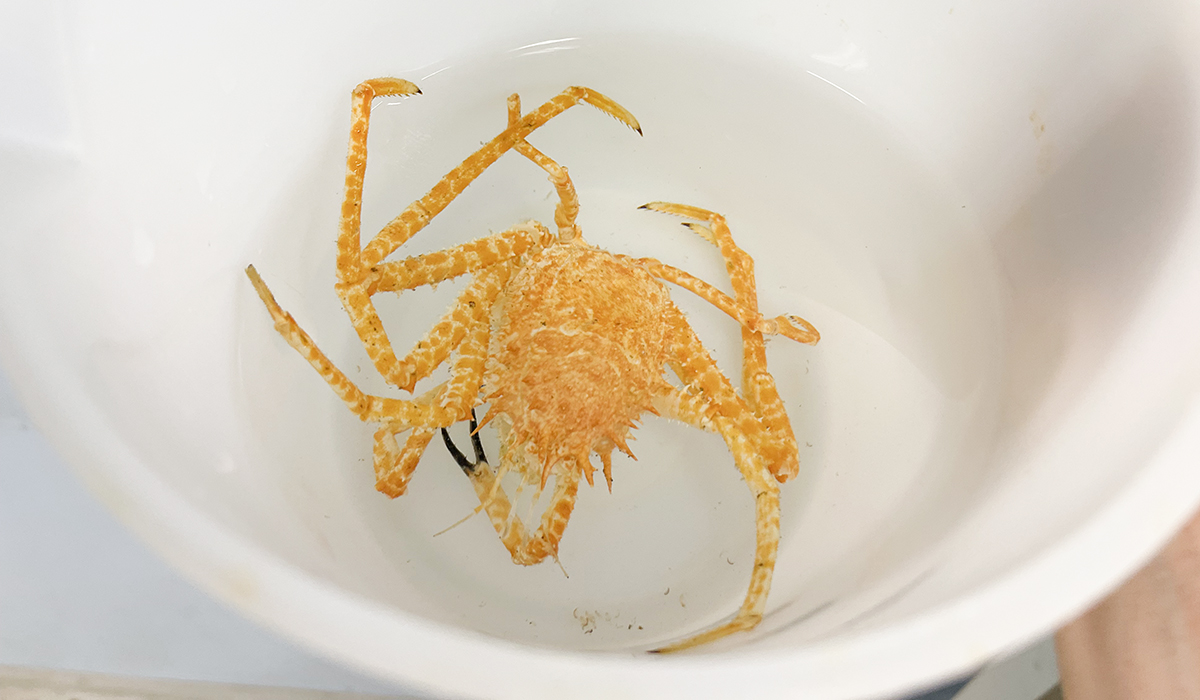
When preparing molted exoskeletons as specimens, most are made into "dried specimens" that can be preserved for a long time without decaying by drying them out.
When preparing dried specimens, I pay particular attention to the "posture of the organism." To avoid unnatural postures, I observe the giant fumaroles in the tank and get an idea of things like the direction of their legs. In particular, the hindmost leg (fourth walking leg) of the giant fumarole is curved backward, and the end of it is hook-shaped, and it is said that it was used to carry other organisms such as sponges on its back for protection.
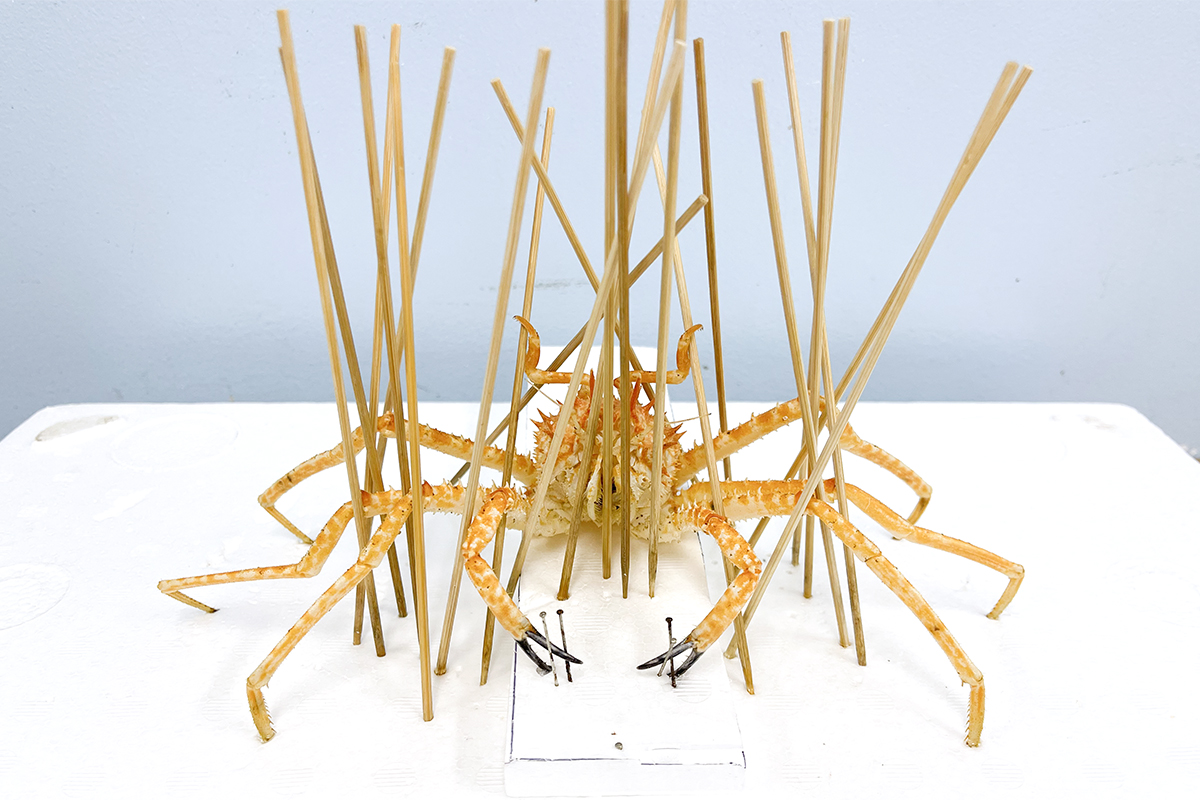
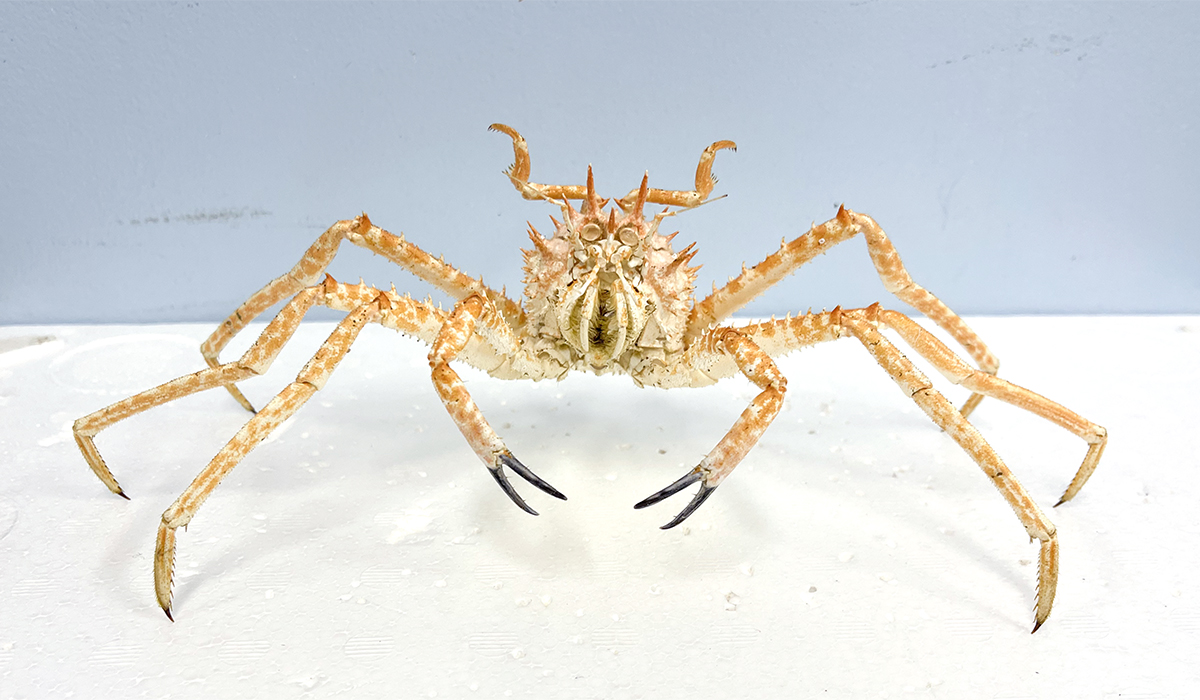
I carefully observed the specimen to ensure I could reproduce this orientation. Once the posture was determined, I used bamboo skewers to dry the very soft shell, which was still soft immediately after molting, on styrofoam to "mount" it (to set its shape and allow it to dry and become fixed). After a few days, I checked on it, removed the bamboo skewers, and it was complete!
Regular observation of the aquarium is useful not only for everyday care but also when preparing specimens.
Information Desk in particular, houses a large collection of specimens, some of which were created by the staff themselves. Please come and see these specimens, each a testament to the staff's dedication and Information Desk. You're sure to make some interesting discoveries when you look at the creatures in the aquariums after seeing the specimens.
We will be displaying the dried specimen of *Homo rhynchophylla* that we introduced today on some days, so please look forward to it!
[Tokyo Sea Life Park]