

Towards the breeding of Scimitar-horned Oryx
October 30, 2026
As of October 30, 2026, the "Savanna Area" at Tama Zoo houses a total of four animal species: 15 Giraffe, 2 Grevy's Zebra, 7 Scimitar-horned Oryx, and 12 Great White Pelican.
Scimitar-horned Oryx, which we'll be introducing today, is a mammal that inhabits the Sahel region, which stretches across the African continent from east to west. It is characterized by its two saber-shaped horns. It is an animal that is extremely resistant to heat and drought and can survive for several weeks without drinking water.
Scimitar-horned Oryx, which is extremely resistant to drought and heat, was once extinct in the wild. Excessive hunting and habitat destruction reduced their population, and they disappeared from many countries between the 19th and 20th centuries, leading to the IUCN declaring them extinct in the wild in 2000. However, a reintroduction program was launched in 2008, and in 2016, they were reintroduced to the Wadi Limeh-Wadi Asim Wildlife Sanctuary in Chad, where they have successfully bred. As a result of these efforts, their category on the IUCN Red List has been improved from "Extinct in the Wild" to "Endangered."
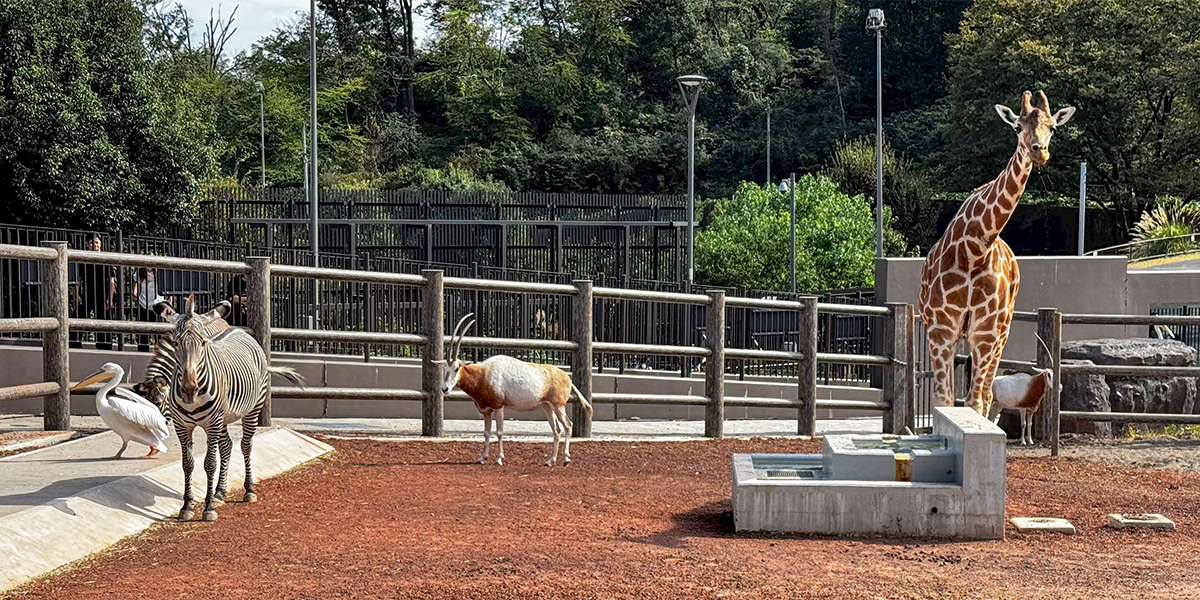
Since 2015, Tama Zoo has not bred Scimitar-horned Oryx due to renovations of the savanna area and bloodline concerns.
Subsequently, the zebra and oryx enclosure was completed in April 2025, and in February 2026, "Hutt," the male oryx with the highest breeding priority in Japan, was brought in from Hamura City Zoo, creating an environment once again for breeding Scimitar-horned Oryx.
On September 9, 2026, we performed our first pairing. The female is Sakura, the youngest at 12 years old and has never given birth before. To ensure a one-on-one pairing, we first separated Sakura from the group of females and then placed her in the same enclosure as Hat.
Hat and Sakura's first contact seemed promising, with them sniffing each other and Hat even performing the flehmen response. However, Sakura began attacking with her horns, to which Hat retaliated, chasing after her as she tried to escape. The high temperature may have contributed to this, but Sakura gradually began breathing with her mouth open and started drooling. Judging that continuing would negatively impact Sakura's health, we ended the first pairing session.
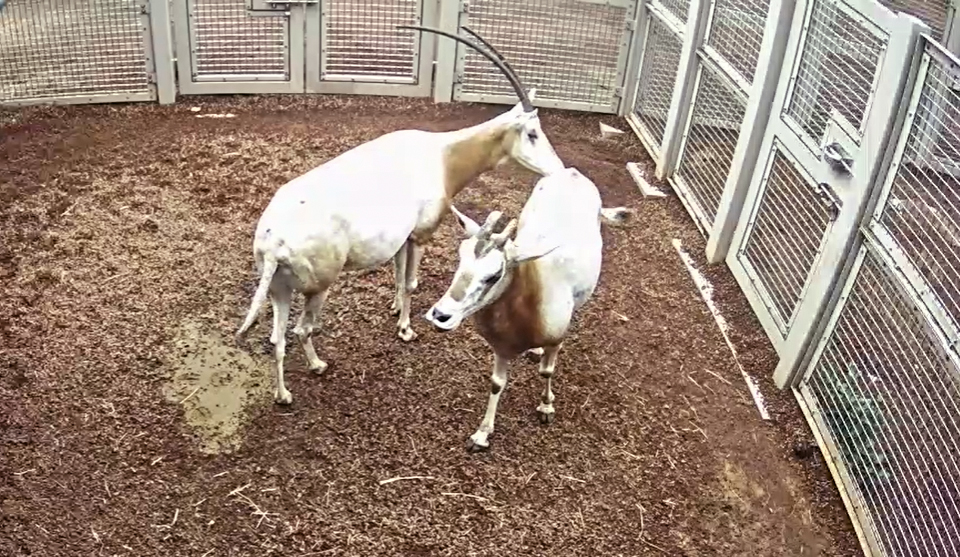
The second pairing attempt was scheduled for October 7th, but Sakura panicked when we separated her, so we had to abandon the attempt before it could be paired.
Going forward, we will continue pairing them, trying other methods such as placing Hutt among the female group, and the entire savanna area team will work together to ensure successful breeding so that we can see baby Scimitar-horned Oryx next year.
[Tama Zoo]