

We have installed a new feeder in White-handed Gibbon enclosure.
September 25, 2026
Tama Zoo houses three White-handed Gibbon: a male named "Tete," a female named "Mitsu," and a male named "Hari," born to the two. This time, we will introduce foraging enrichment, which focuses on their daily eating behavior.
White-handed Gibbon feed on fruits, leaves, and insects. In the wild, they use their long arms to move through the trees, heading towards trees that serve as foraging spots. From there, they select edible items such as ripe fruit and then use their dexterous hands and fingers to eat them. The entire process, from searching for and finding food to putting it in their mouths with their hands, can be considered a single foraging behavior.
However, since the necessary food is provided at the zoo, the animals rarely have the opportunity to search for food at their own pace, as they would in the wild. Therefore, we have installed new feeders to encourage not only eating but also searching for food and using their hands to retrieve it.
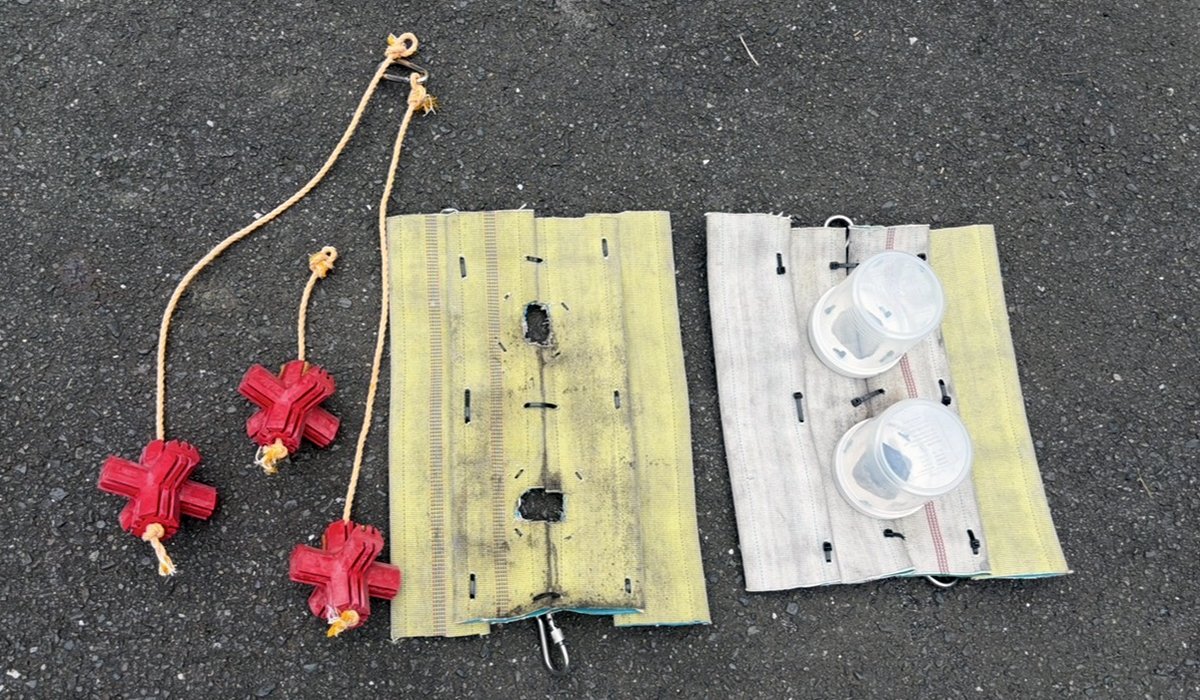
The newly installed feeders were made using a variety of materials, including drums, plastic cases, fire hoses, and rubber dog toys with holes. Inside the feeders are pieces of fruit, raisins, and monkey pellets cut into sizes that can be easily removed through the holes. All of the feeders created this time are installed on the outside of the fence. By deliberately installing them on the outside of the fence, we can increase the difficulty of the monkeys getting the food. In addition, it makes the feeders less likely to be damaged, and allows us to attach the food even when White-handed Gibbon are in the enclosure.
When we actually set it up, each of the three cats reacted differently. The mother, Mitsu, was the quickest to approach the new thing. Mitsu is the strongest of the three and has a relatively fearless personality, so as soon as we set up the new feeder, she approached it and started using it.
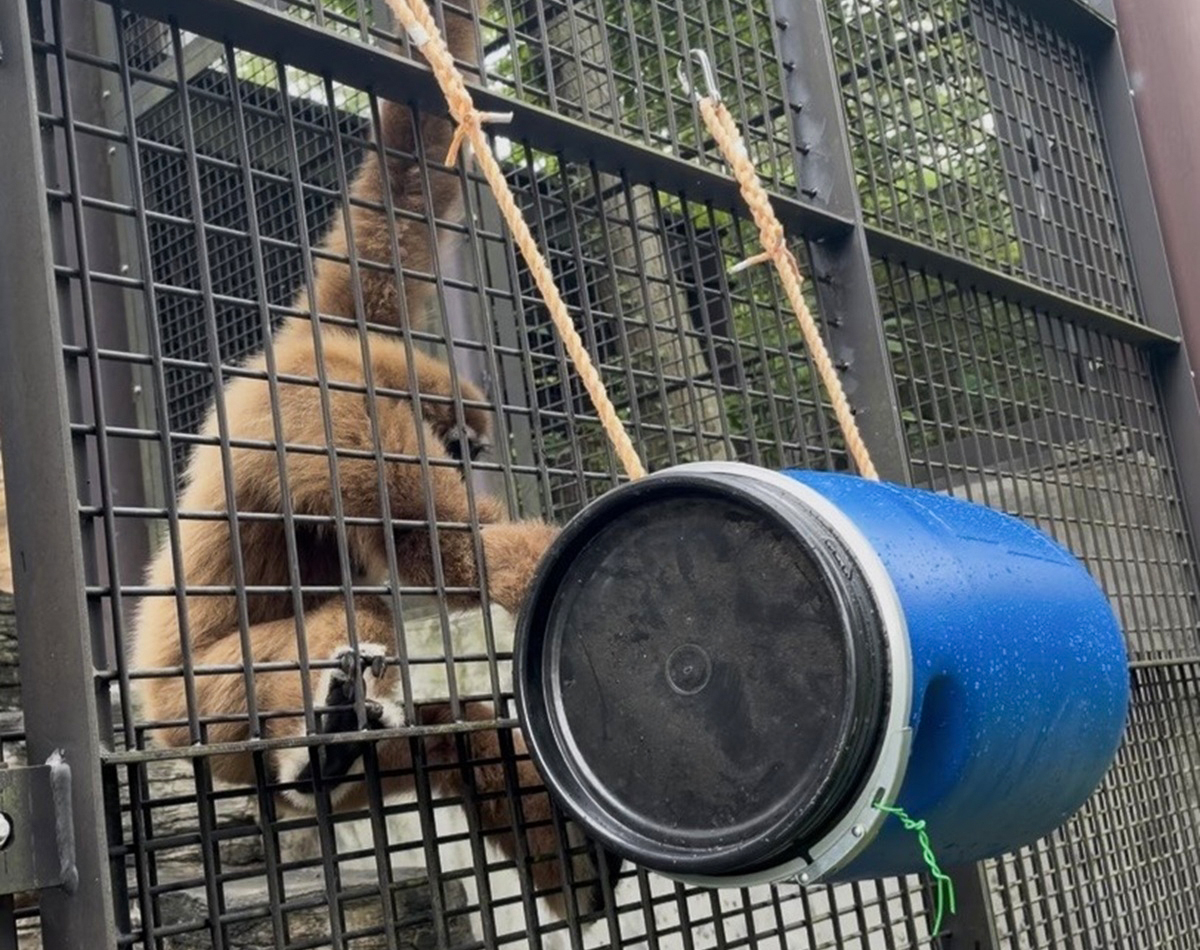
Watching this from nearby is her son, Hari. While Mitsu is using the feeder, Hari watches from a short distance away. When Mitsu leaves, he sometimes approaches the feeder to take some food.
However, with only one feeder, Mitsu would grab the food first, leaving Hari and Tete with fewer opportunities to use it. So, we prepared multiple feeders of different types and locations so that each of them could use them. As a result, we now see Hari using the feeder much more often.
Meanwhile, the father, Tete, is still wary of the feeder and often observes it from a distance, so we haven't yet seen him actually using it.
Even though the three gibbons live in the same group, there are differences in their reactions to new things and how they use White-handed Gibbon to demonstrate their natural abilities and improve animal welfare.
[Tama Zoo]