|
White-handed Gibbon, the forest ninjas, make their appearance.
└─2011/06/10 |
|
|
|
|
Two White-handed Gibbon (a 4-year-old female named "Mitsu" and a 3-year-old male named "Tete") have arrived at Tama Zoo and have moved into the orangutan enclosure Asian Zone.
Gibbons move by swinging from branches and other objects with their long arms, and the two gibbons that have arrived at the zoo move freely throughout the large exercise area. White-handed Gibbon are also characterized by their white fingertips and toes, which look like they are wearing gloves or socks, and the white border around their faces.
Mitsu arrived from Nishiyama Zoo in Sabae City, Fukui Prefecture at the end of 2010, and Tete arrived from Kochi Prefectural Noichi Zoological Park at the beginning of 2011. They made their debut in the exercise area on April 27, 2011.
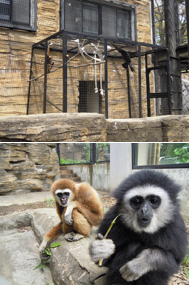
In preparation for their debut, we placed a small cage in the exercise area and let them spend the daytime in it for a month to get used to the environment. At first, the two were quite timid and jumped up at the sound of Common Wolf next door, perhaps confused by the smaller cage, but now they are like completely different people!
Once they got used to the exercise area, their range of movement expanded dramatically, and their movements became much more active. Tete, in particular, is mischievous and surprises not only with his arm movements but also with his jumping ability. Compared to the orangutan next to him, his agility is outstanding, making him seem like a ninja. Mitsu, on the other hand, is showing his gluttonous side, diligently eating weeds.
I expected that they rarely come down to the ground since they live in trees in the wild, but they are often on the ground, and it's quite cute to see them running sideways across the ground. Also, although gibbons are said to rest by sitting on branches, on sunny days they can sometimes be seen lying down on planks to rest.
Just as the exhibit was getting on track, a problem arose. When we tried to return them to their sleeping quarters, Mitsu went back immediately, but Tete wouldn't enter the passageway to his sleeping quarters. After a chase between Tete and animal keeper in the exercise area, he finally returned. Tete didn't seem apologetic at all, and it seems he might have been enjoying the interaction with animal keeper.
Both gibbons are still young and will need another four to five years to reach adulthood at the age of eight. As they grow, Tete's sweet, affectionate calls will fade, and you'll soon hear the distinctive duets of gibbons. Adult gibbons, both male and female, call out to each other to deepen their bond as a pair or to assert their territory. Please come and see these adorable, close-knit gibbons at Tama Zoo.
Top photo: Training in a small cage.
Photo below: Tete (black in the foreground) and Mitsu spending time in the playground.
[Tokuda Yukie, Animal Care and Exhibition Staff, South Tama Zoo]
(June 10, 2011)
|
|
|

|

)