

Breeding of Snow Goose and Bar-headed Goose
August 28, 2026
Tama Zoo keeps several species of geese. I am in charge of six species: Snow Goose, Bar-headed Goose, Greylag Goose, Cackling Goose, Tundra Bean Goose, and Swan Goose. This time, I will tell you about Snow Goose and Bar-headed Goose Goose, which bred this year.
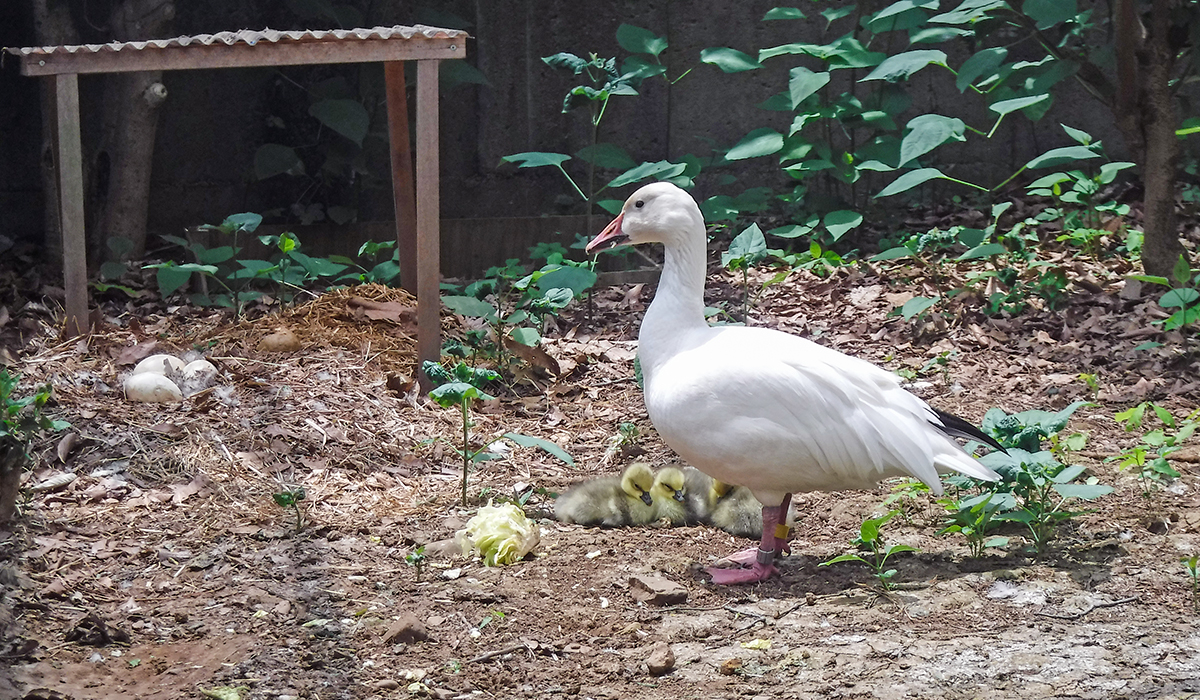
First, regarding Snow Goose, the pair that bred this time consisted of a "black on the left" (male) and a "yellow on the right" (female). Many of the birds kept in the park are identified by colored plastic rings attached to their legs.
"Left Black" refers to individuals with a black ring on their left leg. This pair had bred before, and we thought they were promising again this year, so we kept them in a breeding room. They laid their first egg on April 8, 2026, and continued to lay eggs approximately every other day thereafter, beginning incubation on April 16. The female, Right Yellow, was aggressive during incubation, even pecking at Cackling Goose in the next room through a blind sheet while incubating, but this showed her strong attachment to the eggs, which was promising.
Ultimately, on the 25th day of incubation, three of the seven eggs hatched on the same day. Even if the laying dates are staggered, if incubation begins on the same day, they can hatch almost simultaneously. The three chicks had hearty appetites, eating more and more each day, and growing larger and larger.
After confirming that the chick could eat from the same food dish as the other geese, we began housing it with other birds in the enclosure on July 5th. There was no concern that it would be attacked by the other geese; in fact, it was observed pushing the other geese aside to get to the food, so we actually increased the number of food dishes for the other geese. The chick quickly grew to the same size as the adult birds.
Next are Bar-headed Goose. The pair that bred were "left orange, right blue" (male) and "left light blue, right yellow" (female). This pair had no prior breeding experience and was being kept in the enclosure with other bird species. Amidst this, they began building a nest near another pair of Bar-headed Goose that were incubating eggs, and started incubating on May 1st. Because there was another pair already incubating nearby, the exact date of egg-laying could not be confirmed.
This pair was very wary, and they would stop incubating their eggs and leave the nest just when animal keeper entered the enclosure. So, we took measures to prevent them from leaving the nest by reducing the number of times we entered the enclosure each day. This seemed to work, as they gradually stopped leaving the nest as often. As a result, on June 2nd, chicks hatched from 3 out of 4 eggs.
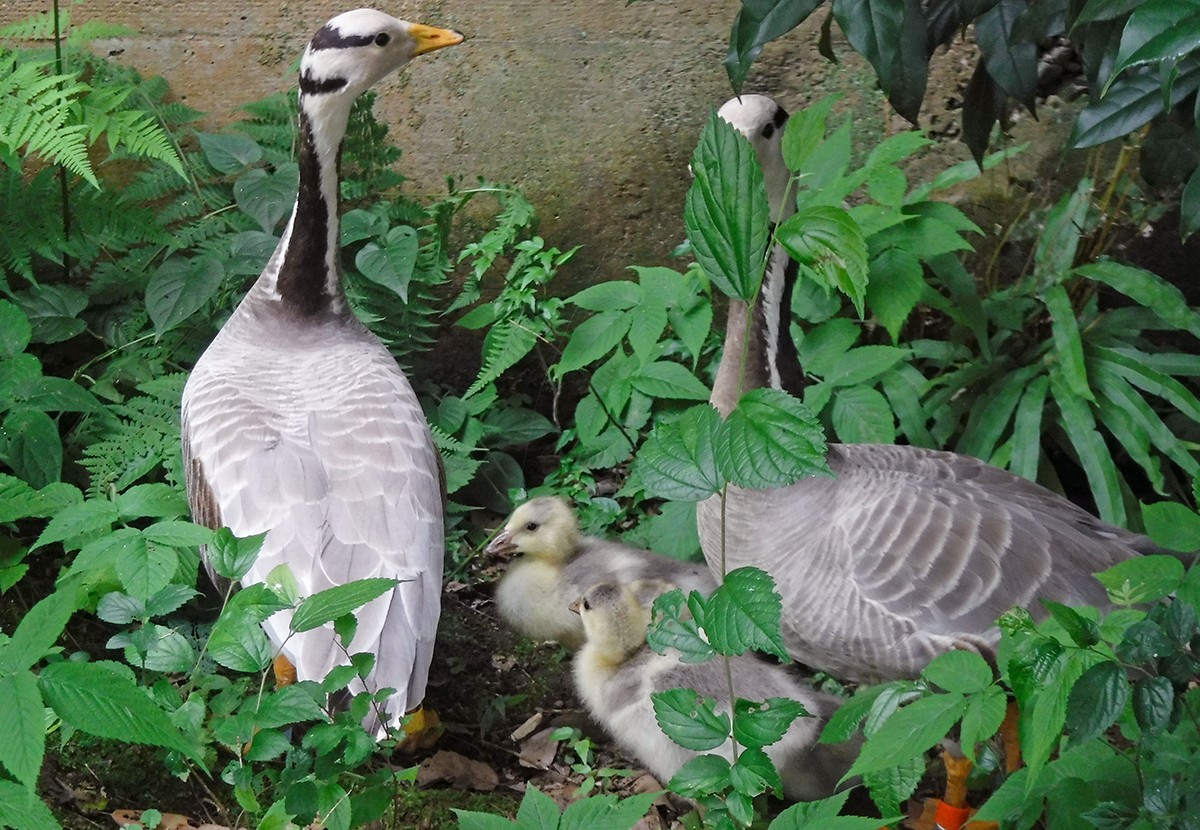
However, because they hatched in a large enclosure, it was difficult to feed the chicks without other geese taking their food, so they were moved to a breeding room similar to those used for Snow Goose. Even after the parents and chicks were separated, the parent birds were very wary, making it difficult to confirm whether they were eating, but we were finally able to confirm it by observing them from a distance with binoculars. Currently, the chicks are still a bit smaller than the parents, and their growth rate seems to be slower compared to Snow Goose.
Building on our experience breeding Snow Goose and Bar-headed Goose this time, we hope to successfully breed the rare Greylag Goose and Tundra Bean Goose during next year's breeding season.
[Tama Zoo]