Tama Zoo houses and exhibits a variety of bird species. In particular, Oriental White Stork is kept in four locations within Asian Zone, and is exhibited in four themed areas: "Coexistence Area," "Matchmaking Area," "Child-rearing Area," and "Stock Area."
This time, I'll introduce the exhibit area next to the egg Tamago Picnic Area which serves as a breeding ground for storks.
Based on the domestic breeding plan, this year a pair from our breeding area was given eggs laid by a pair from another breeding facility to incubate and raise the chicks. This pair is experienced in raising chicks and is skilled at parenting. The chicks hatched from the eggs on May 22nd and 23rd. The chicks stay in the nest for about 70 days, growing by eating the food regurgitated by their parents. Both the male and female storks participate in raising their young. When the chicks had the biggest appetites, the total amount of horse mackerel, smelt, and loaches they were fed exceeded 3 kg. These two chicks successfully fledged on August 8th.
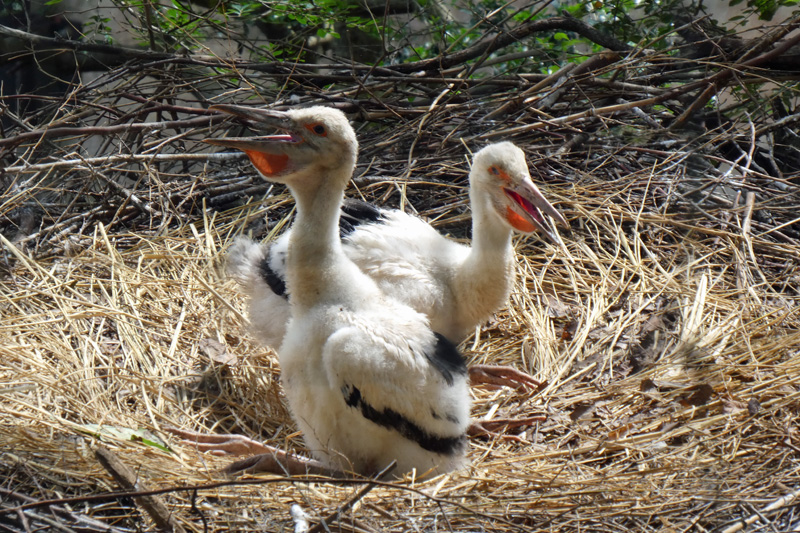
Stork chicks
(Date of photo: June 17, 2022)In fact, this area is also focusing on breeding geese. This year, we have hatched Bar-headed Goose, Greylag Goose, and Snow Goose. The Snow Goose pair that bred this time is a new pair consisting of a male that came to the zoo from Oshima Park last year and a female born Tama Zoo (
see related article here).
Unfortunately, Greylag Goose parents abandoned their chicks, so the chicks are now being raised by animal keeper in a brooding enclosure. Currently, in the "brooding area," you can observe the raising of Bar-headed Goose and Snow Goose.
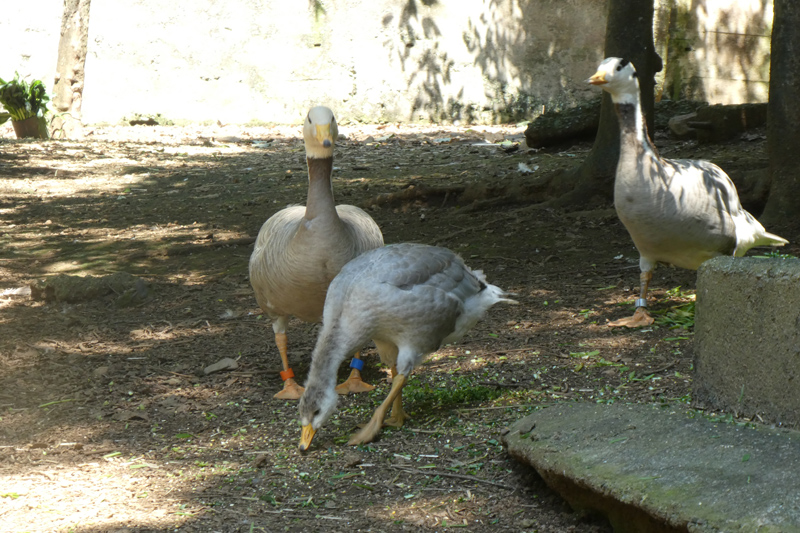
A mother and baby Bar-headed Goose goose (the chick is in the foreground).
(Date of photo: June 25, 2022)
[Video] A family of Snow Goose
(Date of photo: June 25, 2022)Unlike stork chicks, goose chicks can walk with their parents immediately after hatching. The parent geese, both male and female, walk around protecting their chicks from predators. In this respect, they are similar to storks in that the chicks are constantly protected by their parents. When looking for a goose family, first look for geese that have similar feather patterns and are moving in groups of 3-4. The birds that are lighter in color compared to the two parents are the chicks.
This year, the stork and goose rearing area is bustling with activity, like a festival, with lots of chicks. Please come and warmly watch over the chicks as they grow up healthy and strong. It's also interesting to observe and compare the behavior of each parent and offspring.
[Tama Zoo South Garden Animal Care and Exhibition Section 2, Suehiro]
(August 26, 2022)