

Key item for Greater Flamingo breeding
July 31, 2026
This year (2026), Greater Flamingo kept at Tama Zoo have entered their breeding season, and the chicks began hatching in June. As of July 31, 2026, a total of 15 chicks are being raised.
At Tama Zoo, flamingo breeding stalled between 2019 and 2023. Therefore, in the 2024 breeding season, we attempted to induce flamingo egg-laying behavior using artificial eggs. That year, they successfully laid eggs, and they hatched. Since then, we have used artificial eggs every year during the flamingo egg-laying season. This time, I will talk about "artificial eggs," which have become a key item in our flamingo breeding efforts.
Simply put, artificial eggs are "fake eggs." The artificial eggs used at our zoo are made of resin and are designed to resemble real flamingo eggs. The main use of artificial eggs in zoos is for breeding management.
In order to maintain the number of animals within the limited space of a zoo, it is necessary to plan breeding carefully, taking into account the kinship relationships of each species. Therefore, in some cases, breeding may be restricted.
Birds naturally lay new eggs when the ones they've laid are depleted. To prevent this, real eggs are replaced with artificial ones. This way, the birds continue to incubate the artificial eggs without laying any new ones.
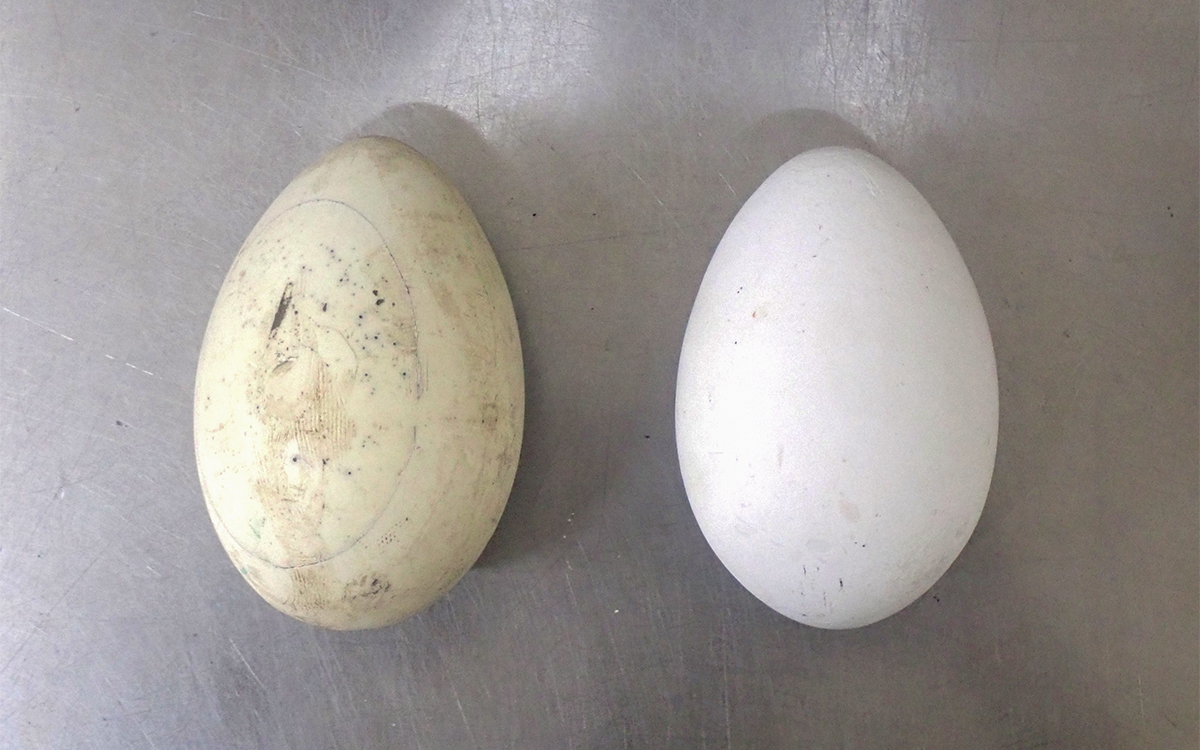
Furthermore, artificial eggs can also be used to stimulate breeding behavior in birds. Placing an artificial egg in a bird's nest stimulates the bird to incubate the eggs, as it senses that there are eggs in the nest.
To give a general explanation of the flamingos at our park, the process is as follows: ① A dummy egg is placed in the nest → ② The dummy egg stimulates the other pair to begin incubating the first egg → ③ Seeing the incubating pair stimulates another pair to lay their own eggs. We believe that flamingo breeding is successful through this process.
At first glance, it might seem that breeding birds is easy, but in reality, various factors such as the animal's health, nutritional status, and living environment are intricately intertwined. Only by inferring the problems from these factors and going through trial and error can one successfully breed birds in captivity.
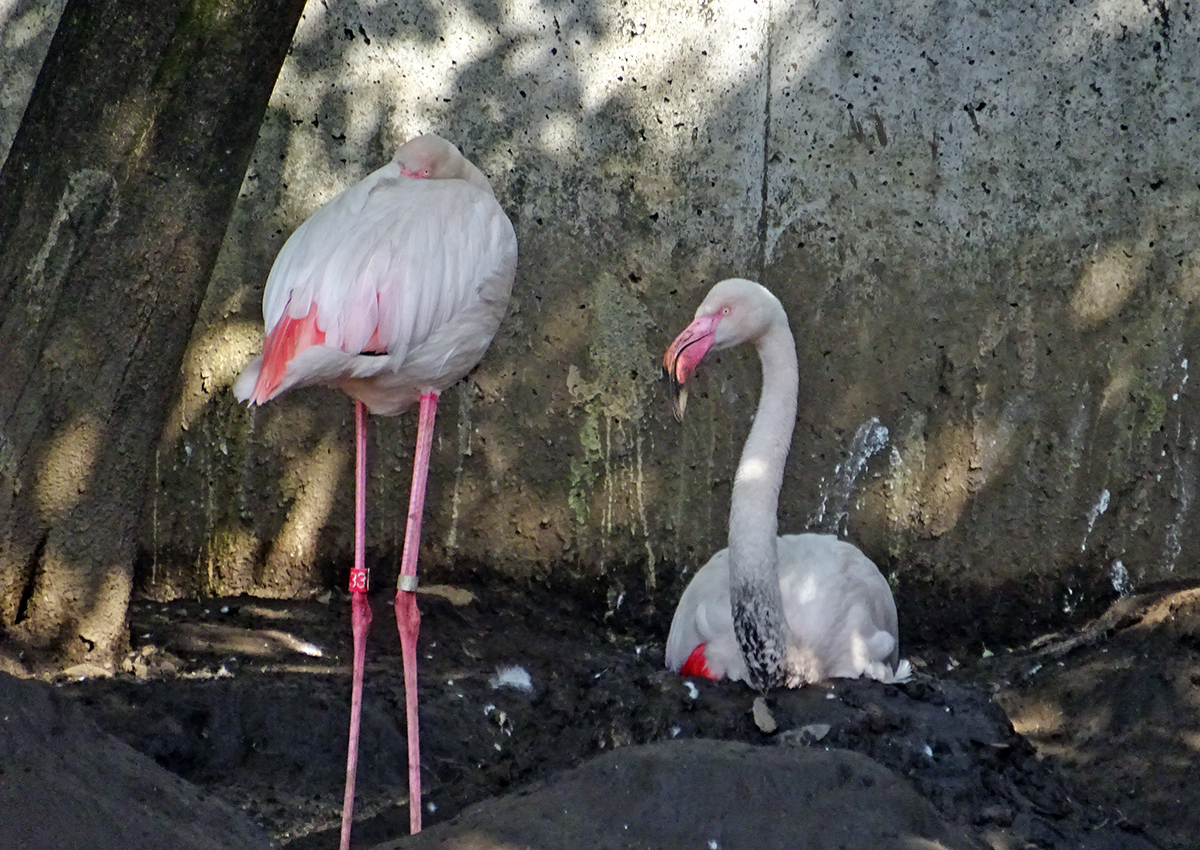
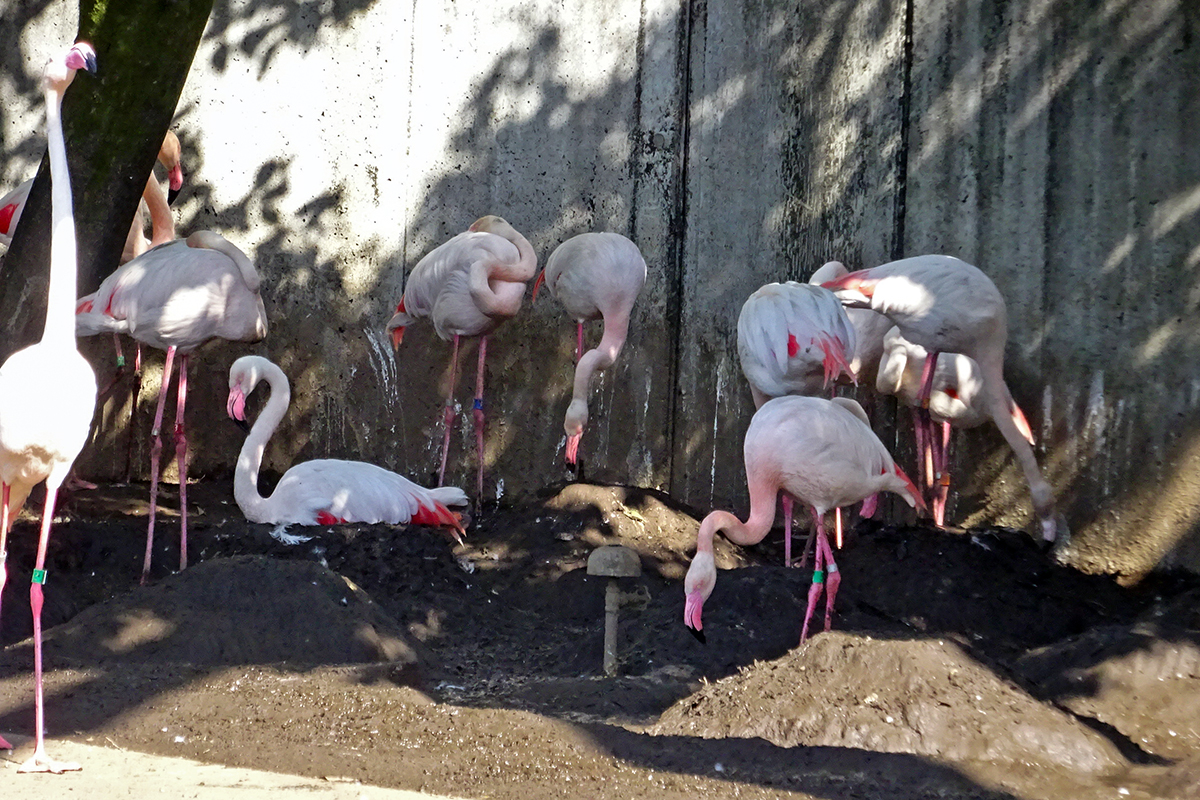
Naturally, flamingos are capable of building nests and laying eggs on their own without the use of artificial eggs. We have found that our flamingos, whose breeding had once stopped, exhibit normal breeding behavior when artificial eggs are used, so it may be possible for them to start breeding without artificial eggs as well, depending on the timing and some other trigger.
We will continue to investigate the cause of this problem, experiment with different approaches, and strive to enable flamingos to reproduce naturally.
[Tama Zoo North Garden Animal Care and Exhibition Staff, Mimatsu]