The greater flamingos at Tama Zoo have been breeding successfully, but last year (2018), their numbers far exceeded the 100 birds considered appropriate given the size of their enclosure. Therefore, we have been managing their breeding to prevent further overbreeding (currently, there are 144 adults).
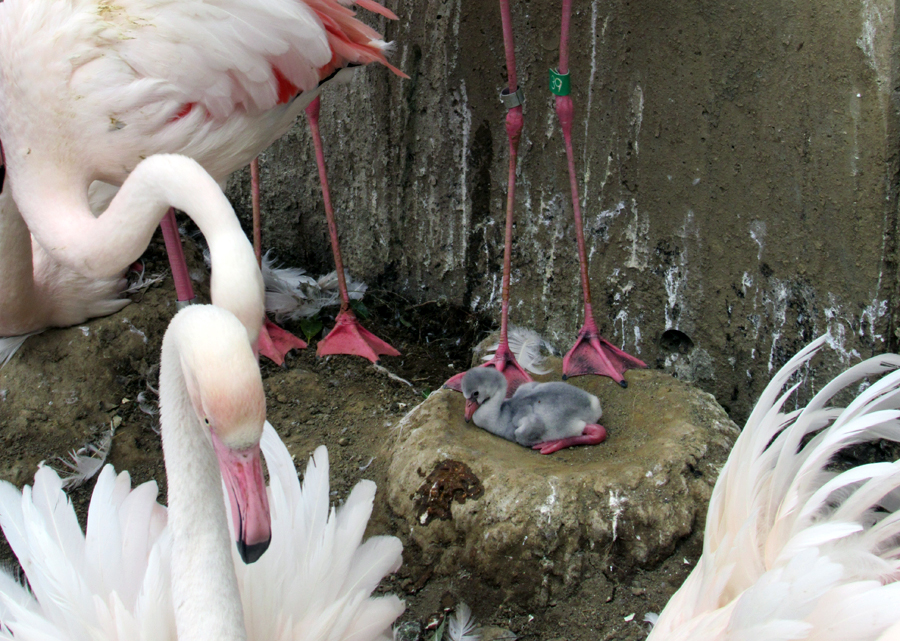
However, since we had to transfer a certain number of individuals to other zoos, we decided to limit the number of eggs hatched to a maximum of five, taking into consideration the continued breeding in the future. Among the many individuals, there are pairs that are valuable from the perspective of genetic diversity. We allowed only these pairs to incubate the eggs, and replaced the other eggs with dummy eggs (fake eggs made of plaster or resin). In July, the eggs hatched, and we have grown to almost our target of four chicks.
By the way, have you ever noticed that flamingos look "dirty and shabby" at this time of year? This is because they neglect preening their feathers when they are busy incubating their eggs.
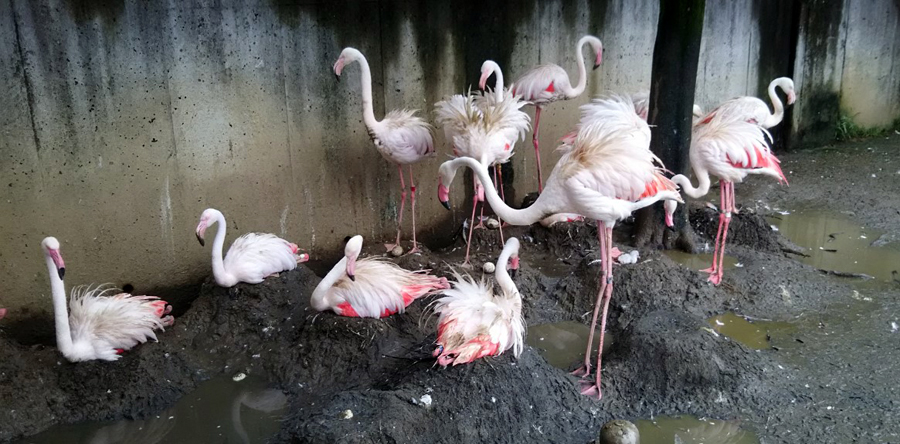
Bird feathers, in their natural state, are easily soiled and do not repel water. By applying an oil secreted from the "uropygial gland" at the base of their tail feathers all over their bodies, they become less prone to soiling and repel water. You might think that oil would be sticky, but in my experience touching the oil secreted by Domestic Duck, it was surprisingly smooth and felt very pleasant to the touch.
If the oil itself becomes dirty, you can wash it off with water and reapply it to maintain a beautiful feather color.
Flamingos take turns incubating the eggs, but they can't keep up with preening their feathers, so the more diligently they incubate the eggs, the more noticeable the dirt becomes. This is especially noticeable because the incubation period coincides with the rainy season. Once they stop incubating the eggs, they quickly become clean again.
The chicks grow very quickly, so the period during which you can see them in their small size is short. Please come and visit Tama Zoo.
[Takahashi Kotaro Tama Zoo, Tama Zoological Park]
(July 19, 2019)