

September 27th: "The Little-Known World of Tiny Creatures 'Meiobenthos'" will be held! (Updated September 7th: Online participants are now being recruited)
event
August 26, 2026 (updated September 7, 2026)
Updated on September 7, 2026:
Registration for "in-person participation" has closed as we have reached full capacity. We are still accepting applications for "online participation" (valid for applications received until September 25, 2026 (Friday). Registration will close once the capacity of 100 participants is reached).
Tokyo Sea Life Park will be hosting a lecture titled "The Little-Known World of Tiny Creatures 'Meiobenthos'" in collaboration with the special exhibition "The Super World of Living Things: National Museum of Nature and Science x Darwin's Coming!" currently being held at the National Museum of Nature and Science.
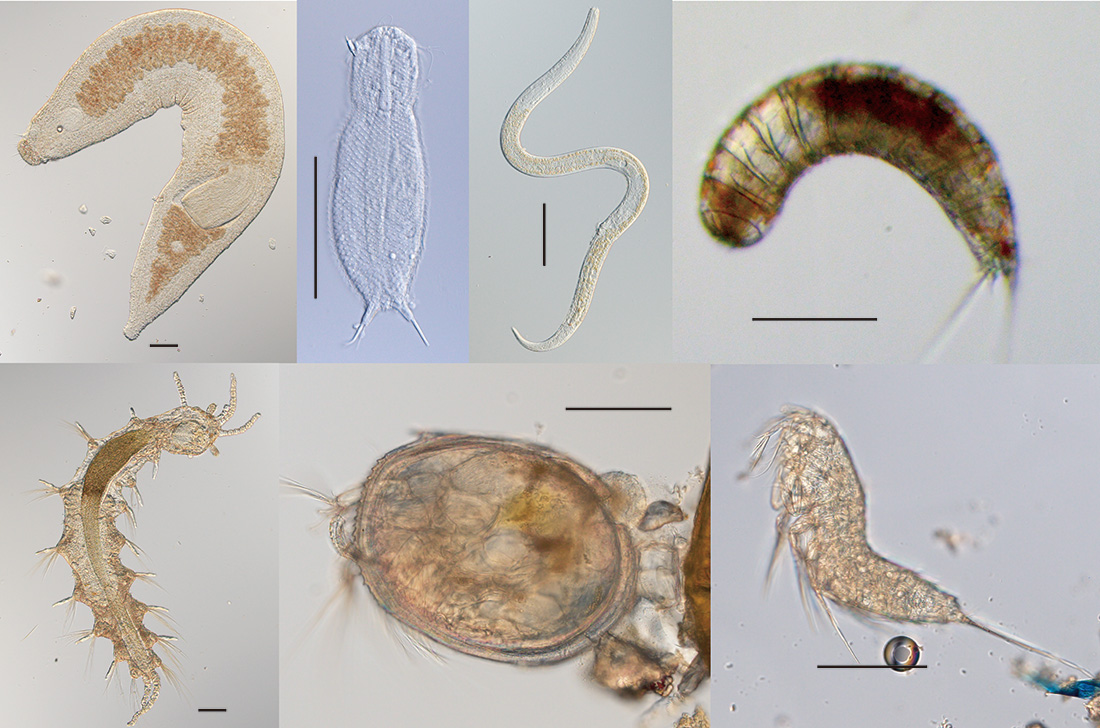
The theme is "meiobenthos," tiny creatures that live at the bottom of the sea and rivers. Most people may have never heard of them, but they actually inhabit many familiar places like sandy beaches. They are so small that they are invisible to the naked eye, and there are few researchers studying them, so we don't know where they live, what kinds they are, or how many there are; they are still very mysterious creatures.
This lecture will feature presentations on Meiobenthos research by researchers from the National Museum of Nature and Science and staff from the aquarium, as well as a behind-the-scenes look at the production process and dedication of the NHK program "Darwin Comes to Town!". There will also be an introduction to the exhibits by the exhibition supervisor of the "Super World of Living Things" exhibition.
Furthermore, after the lecture, we will live-stream a search for Meiobenthos in the sand of the aquarium tanks and provide explanations. If you're curious about things like "What are Meiobenthos?", "How do they live?", or "How can we convey the charm of lesser-known creatures to a wider audience?", please join us!
overview
Sunday, September 27, 2026 13:30-16:00
Lecture Room, 2nd Floor, Main Building Tokyo Sea Life Park
Anyone can participate.
*The content is aimed at upper elementary school students and above.
In-person participation (lecture room): 80 people *Updated 9/7: Applications are now closed as the maximum number of applicants has been reached.
Online: 100 people
*Both require advance registration (first-come, first-served basis).
Free (Participants in the lecture room will also receive free admission to the park)
*Participants are responsible for their own communication costs for online participation.
Content
<Part 1 Lecture>
1:30 PM - 3:30 PM
Lecture 1: "An Introduction to the Highlights of the Special Exhibition 'The Super World of Living Things: National Museum of Nature and Science x Darwin's Coming!'"
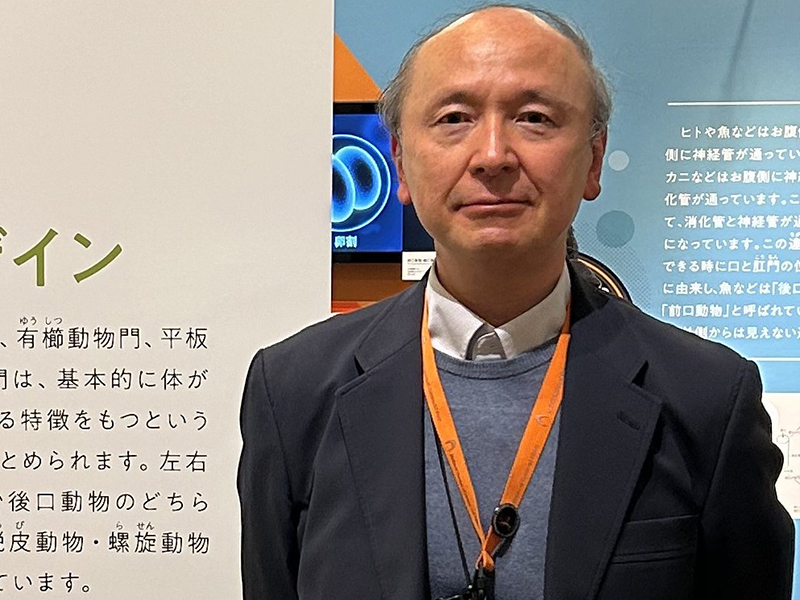
Hiroshi Namikawa (Marine Invertebrate Research Group, Department of Zoology, National Museum of Nature and Science)
The National Museum of Nature and Science is currently hosting a special exhibition, "The Super World of Living Things: National Museum of Nature and Science x Darwin's Coming!". This special exhibition combines specimens, materials, and research results accumulated by the National Museum of Nature and Science and other institutions with valuable footage filmed by the NHK program "Darwin's Coming!", allowing visitors to experience the fascinating world of living things even more vividly. This time, I'd like to talk about the highlights of this special exhibition, including the ingenuity used to showcase small creatures in the exhibits.
Born in 1962. Completed doctoral coursework at Hokkaido University Graduate School of Science in March 1992. Joined the Department of Zoology, National Museum of Nature and Science in April of the same year. Holds a PhD in Science from Hokkaido University in June 1992. Specializes in the biology of hydroids.
Lecture 2: "The vast biodiversity created by tiny organisms – The micro-world in the gaps of sand as seen from meiobenthos"
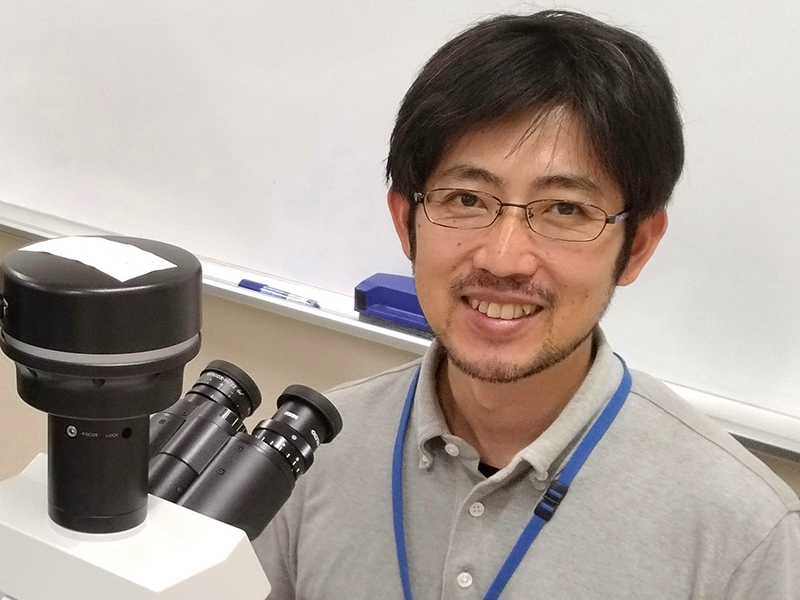
Hiroshi Yamazaki (Marine Invertebrate Research Group, Department of Zoology, National Museum of Nature and Science)
If you scoop up some sand from the sea, you'll find countless tiny creatures called "meiobenthos" living in the gaps between the grains—creatures almost invisible to the naked eye. Meiobenthos include a wide variety of taxonomic groups, such as nematodes, crustaceans, tardigrades, and kinorhynchs, and their forms and lifestyles are incredibly diverse. They not only play an important role in marine ecosystems but are also used as indicators to understand the marine environment. In this lecture, we will introduce what meiobenthos are, peek into the micro-world that unfolds in the gaps of the sand, and convey the fascinating appeal of marine biodiversity—a biodiversity that is often overlooked but continues to be discovered.
Born in Hyogo Prefecture in 1985. After obtaining a PhD in Science from Hokkaido University Graduate School in 2013, he worked as a postdoctoral researcher at Ryukyu University and the Humboldt Museum in Berlin, Germany, before becoming an assistant professor at Kyushu University in 2020. From July 2026, he will be affiliated with the Department of Zoology at the National Museum of Nature and Science. Since his student days, he has consistently engaged in research on biodiversity, classification, and evolution, particularly focusing on meiobenthos, especially kinorhynchates.
Lecture 3: "The battle between males and females unfolding even in the crevices of the sand"
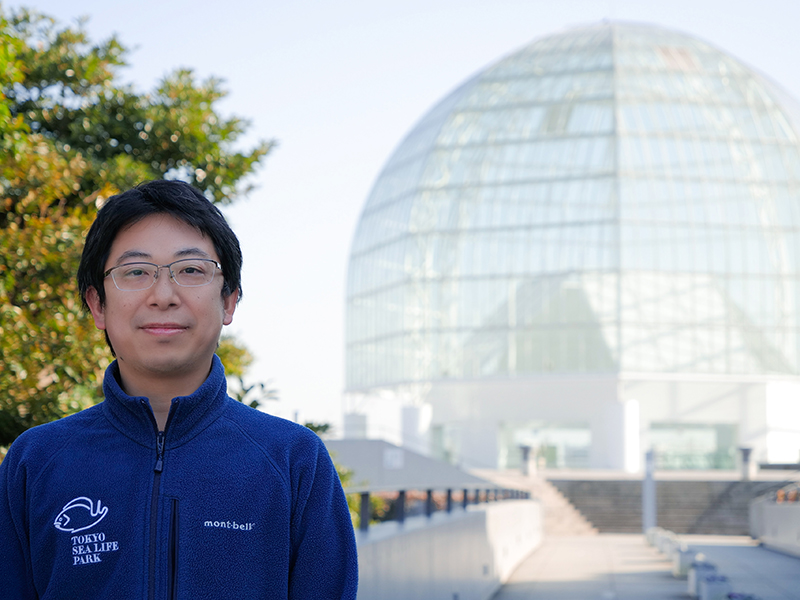
Hayato Tanaka (Education and Outreach Section, Animal Care and Exhibition Division Tokyo Sea Life Park)
The crevices in the sand where meiobenthos live are narrow, dark, and intricate, like a three-dimensional maze. In a place where vision is useless and encounters with other individuals are rare, how do meiobenthos meet and reproduce? In this lecture, using the meiobenthos species "cosmid" as an example, we will discuss the reproductive behavior of males and females that takes place in the crevices of the sand.
Born in Kanagawa Prefecture in 1983. Since 2018, she has been working in the Education and Outreach Section of the Animal Care and Exhibition Department Tokyo Sea Life Park, where she is responsible for explaining aquatic life and conducting educational outreach activities. She holds a PhD in Science. Her major publications include "Shogakukan's NEO POCKET Encyclopedia of Plankton" (co-edited, Shogakukan), "Small and Beautiful Creatures in the Water" (co-edited, Asakura Shoten), and "The Story of Bioluminescent Organisms" (contributing author, Asakura Shoten).
Lecture 4: "Behind the Scenes of the Production of 'Darwin Comes to Town!'"

Fumika Shibagaki (Natural Science Department, Production Center 1, NHK Enterprises)
NHK's nature program "Darwin's Coming!" is celebrating its 20th anniversary this year. Over the more than 950 episodes it has aired, it has focused on many "niche creatures." And this time, we're introducing "Meiobenthos," the smallest subject in the program's history, almost invisible to the naked eye. How can we convey its charm to both nature lovers and those who aren't? We'll talk about the behind-the-scenes story of the program's production, which involved working together with researchers and going through a lot of trial and error.
She joined NHK in 2018. As a director, she was involved in planning a wide range of programs including documentaries, science programs, and sports broadcasts, and since 2022, she has been in charge of "Darwin Comes!". The creatures she has covered include mushrooms, salamanders, midges, newts, and bush mussels.
<Part 2: Observation and Explanation of Meiobenthos>
3:30 PM - 4:00 PM
We will extract Meiobenthos from the sand in the aquarium tanks, examine them under a microscope, and provide explanations. What kind of creatures we find will be a surprise on the day!
How to Apply
Please apply using the registration form as follows.
When applying, please configure your spam filter and email software to allow emails from @tokyo-zoo.net and @kintoneapp.com. This is especially important for those applying from a mobile phone. If you do not receive an automatic reply email after applying, please contact the Education and Outreach Section Tokyo Sea Life Park.
Tokyo Sea Life Park Education and Outreach Section 03-3869-5152 (Main number)
*Reception hours are from 9:30 to 17:00
Both in-person and online participation are valid for submissions received by September 25, 2026 (Friday).
*Updated 9/7: We have reached full capacity and are now closed for "in-person participation".