

Zoo Stock Species and the Red List
Zoo Stock Species and the Red List
Zoo Stock
This indicates that the species is included in the Second Zoo Stock Plan, which was formulated by the Tokyo Metropolitan Government in 2018. The plan sets goals for the next 10 years in three areas: "species conservation," "contribution to wildlife conservation," and "environmental education and conservation awareness." 124 animal species are included.
What is the Red List?
Based on scientific research, this is a list of wildlife classified by rank (category) indicating the degree of risk of extinction.
Livng Things Encyclopedia shows the categories (mainland and islands) assessed by the IUCN (International Union for Conservation of Nature) at the global level, the Ministry of the Environment for Japan, and the Tokyo Metropolitan Government for Tokyo.
The higher the category in each table, the higher the risk of extinction, and CR, EN, and VU are the three categories known as "endangered species." In Tokyo, species that are not at the NT (near threatened) level but are relatively rare are considered "species of concern."
|
IUCN categories |
|
|---|---|
|
EX |
extinction |
|
EW |
Extinction in the wild |
|
CR+EN |
— |
|
CR |
Serious crisis |
|
EN |
crisis |
|
VU |
emergency |
|
NT |
Near Threatened |
|
LC・○ |
Low Concern |
|
DD |
Data shortage |
|
LP |
— |
|
Japan (Ministry of the Environment) Category |
|
|---|---|
|
EX |
extinction |
|
EW |
Extinction in the wild |
|
CR+EN |
Endangered species |
|
CR |
Critically Endangered |
|
EN |
Endangered species |
|
VU |
Endangered species |
|
NT |
Near Threatened |
|
LC・○ |
— |
|
DD |
Lack of information |
|
LP |
Endangered |
|
Tokyo Category |
|
|---|---|
|
EX |
extinction |
|
EW |
Extinction in the wild |
|
CR+EN |
Endangered species |
|
CR |
Critically Endangered |
|
EN |
Endangered species |
|
VU |
Endangered species |
|
NT |
Near Threatened |
|
LC・○ |
Unranked |
|
DD |
Lack of information |
|
LP |
Endangered |
Creatures at Tokyo Sea Life Park
Creatures at Tokyo Sea Life Park
Yellowtail Clownfish
Yellowtail Clownfish
Amphiprion clarkii
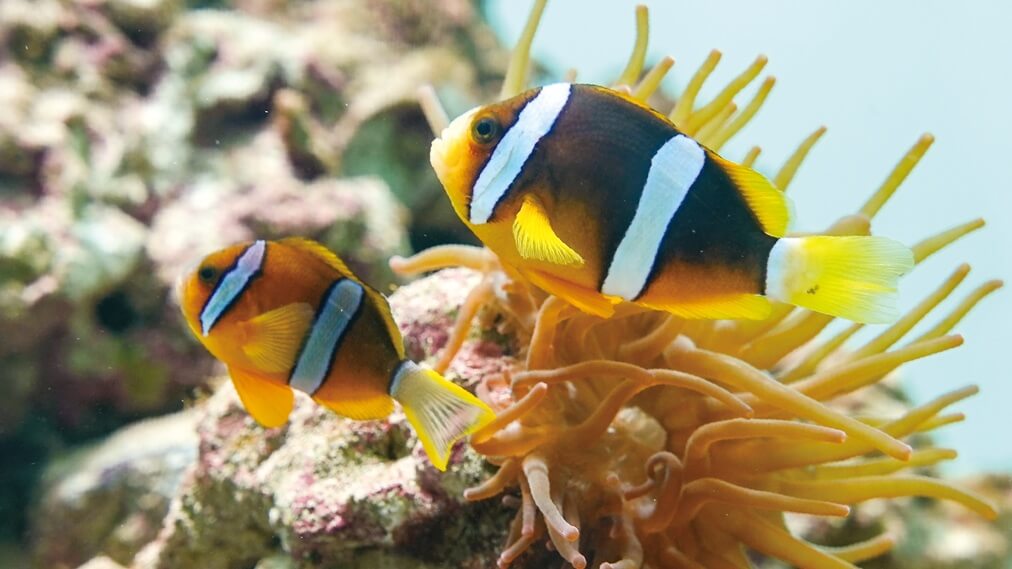
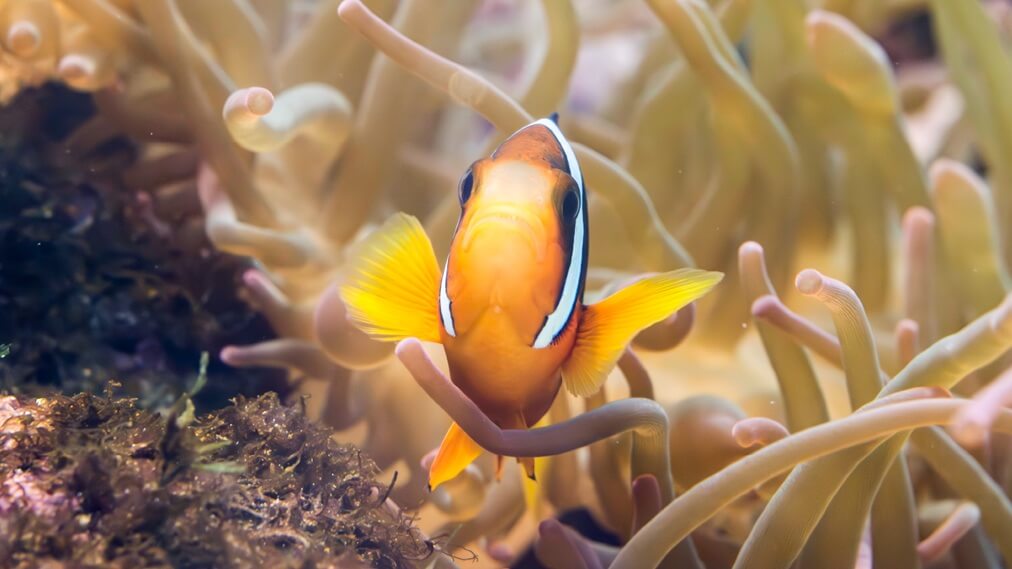
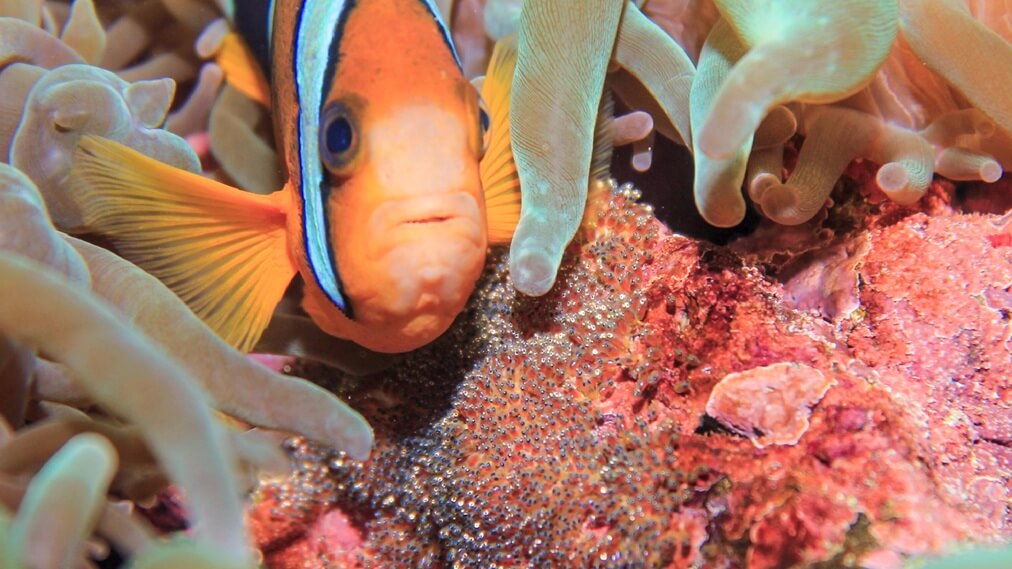
Yellowtail Clownfish live in symbiotic relationships with sea anemones. Other fish cannot approach sea anemones because their tentacles are venomous. Yellowtail Clownfish are immune to the venom because they cover their bodies with a special mucus. They always stay near the safe sea anemones, rest inside them, and lay their eggs nearby. In return, Yellowtail Clownfish drive away predators from the sea anemones and clean their tentacles. It is a mutually beneficial symbiotic relationship.
| classification | Actinopterygii, Perciformes, Pomacentridae |
|---|---|
| English name | Yellowtail Clownfish |
| distribution | South of Chiba Prefecture, Pacific Ocean, Indian Ocean, Persian Gulf |
| Residence | Coastal reefs |
| Size |
Total length: 15cm (maximum)
|
| food | Omnivorous, small crustaceans and attached algae. |
| Red List |
IUCN: LC (Least Concern)
|
Which one is male, which one is female?
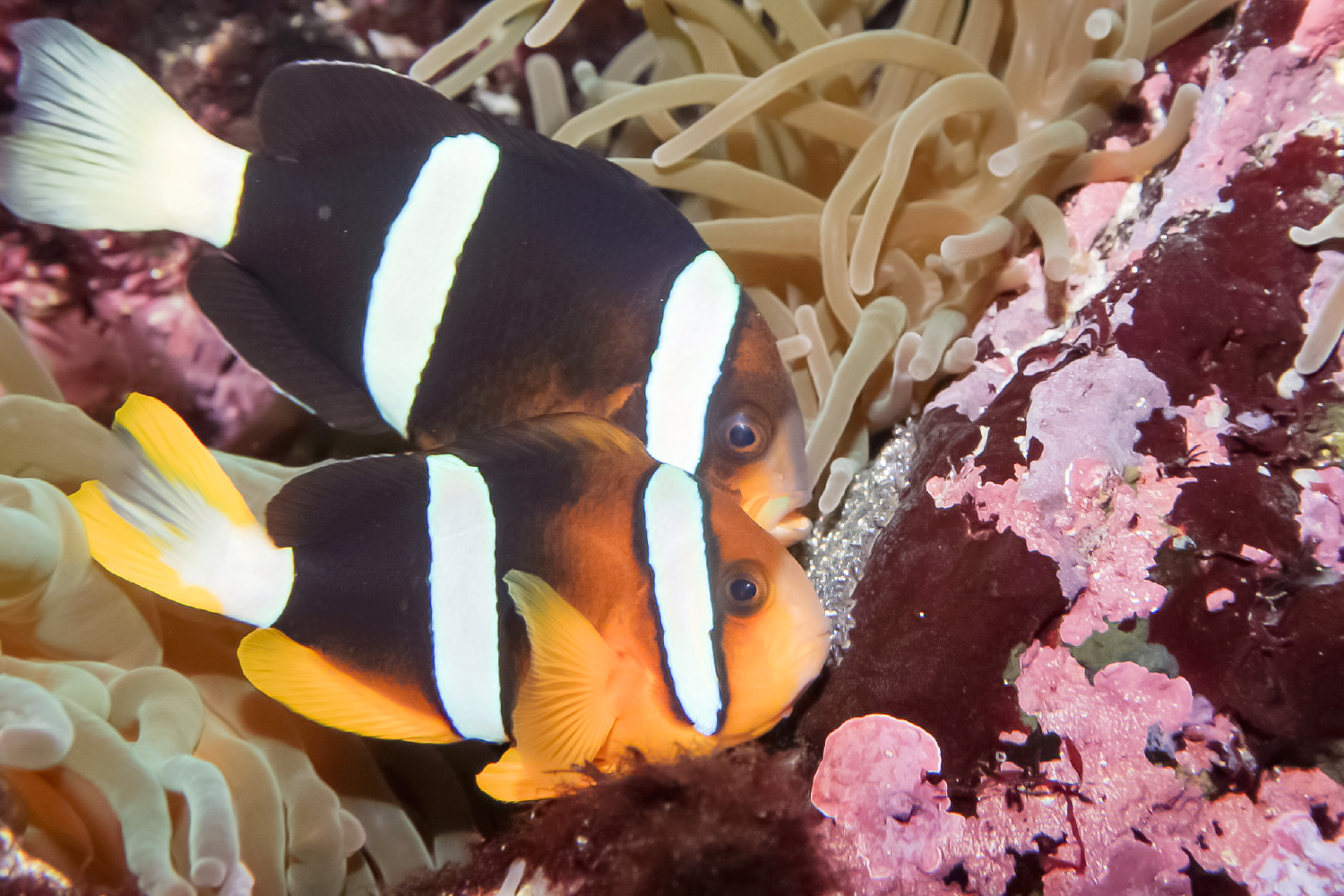
Distinguishing between male and female Yellowtail Clownfish is easy if you know a few key points. The largest fish in the tank is the female, and the next largest is the male. You can also distinguish them by the color of their tail fins: males have yellowish tail fins, and females have whitish ones. When the eggs are being guarded, the males mainly take care of them, so you can infer that the fish near the eggs is the male. Try to tell them apart!
Are you living together as a family?
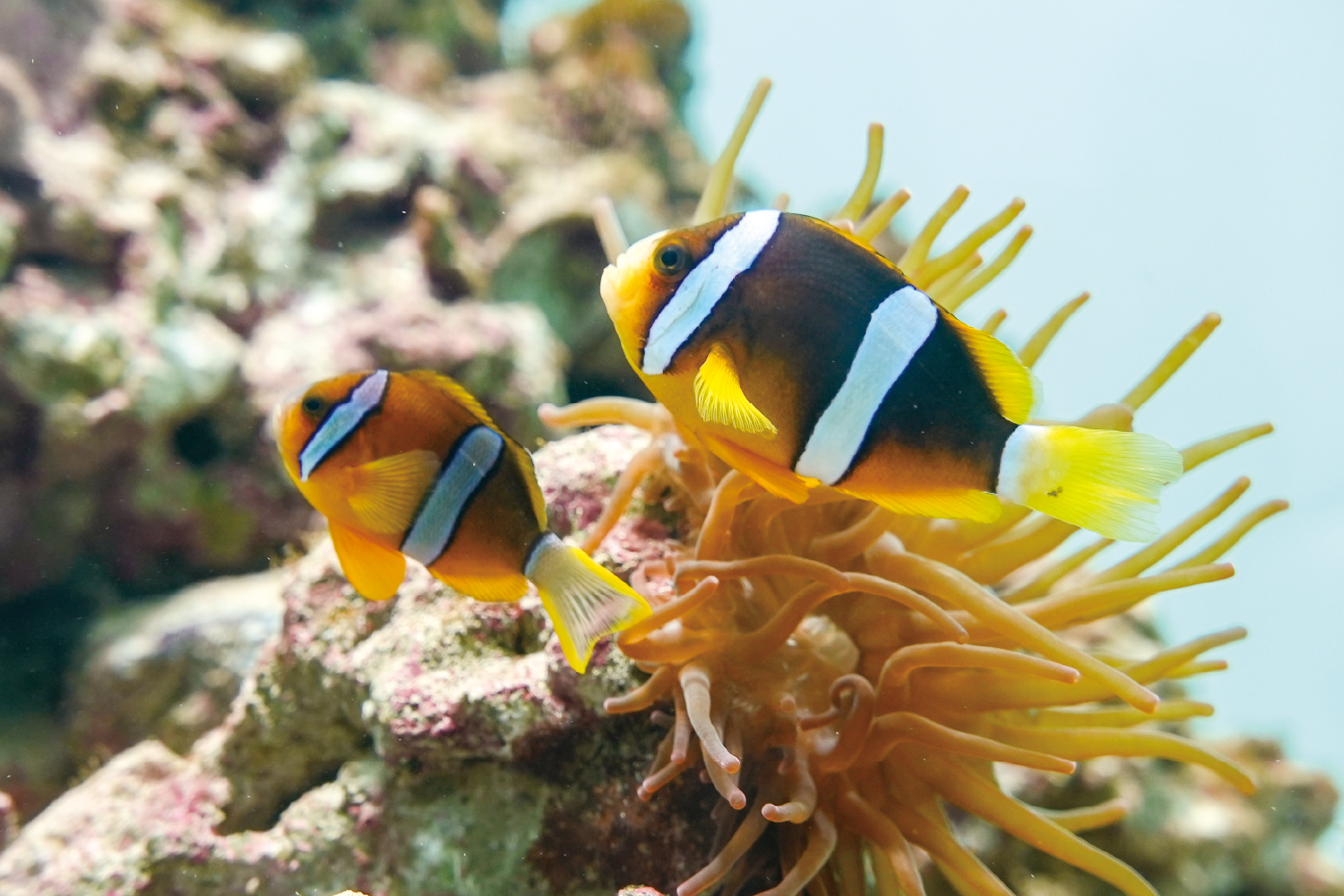
Typically, a single anemone houses one male and one female clownfish pair, along with several juveniles. While they may appear to be parents and offspring, there is no parent-child relationship. Baby Yellowtail Clownfish hatch from eggs and drift in the ocean for a few days. After that, they find an anemone where they can settle and begin a symbiotic relationship. There is no parent-child relationship between them and Yellowtail Clownfish that were already living in that anemone.
Sex change in Yellowtail Clownfish
If you observe Yellowtail Clownfish living with anemones, you'll notice they vary in size. The largest Yellowtail Clownfish is female, the second largest is Yellowtail Clownfish, and the others are either male or female but young. Yellowtail Clownfish undergo "sex change" as a mechanism to ensure they produce more offspring. They are not born with a determined sex, but as they grow, they change sex to become male, and then to female.
For example, in an aquarium, if a female disappears, the male will undergo a sex change and become a female. Then, the largest individual among the offspring living together will mature as a male and form a new pair.