

Zoo Stock Species and the Red List
Zoo Stock Species and the Red List
Zoo Stock
This indicates that the species is included in the Second Zoo Stock Plan, which was formulated by the Tokyo Metropolitan Government in 2018. The plan sets goals for the next 10 years in three areas: "species conservation," "contribution to wildlife conservation," and "environmental education and conservation awareness." 124 animal species are included.
What is the Red List?
Based on scientific research, this is a list of wildlife classified by rank (category) indicating the degree of risk of extinction.
Livng Things Encyclopedia shows the categories (mainland and islands) assessed by the IUCN (International Union for Conservation of Nature) at the global level, the Ministry of the Environment for Japan, and the Tokyo Metropolitan Government for Tokyo.
The higher the category in each table, the higher the risk of extinction, and CR, EN, and VU are the three categories known as "endangered species." In Tokyo, species that are not at the NT (near threatened) level but are relatively rare are considered "species of concern."
|
IUCN categories |
|
|---|---|
|
EX |
extinction |
|
EW |
Extinction in the wild |
|
CR+EN |
— |
|
CR |
Serious crisis |
|
EN |
crisis |
|
VU |
emergency |
|
NT |
Near Threatened |
|
LC・○ |
Low Concern |
|
DD |
Data shortage |
|
LP |
— |
|
Japan (Ministry of the Environment) Category |
|
|---|---|
|
EX |
extinction |
|
EW |
Extinction in the wild |
|
CR+EN |
Endangered species |
|
CR |
Critically Endangered |
|
EN |
Endangered species |
|
VU |
Endangered species |
|
NT |
Near Threatened |
|
LC・○ |
— |
|
DD |
Lack of information |
|
LP |
Endangered |
|
Tokyo Category |
|
|---|---|
|
EX |
extinction |
|
EW |
Extinction in the wild |
|
CR+EN |
Endangered species |
|
CR |
Critically Endangered |
|
EN |
Endangered species |
|
VU |
Endangered species |
|
NT |
Near Threatened |
|
LC・○ |
Unranked |
|
DD |
Lack of information |
|
LP |
Endangered |
Creatures at Tokyo Sea Life Park
Creatures at Tokyo Sea Life Park
Whitemargin Unicornfish
Whitemargin Unicornfish
Naso annulatus
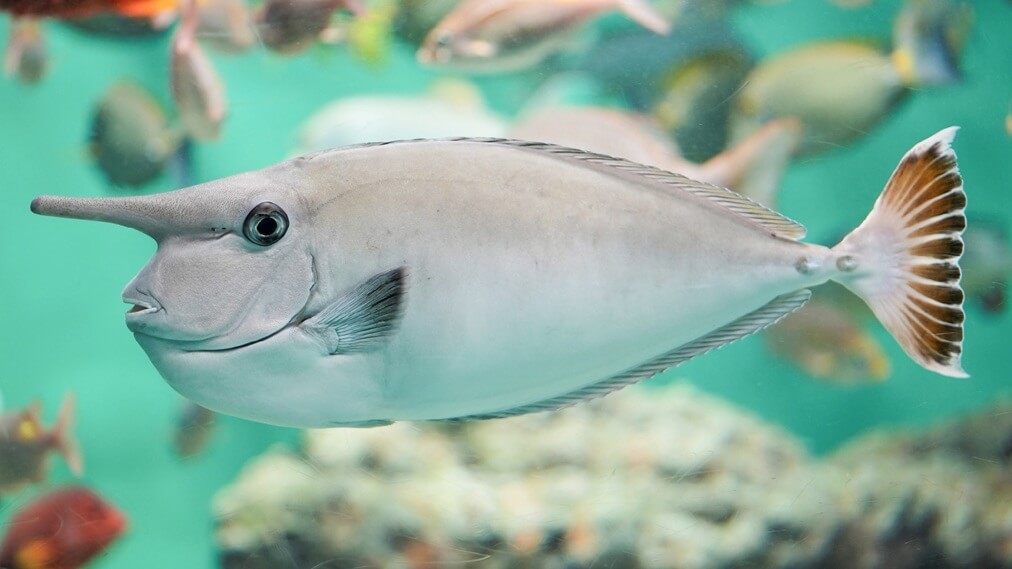
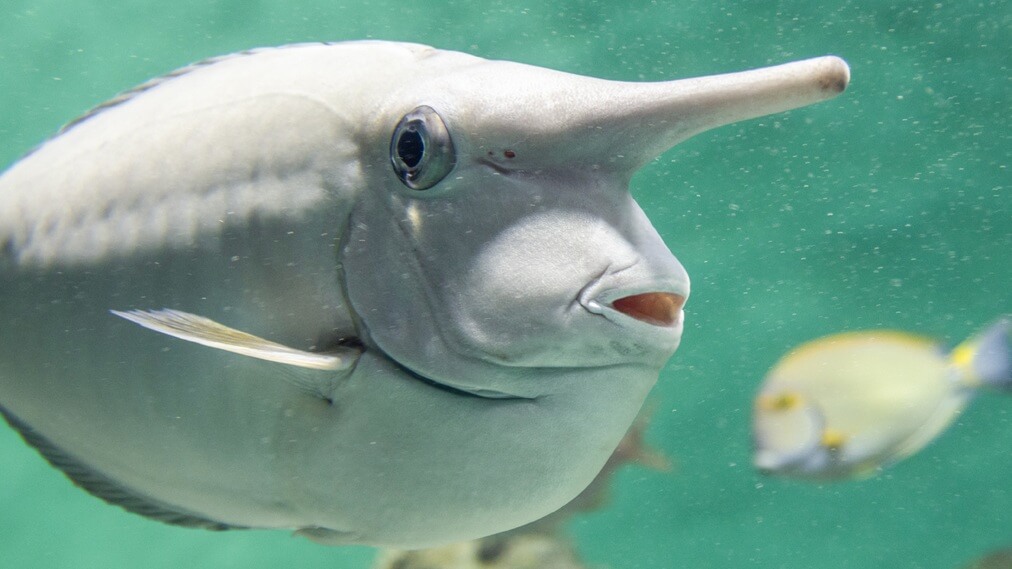
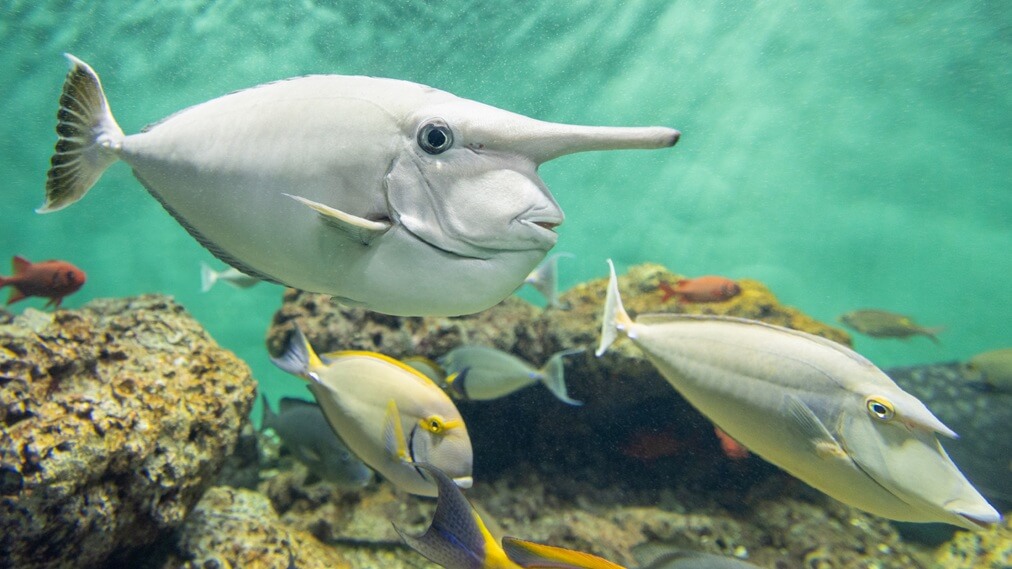
This fish belongs to the surgeonfish family. It has a long, horn-like projection above its eye, which is why it's called the unicorn fish in English. The horn is not present in juveniles and grows longer as the fish matures. The purpose of this long horn is not well understood.
| classification | Actinopterygii, Perciformes, Scyllidae |
|---|---|
| English name | Whitemargin Unicornfish |
| distribution | Pacific Ocean south of Sagami Bay, Indian Ocean |
| Residence | Coral reefs and reefs |
| Size |
Total length: 50cm
|
| food | plankton |
| Red List |
IUCN: LC (Least Concern)
|
Spiny fish
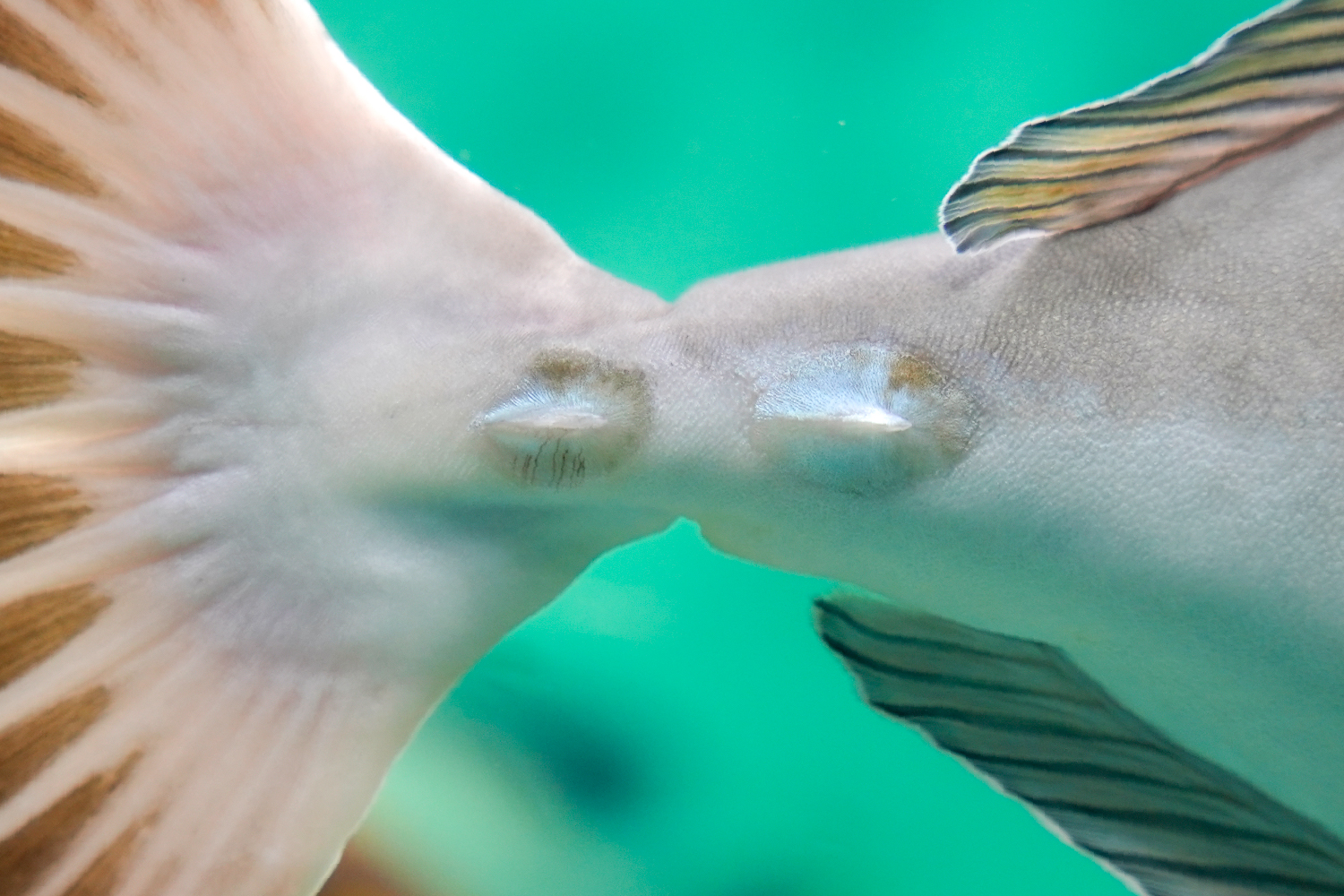
Let's take a closer look at the base of Whitemargin Unicornfish 's tail fin. There are two protrusions. These protrusions are as sharp as knives and can cut you instantly if you touch them. The unicornfish uses these spines to defend itself when it is about to be attacked by other creatures or when it is fighting over territory with other members of its species.