

Zoo Stock Species and the Red List
Zoo Stock Species and the Red List
Zoo Stock
This indicates that the species is included in the Second Zoo Stock Plan, which was formulated by the Tokyo Metropolitan Government in 2018. The plan sets goals for the next 10 years in three areas: "species conservation," "contribution to wildlife conservation," and "environmental education and conservation awareness." 124 animal species are included.
What is the Red List?
Based on scientific research, this is a list of wildlife classified by rank (category) indicating the degree of risk of extinction.
Livng Things Encyclopedia shows the categories (mainland and islands) assessed by the IUCN (International Union for Conservation of Nature) at the global level, the Ministry of the Environment for Japan, and the Tokyo Metropolitan Government for Tokyo.
The higher the category in each table, the higher the risk of extinction, and CR, EN, and VU are the three categories known as "endangered species." In Tokyo, species that are not at the NT (near threatened) level but are relatively rare are considered "species of concern."
|
IUCN categories |
|
|---|---|
|
EX |
extinction |
|
EW |
Extinction in the wild |
|
CR+EN |
— |
|
CR |
Serious crisis |
|
EN |
crisis |
|
VU |
emergency |
|
NT |
Near Threatened |
|
LC・○ |
Low Concern |
|
DD |
Data shortage |
|
LP |
— |
|
Japan (Ministry of the Environment) Category |
|
|---|---|
|
EX |
extinction |
|
EW |
Extinction in the wild |
|
CR+EN |
Endangered species |
|
CR |
Critically Endangered |
|
EN |
Endangered species |
|
VU |
Endangered species |
|
NT |
Near Threatened |
|
LC・○ |
— |
|
DD |
Lack of information |
|
LP |
Endangered |
|
Tokyo Category |
|
|---|---|
|
EX |
extinction |
|
EW |
Extinction in the wild |
|
CR+EN |
Endangered species |
|
CR |
Critically Endangered |
|
EN |
Endangered species |
|
VU |
Endangered species |
|
NT |
Near Threatened |
|
LC・○ |
Unranked |
|
DD |
Lack of information |
|
LP |
Endangered |
Creatures at Tokyo Sea Life Park
Creatures at Tokyo Sea Life Park
Weedy Seadragon
Weedy Seadragon
Phyllopteryx taeniolatus
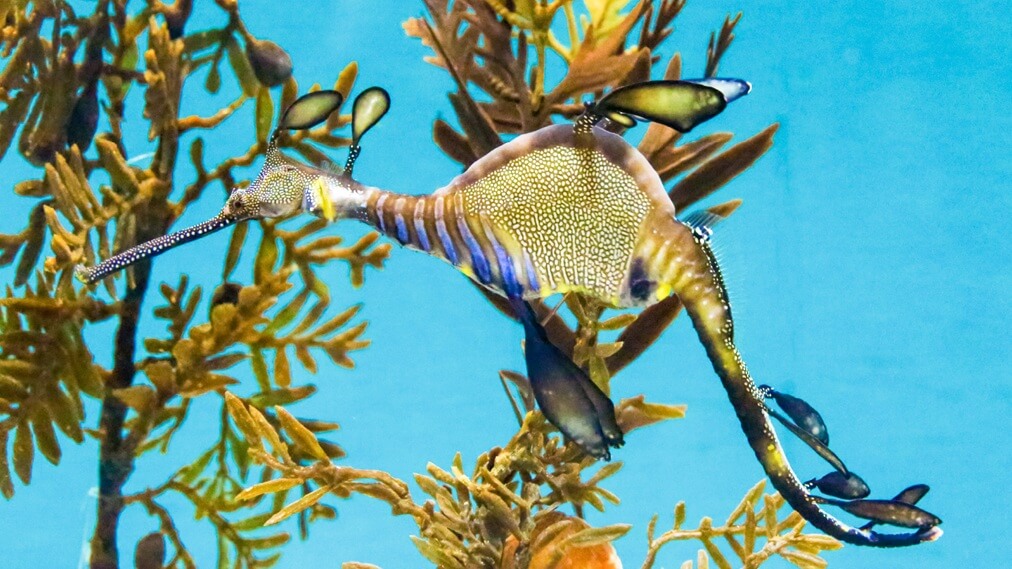
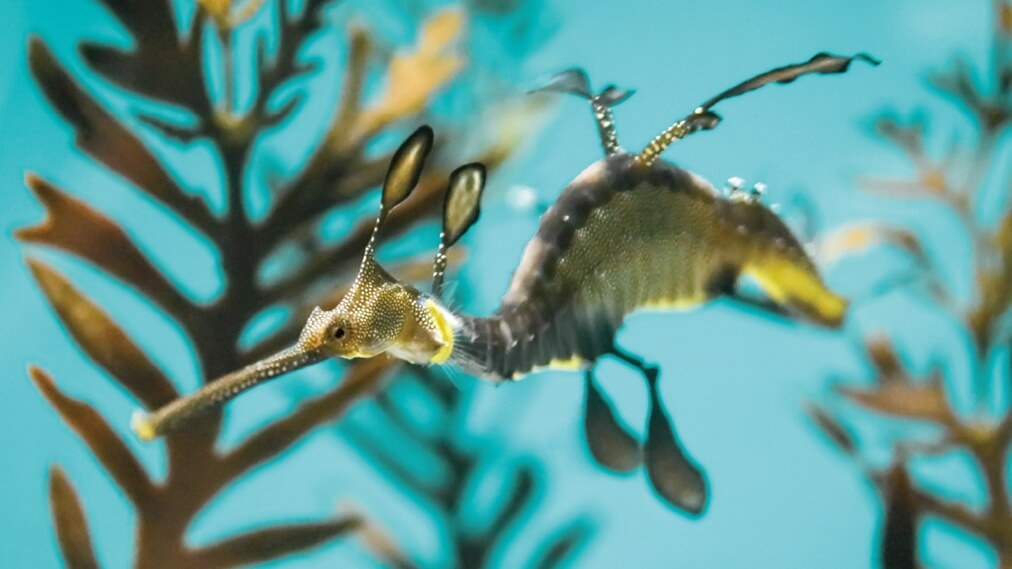
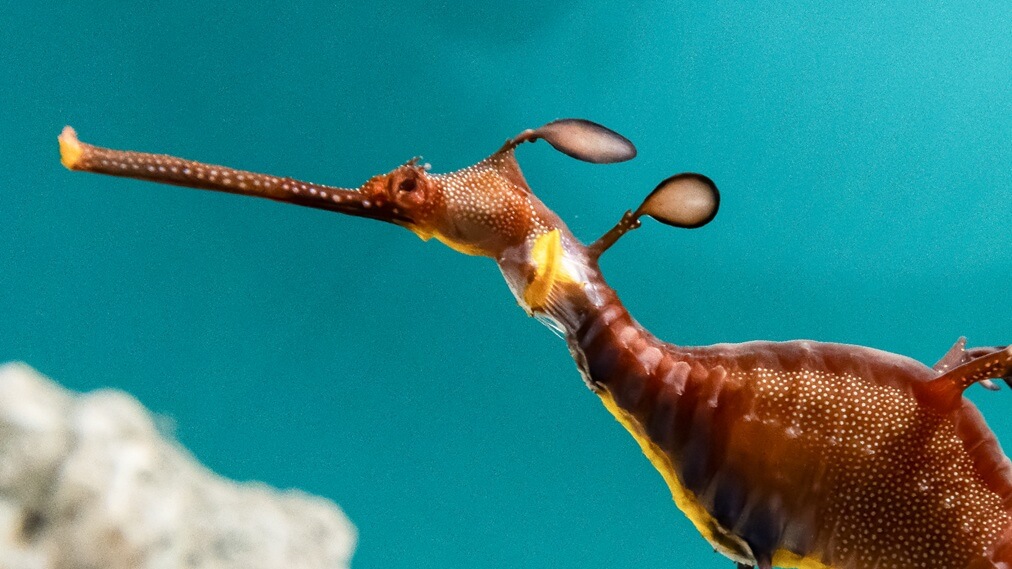
It is a member of the pipefish family. It has leaf-shaped flap-like structures all over its body. These are not fins, but modified skin called flaps. The way it swims about makes it look like torn pieces of seaweed. It eats by sucking in small creatures with its long, thin mouth.
| classification | Actinopterygii, Syngnathidae |
|---|---|
| English name | Weedy Seadragon |
| distribution | Coastal areas of southern Australia and around Kawakawa |
| Residence | Sandy areas and rocky reefs where seaweed and seaweed grow |
| Size |
Total length: 30cm
|
| food | Small fish and crustaceans |
| Red List |
IUCN: VU (Very)
|
Which is the real fin?
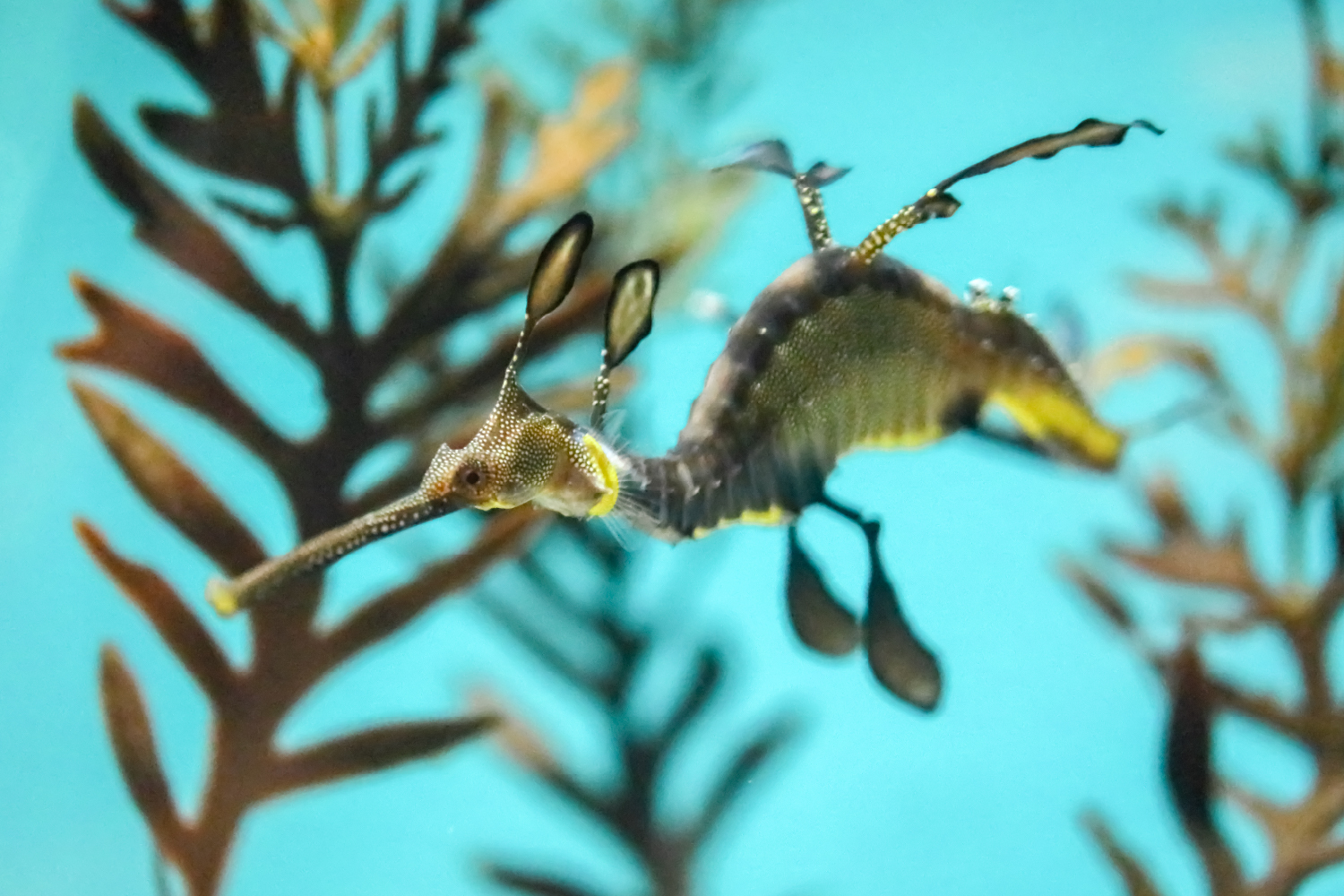
The leaf-like parts sticking out from the body of Weedy Seadragon are called skin flaps, and are not fins but modified skin. So where are the real fins? In fact, the real fins are transparent and hard to see because they disguise themselves as seaweed. If you look closely, you should be able to see the pectoral and dorsal fins moving. Let's try to find them.
By the time you realize it, it's already too late
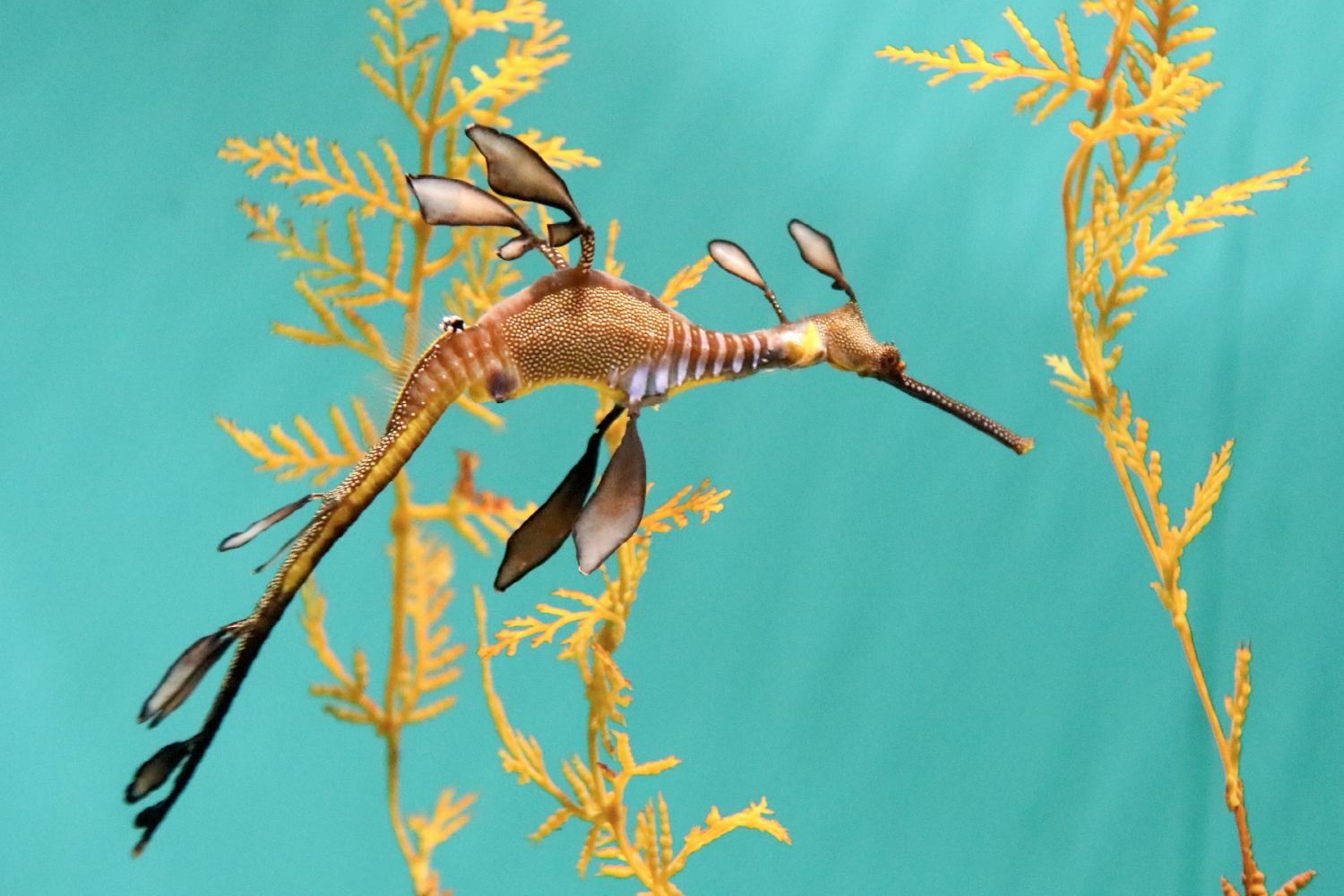
Weedy Seadragon looks like a piece of seaweed and floats about. Its mouth is long and thin, shaped like a straw. It pretends to be a piece of seaweed and sneaks up on small creatures, sucking them in with its mouth and eating them. It pretends to be harmless, lulling its prey into a false sense of security, and by the time its prey realizes it, it's already too late.
Sea Dragon is a good father!?
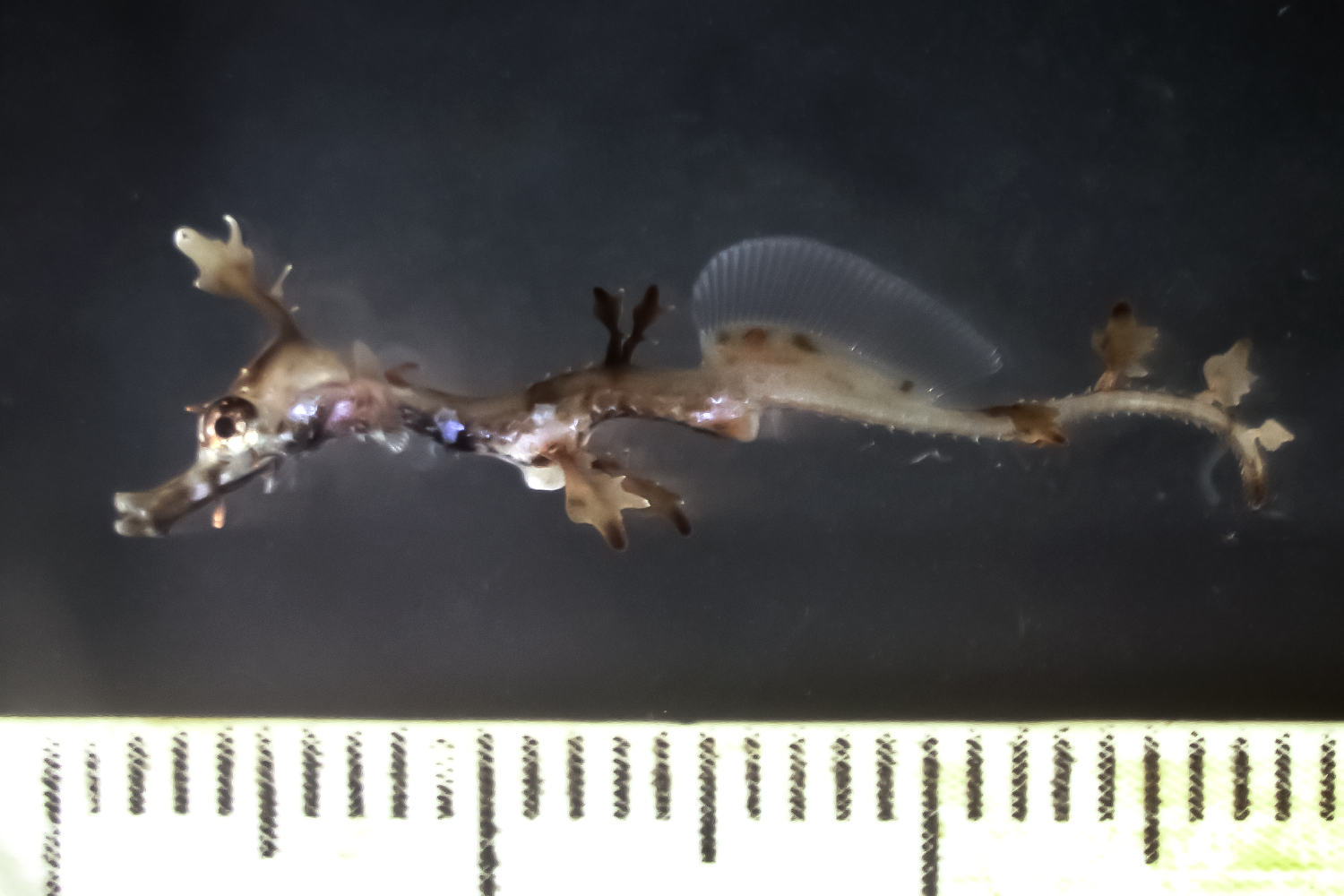
During the breeding season, the underside of the male Weedy Seadragon 's tail swells up, where the female lays her eggs. The male then guards the eggs for just under two months until they hatch. In 2019, Tokyo Sea Life Park became the first in Japan to successfully breed them in an aquarium. Newly hatched Weedy Seadragon are just under 3cm in length. They have skin flaps like their parents from birth, and are able to feed themselves.