

Zoo Stock Species and the Red List
Zoo Stock Species and the Red List
Zoo Stock
This indicates that the species is included in the Second Zoo Stock Plan, which was formulated by the Tokyo Metropolitan Government in 2018. The plan sets goals for the next 10 years in three areas: "species conservation," "contribution to wildlife conservation," and "environmental education and conservation awareness." 124 animal species are included.
What is the Red List?
Based on scientific research, this is a list of wildlife classified by rank (category) indicating the degree of risk of extinction.
Livng Things Encyclopedia shows the categories (mainland and islands) assessed by the IUCN (International Union for Conservation of Nature) at the global level, the Ministry of the Environment for Japan, and the Tokyo Metropolitan Government for Tokyo.
The higher the category in each table, the higher the risk of extinction, and CR, EN, and VU are the three categories known as "endangered species." In Tokyo, species that are not at the NT (near threatened) level but are relatively rare are considered "species of concern."
|
IUCN categories |
|
|---|---|
|
EX |
extinction |
|
EW |
Extinction in the wild |
|
CR+EN |
— |
|
CR |
Serious crisis |
|
EN |
crisis |
|
VU |
emergency |
|
NT |
Near Threatened |
|
LC・○ |
Low Concern |
|
DD |
Data shortage |
|
LP |
— |
|
Japan (Ministry of the Environment) Category |
|
|---|---|
|
EX |
extinction |
|
EW |
Extinction in the wild |
|
CR+EN |
Endangered species |
|
CR |
Critically Endangered |
|
EN |
Endangered species |
|
VU |
Endangered species |
|
NT |
Near Threatened |
|
LC・○ |
— |
|
DD |
Lack of information |
|
LP |
Endangered |
|
Tokyo Category |
|
|---|---|
|
EX |
extinction |
|
EW |
Extinction in the wild |
|
CR+EN |
Endangered species |
|
CR |
Critically Endangered |
|
EN |
Endangered species |
|
VU |
Endangered species |
|
NT |
Near Threatened |
|
LC・○ |
Unranked |
|
DD |
Lack of information |
|
LP |
Endangered |
Creatures at Tokyo Sea Life Park
Creatures at Tokyo Sea Life Park
Valentin's Sharpnose Puffer
Valentin's Sharpnose Puffer
Canthigaster valentini
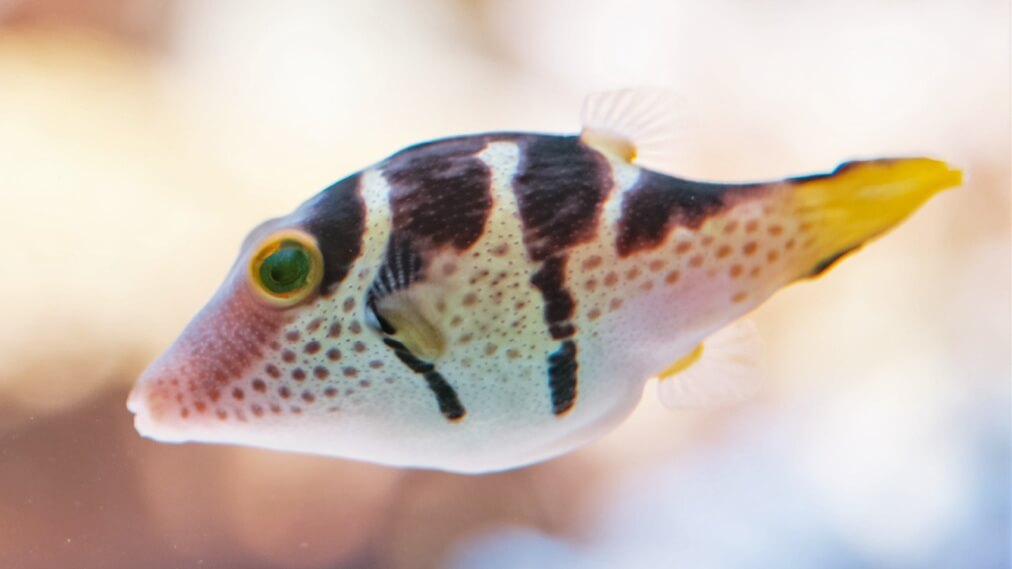
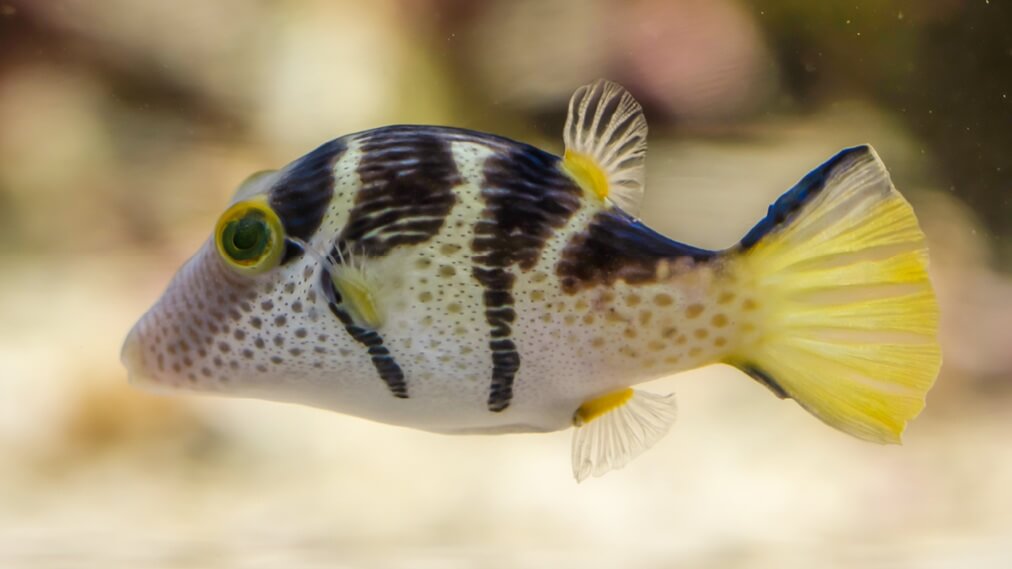
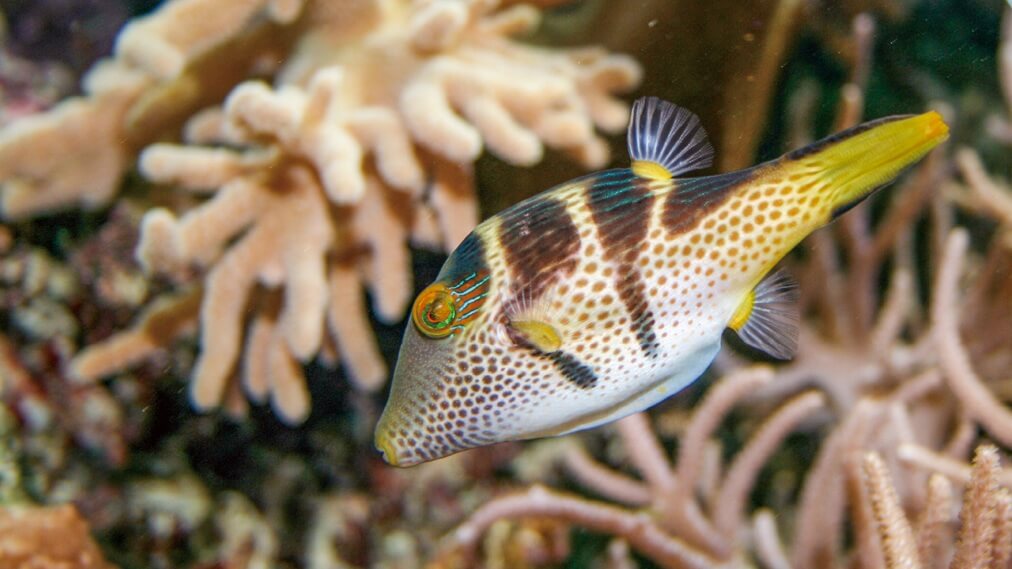
This is a type of pufferfish that lives in coral reefs. It swims freely among coral branches and rocks by undulating its dorsal and anal fins. It uses its small, beak-shaped teeth to nibble on small creatures such as small crabs and shrimp, as well as seaweed. Like other pufferfish, it has toxins in its body to protect itself from predators.
| classification | Actinopterygii, Tetraodontiformes, Tetraodontiidae |
|---|---|
| English name | Valentin's Sharpnose Puffer |
| distribution | Tropical and subtropical waters of the Pacific Ocean and the Indian Ocean south of central Honshu |
| Residence | Coral reefs |
| Size |
Total length: 10cm
|
| food | Small animals such as small crabs and shrimp, and seaweed |
| Red List |
IUCN: LC (Least Concern)
|
A fish that pretends to be Valentin's Sharpnose Puffer
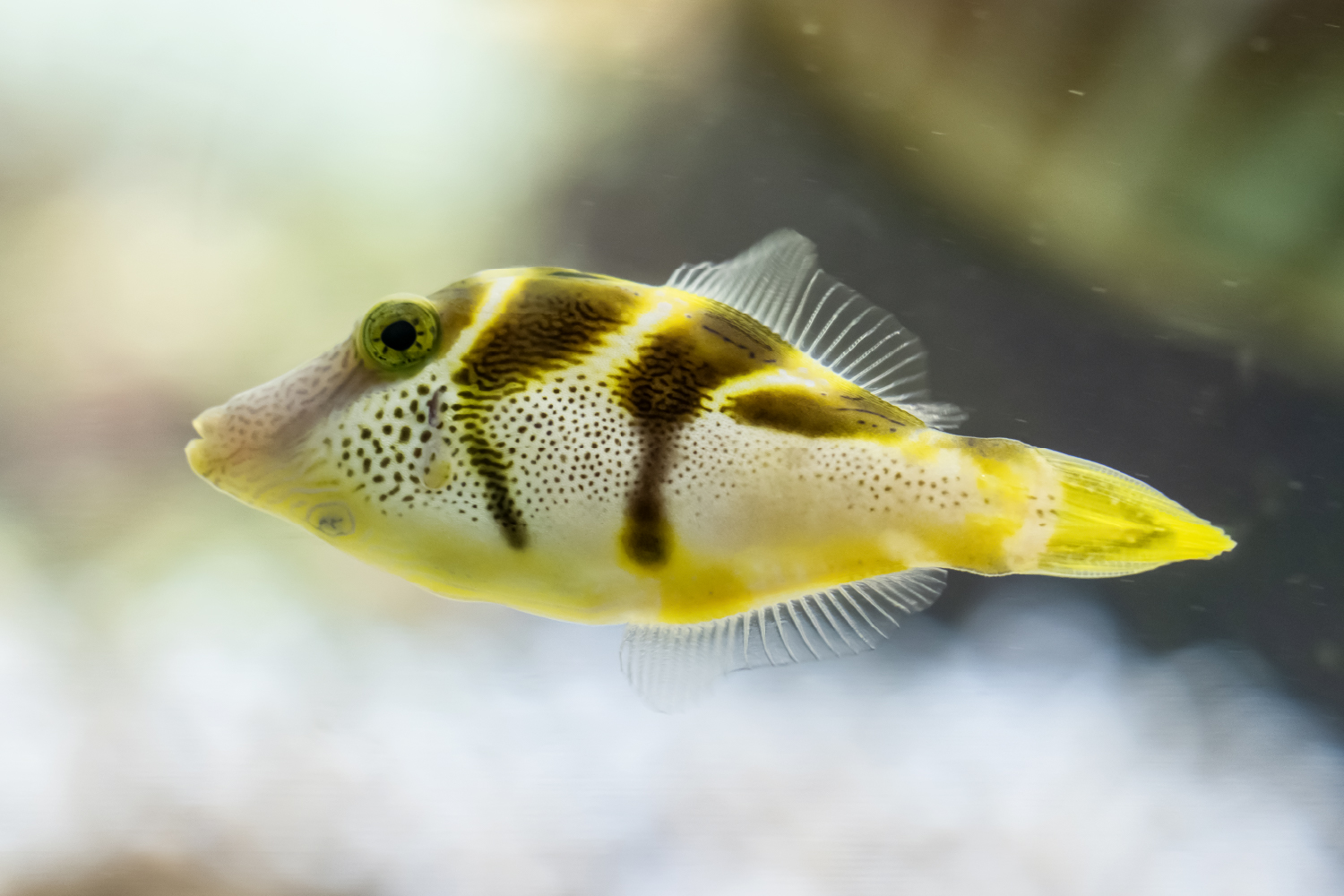
There is a fish that looks very similar to Valentin's Sharpnose Puffer surgeonfish. The sawtooth surgeonfish is not poisonous and is thought to protect itself from predators by mimicking the poisonous Valentin's Sharpnose Puffer. It is very good at camouflage and it is difficult to distinguish it by pattern or body shape alone. The key to distinguishing them is the fins. The sawtooth surgeonfish has large fins that cover half of its body on its back and the back of its belly, but Valentin's Sharpnose Puffer 's fins are much smaller than those of the sawtooth surgeonfish.