

Zoo Stock Species and the Red List
Zoo Stock Species and the Red List
Zoo Stock

This indicates that the species is included in the Second Zoo Stock Plan, which was formulated by the Tokyo Metropolitan Government in 2018. The plan sets goals for the next 10 years in three areas: "species conservation," "contribution to wildlife conservation," and "environmental education and conservation awareness." 124 animal species are included.
What is the Red List?
Based on scientific research, this is a list of wildlife classified by rank (category) indicating the degree of risk of extinction.
Livng Things Encyclopedia shows the categories (mainland and islands) assessed by the IUCN (International Union for Conservation of Nature) at the global level, the Ministry of the Environment for Japan, and the Tokyo Metropolitan Government for Tokyo.
The higher the category in each table, the higher the risk of extinction, and CR, EN, and VU are the three categories known as "endangered species." In Tokyo, species that are not at the NT (near threatened) level but are relatively rare are considered "species of concern."
|
IUCN categories |
|
|---|---|
|
EX |
extinction |
|
EW |
Extinction in the wild |
|
CR+EN |
— |
|
CR |
Serious crisis |
|
EN |
crisis |
|
VU |
emergency |
|
NT |
Near Threatened |
|
LC・○ |
Low Concern |
|
DD |
Data shortage |
|
LP |
— |
|
Japan (Ministry of the Environment) Category |
|
|---|---|
|
EX |
extinction |
|
EW |
Extinction in the wild |
|
CR+EN |
Endangered species |
|
CR |
Critically Endangered |
|
EN |
Endangered species |
|
VU |
Endangered species |
|
NT |
Near Threatened |
|
LC・○ |
— |
|
DD |
Lack of information |
|
LP |
Endangered |
|
Tokyo Category |
|
|---|---|
|
EX |
extinction |
|
EW |
Extinction in the wild |
|
CR+EN |
Endangered species |
|
CR |
Critically Endangered |
|
EN |
Endangered species |
|
VU |
Endangered species |
|
NT |
Near Threatened |
|
LC・○ |
Unranked |
|
DD |
Lack of information |
|
LP |
Endangered |
Creatures at Tokyo Sea Life Park
Creatures at Tokyo Sea Life Park
Tufted Puffin
Tufted Puffin
Fratercula cirrhata
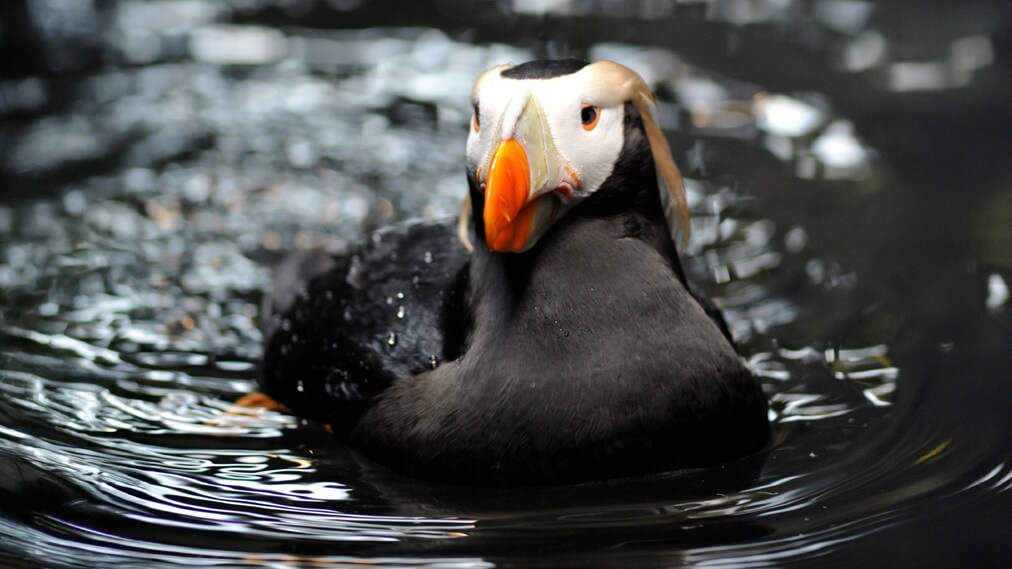
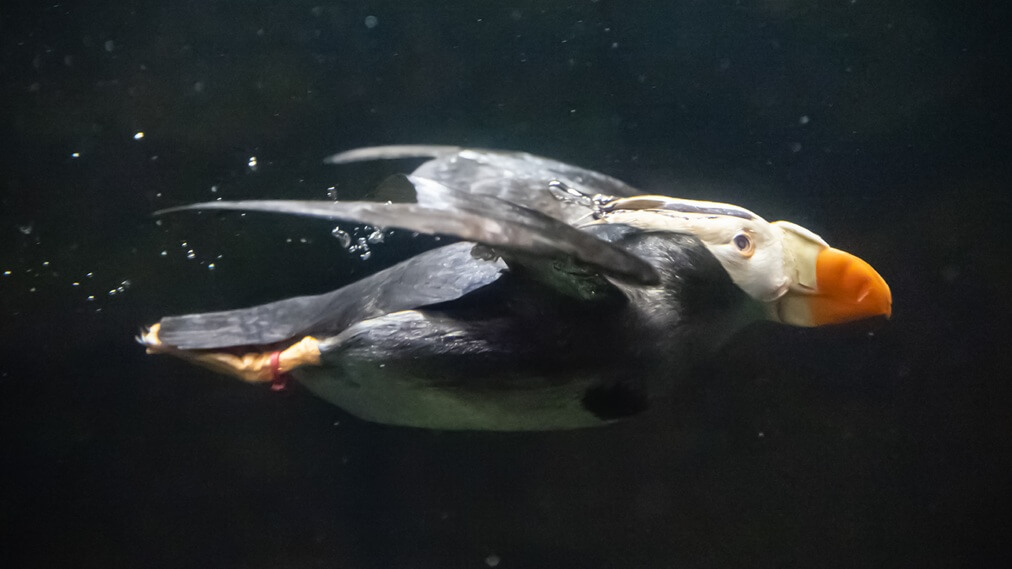
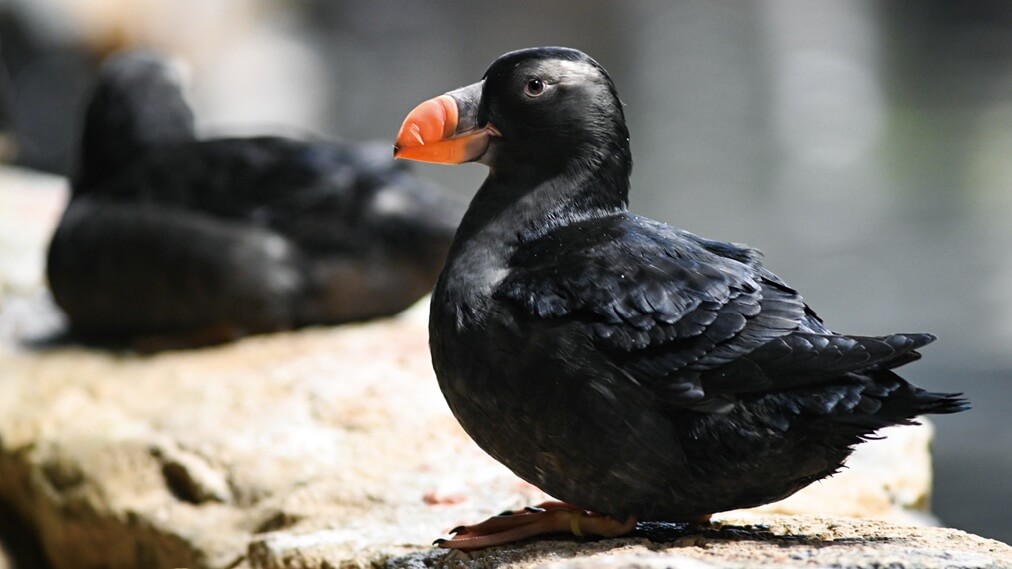
Tufted Puffin lives in the sea outside of the breeding season and is a bird that can both fly in the sky and swim as if flying through the sea. It is widely distributed in cold regions of the Northern Hemisphere, and some of them sometimes come to the islands of Hokkaido to breed. Tufted Puffin means "beautiful beak" in the Ainu language, and it stands out for its bright orange beak.
| classification | Aves, Charadriiformes, Auklidae |
|---|---|
| English name | Tufted Puffin |
| distribution | They breed along the Arctic coasts of Alaska and Siberia, on islands in the Bering Sea, and in the Aleutian Islands. Small numbers can be found in parts of Hokkaido. |
| Residence | Non-breeding season: At sea Breeding season: Rocky areas |
| Size |
Total length: 36-41cm
|
| food | Mainly fish, squid, and crab |
| Red List |
IUCN: LC (Least Concern)
Japan: CR (Critically Endangered) |
A dramatic transformation from winter plumage to summer plumage
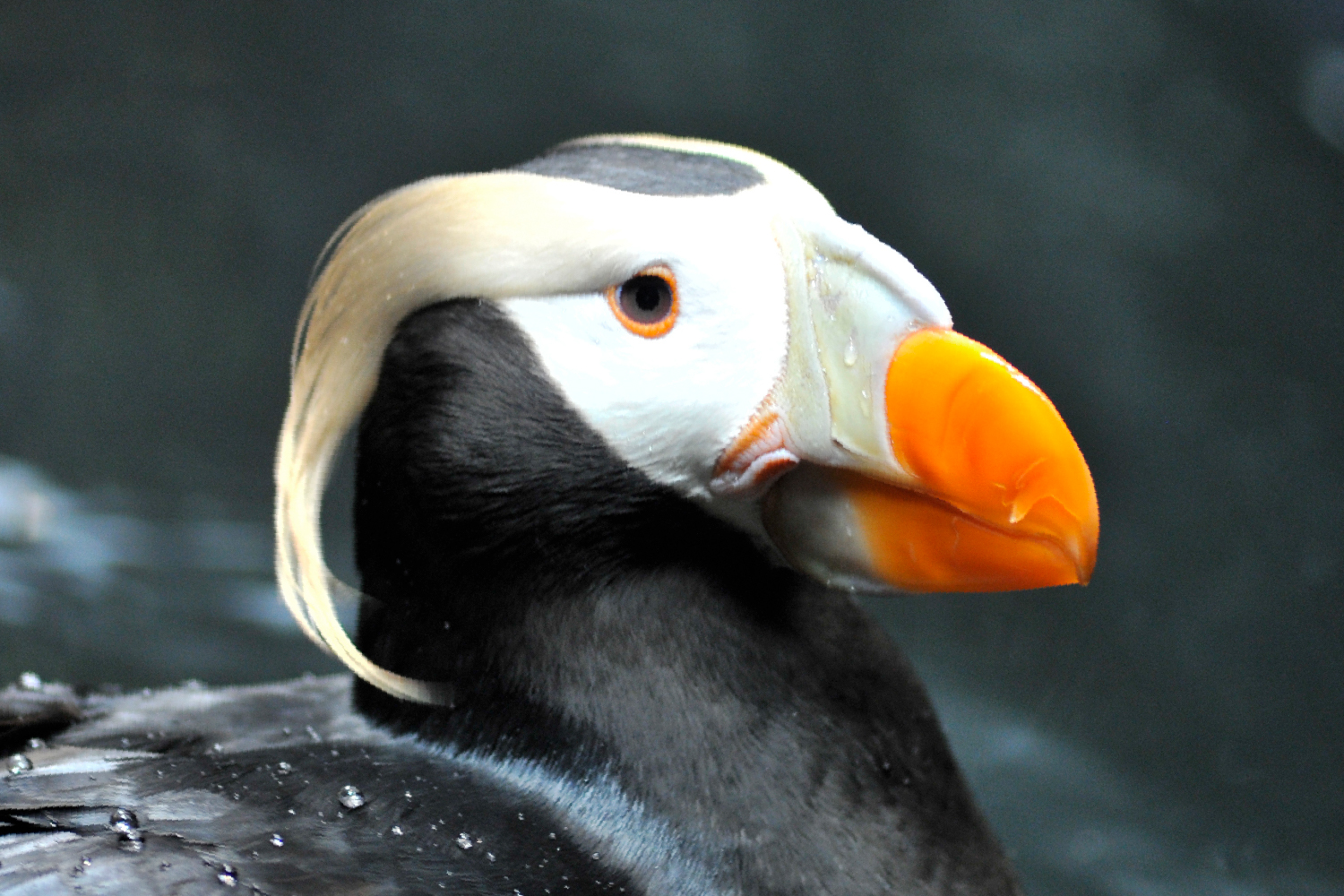
During the breeding season, some birds will experience a phenomenon whereby parts of their feathers grow out in more conspicuous colors and patterns. Their dull appearance during the non-breeding season is called winter plumage, while their flashy appearance during the breeding season is called summer plumage. The appearance Tufted Puffin changes significantly between its winter and summer plumage. Its face, which is black in its winter plumage, turns pure white in its summer plumage, with golden tufts of feathers growing above its eyes and a brightly colored pattern appearing on its beak.
In the hive...
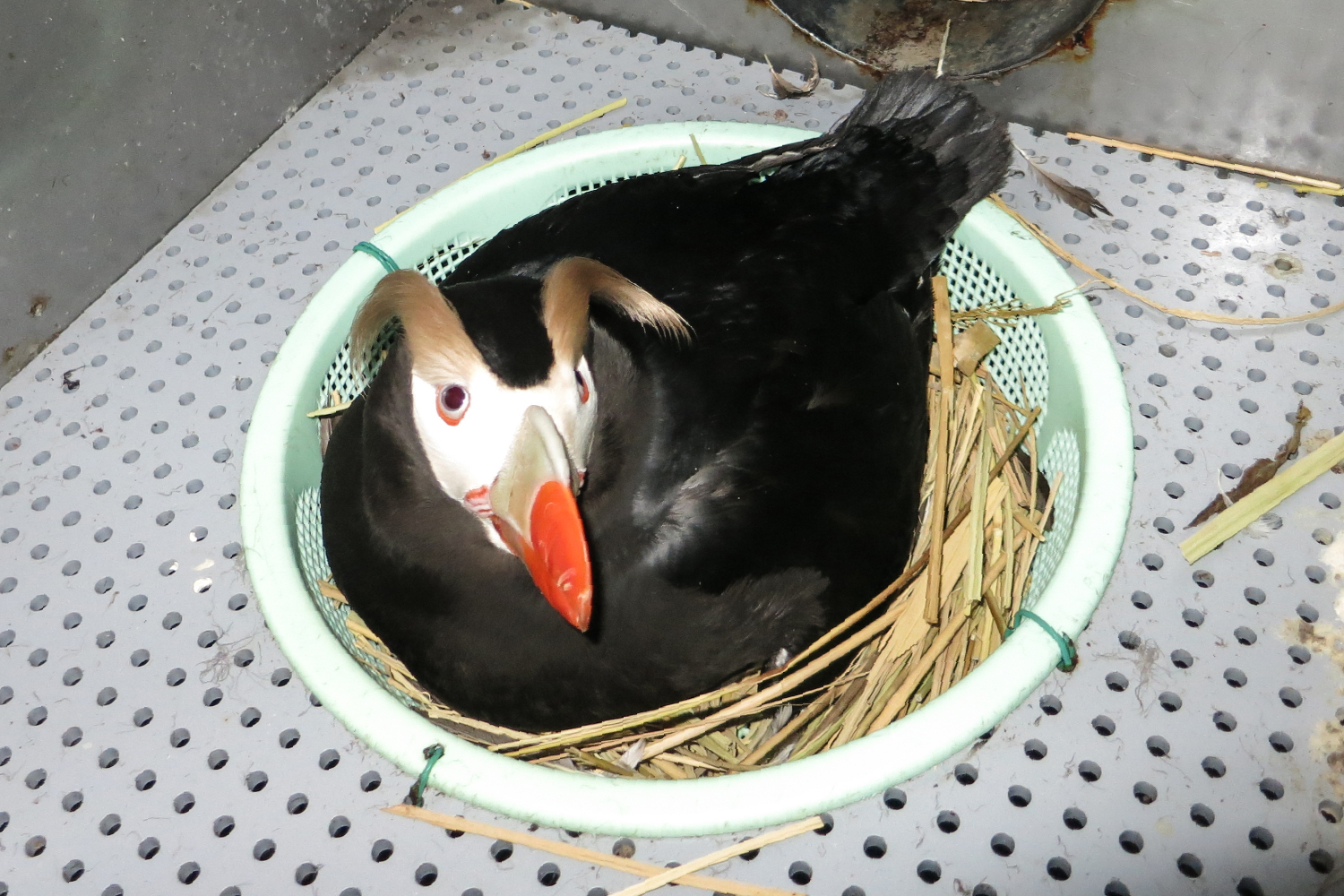
During the summer breeding season, tufted Tufted Puffin gather in grassy areas on cliffs and dig holes to build nests. They lay one egg at a time, and the hatched chicks stay in the burrow until they are able to fly. In the "Seabird Ecology" tank, there is a nest box behind an artificial rock, where the tufted Tufted Puffin raise their young. A camera is attached to the nest box, and when incubation begins, the inside is broadcast on a monitor on the viewing side. The eggs and chicks are usually hidden by the parent birds' bodies and are difficult to see, but when it is feeding time the parent birds come out, giving you a chance to observe the inside of the nest.
Pay attention to the beak!
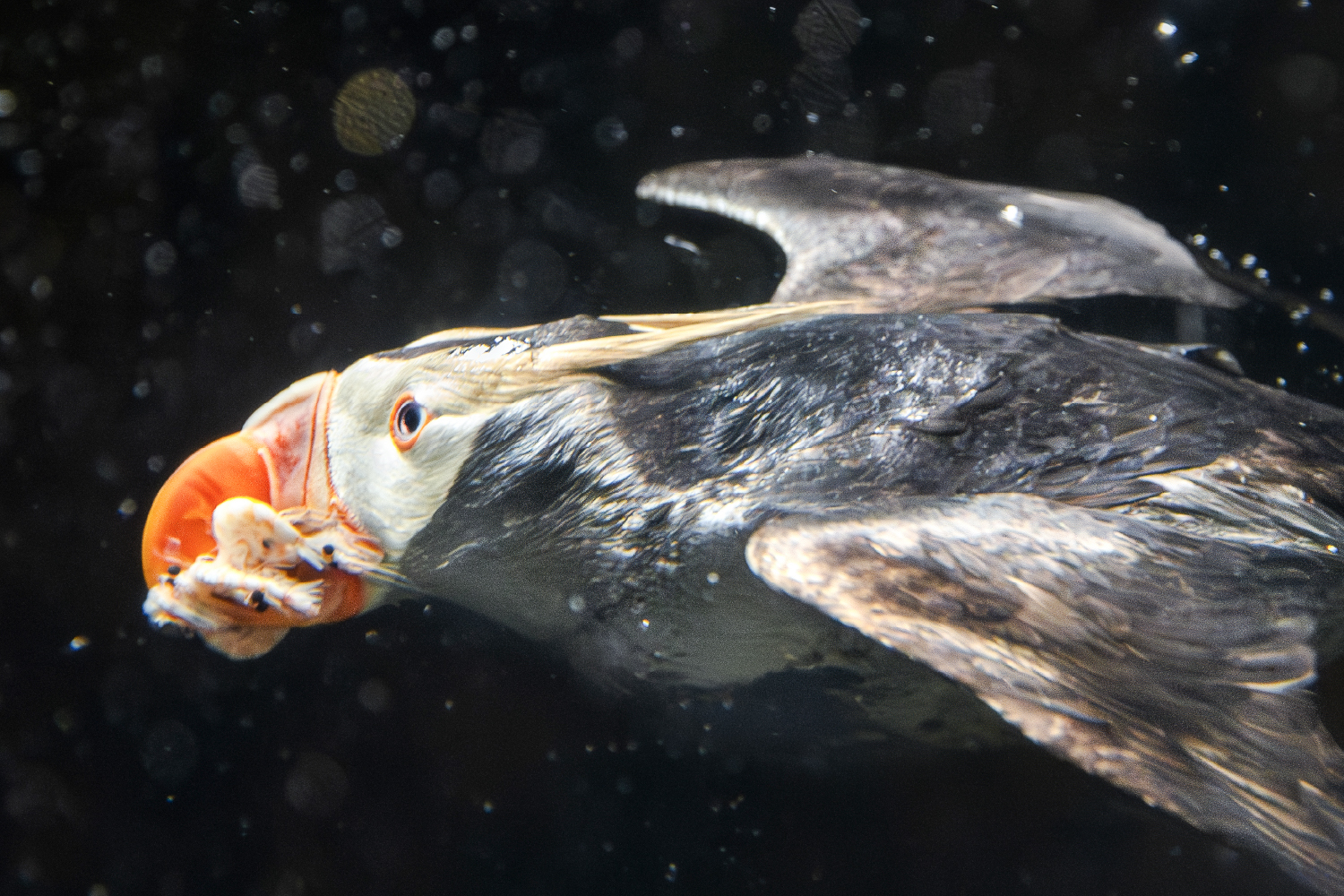
When it's time for feeding, Tufted Puffin raising their young will carry the fish they have caught back to their burrows. If you look closely, you will see that they sometimes hold several prey items in their large beaks at once. When they feed, they aim for one prey item and catch it, so while they are still holding the one they have already caught, they will be catching the next prey. They are truly dexterous.