

Zoo Stock Species and the Red List
Zoo Stock Species and the Red List
Zoo Stock
This indicates that the species is included in the Second Zoo Stock Plan, which was formulated by the Tokyo Metropolitan Government in 2018. The plan sets goals for the next 10 years in three areas: "species conservation," "contribution to wildlife conservation," and "environmental education and conservation awareness." 124 animal species are included.
What is the Red List?
Based on scientific research, this is a list of wildlife classified by rank (category) indicating the degree of risk of extinction.
Livng Things Encyclopedia shows the categories (mainland and islands) assessed by the IUCN (International Union for Conservation of Nature) at the global level, the Ministry of the Environment for Japan, and the Tokyo Metropolitan Government for Tokyo.
The higher the category in each table, the higher the risk of extinction, and CR, EN, and VU are the three categories known as "endangered species." In Tokyo, species that are not at the NT (near threatened) level but are relatively rare are considered "species of concern."
|
IUCN categories |
|
|---|---|
|
EX |
extinction |
|
EW |
Extinction in the wild |
|
CR+EN |
— |
|
CR |
Serious crisis |
|
EN |
crisis |
|
VU |
emergency |
|
NT |
Near Threatened |
|
LC・○ |
Low Concern |
|
DD |
Data shortage |
|
LP |
— |
|
Japan (Ministry of the Environment) Category |
|
|---|---|
|
EX |
extinction |
|
EW |
Extinction in the wild |
|
CR+EN |
Endangered species |
|
CR |
Critically Endangered |
|
EN |
Endangered species |
|
VU |
Endangered species |
|
NT |
Near Threatened |
|
LC・○ |
— |
|
DD |
Lack of information |
|
LP |
Endangered |
|
Tokyo Category |
|
|---|---|
|
EX |
extinction |
|
EW |
Extinction in the wild |
|
CR+EN |
Endangered species |
|
CR |
Critically Endangered |
|
EN |
Endangered species |
|
VU |
Endangered species |
|
NT |
Near Threatened |
|
LC・○ |
Unranked |
|
DD |
Lack of information |
|
LP |
Endangered |
Creatures at Tokyo Sea Life Park
Creatures at Tokyo Sea Life Park
Strawberry Anemone
Strawberry Anemone
Corynactis californica
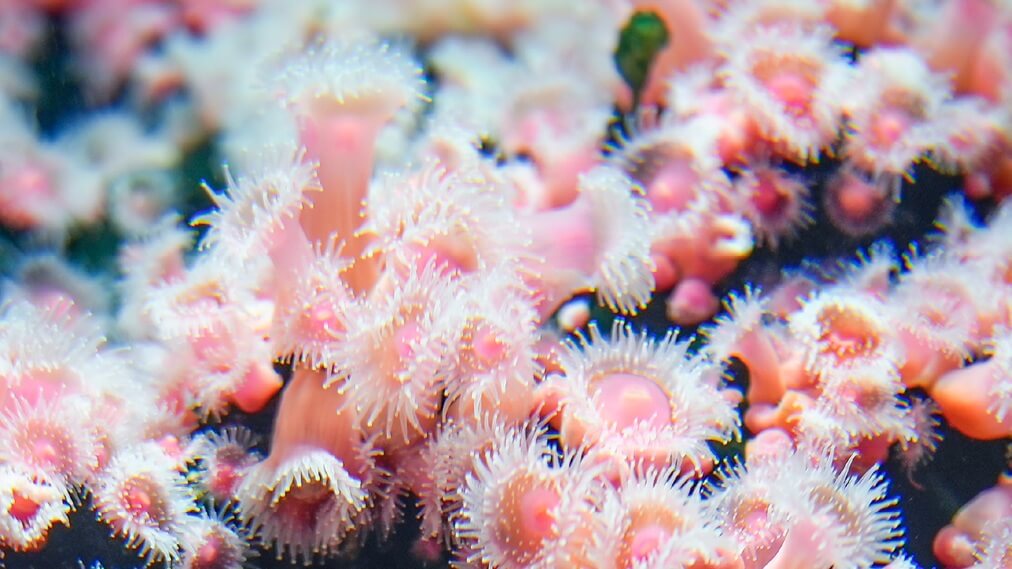
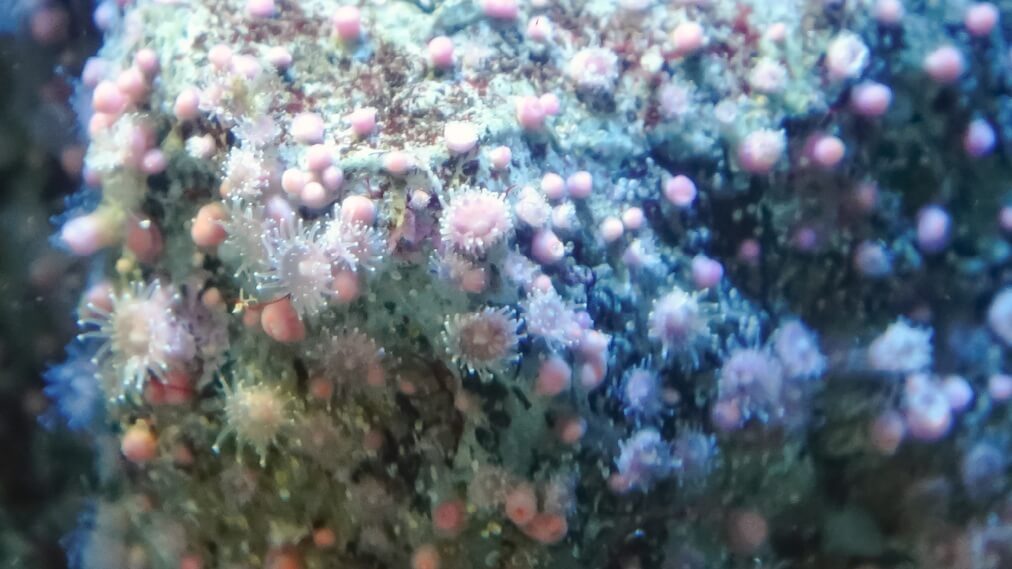
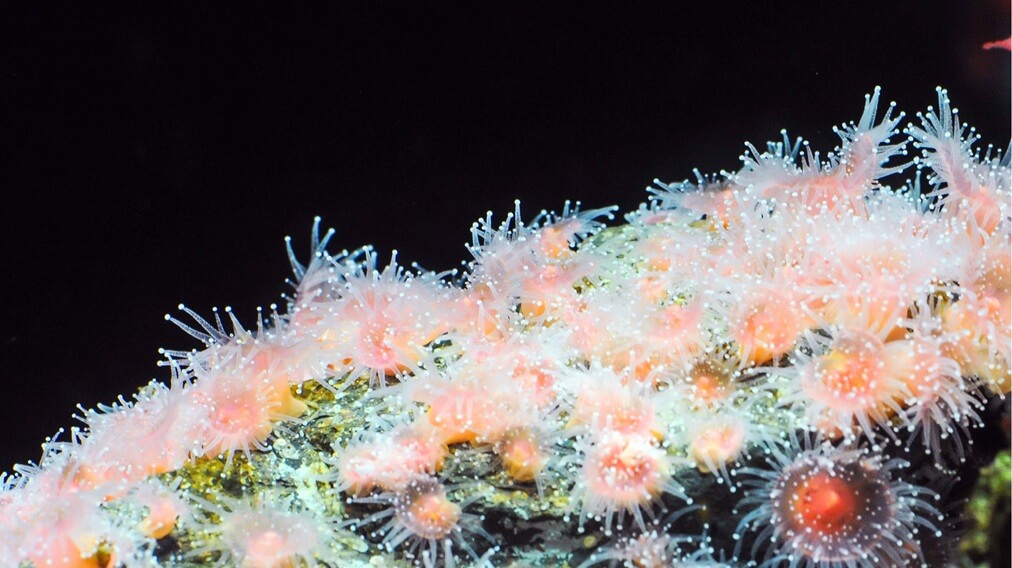
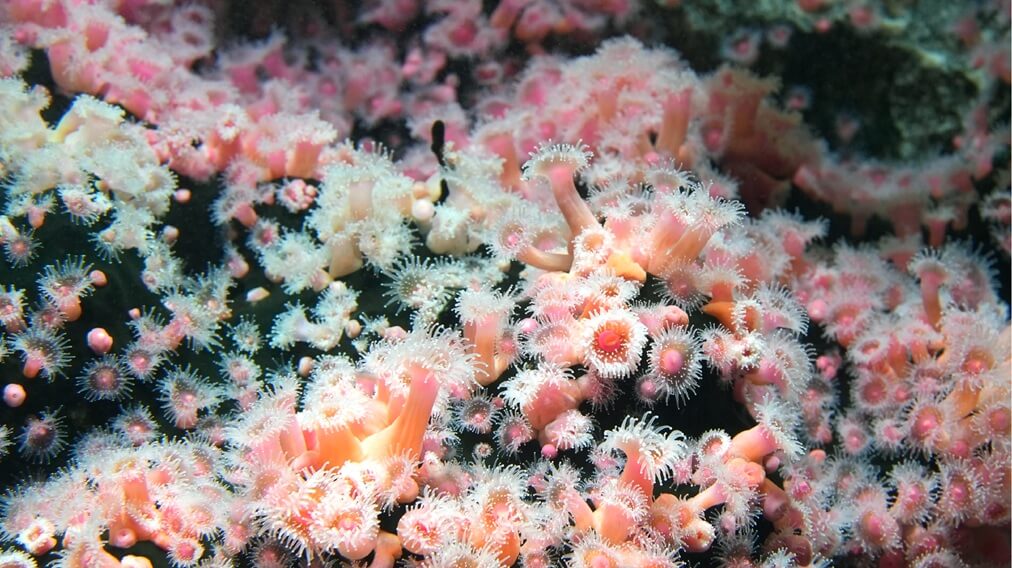
It looks like a small, pink anemone, but it's actually more closely related to coral than to anemone. Because it lacks a calcareous skeleton, it's called a boneless coral. It extends its tentacles to catch and eat small plankton that drift by. It's fixed to rocks and cannot move. It can reproduce by fission, and the resulting population spreads out on the rocks in groups.
| classification | Anthozoa, Order Osmodium, Family Osmodium |
|---|---|
| English name | Strawberry Anemone |
| distribution | Coastal areas from the west coast of North America to Mexico |
| Residence | Rocky areas |
| Size |
2cm
|
| food | Small plankton and organic matter |
| Red List |
Unrated
|
Where's your mouth? Where's your ass?
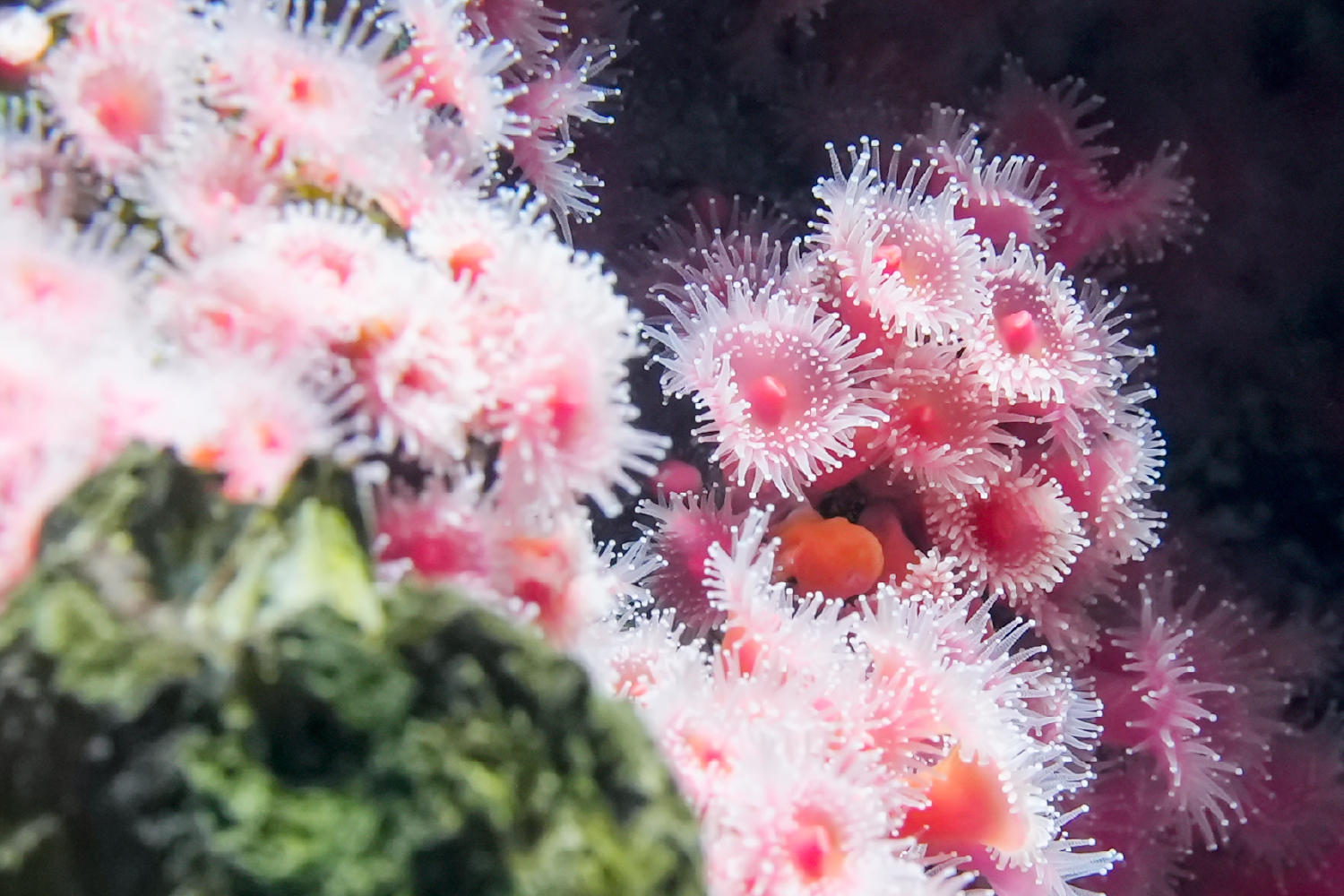
Let's try to find the mouth of Strawberry Anemone. The mouth is the hole-like structure in the middle of the tentacles that spread out like petals. It uses its tentacles to catch food and then brings it to its mouth to eat. So where does it poop from? Actually, it poops from its mouth as well. Anemones and corals have the same body structure.
Currently splitting up!?
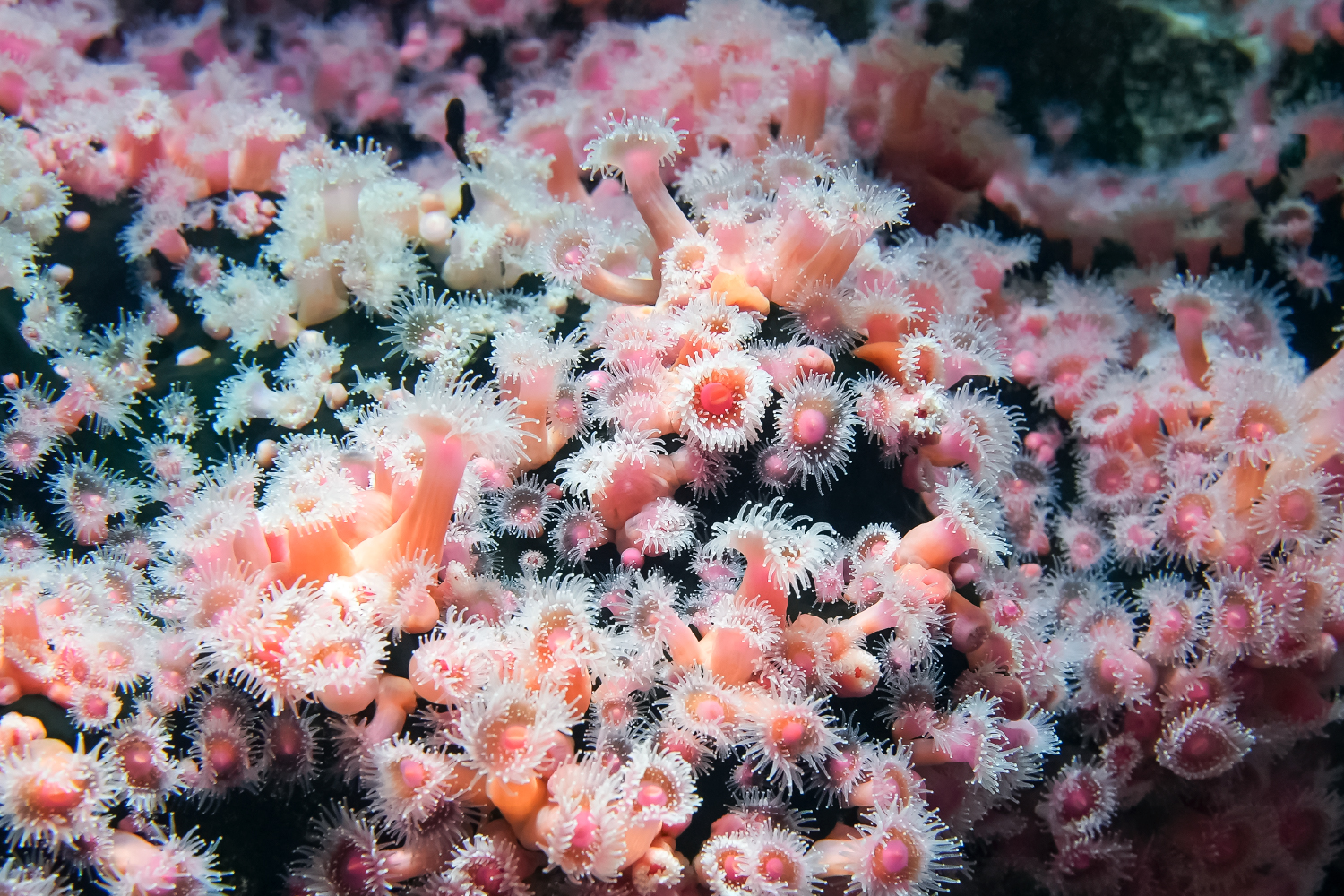
Anemones and corals are known to reproduce not only from eggs but also through asexual reproduction such as fission. Strawberry Anemone have an oval-shaped oral disc with tentacles that eventually constricts in the middle and splits into two. Strawberry Anemone in the aquarium started out as just a few, but they have split rapidly and grown to their current state, covering the rocks. If you observe carefully, you might be able to find individuals in the process of splitting.