

Zoo Stock Species and the Red List
Zoo Stock Species and the Red List
Zoo Stock
This indicates that the species is included in the Second Zoo Stock Plan, which was formulated by the Tokyo Metropolitan Government in 2018. The plan sets goals for the next 10 years in three areas: "species conservation," "contribution to wildlife conservation," and "environmental education and conservation awareness." 124 animal species are included.
What is the Red List?
Based on scientific research, this is a list of wildlife classified by rank (category) indicating the degree of risk of extinction.
Livng Things Encyclopedia shows the categories (mainland and islands) assessed by the IUCN (International Union for Conservation of Nature) at the global level, the Ministry of the Environment for Japan, and the Tokyo Metropolitan Government for Tokyo.
The higher the category in each table, the higher the risk of extinction, and CR, EN, and VU are the three categories known as "endangered species." In Tokyo, species that are not at the NT (near threatened) level but are relatively rare are considered "species of concern."
|
IUCN categories |
|
|---|---|
|
EX |
extinction |
|
EW |
Extinction in the wild |
|
CR+EN |
— |
|
CR |
Serious crisis |
|
EN |
crisis |
|
VU |
emergency |
|
NT |
Near Threatened |
|
LC・○ |
Low Concern |
|
DD |
Data shortage |
|
LP |
— |
|
Japan (Ministry of the Environment) Category |
|
|---|---|
|
EX |
extinction |
|
EW |
Extinction in the wild |
|
CR+EN |
Endangered species |
|
CR |
Critically Endangered |
|
EN |
Endangered species |
|
VU |
Endangered species |
|
NT |
Near Threatened |
|
LC・○ |
— |
|
DD |
Lack of information |
|
LP |
Endangered |
|
Tokyo Category |
|
|---|---|
|
EX |
extinction |
|
EW |
Extinction in the wild |
|
CR+EN |
Endangered species |
|
CR |
Critically Endangered |
|
EN |
Endangered species |
|
VU |
Endangered species |
|
NT |
Near Threatened |
|
LC・○ |
Unranked |
|
DD |
Lack of information |
|
LP |
Endangered |
Creatures at Tokyo Sea Life Park
Creatures at Tokyo Sea Life Park
Spotted Ratfish
Spotted Ratfish
Hydrolagus colliei
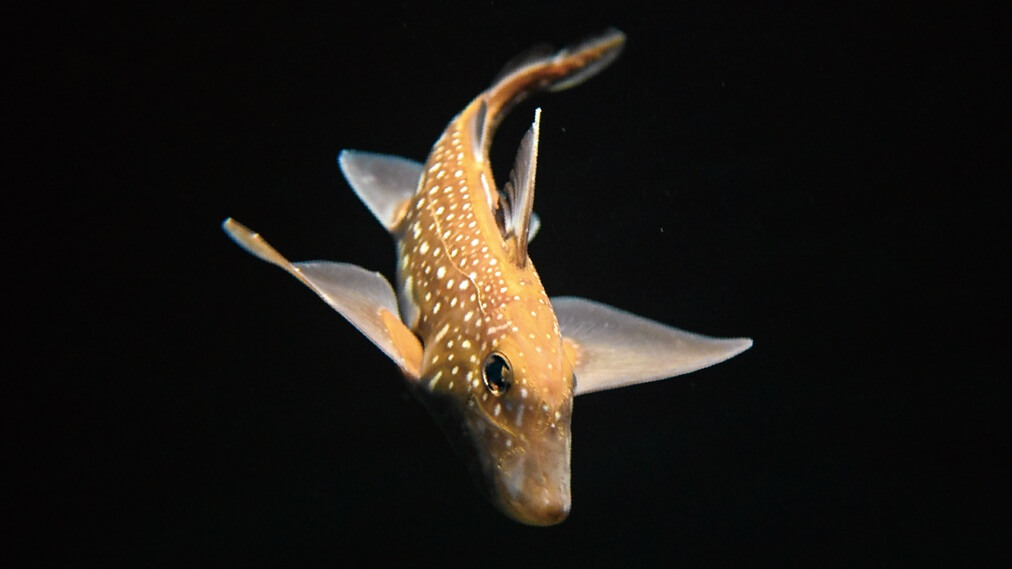
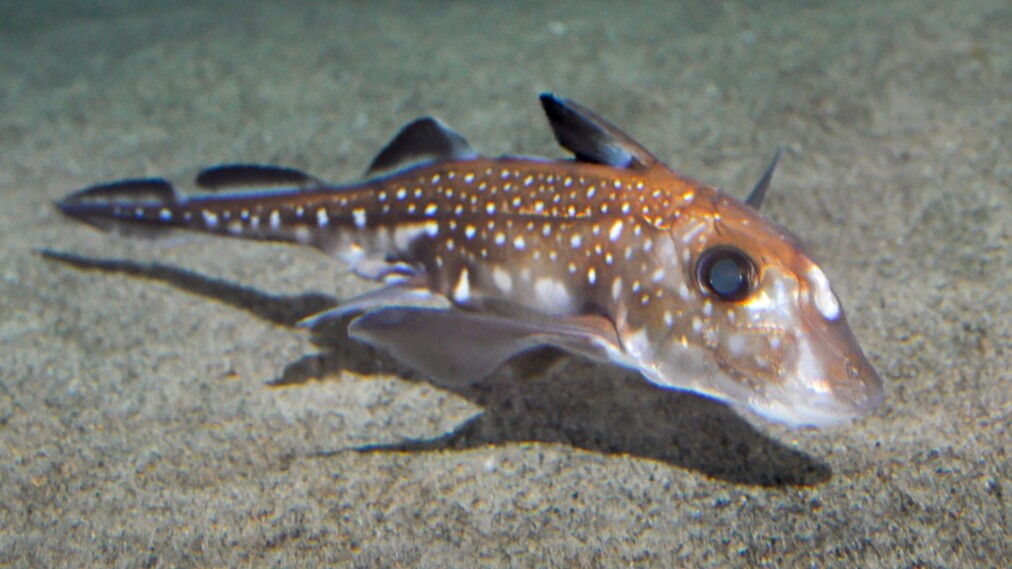
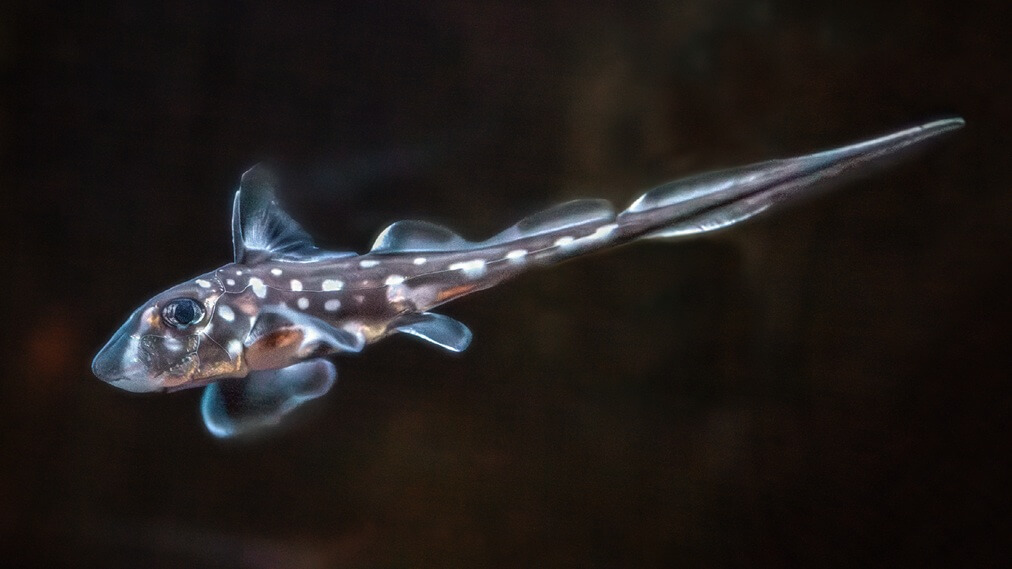
It belongs to the chimaera group. This group also inhabits the Japanese coast and all live in deep seas. However, Spotted Ratfish is unusual in that it sometimes comes up to depths of several tens of meters where divers can reach. Its English name, "spotted ratfish," comes from the white spots on its body and the shape of its mouth and large front teeth, which resemble those of a rat.
| classification | Actinopterygii, Chimaera, Chimaeridae |
|---|---|
| English name | Spotted Ratfish |
| distribution | Eastern Pacific coast from Alaska to Southern California |
| Residence | They inhabit deep seas, but sometimes rise to depths of several tens of meters. |
| Size |
Total length: 90cm
|
| food | Shellfish, shrimp, crabs, small fish, etc. |
| Red List |
IUCN: LC (Least Concern)
|
Mating with females using special hooks
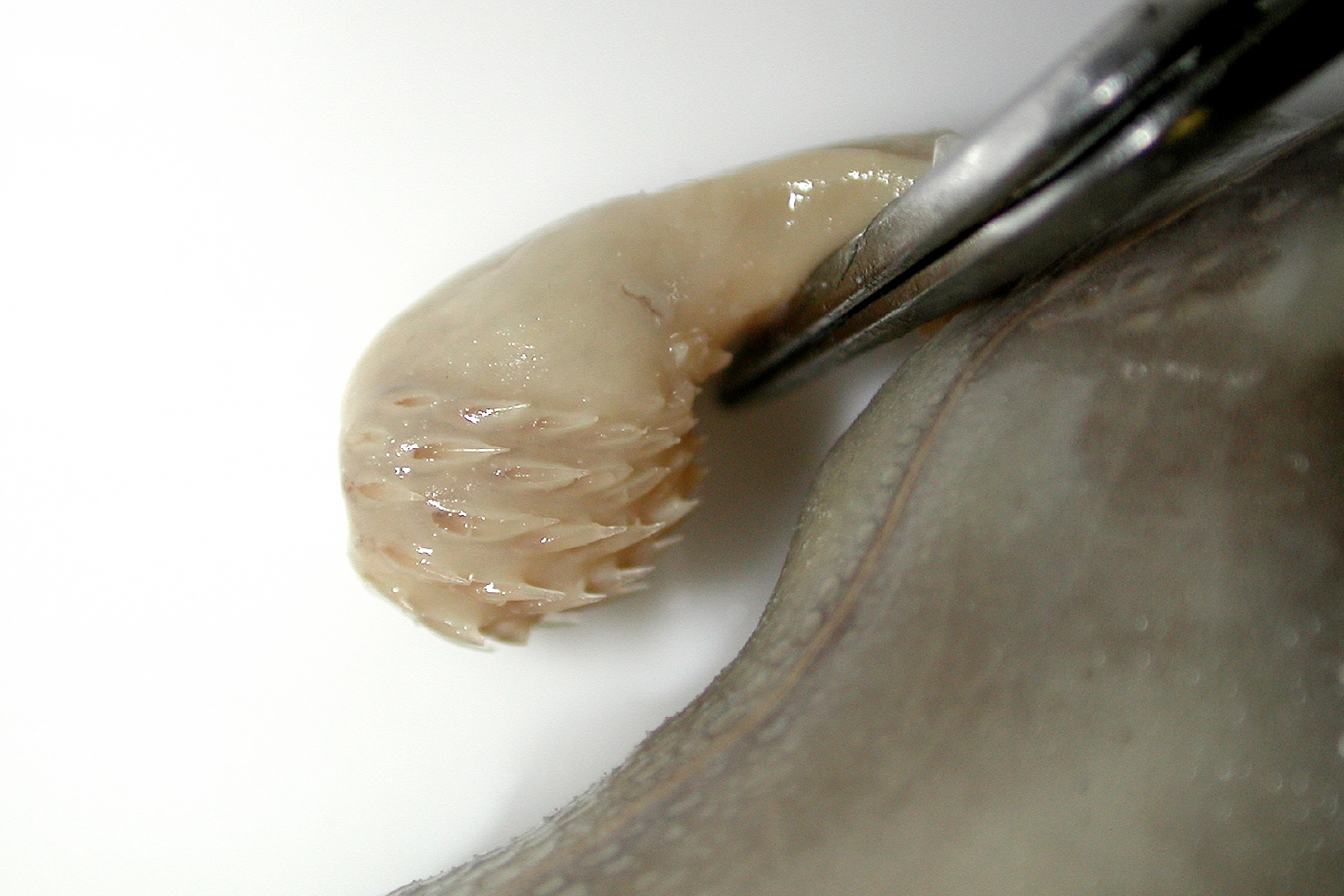
Look for the oval-shaped white marking on the male's head. When viewed from the side, you'll see a swollen projection stored there. During mating, the male uses this hook to grasp the female's pectoral fin. The tip of the hook is covered with many small spines to firmly grip its partner.
Lays large eggs
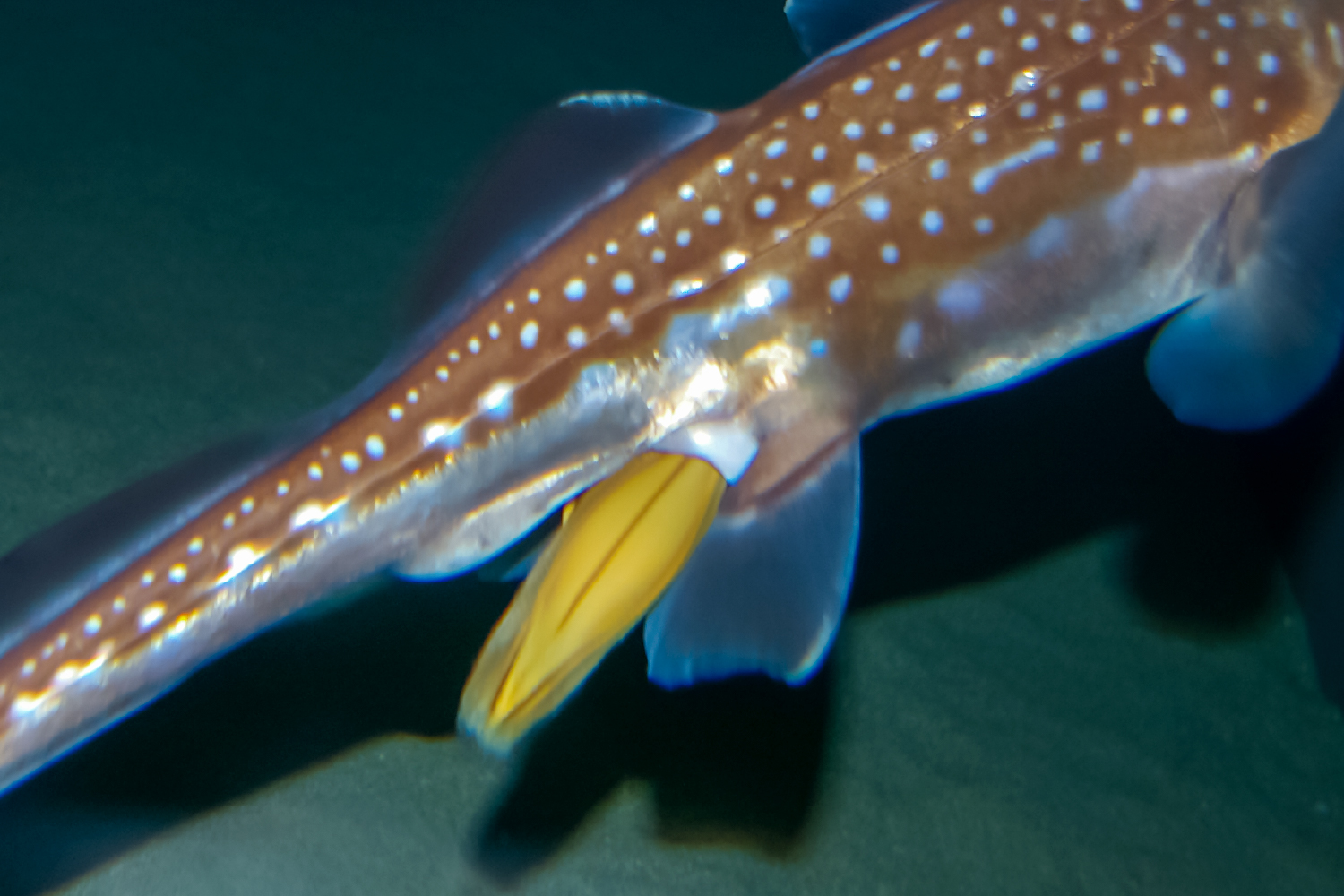
They lay eggs enclosed in large shells about 13cm long. The shells are yellowish-brown and look similar to dead plant leaves. Females usually lay two eggs at a time, and after swimming with the eggs dangling from their abdomen for a while, they bury them in the sand. The eggs develop over several months, and the hatched babies emerge from the sand. The first eggs hatched at Tokyo Sea Life Park in 1999, and a second offspring was born.