

Zoo Stock Species and the Red List
Zoo Stock Species and the Red List
Zoo Stock
This indicates that the species is included in the Second Zoo Stock Plan, which was formulated by the Tokyo Metropolitan Government in 2018. The plan sets goals for the next 10 years in three areas: "species conservation," "contribution to wildlife conservation," and "environmental education and conservation awareness." 124 animal species are included.
What is the Red List?
Based on scientific research, this is a list of wildlife classified by rank (category) indicating the degree of risk of extinction.
Livng Things Encyclopedia shows the categories (mainland and islands) assessed by the IUCN (International Union for Conservation of Nature) at the global level, the Ministry of the Environment for Japan, and the Tokyo Metropolitan Government for Tokyo.
The higher the category in each table, the higher the risk of extinction, and CR, EN, and VU are the three categories known as "endangered species." In Tokyo, species that are not at the NT (near threatened) level but are relatively rare are considered "species of concern."
|
IUCN categories |
|
|---|---|
|
EX |
extinction |
|
EW |
Extinction in the wild |
|
CR+EN |
— |
|
CR |
Serious crisis |
|
EN |
crisis |
|
VU |
emergency |
|
NT |
Near Threatened |
|
LC・○ |
Low Concern |
|
DD |
Data shortage |
|
LP |
— |
|
Japan (Ministry of the Environment) Category |
|
|---|---|
|
EX |
extinction |
|
EW |
Extinction in the wild |
|
CR+EN |
Endangered species |
|
CR |
Critically Endangered |
|
EN |
Endangered species |
|
VU |
Endangered species |
|
NT |
Near Threatened |
|
LC・○ |
— |
|
DD |
Lack of information |
|
LP |
Endangered |
|
Tokyo Category |
|
|---|---|
|
EX |
extinction |
|
EW |
Extinction in the wild |
|
CR+EN |
Endangered species |
|
CR |
Critically Endangered |
|
EN |
Endangered species |
|
VU |
Endangered species |
|
NT |
Near Threatened |
|
LC・○ |
Unranked |
|
DD |
Lack of information |
|
LP |
Endangered |
Creatures at Tokyo Sea Life Park
Creatures at Tokyo Sea Life Park
Spotted Moray
Spotted Moray
Gymnothorax isingteena
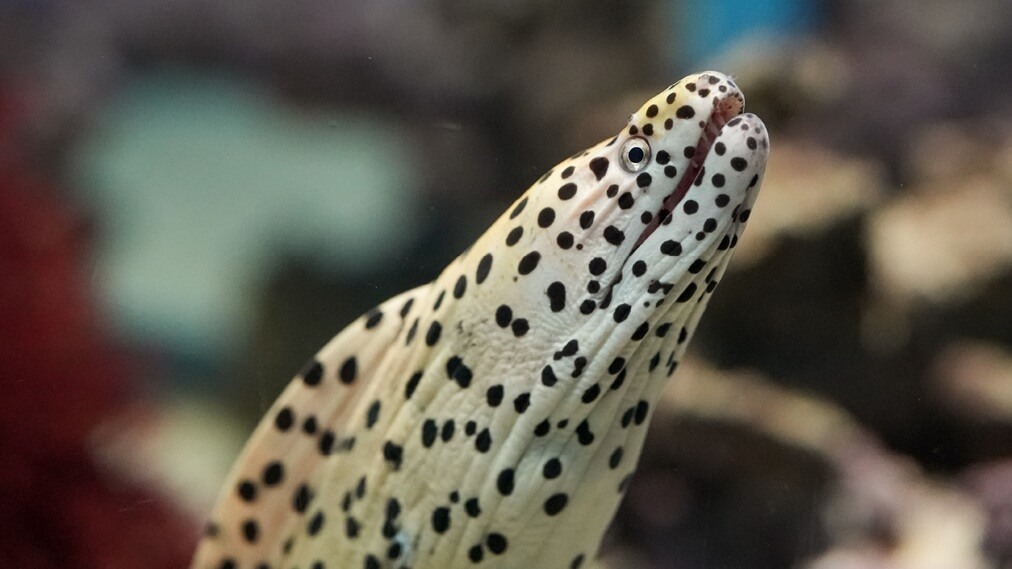
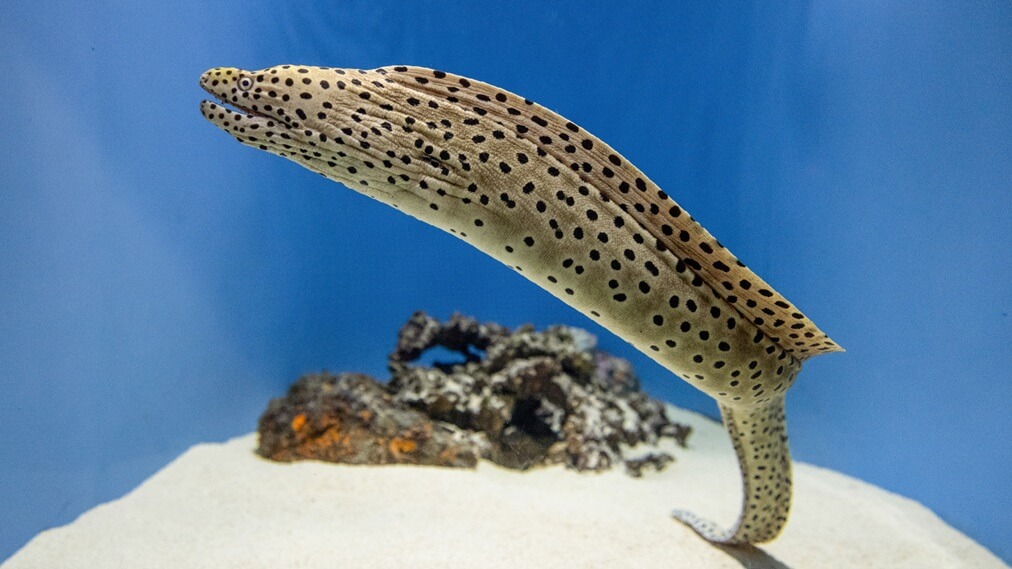
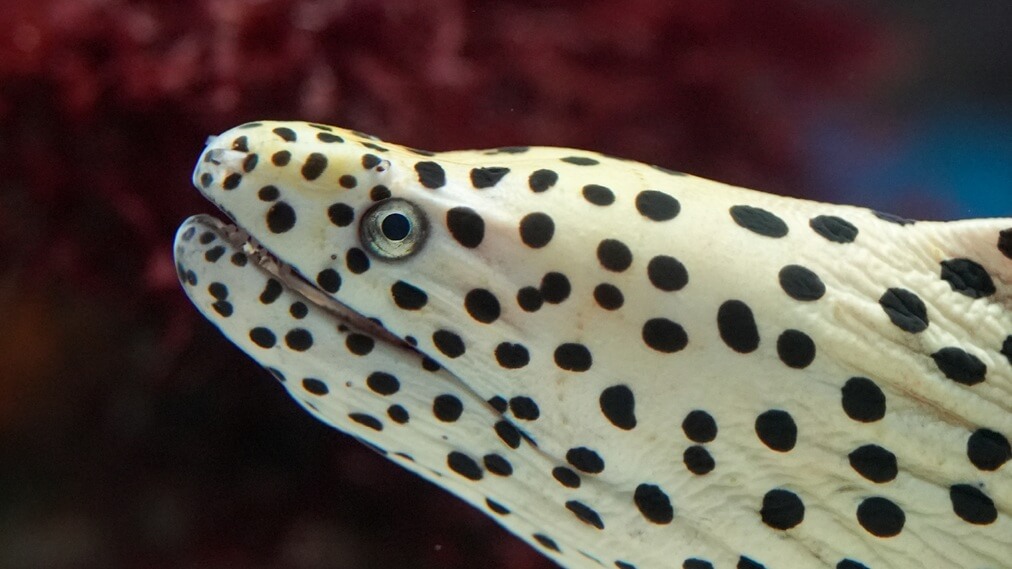
This is a type of moray eel that lives in shallow seas where coral reefs are well-developed. When fully grown, it can reach a length of 2 meters. During the day, it hides its long, slender body in crevices in rocks, and it becomes active at night, making it nocturnal. It swims by undulating its long, slender body, much like a snake. It has sharp teeth and uses them to catch and eat fish and crustaceans.
| classification | Actinopterygii, Anguilliformes, Moray eels |
|---|---|
| English name | Spotted Moray |
| distribution | Western Pacific |
| Residence | Coral Reef Sea |
| Size |
Total length: 2m
|
| food | Fish and crustaceans |
| Red List |
IUCN: LC (Least Concern)
|
Let's take a look at the fins!
It may seem obvious that "fish use their fins to swim." But let's take a closer look at the fins of Spotted Moray. It has long fins that run along its body on its back and belly, but it doesn't have pectoral or pelvic fins. The shape and characteristics of a fish's fins are deeply related to the environment in which it lives and how it uses its fins. Let's compare the fins and how different fish use them.
A mouth within a mouth?!
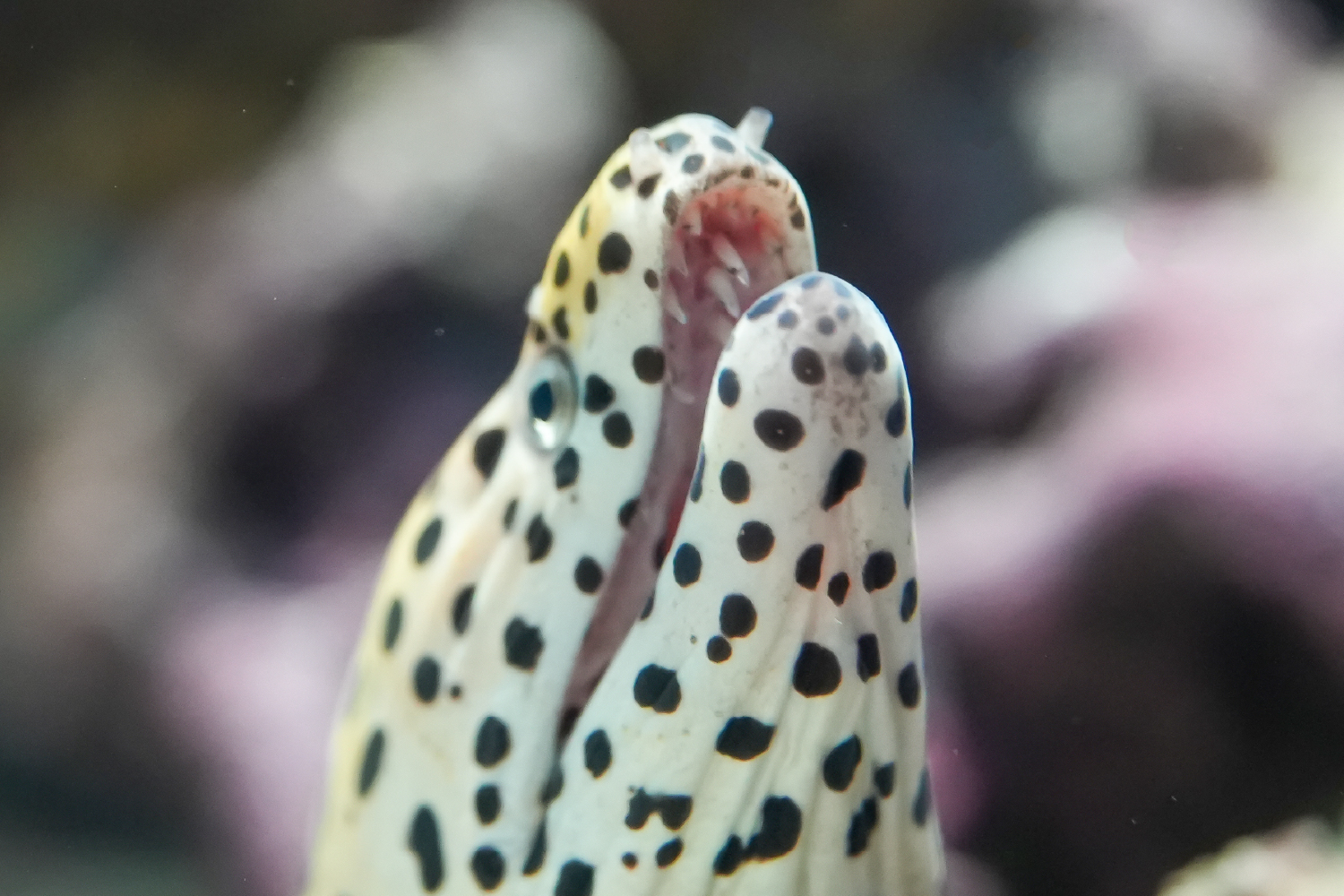
If you look closely at the mouth of Spotted Moray, you will see a row of sharp teeth. These sharp teeth are used to catch fish and crustaceans, but the moray also has a second mouth to prevent its prey from escaping. The second mouth is called the "pharyngeal jaw" and is located deep in the throat. It pops out, grabs the prey, and pulls it into the back of its throat.