

Zoo Stock Species and the Red List
Zoo Stock Species and the Red List
Zoo Stock
This indicates that the species is included in the Second Zoo Stock Plan, which was formulated by the Tokyo Metropolitan Government in 2018. The plan sets goals for the next 10 years in three areas: "species conservation," "contribution to wildlife conservation," and "environmental education and conservation awareness." 124 animal species are included.
What is the Red List?
Based on scientific research, this is a list of wildlife classified by rank (category) indicating the degree of risk of extinction.
Livng Things Encyclopedia shows the categories (mainland and islands) assessed by the IUCN (International Union for Conservation of Nature) at the global level, the Ministry of the Environment for Japan, and the Tokyo Metropolitan Government for Tokyo.
The higher the category in each table, the higher the risk of extinction, and CR, EN, and VU are the three categories known as "endangered species." In Tokyo, species that are not at the NT (near threatened) level but are relatively rare are considered "species of concern."
|
IUCN categories |
|
|---|---|
|
EX |
extinction |
|
EW |
Extinction in the wild |
|
CR+EN |
— |
|
CR |
Serious crisis |
|
EN |
crisis |
|
VU |
emergency |
|
NT |
Near Threatened |
|
LC・○ |
Low Concern |
|
DD |
Data shortage |
|
LP |
— |
|
Japan (Ministry of the Environment) Category |
|
|---|---|
|
EX |
extinction |
|
EW |
Extinction in the wild |
|
CR+EN |
Endangered species |
|
CR |
Critically Endangered |
|
EN |
Endangered species |
|
VU |
Endangered species |
|
NT |
Near Threatened |
|
LC・○ |
— |
|
DD |
Lack of information |
|
LP |
Endangered |
|
Tokyo Category |
|
|---|---|
|
EX |
extinction |
|
EW |
Extinction in the wild |
|
CR+EN |
Endangered species |
|
CR |
Critically Endangered |
|
EN |
Endangered species |
|
VU |
Endangered species |
|
NT |
Near Threatened |
|
LC・○ |
Unranked |
|
DD |
Lack of information |
|
LP |
Endangered |
Creatures at Tokyo Sea Life Park
Creatures at Tokyo Sea Life Park
Splendid Alfonsino
Splendid Alfonsino
Beryx splendens
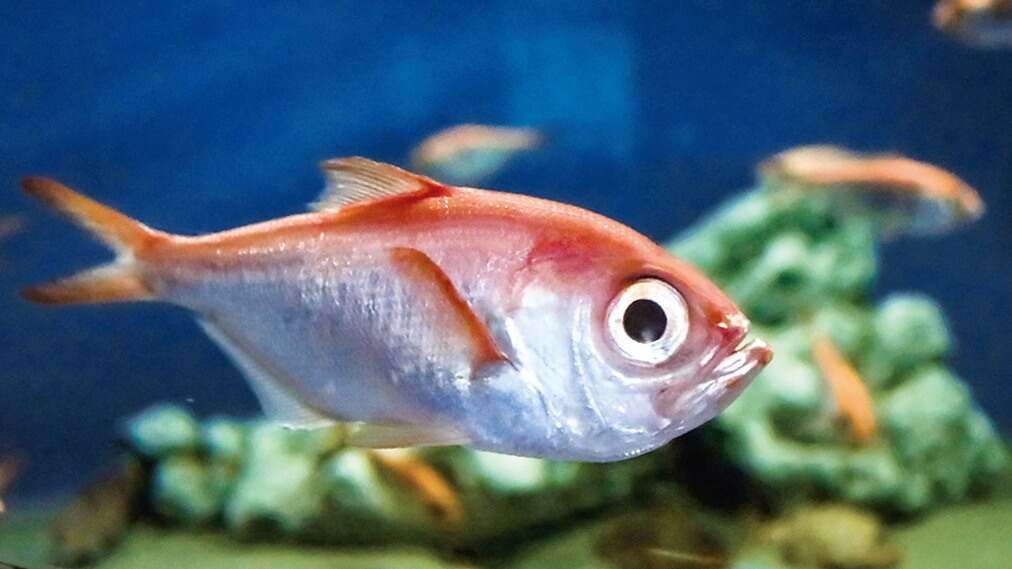
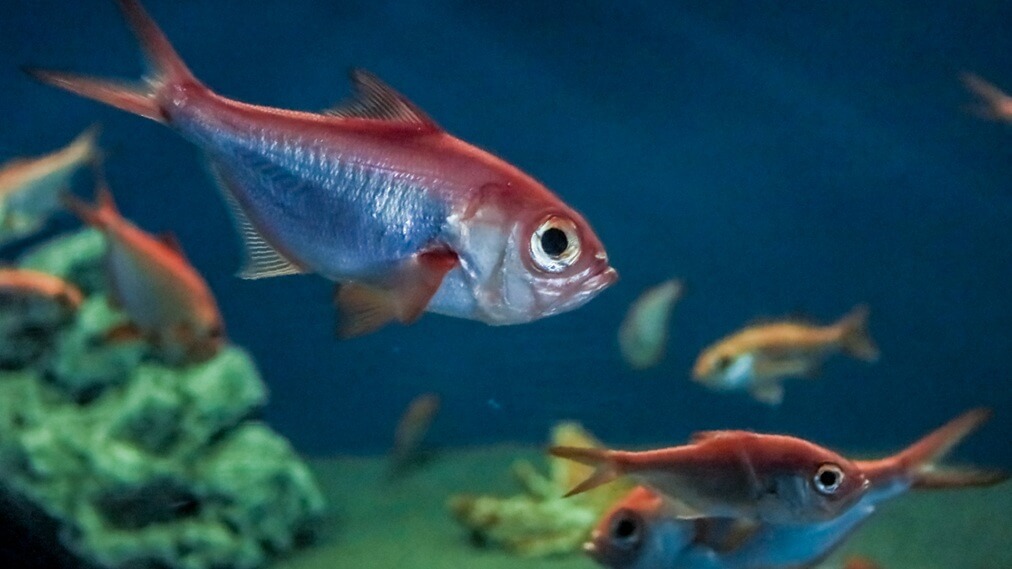
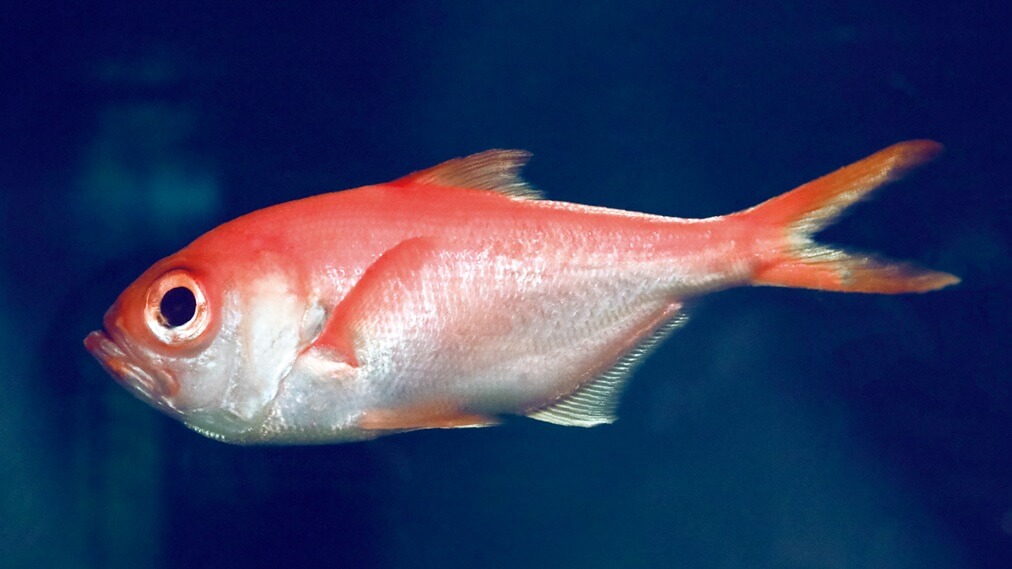
This deep-sea fish lives in rocky reefs with large undulations at depths of 200 to 800 meters. Young fish under 10 cm have elongated dorsal and pelvic fins, and are also known as "thin-finned alfonsinos." They live in coastal waters at depths of 100 to 250 meters. As they grow, they migrate to deeper waters offshore. They are a popular, high-quality fish, often eaten in stews or as sashimi. In the aquarium, pay attention to their unique swimming style, with their flapping pectoral fins, and their large golden eyes, which are the origin of Splendid Alfonsino name.
| classification | Splendid Alfonsino, Order Splendid Alfonsino |
|---|---|
| English name | Splendid Alfonsino |
| distribution | The Pacific Ocean south of Kushiro, the Indian Ocean, the Atlantic Ocean, and the Mediterranean Sea |
| Residence | Middle to deep sea |
| Size |
Total length: 60cm
|
| food | Fish such as sardines, shrimp, squid, etc. |
| Red List |
IUCN: LC (Least Concern)
|
Does the bright red body color stand out?
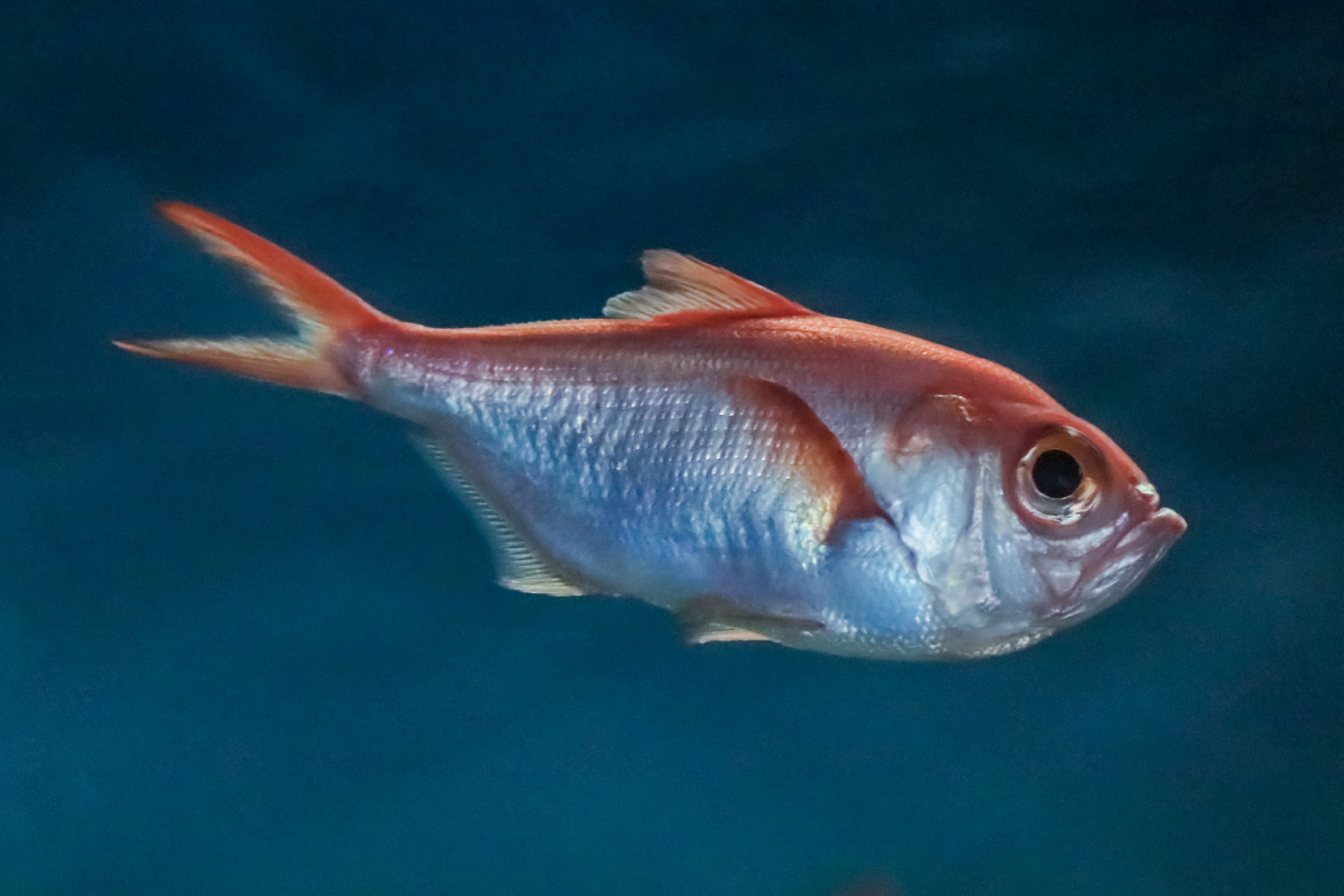
With its bright red body color, Splendid Alfonsino stands out very much in the aquarium. If you take a look at the body colors of other creatures in the "Deep Sea Creatures" section, you will find many other creatures with red bodies. In fact, red light is easily absorbed by water, making it very difficult to see in the deep sea. So it was a convenient color for protecting itself from predators!
Big golden eyes
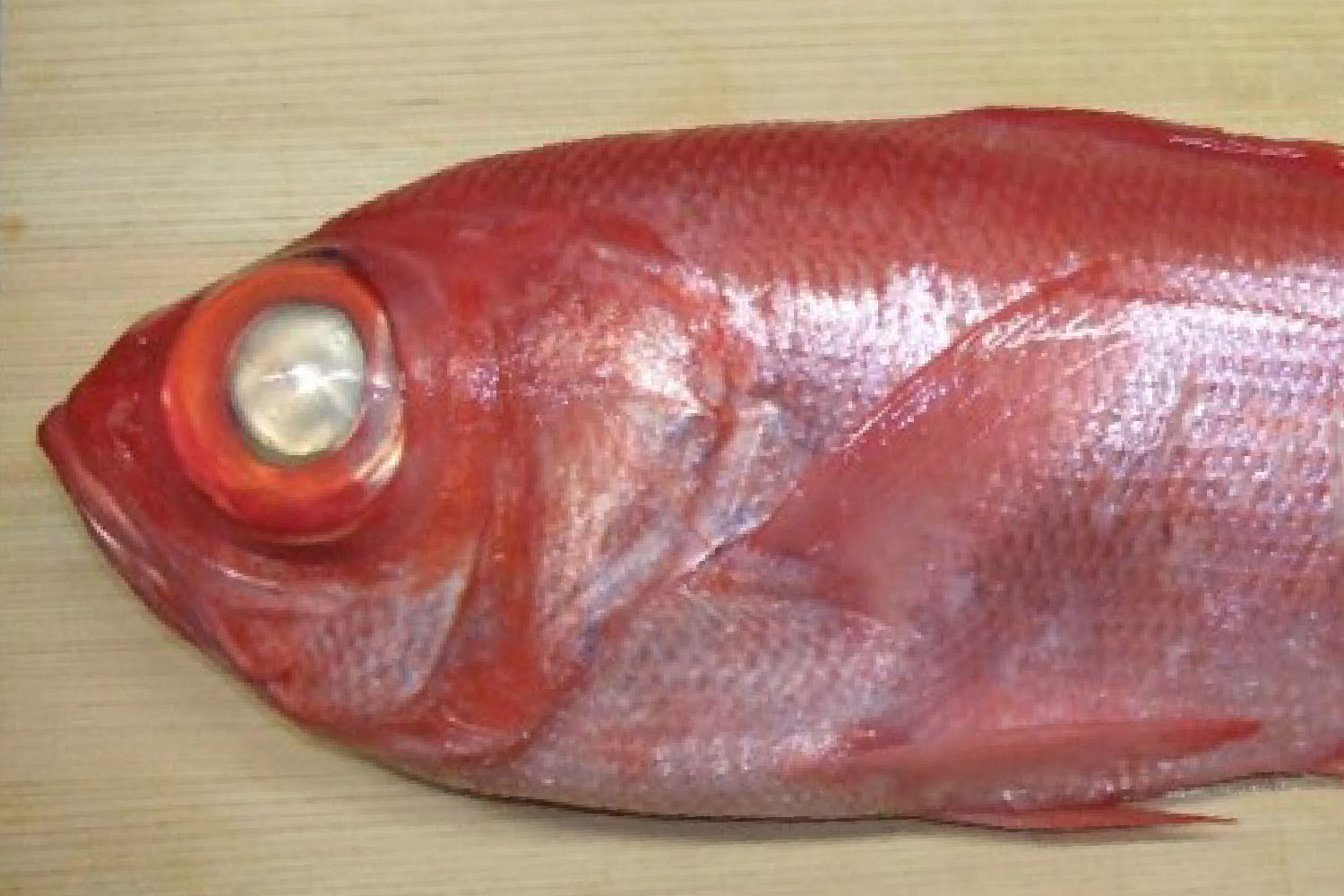
The shining golden eyes that gave them their name contain a tissue called the tapetum behind the retina. The tapetum reflects light like a mirror. Light that enters the eye passes through the retina, is reflected by the tapetum, and passes through the retina again. This is a mechanism that efficiently uses limited light, and can be seen in deep-sea creatures and nocturnal animals on land. It is because the eyes reflect light that they appear to glow.