

Zoo Stock Species and the Red List
Zoo Stock Species and the Red List
Zoo Stock

This indicates that the species is included in the Second Zoo Stock Plan, which was formulated by the Tokyo Metropolitan Government in 2018. The plan sets goals for the next 10 years in three areas: "species conservation," "contribution to wildlife conservation," and "environmental education and conservation awareness." 124 animal species are included.
What is the Red List?
Based on scientific research, this is a list of wildlife classified by rank (category) indicating the degree of risk of extinction.
Livng Things Encyclopedia shows the categories (mainland and islands) assessed by the IUCN (International Union for Conservation of Nature) at the global level, the Ministry of the Environment for Japan, and the Tokyo Metropolitan Government for Tokyo.
The higher the category in each table, the higher the risk of extinction, and CR, EN, and VU are the three categories known as "endangered species." In Tokyo, species that are not at the NT (near threatened) level but are relatively rare are considered "species of concern."
|
IUCN categories |
|
|---|---|
|
EX |
extinction |
|
EW |
Extinction in the wild |
|
CR+EN |
— |
|
CR |
Serious crisis |
|
EN |
crisis |
|
VU |
emergency |
|
NT |
Near Threatened |
|
LC・○ |
Low Concern |
|
DD |
Data shortage |
|
LP |
— |
|
Japan (Ministry of the Environment) Category |
|
|---|---|
|
EX |
extinction |
|
EW |
Extinction in the wild |
|
CR+EN |
Endangered species |
|
CR |
Critically Endangered |
|
EN |
Endangered species |
|
VU |
Endangered species |
|
NT |
Near Threatened |
|
LC・○ |
— |
|
DD |
Lack of information |
|
LP |
Endangered |
|
Tokyo Category |
|
|---|---|
|
EX |
extinction |
|
EW |
Extinction in the wild |
|
CR+EN |
Endangered species |
|
CR |
Critically Endangered |
|
EN |
Endangered species |
|
VU |
Endangered species |
|
NT |
Near Threatened |
|
LC・○ |
Unranked |
|
DD |
Lack of information |
|
LP |
Endangered |
Creatures at Tokyo Sea Life Park
Creatures at Tokyo Sea Life Park
Southern Rockhopper Penguin
Southern Rockhopper Penguin
Eudyptes chrysocome
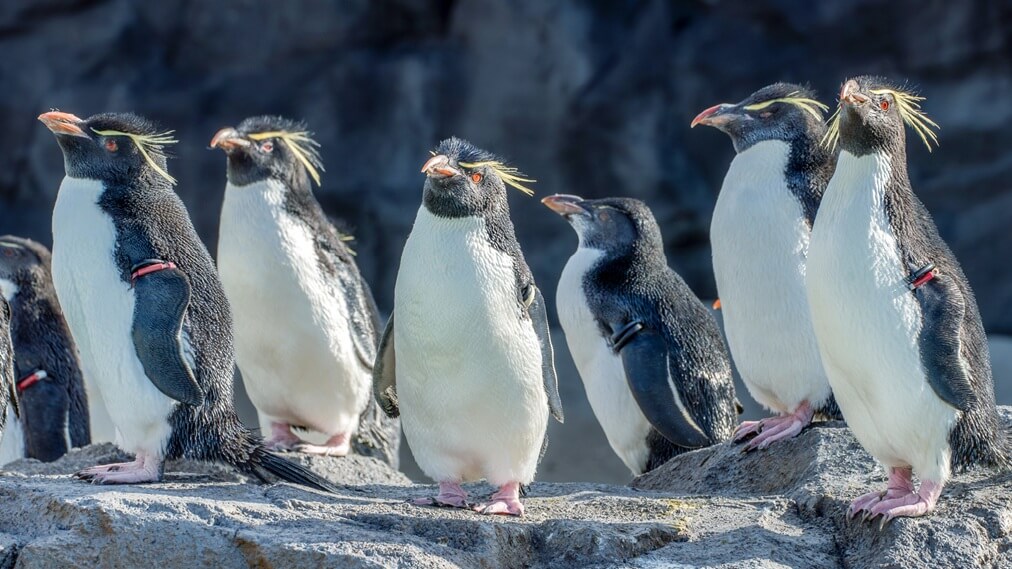
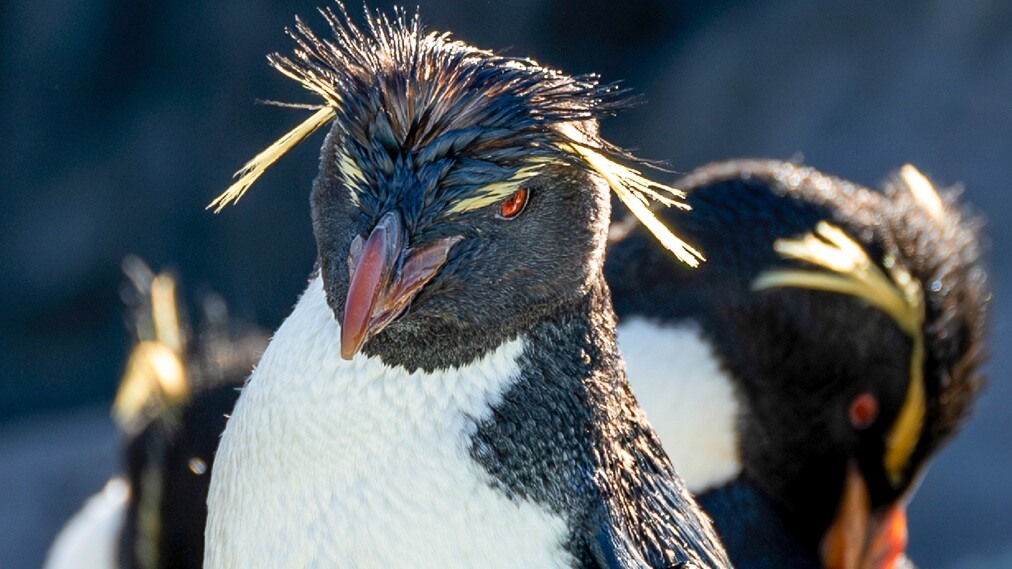
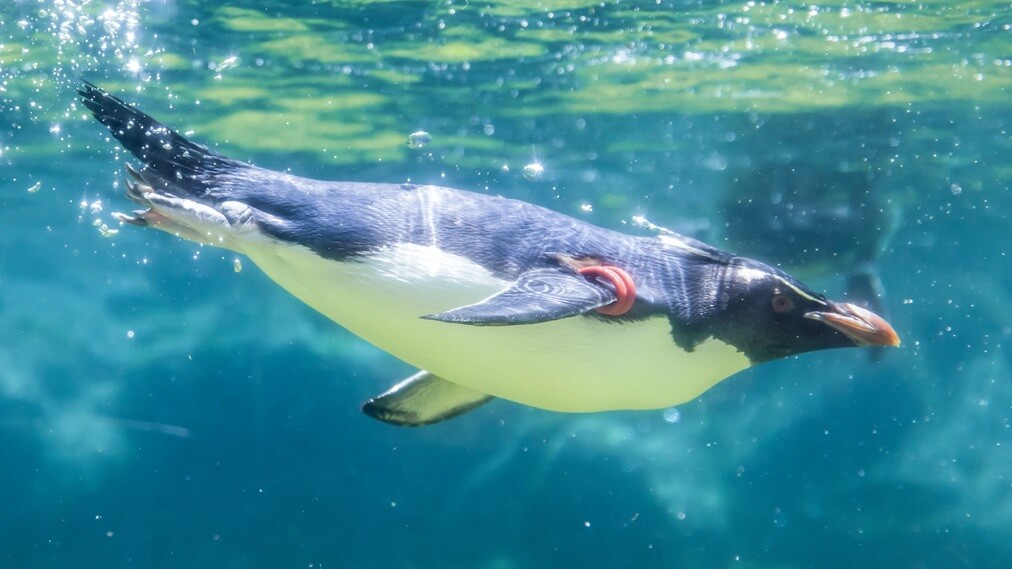
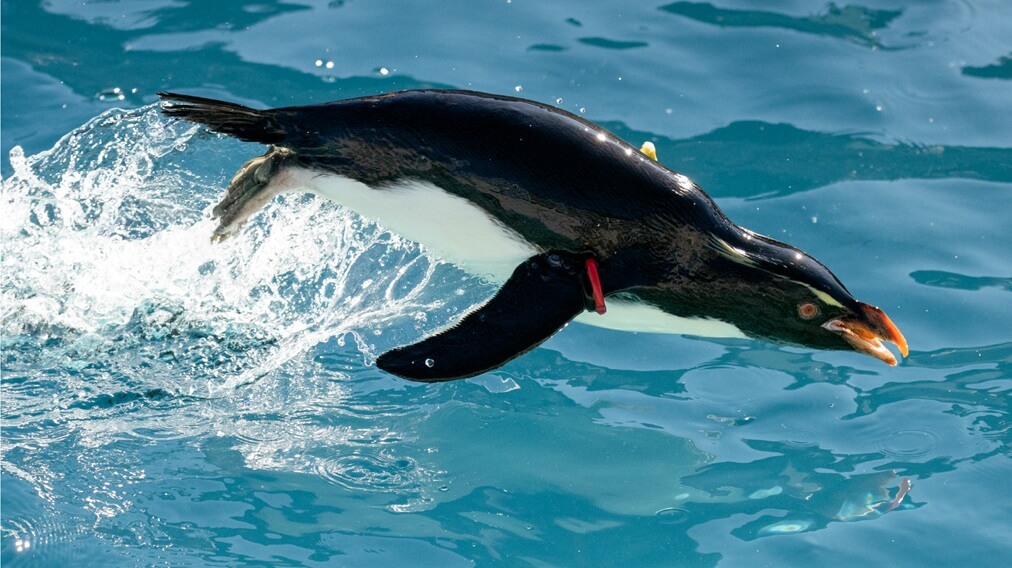
Most penguins walk by swaying their bodies from side to side, but rockhopper penguins hop with both feet together. They move by leaping from rock to rock, and their leaps can reach 2 meters. Outside of the breeding season, they live in the sea, and during the breeding season, they build colonies and nest on islands such as Cape Horn in South America and the Falkland Islands.
*On Thursday, May 7, 2026 (a day the zoo is closed), Southern Rockhopper Penguin and King Penguin will be moved to an air-conditioned room for summer refuge and breeding purposes. They will not be in the main enclosure, but can be observed on monitor screens. They are scheduled to be put back on display outdoors around autumn (they may be temporarily moved to the outdoor enclosure for health management purposes).
| classification | Aves, Sphenisciformes, Penguinidae |
|---|---|
| English name | Southern Rockhopper Penguin |
| distribution | Islands around Antarctica |
| Residence | Non-breeding season: At sea Breeding season: Rocky areas |
| Size |
Tip of beak to tip of tail: 57-65cm
Weight: 3.5-4kg |
| food | They eat small fish and squid. |
| Red List |
IUCN: VU (Very)
|
Are yellow ornamental feathers a sign of adulthood?
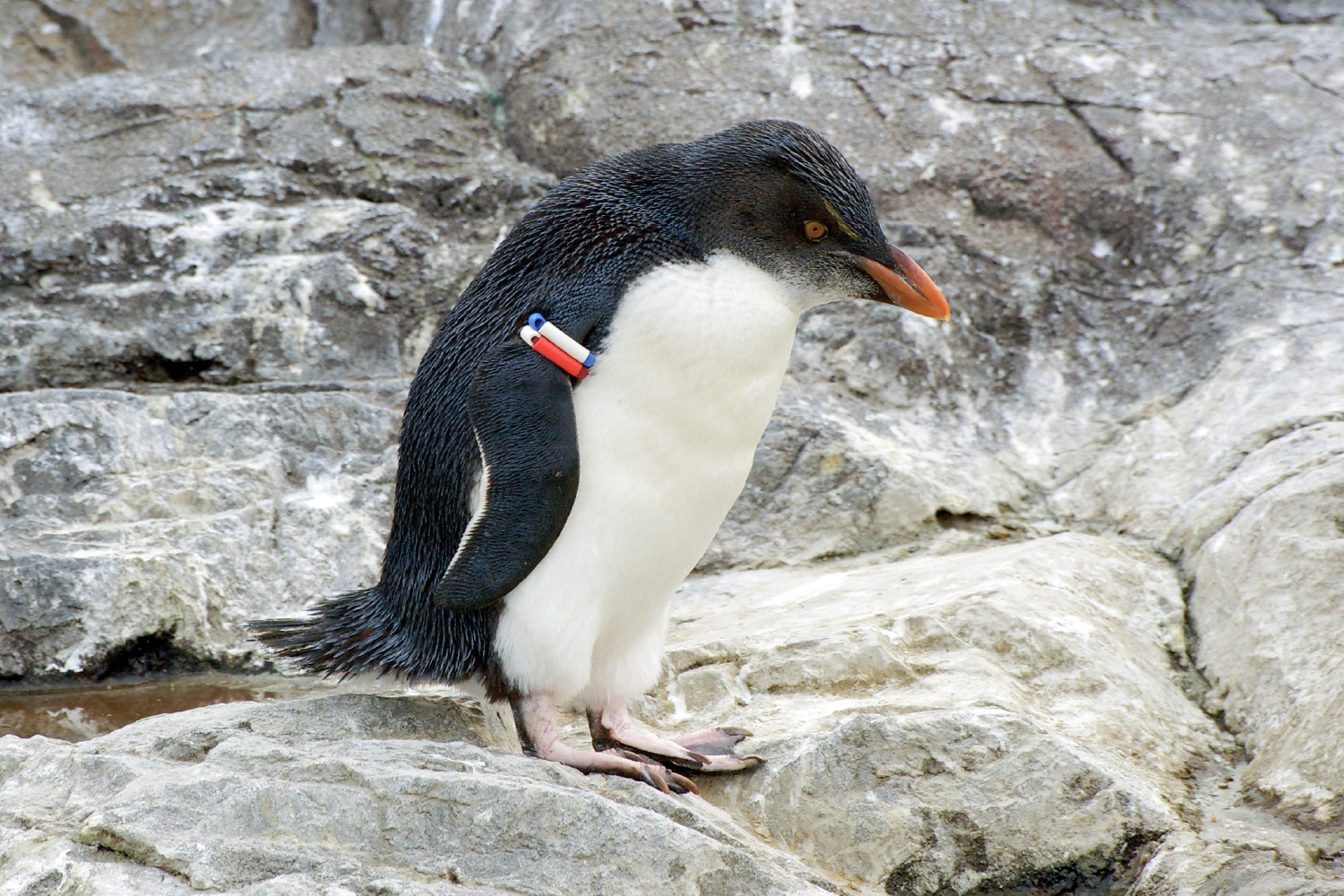
The yellow feather Southern Rockhopper Penguin penguin. These feathers are called crests, and they give off a sharp, cool impression. In fact, young birds and young individuals (subadults) do not have these crests. If you find an individual at the aquarium without ornamental feathers, it is a baby born this year.
In the hot summer, in a comfortable air-conditioned room
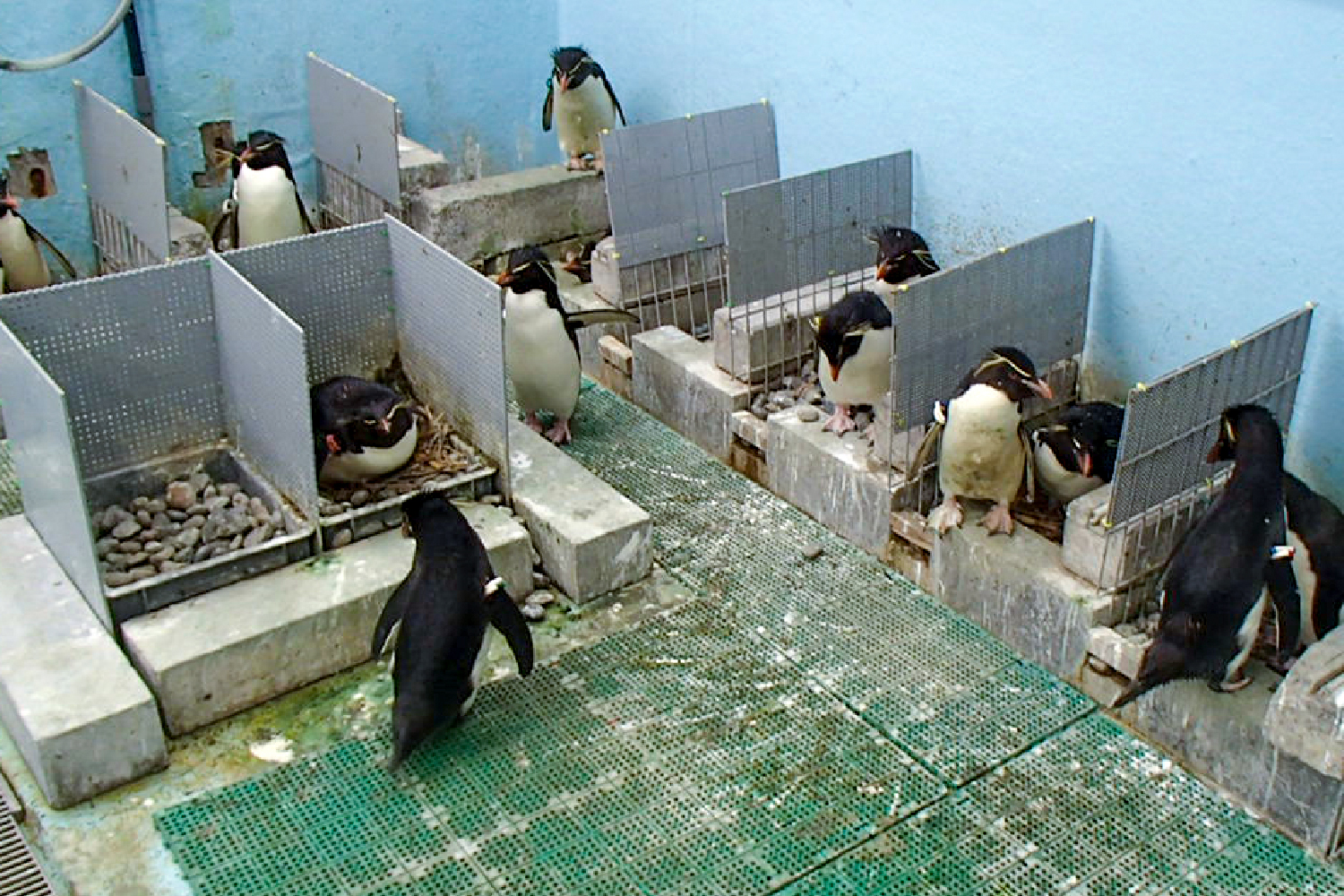
Summer in Japan is extremely hot and difficult for Southern Rockhopper Penguin that live on islands around Antarctica. Southern Rockhopper Penguin is also their breeding season, so every year from around Golden Week until the heat subsides around October, they spend the time indoors in air-conditioned rooms to avoid the heat and breed.
Outside the breeding season, they live at sea.
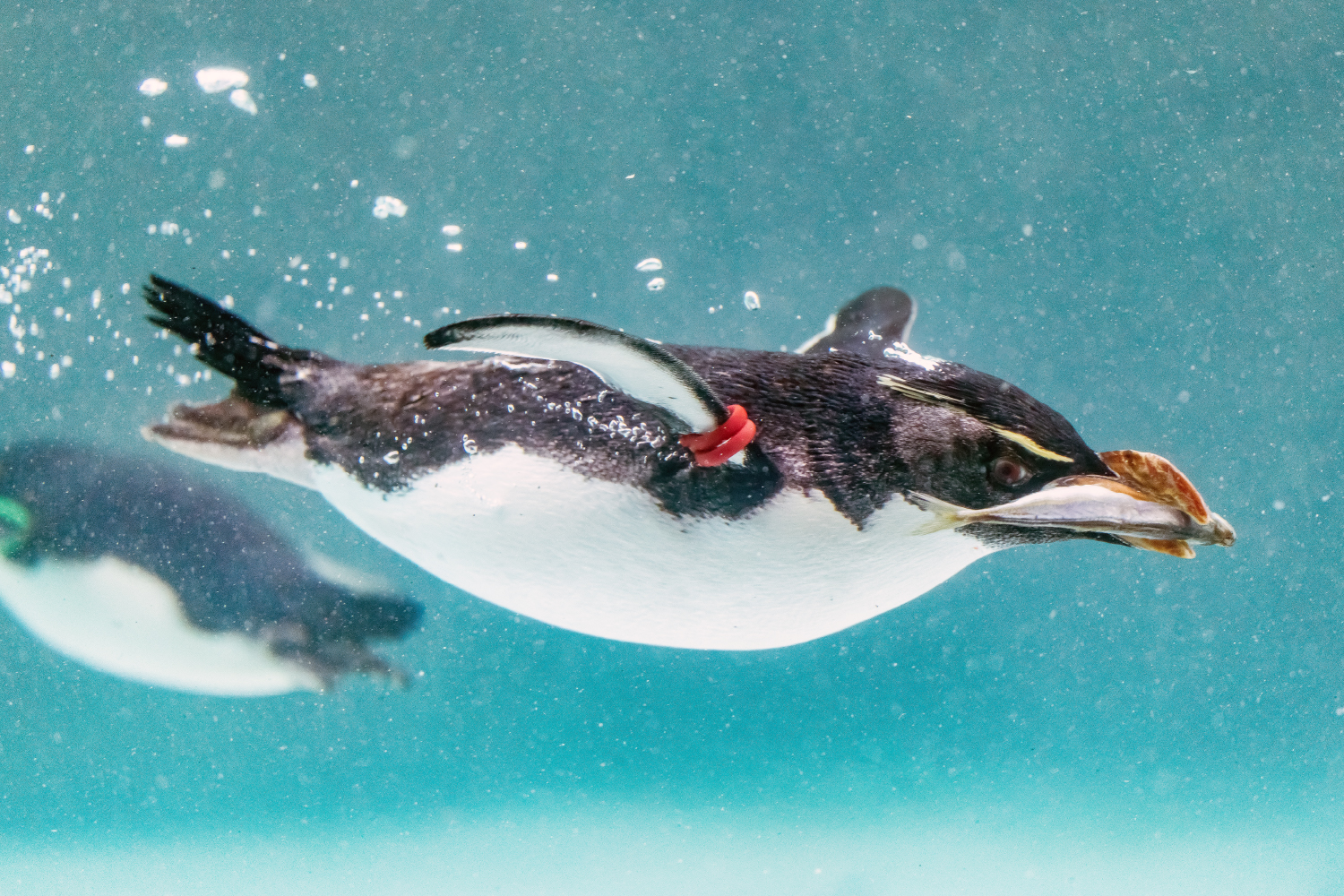
Rockhopper penguins spend their time out at sea except during the breeding season. Moreover, males and females spend their time in different waters. In the aquarium's "Penguin Ecology" tank, many penguins are not only in the pool, but also on land, resting on rocks or climbing to high places. Try to find out where the rockhopper penguins are and what they are doing.