

Zoo Stock Species and the Red List
Zoo Stock Species and the Red List
Zoo Stock
This indicates that the species is included in the Second Zoo Stock Plan, which was formulated by the Tokyo Metropolitan Government in 2018. The plan sets goals for the next 10 years in three areas: "species conservation," "contribution to wildlife conservation," and "environmental education and conservation awareness." 124 animal species are included.
What is the Red List?
Based on scientific research, this is a list of wildlife classified by rank (category) indicating the degree of risk of extinction.
Livng Things Encyclopedia shows the categories (mainland and islands) assessed by the IUCN (International Union for Conservation of Nature) at the global level, the Ministry of the Environment for Japan, and the Tokyo Metropolitan Government for Tokyo.
The higher the category in each table, the higher the risk of extinction, and CR, EN, and VU are the three categories known as "endangered species." In Tokyo, species that are not at the NT (near threatened) level but are relatively rare are considered "species of concern."
|
IUCN categories |
|
|---|---|
|
EX |
extinction |
|
EW |
Extinction in the wild |
|
CR+EN |
— |
|
CR |
Serious crisis |
|
EN |
crisis |
|
VU |
emergency |
|
NT |
Near Threatened |
|
LC・○ |
Low Concern |
|
DD |
Data shortage |
|
LP |
— |
|
Japan (Ministry of the Environment) Category |
|
|---|---|
|
EX |
extinction |
|
EW |
Extinction in the wild |
|
CR+EN |
Endangered species |
|
CR |
Critically Endangered |
|
EN |
Endangered species |
|
VU |
Endangered species |
|
NT |
Near Threatened |
|
LC・○ |
— |
|
DD |
Lack of information |
|
LP |
Endangered |
|
Tokyo Category |
|
|---|---|
|
EX |
extinction |
|
EW |
Extinction in the wild |
|
CR+EN |
Endangered species |
|
CR |
Critically Endangered |
|
EN |
Endangered species |
|
VU |
Endangered species |
|
NT |
Near Threatened |
|
LC・○ |
Unranked |
|
DD |
Lack of information |
|
LP |
Endangered |
Creatures at Tokyo Sea Life Park
Creatures at Tokyo Sea Life Park
Snailfish
Snailfish
Careproctus rastrinus species complex
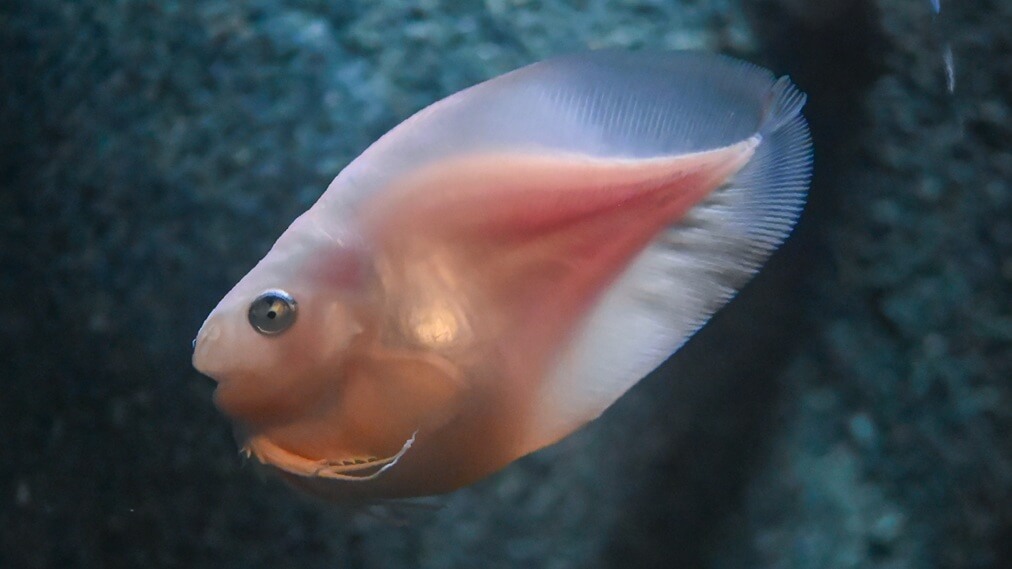
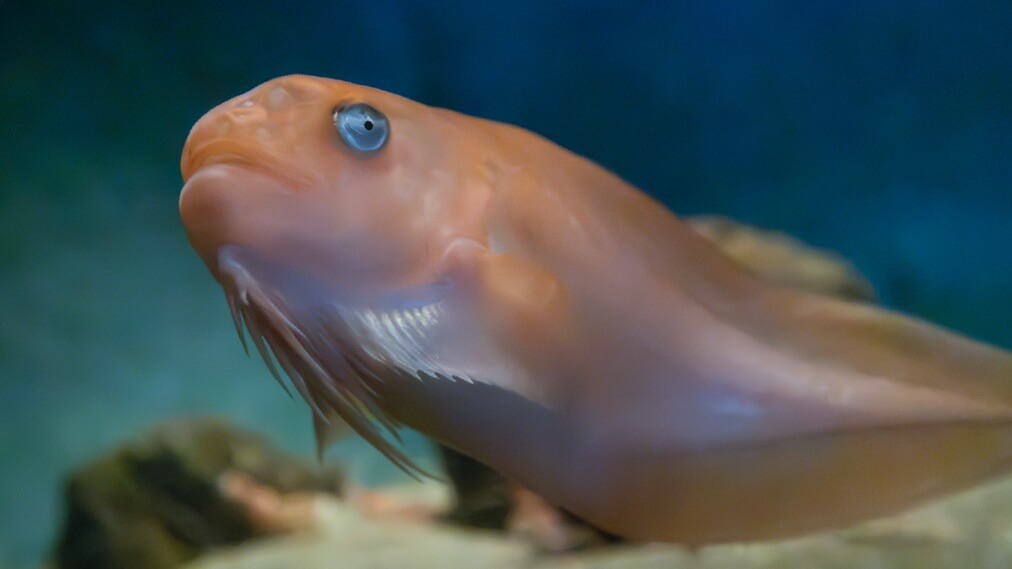
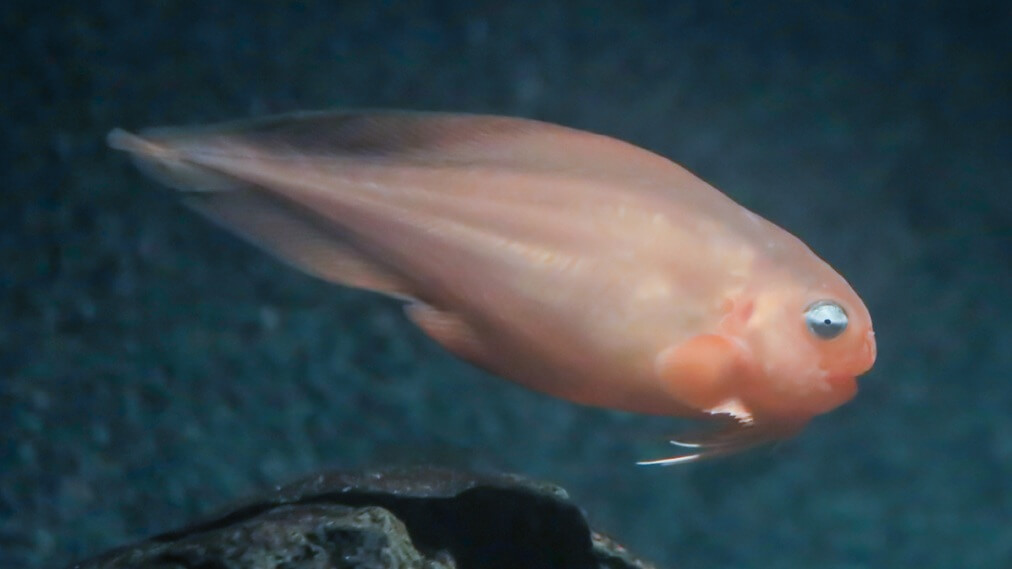
This fish lives in the deep sea. Its entire body is a translucent pink color, and it has a soft, jelly-like appearance. Because of this unique appearance, the group that includes Snailfish is called the "jellyfish genus." The fin veins on its pectoral fins are taste-sensing organs, which it uses to explore the seabed and eat shrimp, crabs, and other creatures.
| classification | Actinopterygii, Scorpaeniformes, Snailfish |
|---|---|
| English name | Snailfish |
| distribution | The Sea of Okhotsk, the Pacific Ocean north of Ibaraki Prefecture, and the Sea of Japan |
| Residence | Deep seas at depths of 100 to 600 meters |
| Size |
Total length: 35cm
|
| food | Small animals such as shrimp and crabs |
| Red List |
Unrated
|
Searching for food
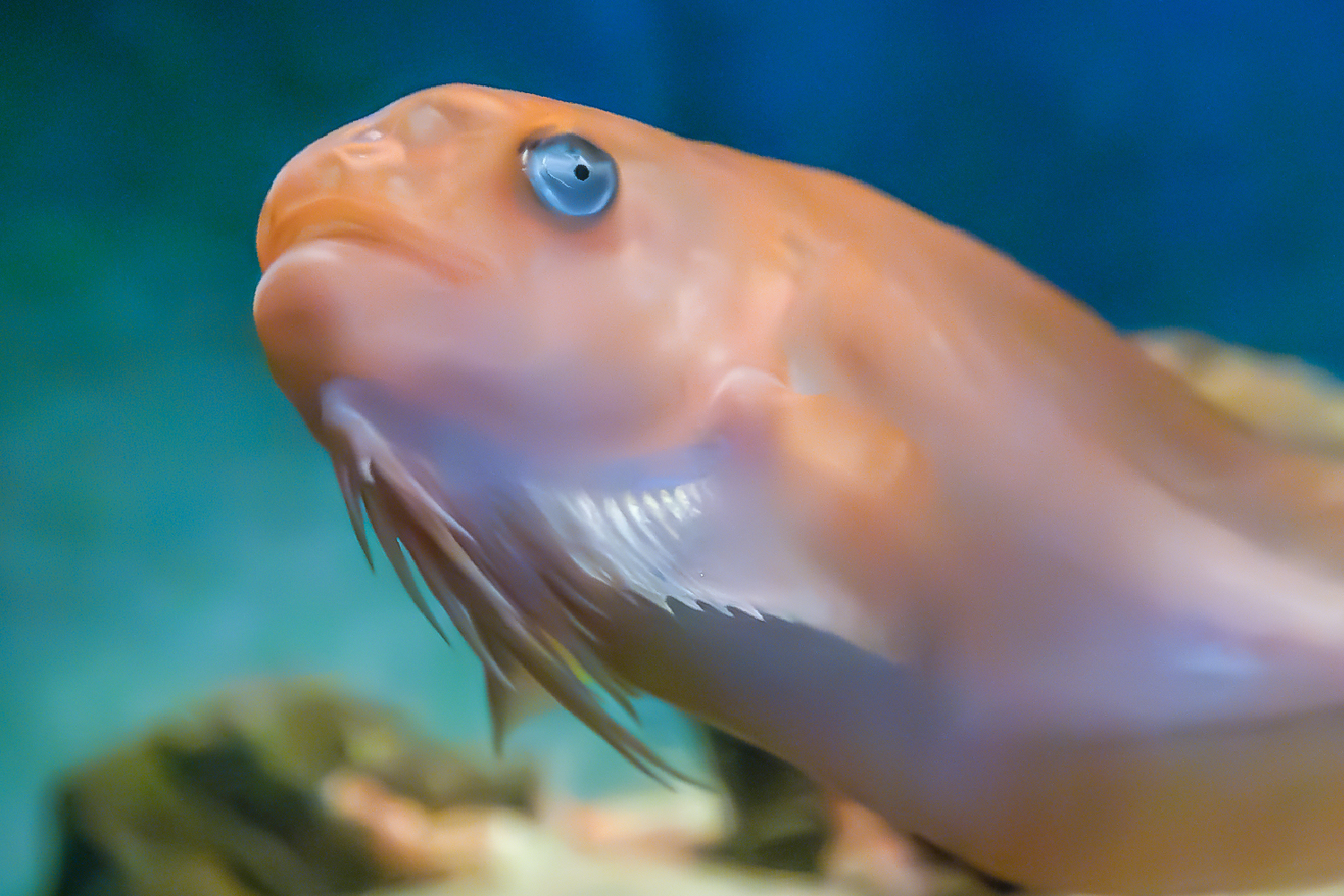
Let's look at the "strip" located below the pectoral fin. This is a modified part of the pectoral fin that has been transformed into a taste-sensing organ. They use this "strip" to probe the seabed and eat small creatures such as shrimp and crabs. Normally they swim slowly, but when they sense the smell of food, they swim quickly to approach it and swallow it whole with their large mouths.
Eggs and hatched offspring
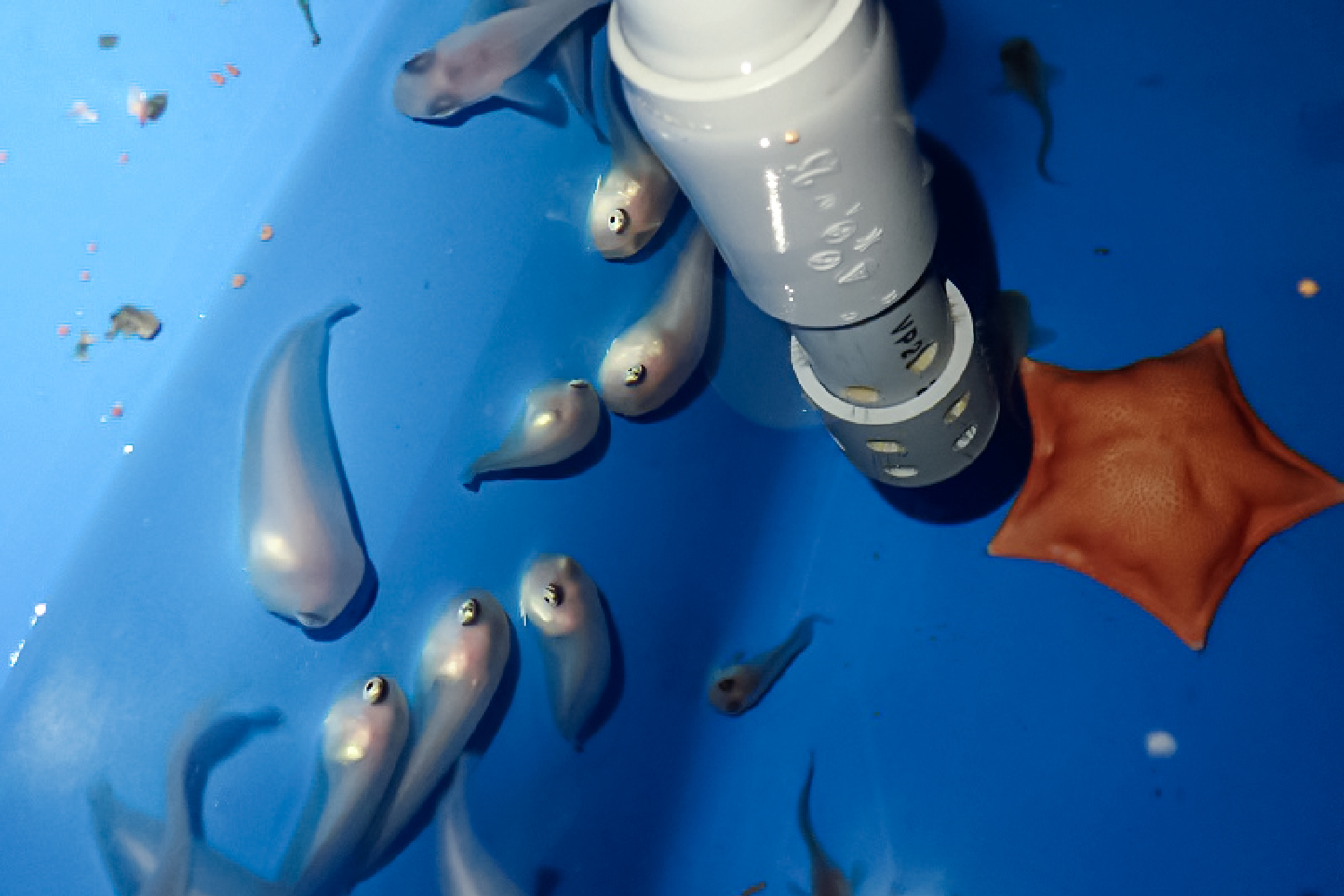
Snailfish has laid eggs in an aquarium. The eggs are about 0.5 cm in diameter and look like pearls. These eggs were discovered in clusters called "egg masses." It takes more than six months for the eggs to hatch in an aquarium at a water temperature of 3°C. Newly hatched offspring are translucent, tadpole-like creatures about 1.5 cm in length. They use their pelvic fins, which have been modified into suction cups, to cling to the walls of the aquarium.