

Zoo Stock Species and the Red List
Zoo Stock Species and the Red List
Zoo Stock

This indicates that the species is included in the Second Zoo Stock Plan, which was formulated by the Tokyo Metropolitan Government in 2018. The plan sets goals for the next 10 years in three areas: "species conservation," "contribution to wildlife conservation," and "environmental education and conservation awareness." 124 animal species are included.
What is the Red List?
Based on scientific research, this is a list of wildlife classified by rank (category) indicating the degree of risk of extinction.
Livng Things Encyclopedia shows the categories (mainland and islands) assessed by the IUCN (International Union for Conservation of Nature) at the global level, the Ministry of the Environment for Japan, and the Tokyo Metropolitan Government for Tokyo.
The higher the category in each table, the higher the risk of extinction, and CR, EN, and VU are the three categories known as "endangered species." In Tokyo, species that are not at the NT (near threatened) level but are relatively rare are considered "species of concern."
|
IUCN categories |
|
|---|---|
|
EX |
extinction |
|
EW |
Extinction in the wild |
|
CR+EN |
— |
|
CR |
Serious crisis |
|
EN |
crisis |
|
VU |
emergency |
|
NT |
Near Threatened |
|
LC・○ |
Low Concern |
|
DD |
Data shortage |
|
LP |
— |
|
Japan (Ministry of the Environment) Category |
|
|---|---|
|
EX |
extinction |
|
EW |
Extinction in the wild |
|
CR+EN |
Endangered species |
|
CR |
Critically Endangered |
|
EN |
Endangered species |
|
VU |
Endangered species |
|
NT |
Near Threatened |
|
LC・○ |
— |
|
DD |
Lack of information |
|
LP |
Endangered |
|
Tokyo Category |
|
|---|---|
|
EX |
extinction |
|
EW |
Extinction in the wild |
|
CR+EN |
Endangered species |
|
CR |
Critically Endangered |
|
EN |
Endangered species |
|
VU |
Endangered species |
|
NT |
Near Threatened |
|
LC・○ |
Unranked |
|
DD |
Lack of information |
|
LP |
Endangered |
Creatures at Tokyo Sea Life Park
Creatures at Tokyo Sea Life Park

Shuttles Hoppfish
Shuttles Hoppfish
Periophthalmusmodes
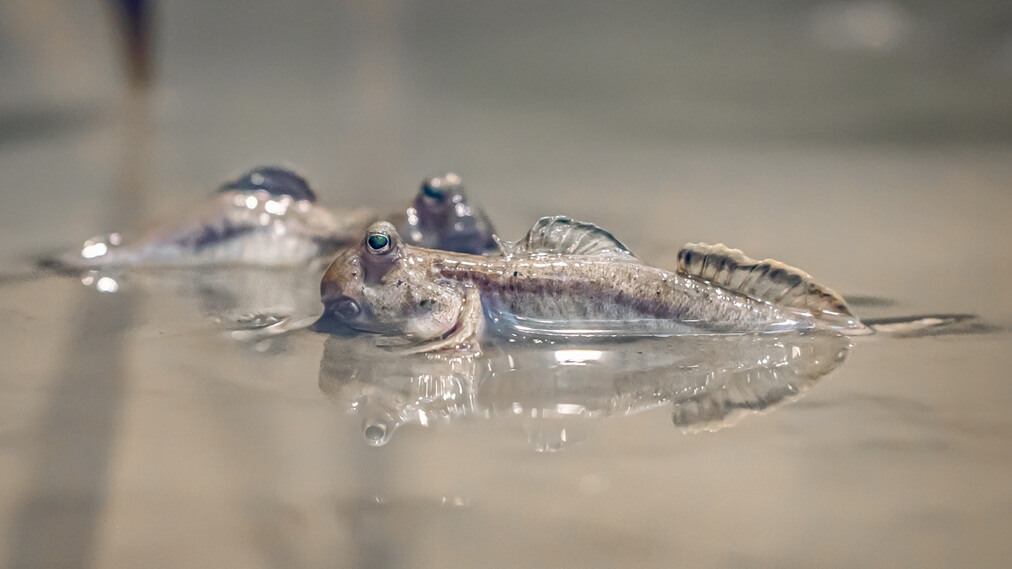
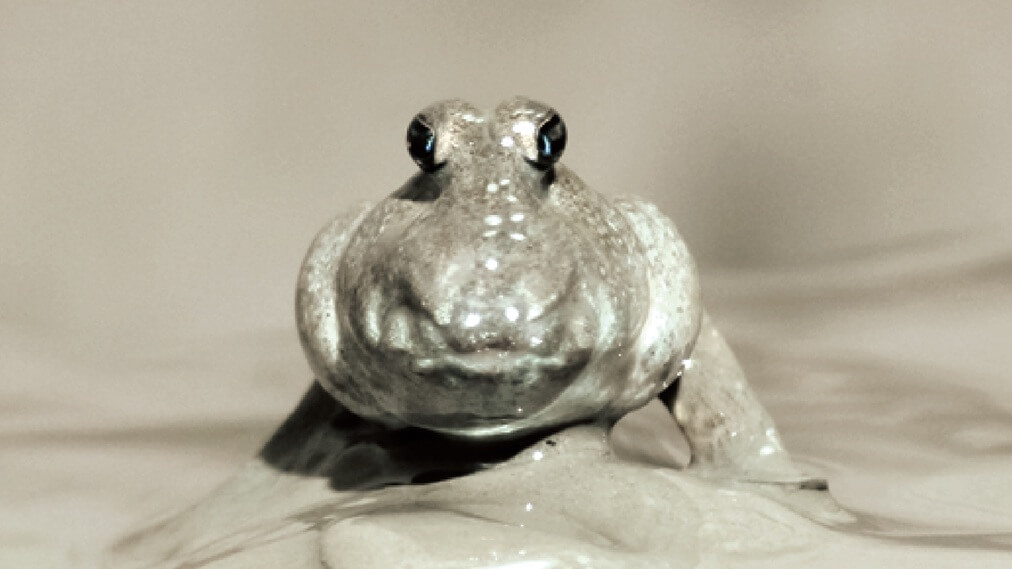
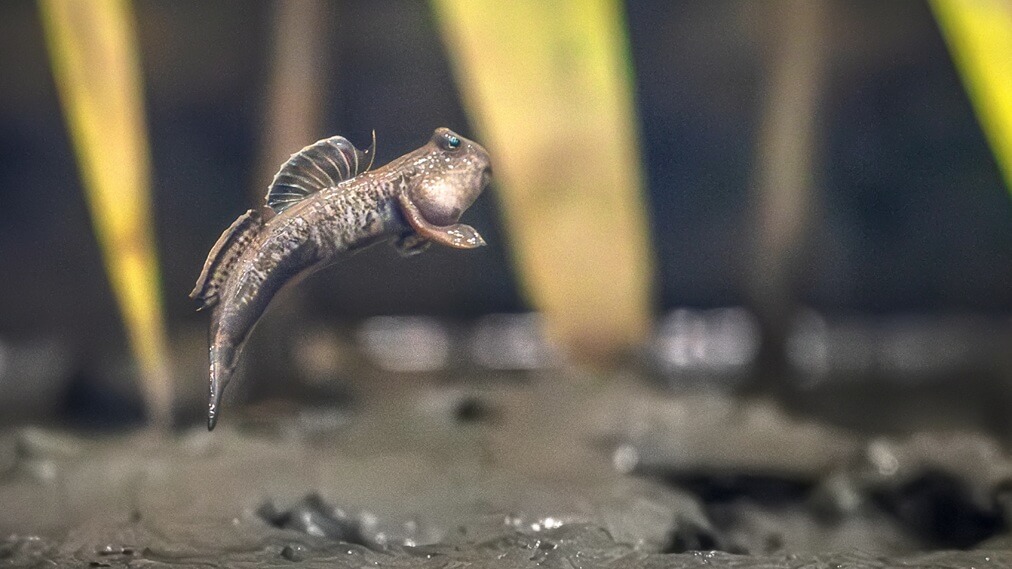
This fish lives in muddy tidal flats. Its body color closely resembles the mud, and it skillfully moves around on the mud using its pectoral fins. When it needs to move quickly, it hops and jumps using the back half of its body. Although it is a fish, it rarely enters the water. In addition to gill respiration, it can take in oxygen from the air through skin respiration.
| classification | Actinopterygii, Perciformes, Gobiidae |
|---|---|
| English name | Shuttles Hoppfish |
| distribution | From Tokyo Bay to the Ryukyu Islands, the Korean Peninsula, and China |
| Residence | Muddy tidal flats |
| Size |
Total length: 7cm
|
| food | Crustaceans, worms, etc. |
| Red List |
IUCN: LC (Least Concern)
Japan: NT (Near Threatened) |
Rolling around in the mud
When observing Shuttles Hoppfish in an aquarium, you'll sometimes see them rolling around on the mud. This is a behavior to keep their bodies covered in muddy water, preventing their skin from drying out and allowing them to breathe through their skin. They also sometimes pull their eyes, which are located on top of their heads, back in tightly. This is also a behavior to prevent dehydration.
Why are the eyes on top of the head?
Shuttles Hoppfish 's face is somehow endearing. This might be because its eyes are located on top of its head. On an unobstructed tidal flat, being able to see a little further ahead allows it to spot predators more quickly. Similarly, the sand crab, a relative of Crab, also has its eyes located high up. Let's observe them.
Burrows aren't just hiding places
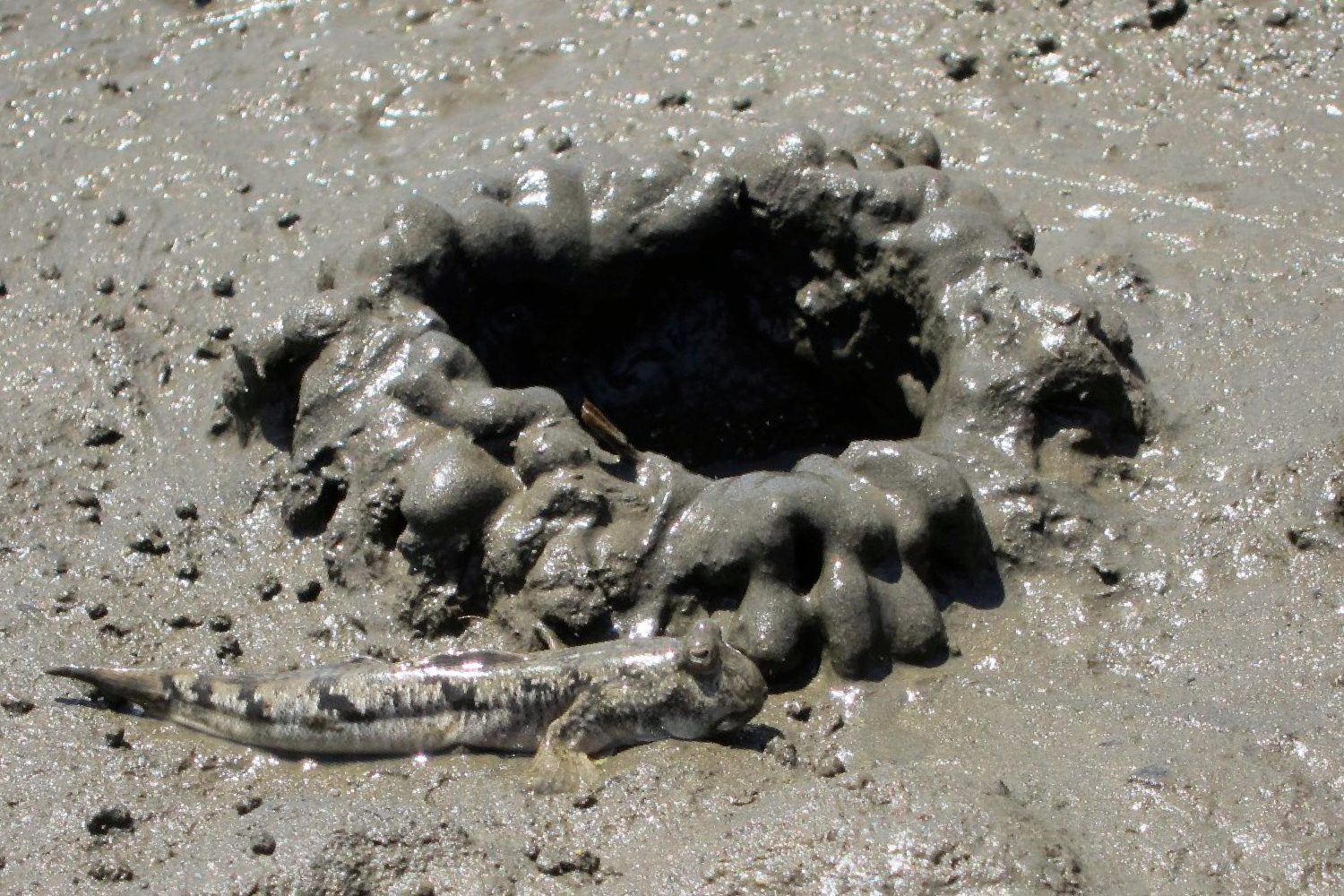
Shuttles Hoppfish build burrows about 30 cm deep in muddy tidal flats. Around the burrows, there is a pile of mud that they have taken in with their mouths and spat out. The burrows not only protect them from predators such as birds, but also help them escape the high temperatures of summer and the low temperatures of winter, and they are also used as spawning grounds.
Wriggling in the mud
Shuttles Hoppfish have bodies that are brown or grayish in color, resembling mud, but from early summer to summer, you can see Shuttles Hoppfish that are light pink in color. These are males during the breeding season. When male Shuttles Hoppfish are in the breeding season, their body color changes, and they wriggle and jump around to court females.
Protecting Shuttles Hoppfish
Shuttles Hoppfish living in Tokyo Bay are a rare population, representing the northernmost limit of their habitat. However, most of the tidal flats in Tokyo Bay have been lost, putting them in a critical situation. The aquarium, in cooperation with nearby museums and other organizations, has formed the "Shuttles Hoppfish Conservation Facility Liaison Council" to conduct observation events for the public and research on Shuttles Hoppfish.