

Zoo Stock Species and the Red List
Zoo Stock Species and the Red List
Zoo Stock
This indicates that the species is included in the Second Zoo Stock Plan, which was formulated by the Tokyo Metropolitan Government in 2018. The plan sets goals for the next 10 years in three areas: "species conservation," "contribution to wildlife conservation," and "environmental education and conservation awareness." 124 animal species are included.
What is the Red List?
Based on scientific research, this is a list of wildlife classified by rank (category) indicating the degree of risk of extinction.
Livng Things Encyclopedia shows the categories (mainland and islands) assessed by the IUCN (International Union for Conservation of Nature) at the global level, the Ministry of the Environment for Japan, and the Tokyo Metropolitan Government for Tokyo.
The higher the category in each table, the higher the risk of extinction, and CR, EN, and VU are the three categories known as "endangered species." In Tokyo, species that are not at the NT (near threatened) level but are relatively rare are considered "species of concern."
|
IUCN categories |
|
|---|---|
|
EX |
extinction |
|
EW |
Extinction in the wild |
|
CR+EN |
— |
|
CR |
Serious crisis |
|
EN |
crisis |
|
VU |
emergency |
|
NT |
Near Threatened |
|
LC・○ |
Low Concern |
|
DD |
Data shortage |
|
LP |
— |
|
Japan (Ministry of the Environment) Category |
|
|---|---|
|
EX |
extinction |
|
EW |
Extinction in the wild |
|
CR+EN |
Endangered species |
|
CR |
Critically Endangered |
|
EN |
Endangered species |
|
VU |
Endangered species |
|
NT |
Near Threatened |
|
LC・○ |
— |
|
DD |
Lack of information |
|
LP |
Endangered |
|
Tokyo Category |
|
|---|---|
|
EX |
extinction |
|
EW |
Extinction in the wild |
|
CR+EN |
Endangered species |
|
CR |
Critically Endangered |
|
EN |
Endangered species |
|
VU |
Endangered species |
|
NT |
Near Threatened |
|
LC・○ |
Unranked |
|
DD |
Lack of information |
|
LP |
Endangered |
Creatures at Tokyo Sea Life Park
Creatures at Tokyo Sea Life Park
Sea Anemone
Sea Anemone
Entacmaea actinostoloides
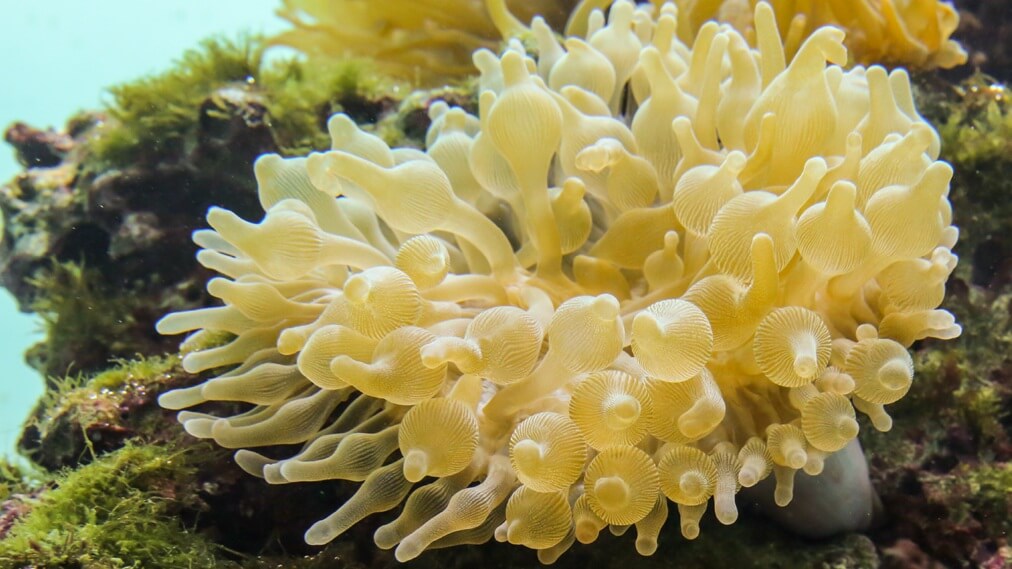
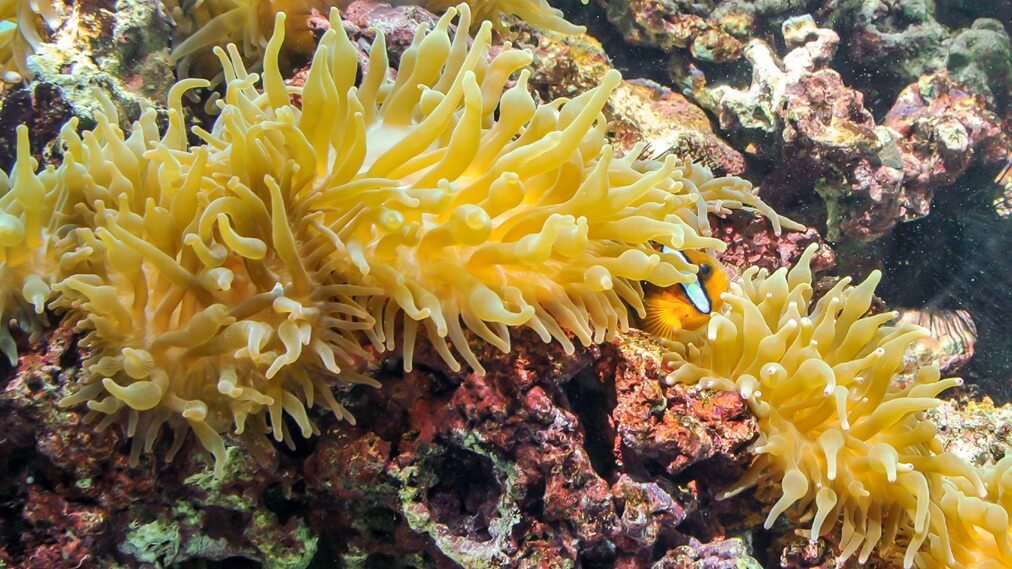
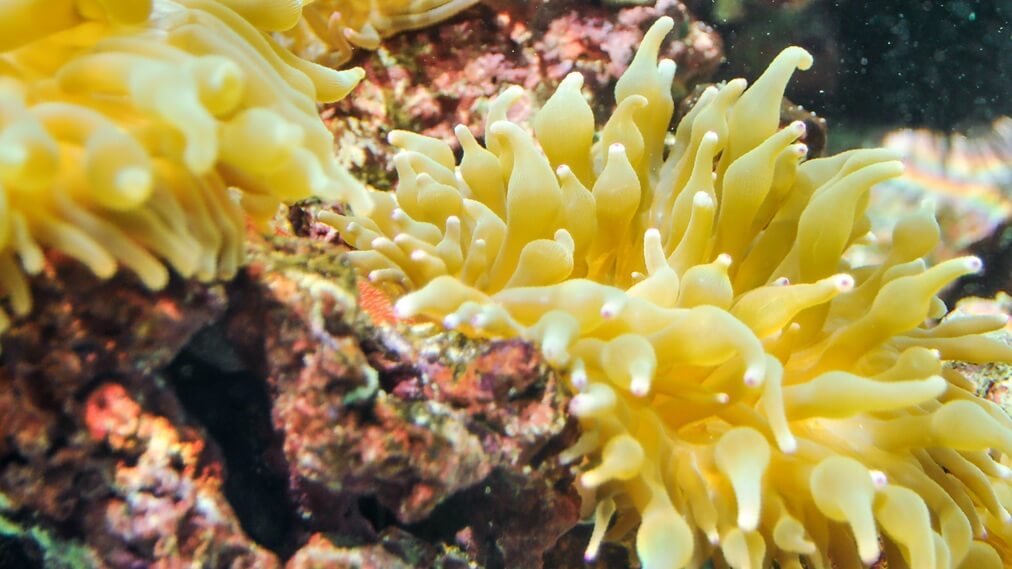
This is a type of sea anemone that lives on rocky shores in warm seas. In shallow waters bathed in sunlight, they form colonies of tens, sometimes hundreds, of them, resembling a flower garden. There's a reason why Sea Anemone live in shallow waters: they have tiny algae living symbiotically inside their bodies, and they survive by obtaining nutrients produced by these algae through photosynthesis.
| classification | Anthozoa, Actiniaria, Acanthidae |
|---|---|
| English name | Sea Anemone |
| distribution | From Aomori south to the Kyushu coast |
| Residence | Rocky reefs covered with seaweed |
| Size |
Diameter: 10cm
|
| food | Nutrients from photosynthesis by symbiotic algae, small plankton and organic matter |
| Red List |
Unrated
|
Living in symbiosis with algae
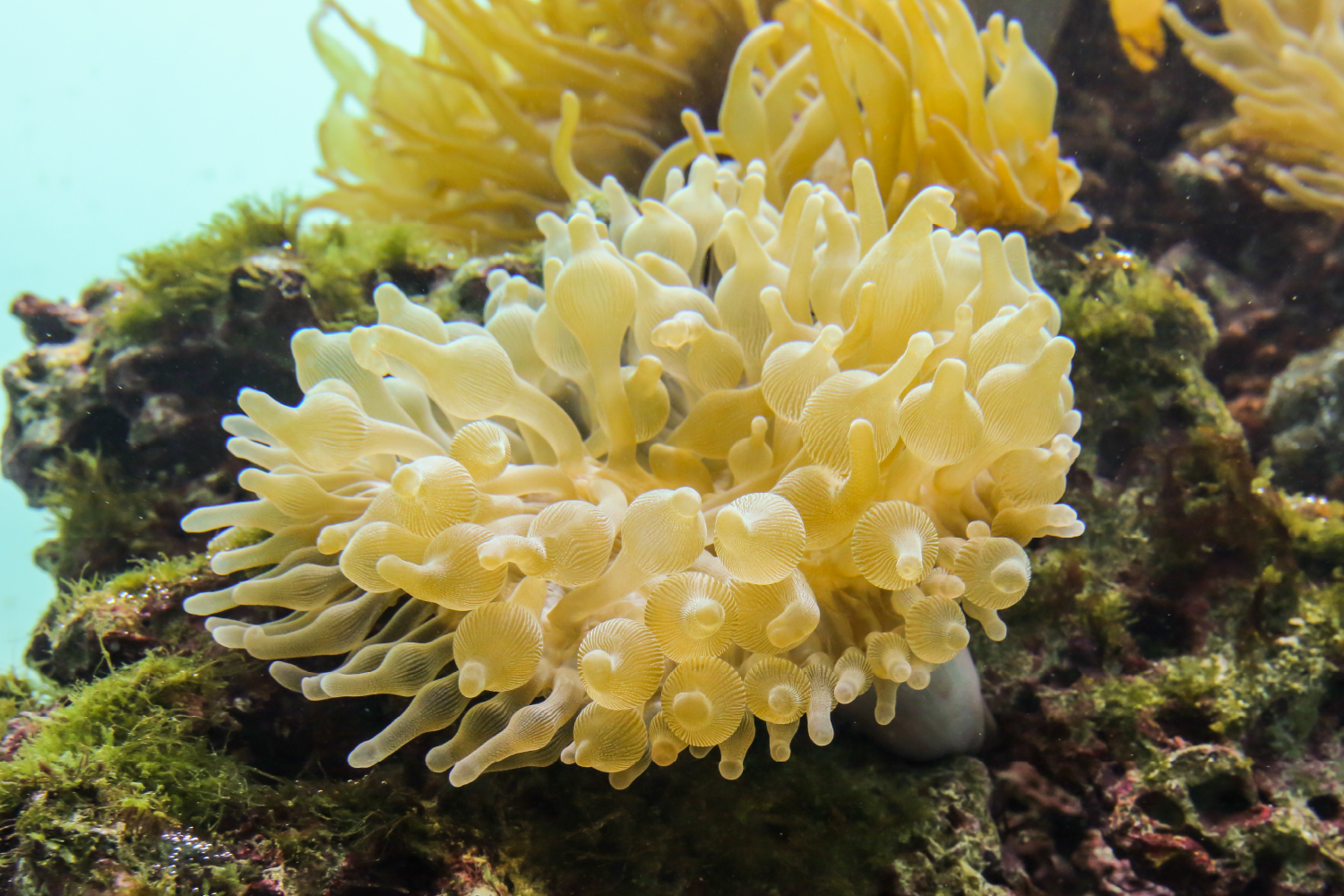
If you look at the tentacles, you'll see they range in color from green to brown. This is due to the color of the algae that live inside their bodies. Sea Anemone not only receive nutrients from symbiotic algae, but they also use their tentacles to catch and eat small creatures. It seems that both the nutrients produced by the symbiotic algae and the food they catch themselves are essential for their survival.
Divide and multiply
Sea Anemone reproduce sexually by producing eggs and sperm, but they can also reproduce asexually. This is called "fission," in which the middle of the body splits open to the left and right, turning one into two. It is known that by fission and reproduction, they can create clonal populations with the same genotype.
Coexistence with Yellowtail Clownfish
Yellowtail Clownfish live together with Sea Anemone. The anemone's tentacles are poisonous, but Yellowtail Clownfish, covered in a special mucus, can protect themselves from predators by hiding in the anemone's tentacles. In addition, Yellowtail Clownfish chase away fish that try to eat the anemone and also clean the tentacles. Recent research has also shown that Yellowtail Clownfish bring food to the anemones.