

Zoo Stock Species and the Red List
Zoo Stock Species and the Red List
Zoo Stock

This indicates that the species is included in the Second Zoo Stock Plan, which was formulated by the Tokyo Metropolitan Government in 2018. The plan sets goals for the next 10 years in three areas: "species conservation," "contribution to wildlife conservation," and "environmental education and conservation awareness." 124 animal species are included.
What is the Red List?
Based on scientific research, this is a list of wildlife classified by rank (category) indicating the degree of risk of extinction.
Livng Things Encyclopedia shows the categories (mainland and islands) assessed by the IUCN (International Union for Conservation of Nature) at the global level, the Ministry of the Environment for Japan, and the Tokyo Metropolitan Government for Tokyo.
The higher the category in each table, the higher the risk of extinction, and CR, EN, and VU are the three categories known as "endangered species." In Tokyo, species that are not at the NT (near threatened) level but are relatively rare are considered "species of concern."
|
IUCN categories |
|
|---|---|
|
EX |
extinction |
|
EW |
Extinction in the wild |
|
CR+EN |
— |
|
CR |
Serious crisis |
|
EN |
crisis |
|
VU |
emergency |
|
NT |
Near Threatened |
|
LC・○ |
Low Concern |
|
DD |
Data shortage |
|
LP |
— |
|
Japan (Ministry of the Environment) Category |
|
|---|---|
|
EX |
extinction |
|
EW |
Extinction in the wild |
|
CR+EN |
Endangered species |
|
CR |
Critically Endangered |
|
EN |
Endangered species |
|
VU |
Endangered species |
|
NT |
Near Threatened |
|
LC・○ |
— |
|
DD |
Lack of information |
|
LP |
Endangered |
|
Tokyo Category |
|
|---|---|
|
EX |
extinction |
|
EW |
Extinction in the wild |
|
CR+EN |
Endangered species |
|
CR |
Critically Endangered |
|
EN |
Endangered species |
|
VU |
Endangered species |
|
NT |
Near Threatened |
|
LC・○ |
Unranked |
|
DD |
Lack of information |
|
LP |
Endangered |
Creatures at Tokyo Sea Life Park
Creatures at Tokyo Sea Life Park

Scalloped Hammerhead
Scalloped Hammerhead
Sphyrna lewini
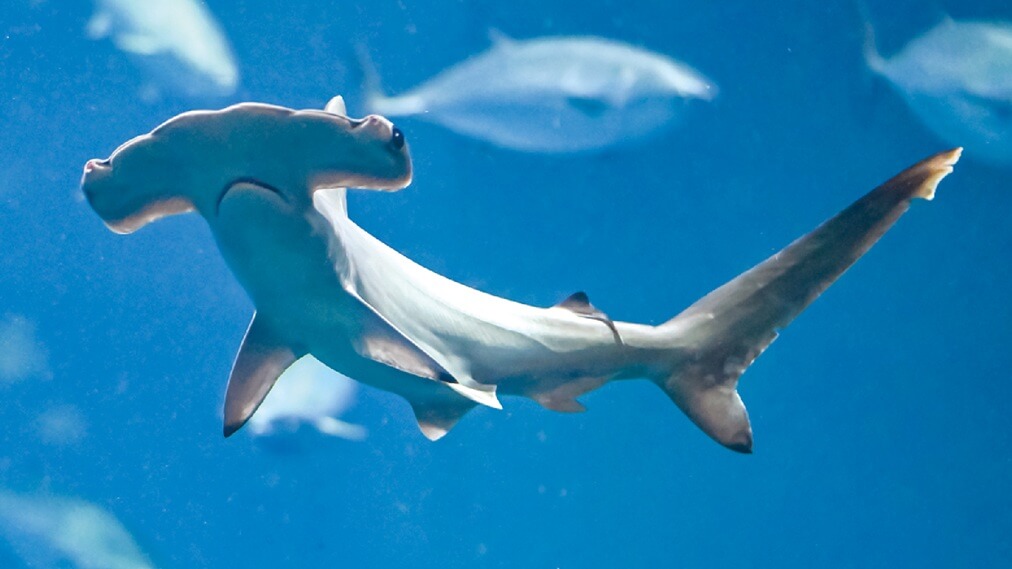
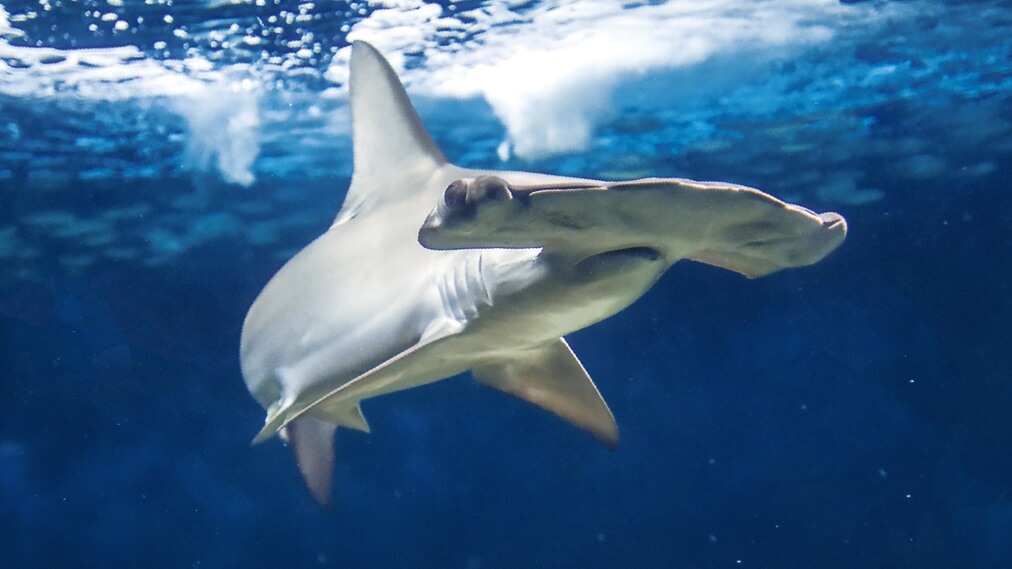
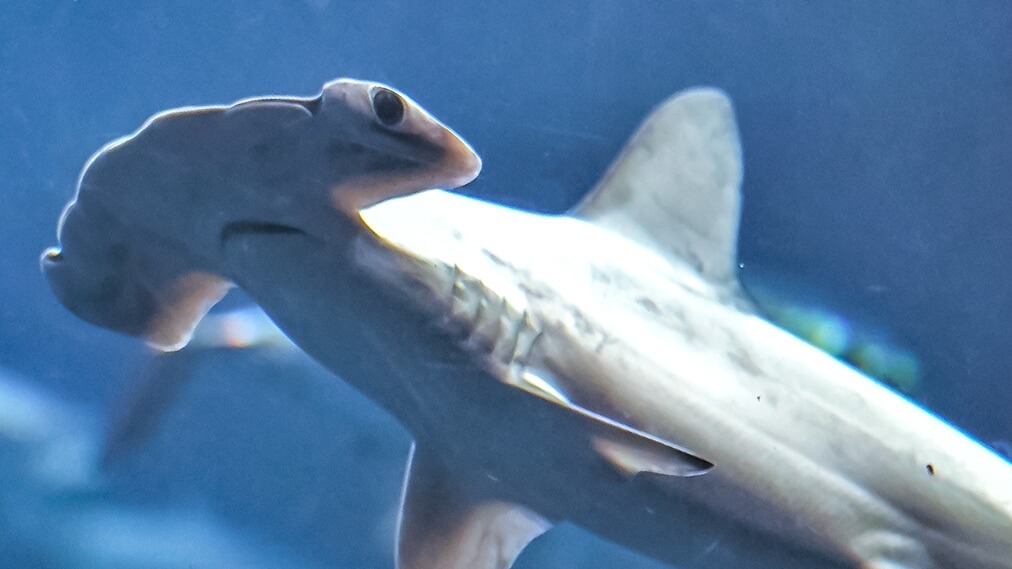
They have a unique hammer-shaped head and are also known as "hammerheads." They sometimes live in large schools of several hundred. Males have claspers (copulation organs) and are known to mate and give birth to young.
| classification | Chondrichthyes, Carcharhiniformes, Smaenidae |
|---|---|
| English name | Scalloped Hammerhead |
| distribution | Subtropical to temperate oceans around the world |
| Residence | Coastal to open ocean waters |
| Size |
Total length: 4m
|
| food | Fish, crustaceans, squid, etc. |
| Red List |
IUCN: Critically Endangered
Tokyo: Species of note |
What's the purpose of the oddly shaped head?
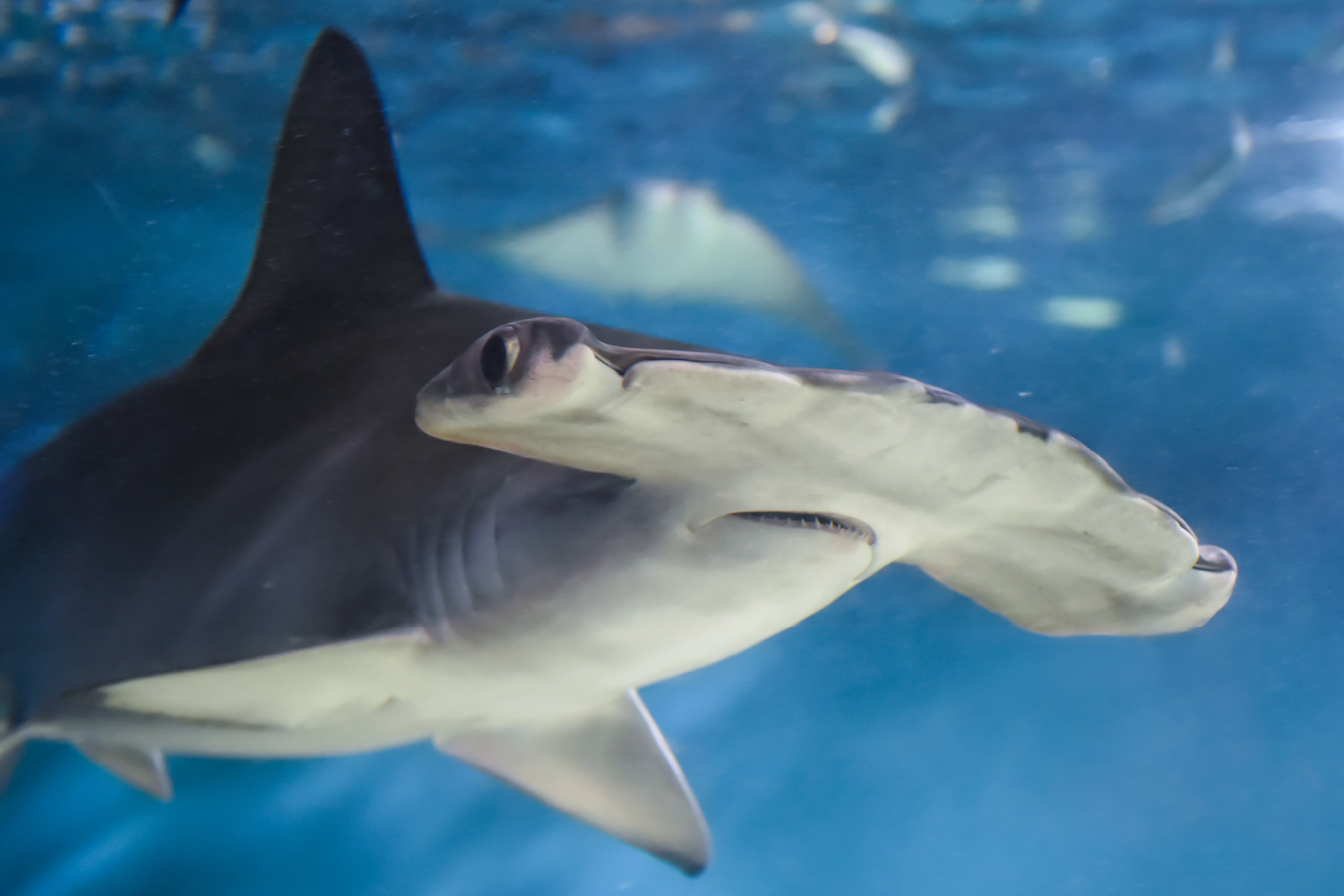
Let's try to find out where Scalloped Hammerhead 's eyes and nostrils are located. They are located at either end of its flat, wide head. It may seem strange, but the distance between the eyes and nose allows it to locate prey more accurately. Its head is also dotted with organs that sense the electricity emitted by living creatures, which helps it find creatures in the sand. Its head also functions as a rudder when it needs to maneuver quickly to swim, so there are many benefits to its oddly shaped head.
Two penises on a male
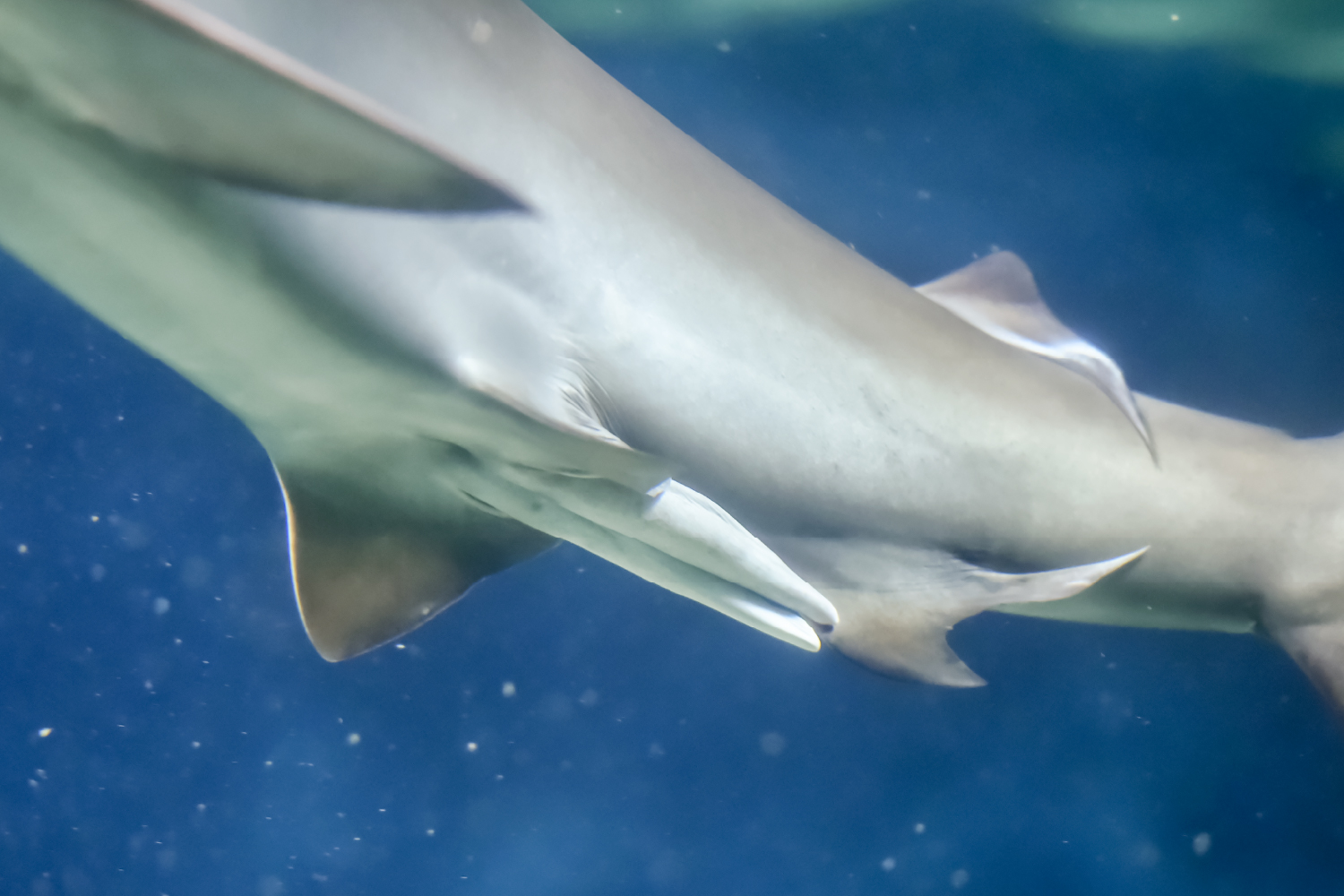
Let's take a look at Scalloped Hammerhead in the tank from underneath. Do you see two rod-like structures hanging from the inside of its pelvic fins? These rod-like structures are claspers (copulatory organs) that are modified pelvic fins of the male. Scalloped Scalloped Hammerhead and other shark species are known to mate and produce eggs or live young through internal fertilization. The offspring are born looking just like their parents. Let's try to find Scalloped Hammerhead shark.
His mind is a food detector!
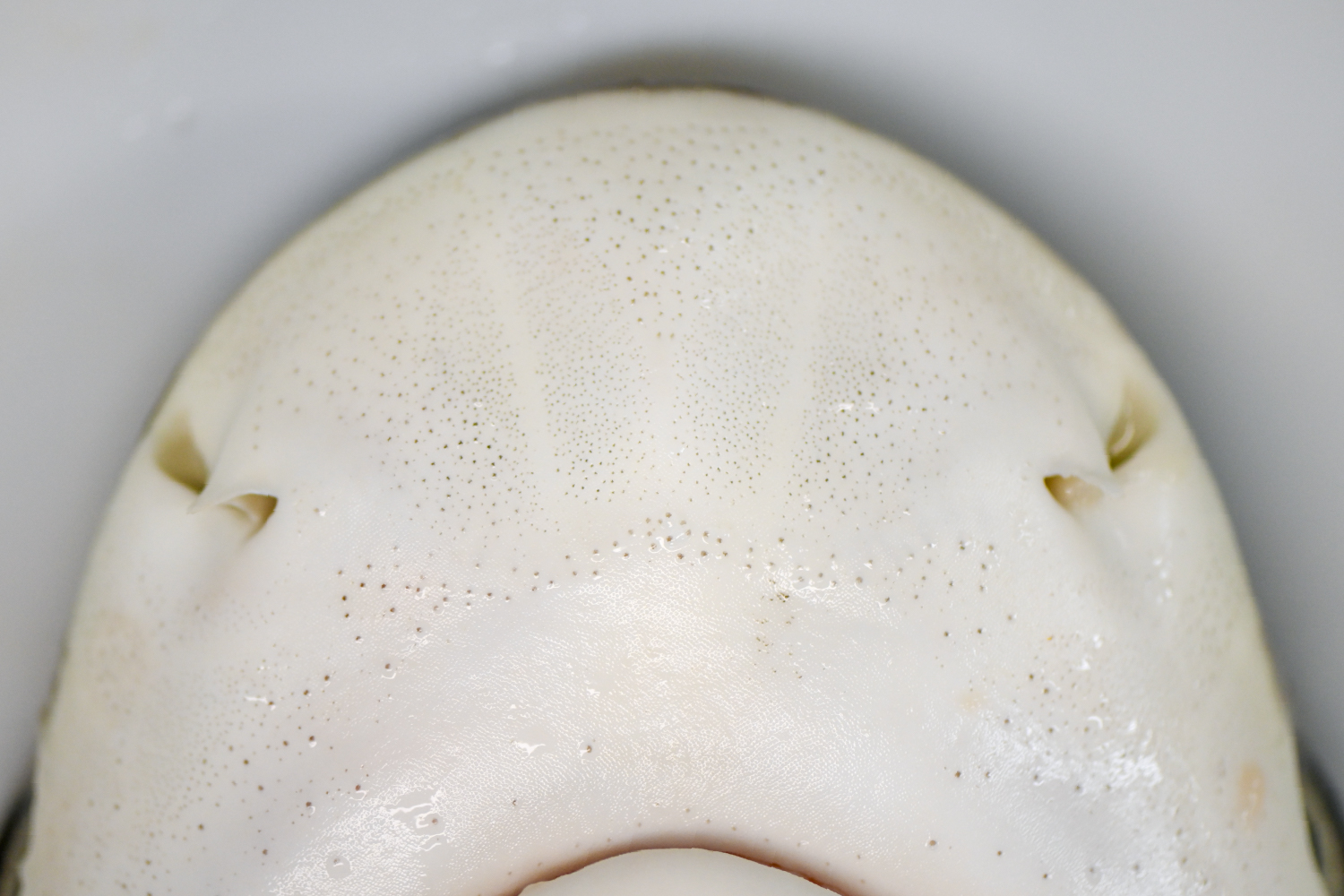
If you happen to be watching Scalloped Hammerhead shark during feeding time, try watching it search for and eat food. It circles around on the seabed searching for food. The photo shows the head of a blacktip reef shark, and you can see that it has many small holes. Sharks' heads are home to a collection of organs called the organs of Lorenzini, which detect weak electrical currents emitted by other living creatures. In the sea, they use these detector-like heads to search for prey in the sand.