

Zoo Stock Species and the Red List
Zoo Stock Species and the Red List
Zoo Stock

This indicates that the species is included in the Second Zoo Stock Plan, which was formulated by the Tokyo Metropolitan Government in 2018. The plan sets goals for the next 10 years in three areas: "species conservation," "contribution to wildlife conservation," and "environmental education and conservation awareness." 124 animal species are included.
What is the Red List?
Based on scientific research, this is a list of wildlife classified by rank (category) indicating the degree of risk of extinction.
Livng Things Encyclopedia shows the categories (mainland and islands) assessed by the IUCN (International Union for Conservation of Nature) at the global level, the Ministry of the Environment for Japan, and the Tokyo Metropolitan Government for Tokyo.
The higher the category in each table, the higher the risk of extinction, and CR, EN, and VU are the three categories known as "endangered species." In Tokyo, species that are not at the NT (near threatened) level but are relatively rare are considered "species of concern."
|
IUCN categories |
|
|---|---|
|
EX |
extinction |
|
EW |
Extinction in the wild |
|
CR+EN |
— |
|
CR |
Serious crisis |
|
EN |
crisis |
|
VU |
emergency |
|
NT |
Near Threatened |
|
LC・○ |
Low Concern |
|
DD |
Data shortage |
|
LP |
— |
|
Japan (Ministry of the Environment) Category |
|
|---|---|
|
EX |
extinction |
|
EW |
Extinction in the wild |
|
CR+EN |
Endangered species |
|
CR |
Critically Endangered |
|
EN |
Endangered species |
|
VU |
Endangered species |
|
NT |
Near Threatened |
|
LC・○ |
— |
|
DD |
Lack of information |
|
LP |
Endangered |
|
Tokyo Category |
|
|---|---|
|
EX |
extinction |
|
EW |
Extinction in the wild |
|
CR+EN |
Endangered species |
|
CR |
Critically Endangered |
|
EN |
Endangered species |
|
VU |
Endangered species |
|
NT |
Near Threatened |
|
LC・○ |
Unranked |
|
DD |
Lack of information |
|
LP |
Endangered |
Creatures at Tokyo Sea Life Park
Creatures at Tokyo Sea Life Park
Pacific Bluefin Tuna
Pacific Bluefin Tuna
Thunnus orientalis
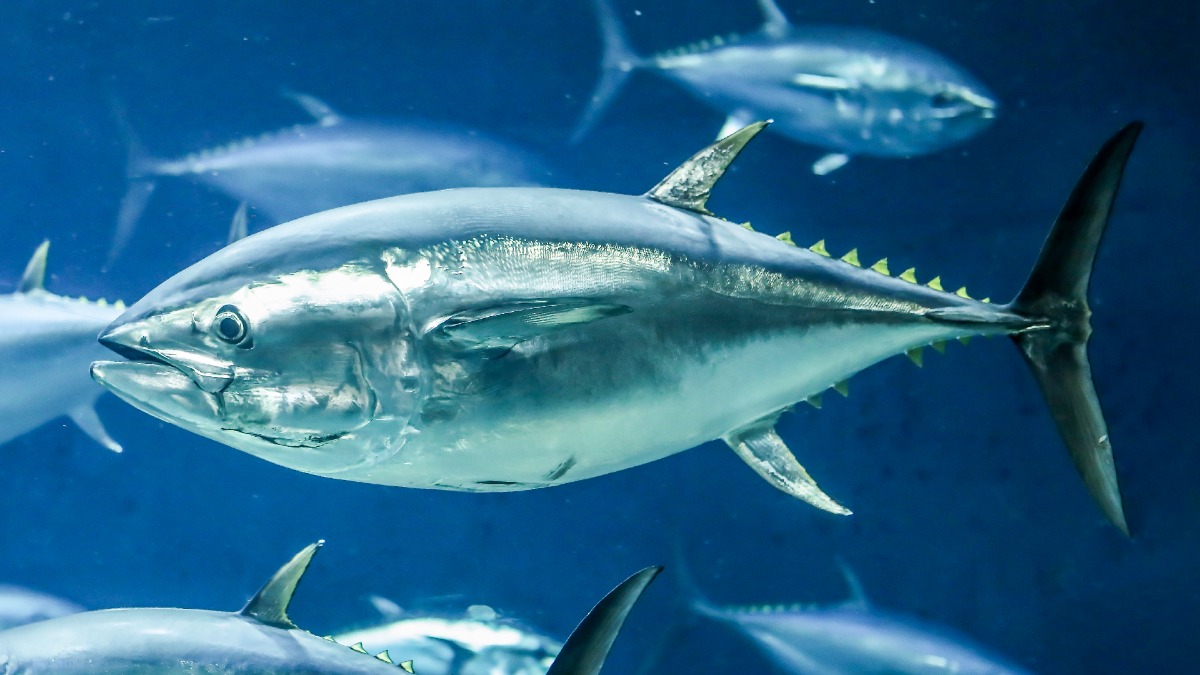
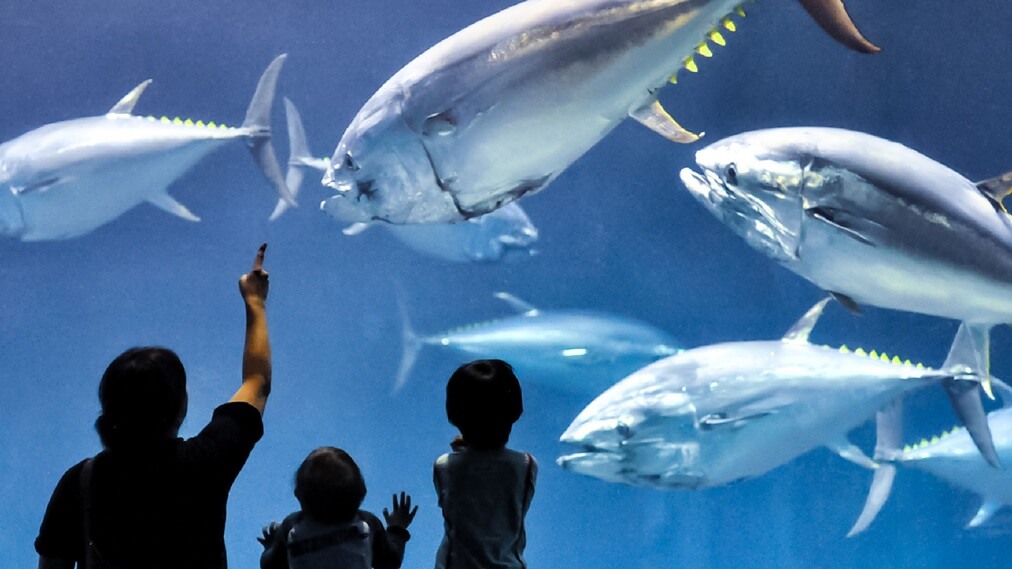
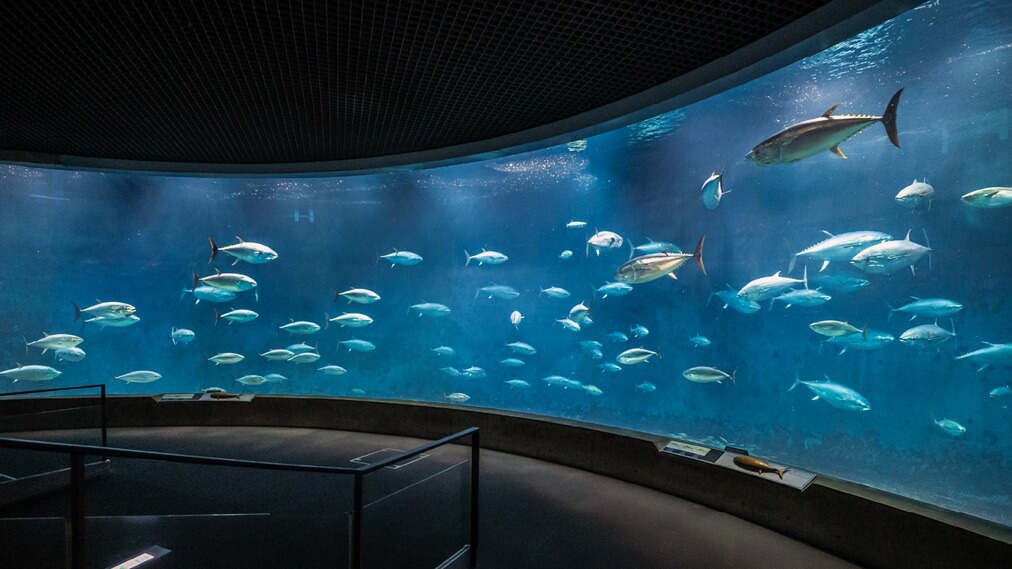
Pacific Bluefin Tuna, also known as "honmaguro," is a fish that has long been familiar as a food ingredient in sushi and other dishes. They spend their lives swimming in the vast ocean (open ocean), migrating mainly from the temperate to tropical zones of the Pacific Ocean in the Northern Hemisphere. Some individuals travel thousands of kilometers from the coast of Japan to North America. They can grow up to 3 meters in length, making them one of the larger species of tuna. Tokyo Sea Life Park was the first to successfully raise a group of them in a land-based tank in 1989, and later succeeded in spawning in 1999.
| classification | Actinopterygii, Perciformes, Scombridae |
|---|---|
| English name | Pacific Bluefin Tuna |
| distribution | Tropical to temperate waters of the Pacific Ocean |
| Residence | open ocean |
| Size |
Total length: 3m
|
| food | Small fish and squid |
| Red List |
IUCN: NT (Near Threatened)
|
Find the secret fin!
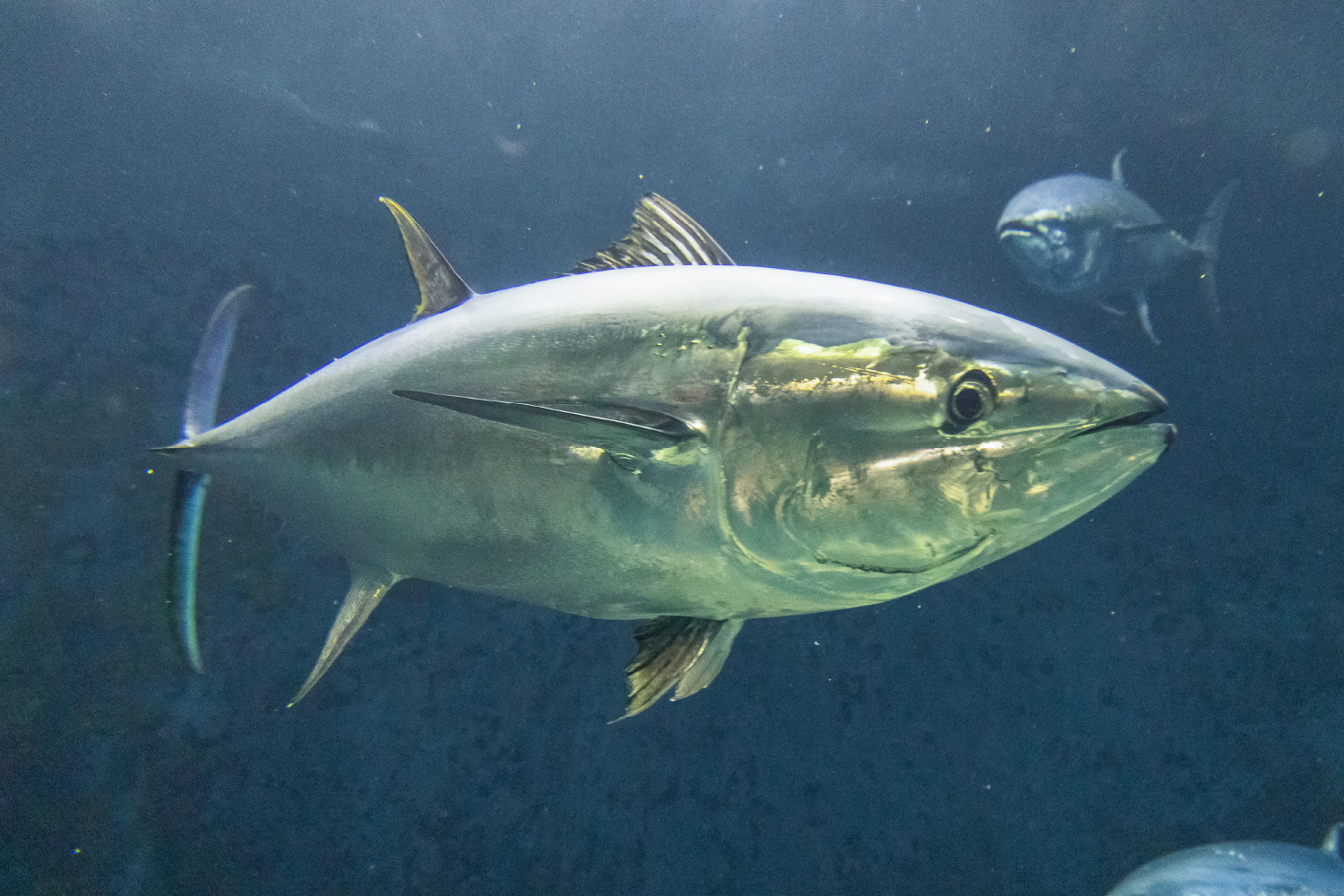
Observe how the fish use their fins when swimming straight, slowing down, and turning in the aquarium. You'll notice that sometimes the pelvic fins and first dorsal fin are visible, and sometimes they're not. The first dorsal fin can be neatly tucked into a pocket on its back, which is why we call it the "secret fin." The pectoral fins also use differently when swimming straight and when turning. Observe this as well.
Pacific Bluefin Tuna are huge! But they're tiny when they're born!
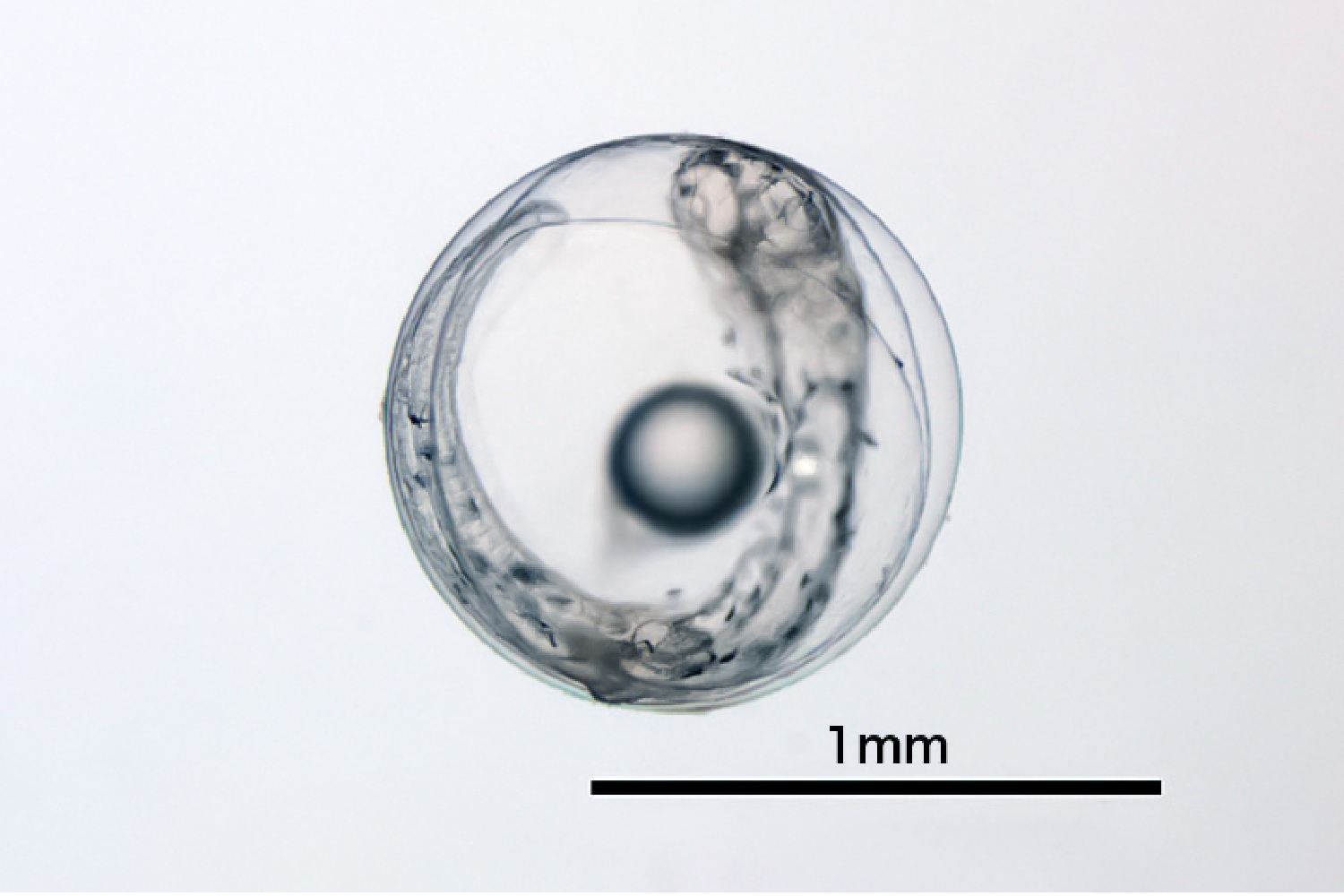
When you see Pacific Bluefin Tuna in an aquarium, you might be surprised by its size. However, in the wild, it's nothing like that. Pacific Bluefin Tuna are known to live for over 20 years, and when fully grown, they can reach a length of 3 meters and weigh over 400 kg. Yet, even these tuna lay eggs that are only about 1 mm in size, and the hatched offspring are only 2-3 mm long.
How fast can tuna swim?
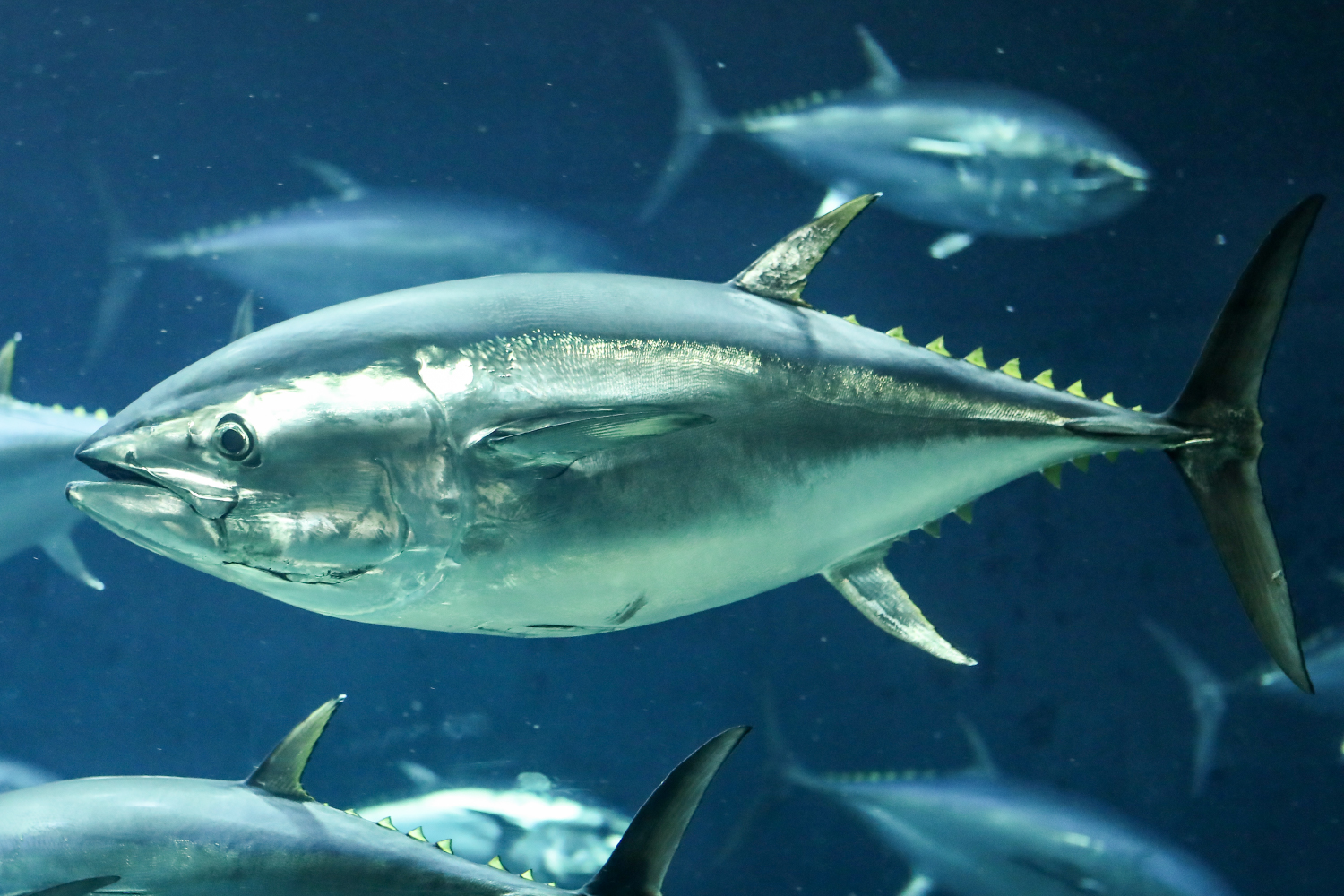
Tuna are well-known for being fast swimmers. But just how fast can they swim? There are various theories, but past measurements have reported speeds of up to 80 km/h. Imagine Pacific Bluefin Tuna swimming across the vast ocean at the speed of a car. Pretty cool, right?
What shape are tuna's teeth?
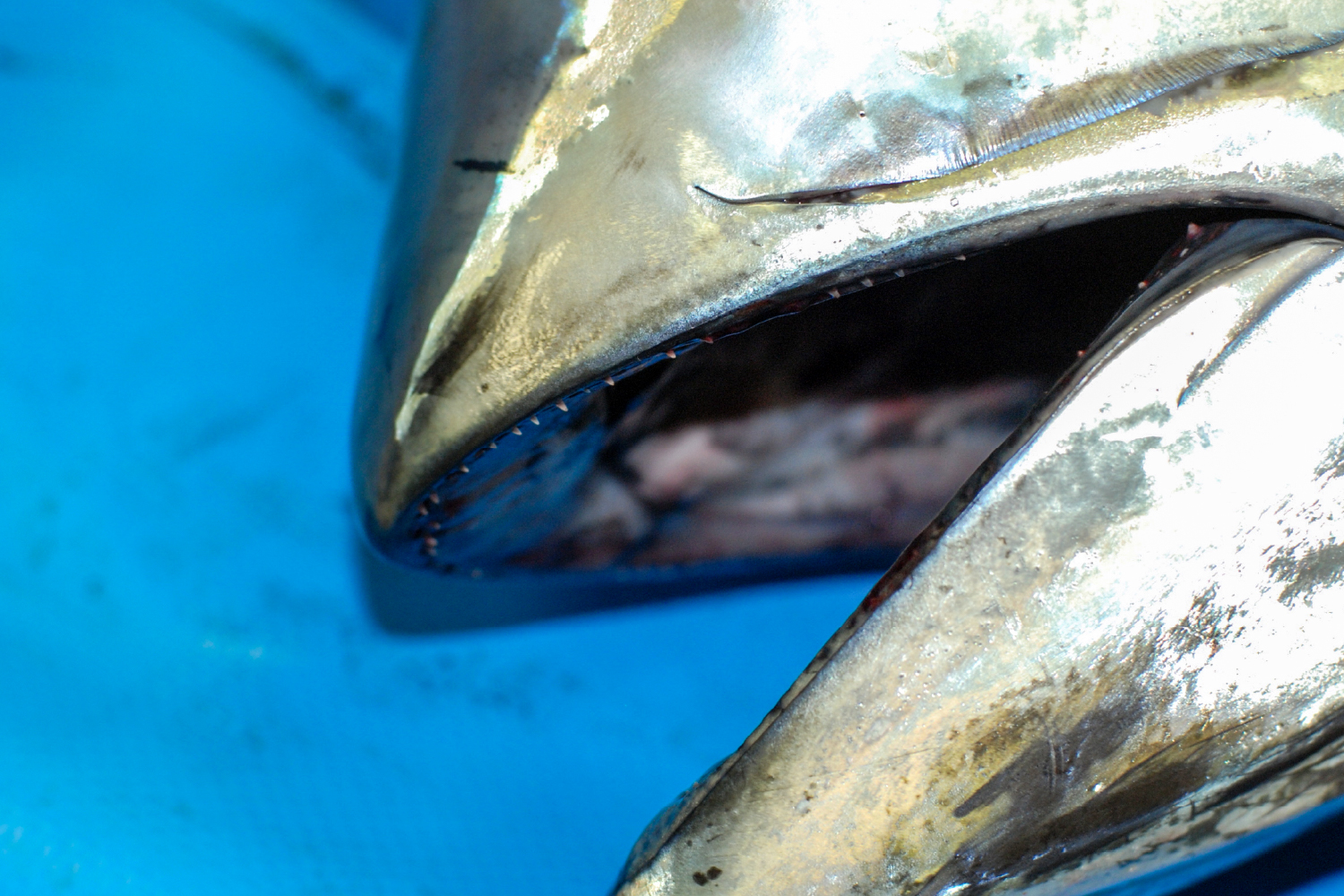
If you look inside the mouth of Pacific Bluefin Tuna in a tank, you'll see many small, sharp teeth. Do tuna chew their food with these teeth? When you observe them eating, you'll see that they swallow their food whole. The small teeth serve to hold the food in place and prevent it from escaping.
How tuna breathe
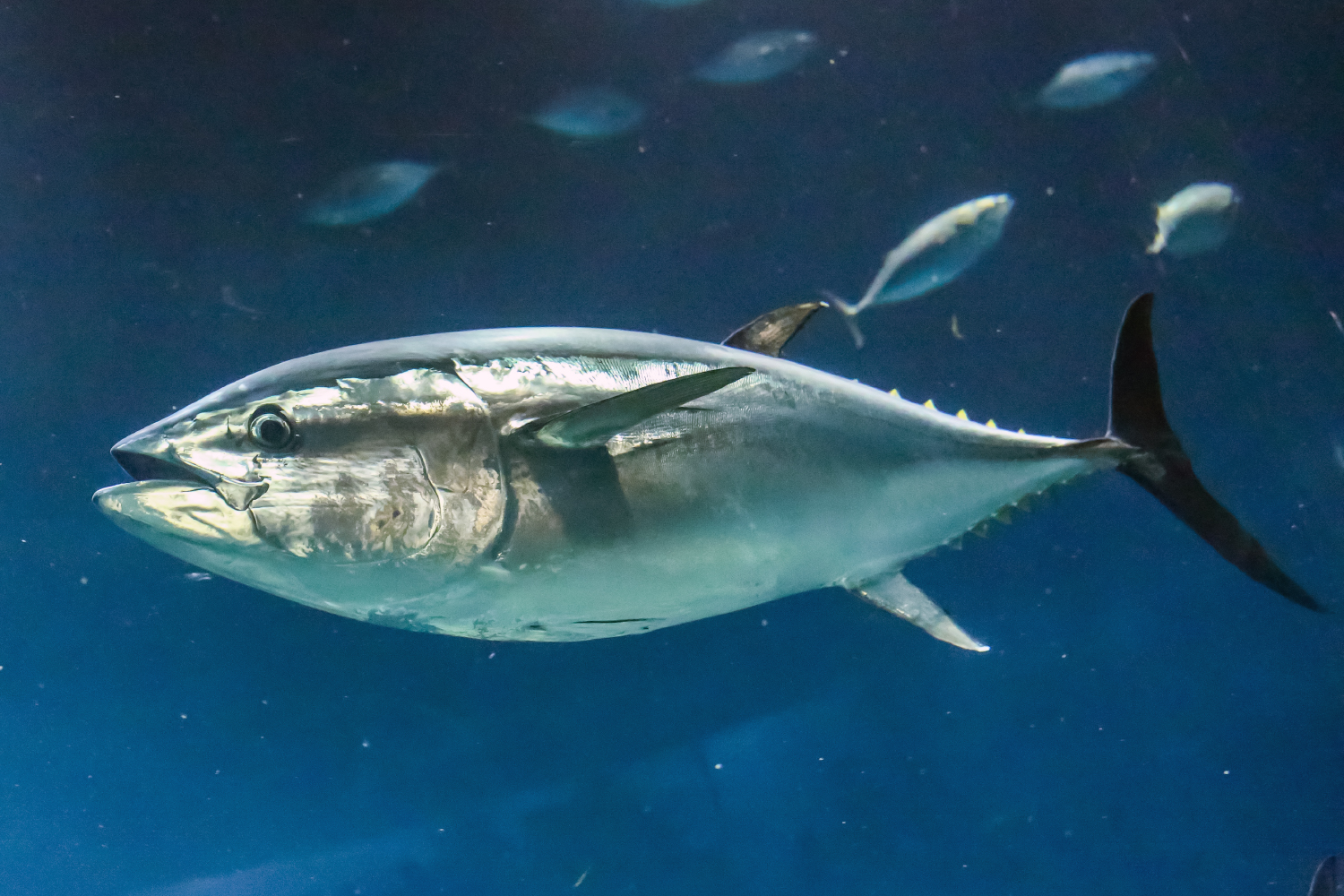
If you look at Pacific Bluefin Tuna in an aquarium, you'll notice that every individual swims continuously with its mouth and gill cover slightly open. This is related to how tuna breathe. By swimming with their mouths and gill covers open, tuna breathe by taking in fresh seawater through their mouths and passing it through their gills. This type of breathing is also seen in fast-swimming and migratory fish such as open-ocean sharks and sardines.