

Zoo Stock Species and the Red List
Zoo Stock Species and the Red List
Zoo Stock
This indicates that the species is included in the Second Zoo Stock Plan, which was formulated by the Tokyo Metropolitan Government in 2018. The plan sets goals for the next 10 years in three areas: "species conservation," "contribution to wildlife conservation," and "environmental education and conservation awareness." 124 animal species are included.
What is the Red List?
Based on scientific research, this is a list of wildlife classified by rank (category) indicating the degree of risk of extinction.
Livng Things Encyclopedia shows the categories (mainland and islands) assessed by the IUCN (International Union for Conservation of Nature) at the global level, the Ministry of the Environment for Japan, and the Tokyo Metropolitan Government for Tokyo.
The higher the category in each table, the higher the risk of extinction, and CR, EN, and VU are the three categories known as "endangered species." In Tokyo, species that are not at the NT (near threatened) level but are relatively rare are considered "species of concern."
|
IUCN categories |
|
|---|---|
|
EX |
extinction |
|
EW |
Extinction in the wild |
|
CR+EN |
— |
|
CR |
Serious crisis |
|
EN |
crisis |
|
VU |
emergency |
|
NT |
Near Threatened |
|
LC・○ |
Low Concern |
|
DD |
Data shortage |
|
LP |
— |
|
Japan (Ministry of the Environment) Category |
|
|---|---|
|
EX |
extinction |
|
EW |
Extinction in the wild |
|
CR+EN |
Endangered species |
|
CR |
Critically Endangered |
|
EN |
Endangered species |
|
VU |
Endangered species |
|
NT |
Near Threatened |
|
LC・○ |
— |
|
DD |
Lack of information |
|
LP |
Endangered |
|
Tokyo Category |
|
|---|---|
|
EX |
extinction |
|
EW |
Extinction in the wild |
|
CR+EN |
Endangered species |
|
CR |
Critically Endangered |
|
EN |
Endangered species |
|
VU |
Endangered species |
|
NT |
Near Threatened |
|
LC・○ |
Unranked |
|
DD |
Lack of information |
|
LP |
Endangered |
Creatures at Tokyo Sea Life Park
Creatures at Tokyo Sea Life Park
Moon Jellyfish
Moon Jellyfish
Aurelia coerulea
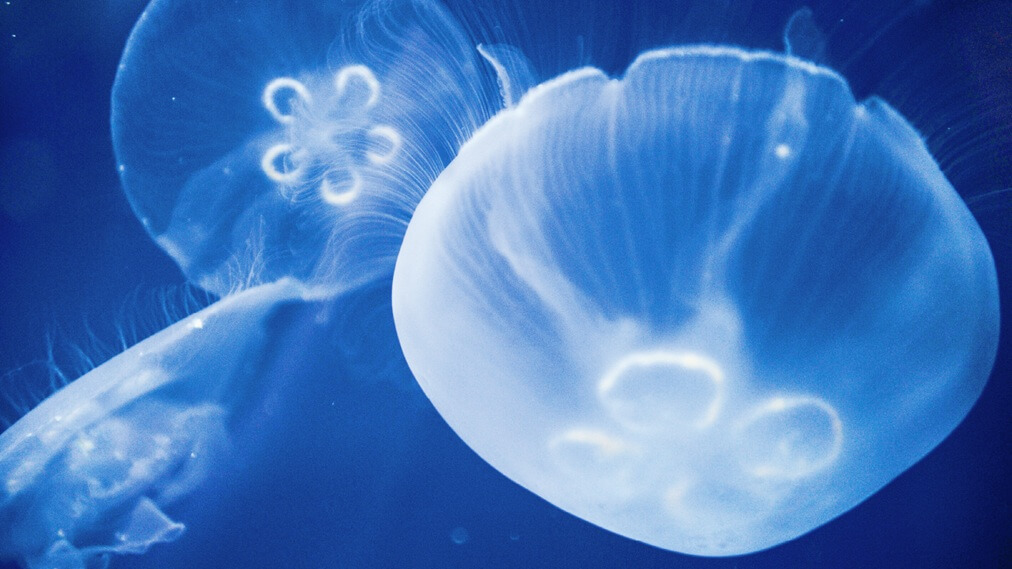
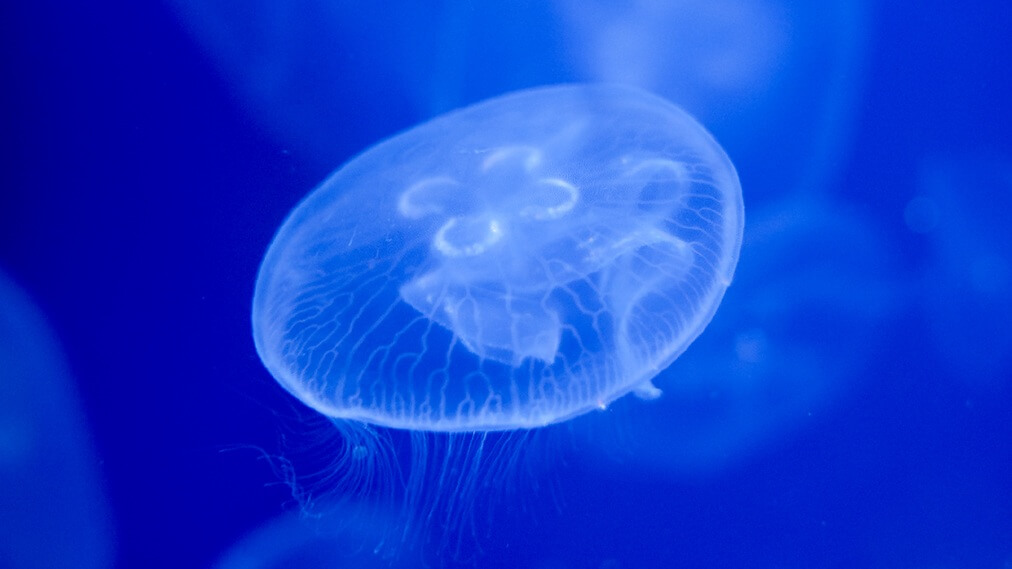
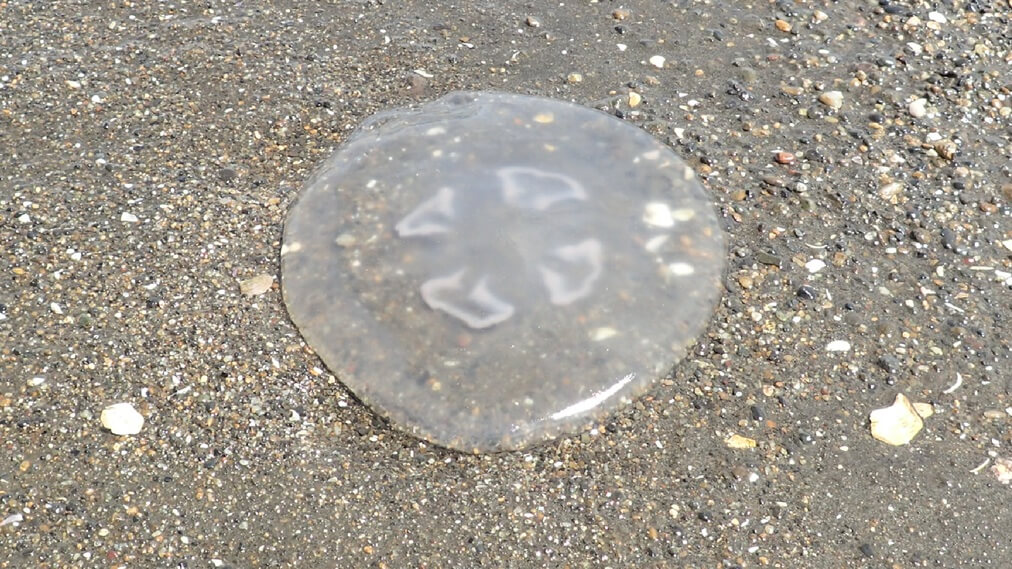
This is one of the most commonly seen jellyfish along the Japanese coast. Its soft body is mostly water. Its long, slender tentacles contain capsules with stinging cells called nematocysts, which it uses to catch and eat prey. The captured prey is then brought to its mouth by four ribbon-shaped oral arms.
| classification | Scyphozoa, Order Bannerstomedusa, Family Moon Jellyfish |
|---|---|
| English name | Moon Jellyfish |
| distribution | North Pacific, Western Pacific, Eastern Indian Ocean |
| Residence | Inner bays and coastal areas |
| Size |
Umbrella diameter: 30cm
|
| food | This is the most common type of jellyfish found off the coast of Japan. It is a plankton that lives by drifting in the ocean, and its soft body is mostly water. Its long, thin tentacles contain capsules containing poisonous stingers called nematocysts, which it uses to capture and eat food. The food is then carried to its mouth by its four ribbon-shaped oral arms. |
| Red List |
Unrated
|
I'm currently eating
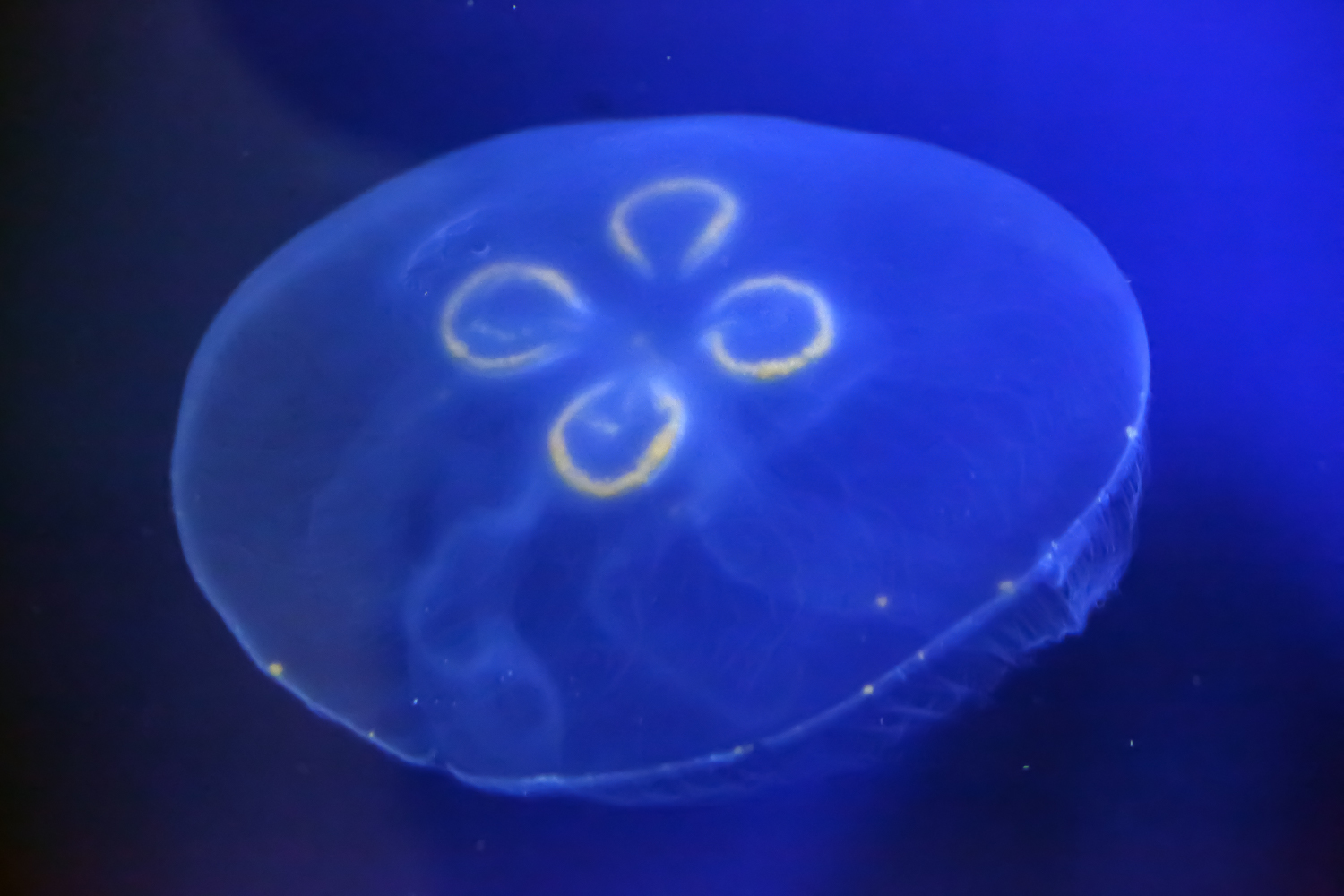
If you observe the bell-shaped part of Moon Jellyfish, you'll notice a petal-like pattern. This is actually Moon Jellyfish 's stomach and gonads. If the petals are orange, it might mean Moon Jellyfish has just eaten brine shrimp.