

Zoo Stock Species and the Red List
Zoo Stock Species and the Red List
Zoo Stock
This indicates that the species is included in the Second Zoo Stock Plan, which was formulated by the Tokyo Metropolitan Government in 2018. The plan sets goals for the next 10 years in three areas: "species conservation," "contribution to wildlife conservation," and "environmental education and conservation awareness." 124 animal species are included.
What is the Red List?
Based on scientific research, this is a list of wildlife classified by rank (category) indicating the degree of risk of extinction.
Livng Things Encyclopedia shows the categories (mainland and islands) assessed by the IUCN (International Union for Conservation of Nature) at the global level, the Ministry of the Environment for Japan, and the Tokyo Metropolitan Government for Tokyo.
The higher the category in each table, the higher the risk of extinction, and CR, EN, and VU are the three categories known as "endangered species." In Tokyo, species that are not at the NT (near threatened) level but are relatively rare are considered "species of concern."
|
IUCN categories |
|
|---|---|
|
EX |
extinction |
|
EW |
Extinction in the wild |
|
CR+EN |
— |
|
CR |
Serious crisis |
|
EN |
crisis |
|
VU |
emergency |
|
NT |
Near Threatened |
|
LC・○ |
Low Concern |
|
DD |
Data shortage |
|
LP |
— |
|
Japan (Ministry of the Environment) Category |
|
|---|---|
|
EX |
extinction |
|
EW |
Extinction in the wild |
|
CR+EN |
Endangered species |
|
CR |
Critically Endangered |
|
EN |
Endangered species |
|
VU |
Endangered species |
|
NT |
Near Threatened |
|
LC・○ |
— |
|
DD |
Lack of information |
|
LP |
Endangered |
|
Tokyo Category |
|
|---|---|
|
EX |
extinction |
|
EW |
Extinction in the wild |
|
CR+EN |
Endangered species |
|
CR |
Critically Endangered |
|
EN |
Endangered species |
|
VU |
Endangered species |
|
NT |
Near Threatened |
|
LC・○ |
Unranked |
|
DD |
Lack of information |
|
LP |
Endangered |
Creatures at Tokyo Sea Life Park
Creatures at Tokyo Sea Life Park
Marbled Flounder
Marbled Flounder
Pseudopleuronectes yokohamae
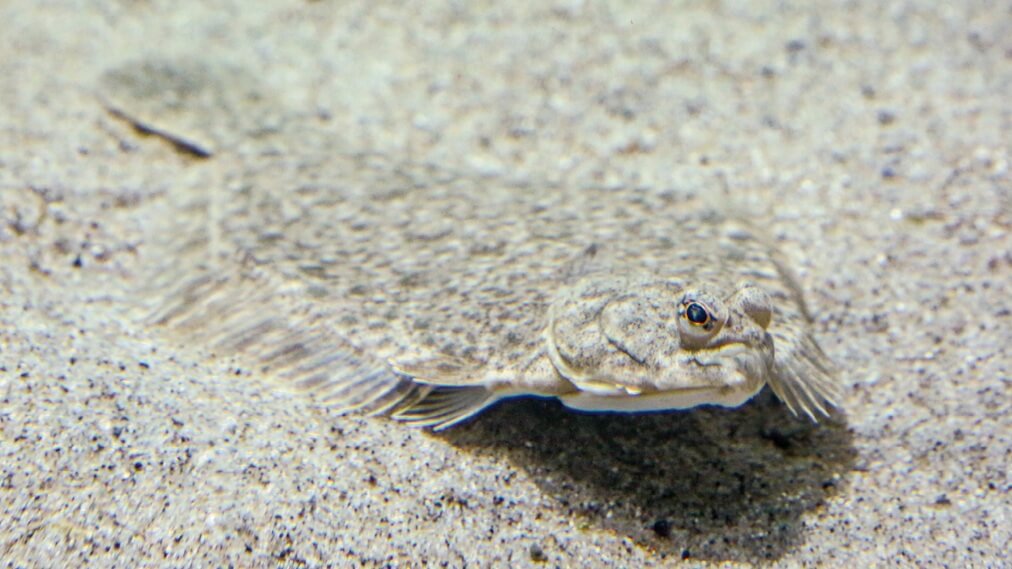
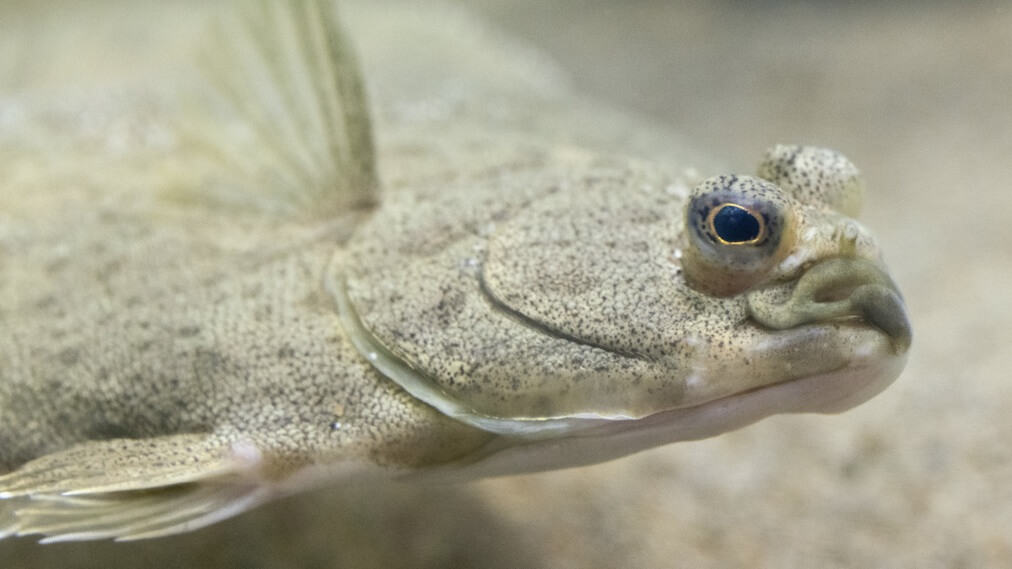
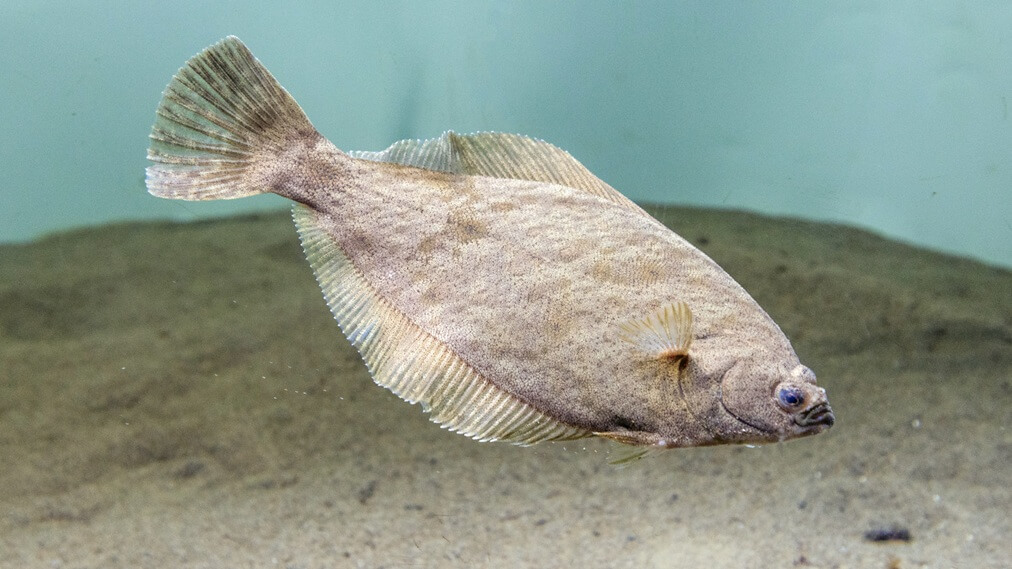
This is a type of flounder that lives in sandy areas from near the shore to depths of about 100 meters. It lies on its flat body, which is the same color as the sand, burying itself in the sand and only peeking out with its eyes to survey its surroundings. It has long been eaten as a representative fish of Edo-mae cuisine and is a popular fish among anglers.
| classification | Actinopterygii, Pleuronectiformes, Family Pleuronectidae |
|---|---|
| English name | Marbled Flounder |
| distribution | From southern Hokkaido to Kyushu |
| Residence | Sandy seabed from near the shore to a depth of about 100m |
| Size |
Total length: Male 35cm, Female 45cm
|
| food | Small shrimp, crabs, lugworms, bivalves, small fish, etc. |
| Red List |
IUCN: NT (Near Threatened)
|
Let's take a look at some hidden techniques!
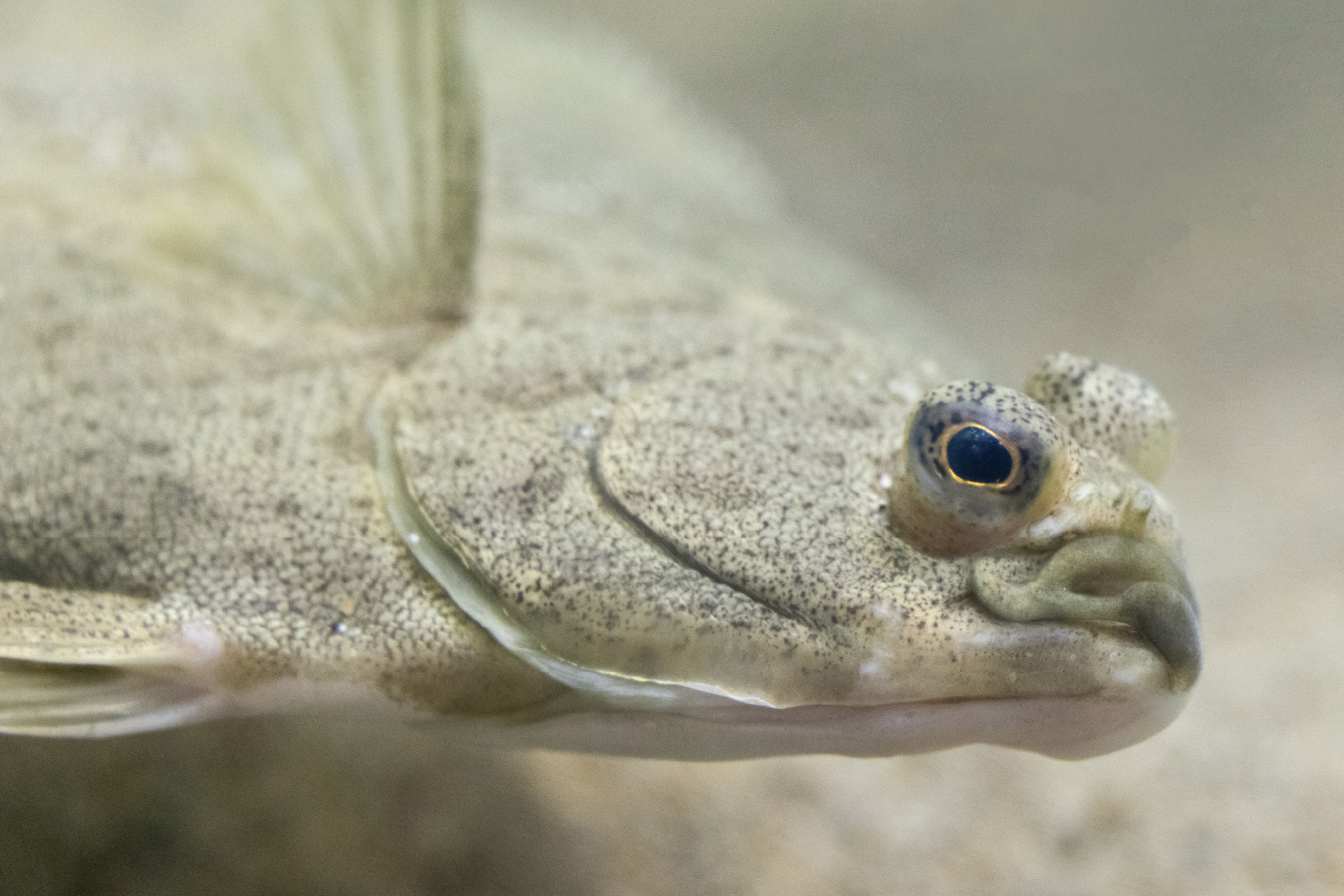
Flounder are adept at camouflage. Their bodies are flat, with the side containing their eyes being brownish and the opposite side being white. They can change their body color and pattern to match their surroundings. Marbled Flounder spawn in the shallow seabed of the inner bay from autumn to winter. When they first hatch, they have eyes on both sides of their body like ordinary fish and swim in the water, but as they grow, their eyes move to one side and they begin to live on the seabed.
Use of Marbled Flounder
Marbled Flounder is characterized by its elegant and mild white flesh, and is highly valued as a sashimi and sushi topping. In particular, the roe (roe) of the female flounder is prized during its peak season from winter to spring, and is used in simmered dishes and simmered flounder with roe, which is the origin of its name.