

Zoo Stock Species and the Red List
Zoo Stock Species and the Red List
Zoo Stock

This indicates that the species is included in the Second Zoo Stock Plan, which was formulated by the Tokyo Metropolitan Government in 2018. The plan sets goals for the next 10 years in three areas: "species conservation," "contribution to wildlife conservation," and "environmental education and conservation awareness." 124 animal species are included.
What is the Red List?
Based on scientific research, this is a list of wildlife classified by rank (category) indicating the degree of risk of extinction.
Livng Things Encyclopedia shows the categories (mainland and islands) assessed by the IUCN (International Union for Conservation of Nature) at the global level, the Ministry of the Environment for Japan, and the Tokyo Metropolitan Government for Tokyo.
The higher the category in each table, the higher the risk of extinction, and CR, EN, and VU are the three categories known as "endangered species." In Tokyo, species that are not at the NT (near threatened) level but are relatively rare are considered "species of concern."
|
IUCN categories |
|
|---|---|
|
EX |
extinction |
|
EW |
Extinction in the wild |
|
CR+EN |
— |
|
CR |
Serious crisis |
|
EN |
crisis |
|
VU |
emergency |
|
NT |
Near Threatened |
|
LC・○ |
Low Concern |
|
DD |
Data shortage |
|
LP |
— |
|
Japan (Ministry of the Environment) Category |
|
|---|---|
|
EX |
extinction |
|
EW |
Extinction in the wild |
|
CR+EN |
Endangered species |
|
CR |
Critically Endangered |
|
EN |
Endangered species |
|
VU |
Endangered species |
|
NT |
Near Threatened |
|
LC・○ |
— |
|
DD |
Lack of information |
|
LP |
Endangered |
|
Tokyo Category |
|
|---|---|
|
EX |
extinction |
|
EW |
Extinction in the wild |
|
CR+EN |
Endangered species |
|
CR |
Critically Endangered |
|
EN |
Endangered species |
|
VU |
Endangered species |
|
NT |
Near Threatened |
|
LC・○ |
Unranked |
|
DD |
Lack of information |
|
LP |
Endangered |
Creatures at Tokyo Sea Life Park
Creatures at Tokyo Sea Life Park
Manybar Goatfish
Manybar Goatfish
Parupeneus multifasciatus
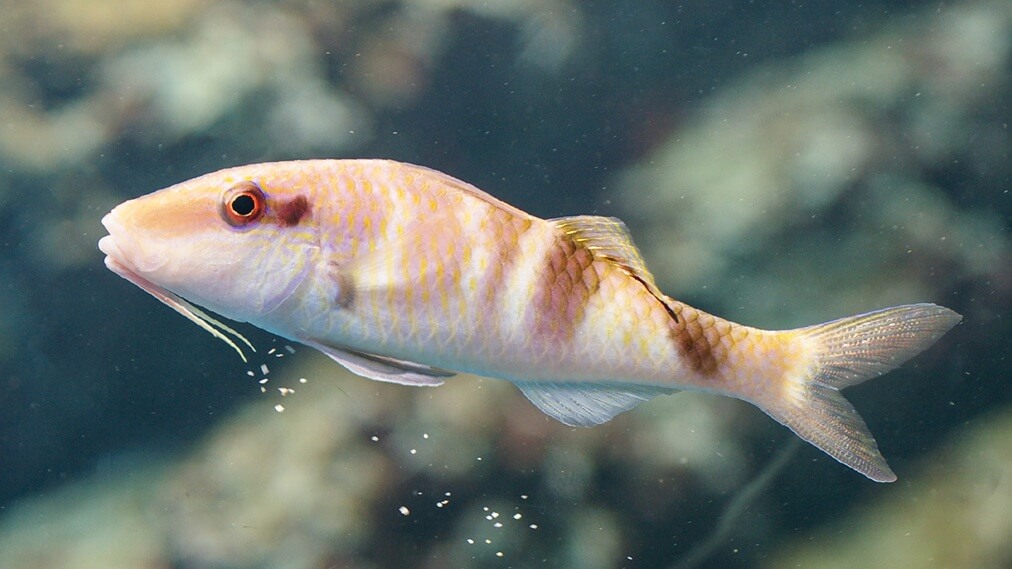
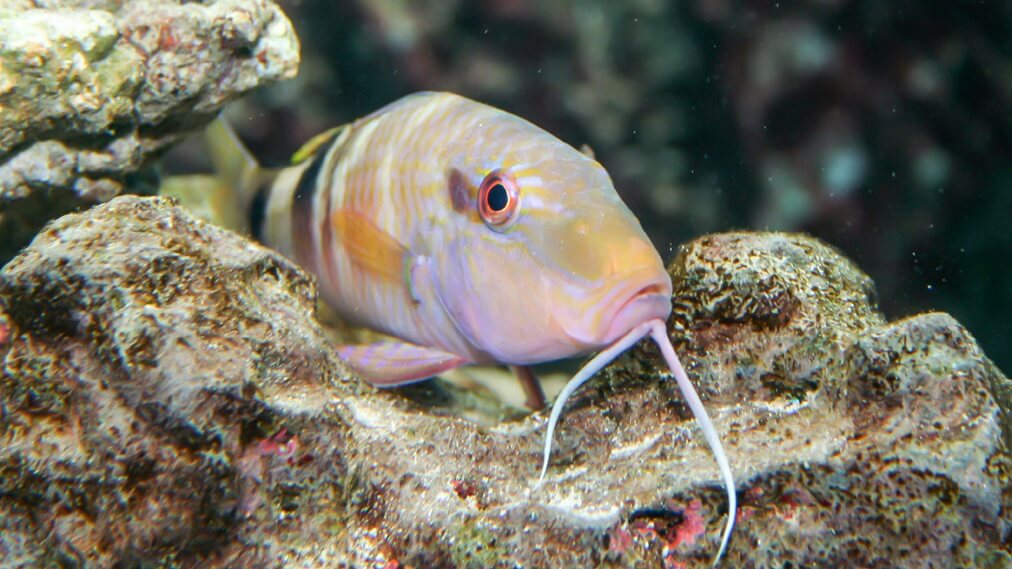
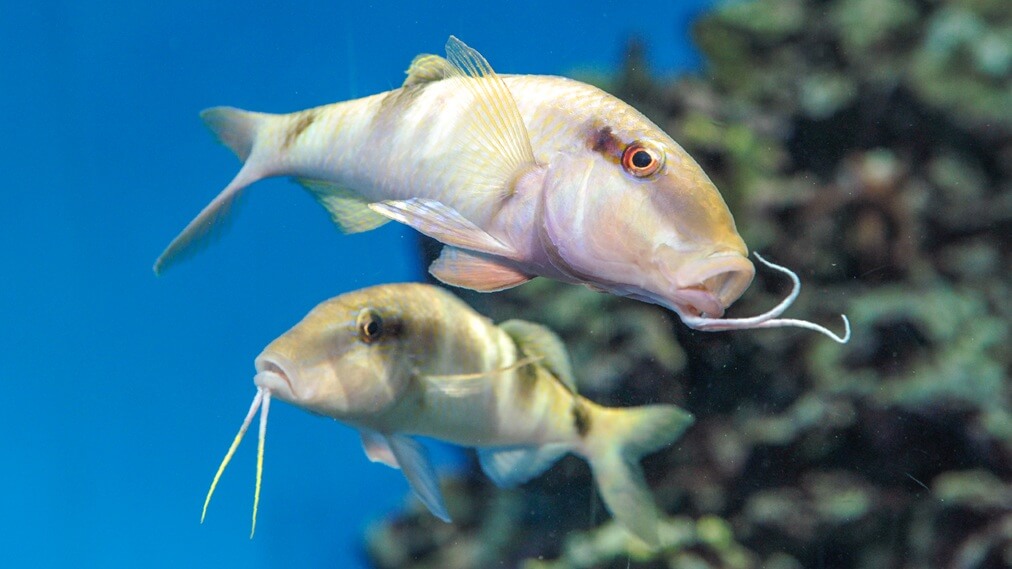
This fish is a member of the goatfish family that lives in shallow waters with well-developed coral reefs. Its name comes from the pair of barbels on its lower jaw, which it uses to probe the seabed and find shrimp and lugworms hidden in the sand to eat. The barbels are a wonderful feature that can be neatly stored in the recesses of the lower jaw when not in use. The impact of its name makes this fish popular at aquariums.
| classification | Actinopterygii, Perciformes, Goatfish |
|---|---|
| English name | Manybar Goatfish |
| distribution | Indian Ocean, Pacific Ocean |
| Residence | Coral Reef Sea |
| Size |
Total length: 20cm
|
| food | Benthic organisms such as shrimp and crabs |
| Red List |
IUCN: LC (Least Concern)
|
The "beard" that lets you know the taste
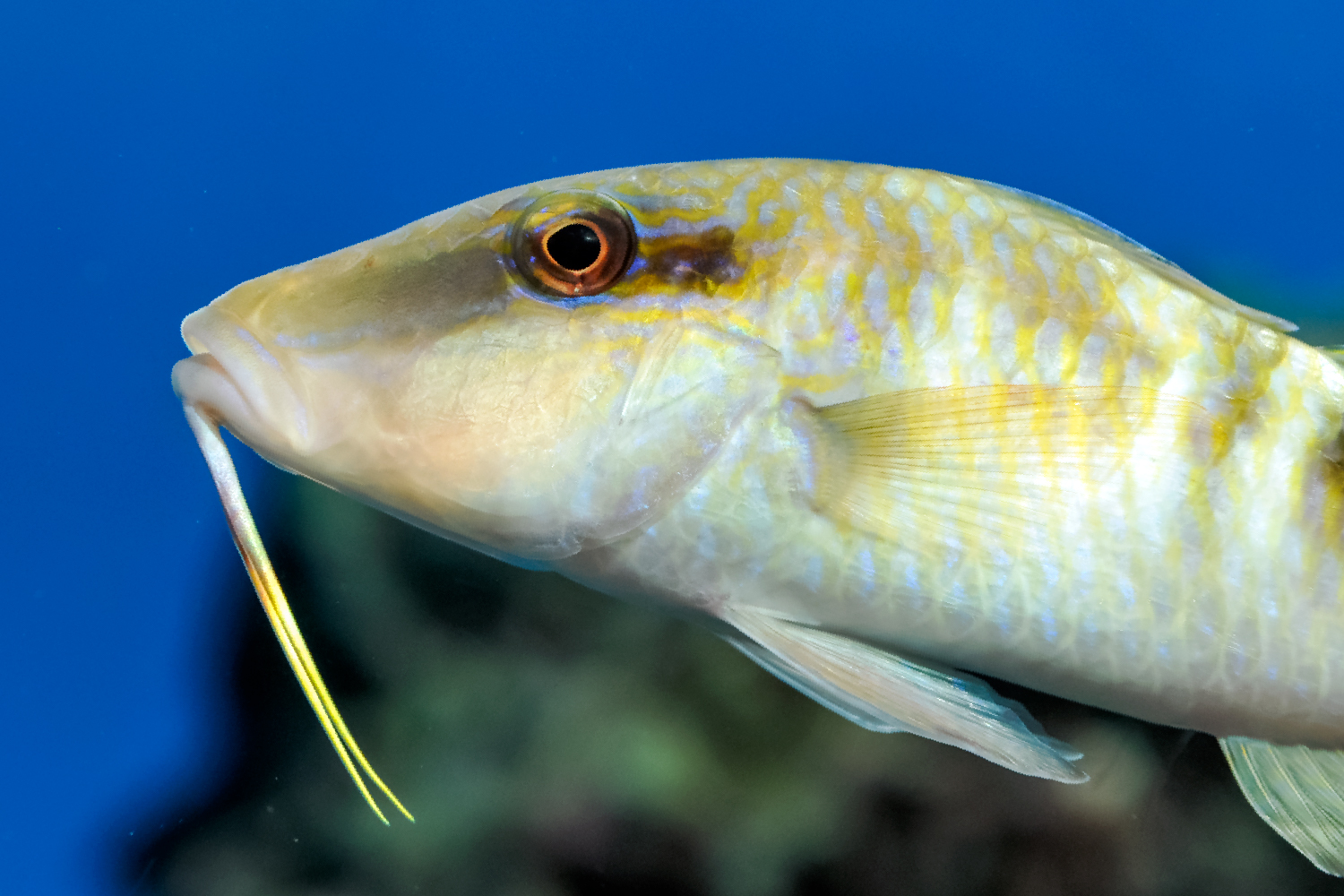
If you pay close attention to Manybar Goatfish 's behavior, you will notice that he occasionally moves the two barbels on his lower jaw as he explores the sand and rocks at the bottom of the tank. These barbels have a structure similar to the taste buds on a human tongue, allowing him to sense the taste of things he touches. Manybar Goatfish uses these barbels to search for food such as shrimp and lugworms hidden in the sand. Let's observe how he skillfully moves his barbels.
Body color changes
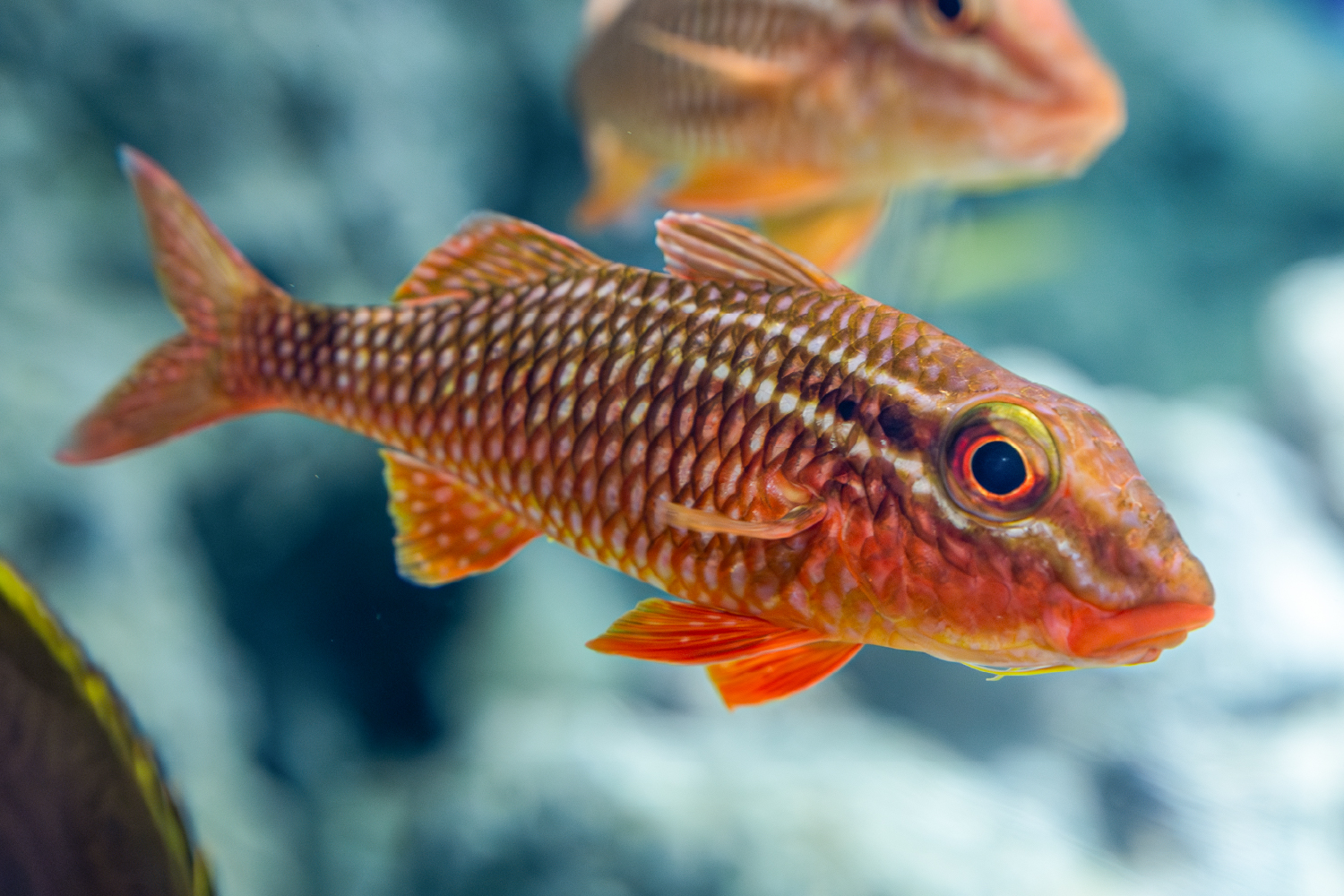
Manybar Goatfish is a member of the goatfish family. A distinctive feature of goatfish is that they often change the color of their body. The photo shows a white goatfish when it changes its body color. Even within the same species, individuals of various colors can be seen, and they sometimes do not look like the same species at all. Even in the aquarium, they turn a reddish color when excited, such as when eating, or at night. Pay attention to the changes in their body color.
The fish names are fun!
All goatfish have a pair of whiskers. However, for some reason, only Manybar Goatfish is called "ojisan" (old man), which is a shame considering there are both males and females... Some people may think so. In addition to Manybar Goatfish, there is also a goatfish called "okina (old man) himeji" which has a name derived from its whiskers. Incidentally, there is no fish with the Japanese name (official name) "obasan."