

Zoo Stock Species and the Red List
Zoo Stock Species and the Red List
Zoo Stock

This indicates that the species is included in the Second Zoo Stock Plan, which was formulated by the Tokyo Metropolitan Government in 2018. The plan sets goals for the next 10 years in three areas: "species conservation," "contribution to wildlife conservation," and "environmental education and conservation awareness." 124 animal species are included.
What is the Red List?
Based on scientific research, this is a list of wildlife classified by rank (category) indicating the degree of risk of extinction.
Livng Things Encyclopedia shows the categories (mainland and islands) assessed by the IUCN (International Union for Conservation of Nature) at the global level, the Ministry of the Environment for Japan, and the Tokyo Metropolitan Government for Tokyo.
The higher the category in each table, the higher the risk of extinction, and CR, EN, and VU are the three categories known as "endangered species." In Tokyo, species that are not at the NT (near threatened) level but are relatively rare are considered "species of concern."
|
IUCN categories |
|
|---|---|
|
EX |
extinction |
|
EW |
Extinction in the wild |
|
CR+EN |
— |
|
CR |
Serious crisis |
|
EN |
crisis |
|
VU |
emergency |
|
NT |
Near Threatened |
|
LC・○ |
Low Concern |
|
DD |
Data shortage |
|
LP |
— |
|
Japan (Ministry of the Environment) Category |
|
|---|---|
|
EX |
extinction |
|
EW |
Extinction in the wild |
|
CR+EN |
Endangered species |
|
CR |
Critically Endangered |
|
EN |
Endangered species |
|
VU |
Endangered species |
|
NT |
Near Threatened |
|
LC・○ |
— |
|
DD |
Lack of information |
|
LP |
Endangered |
|
Tokyo Category |
|
|---|---|
|
EX |
extinction |
|
EW |
Extinction in the wild |
|
CR+EN |
Endangered species |
|
CR |
Critically Endangered |
|
EN |
Endangered species |
|
VU |
Endangered species |
|
NT |
Near Threatened |
|
LC・○ |
Unranked |
|
DD |
Lack of information |
|
LP |
Endangered |
Creatures at Tokyo Sea Life Park
Creatures at Tokyo Sea Life Park
Kawakawa
Kawakawa
Euthynnus affinis
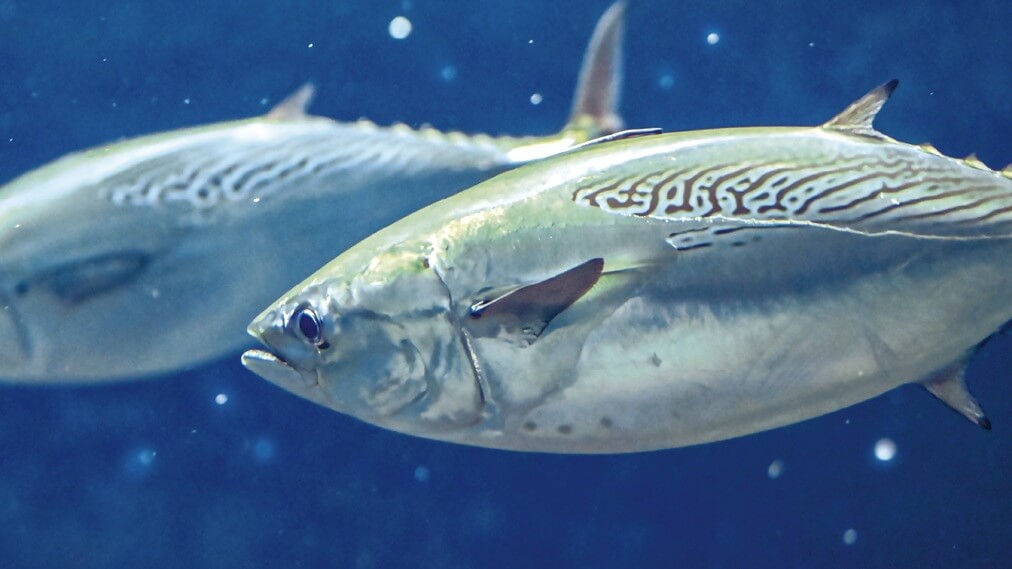
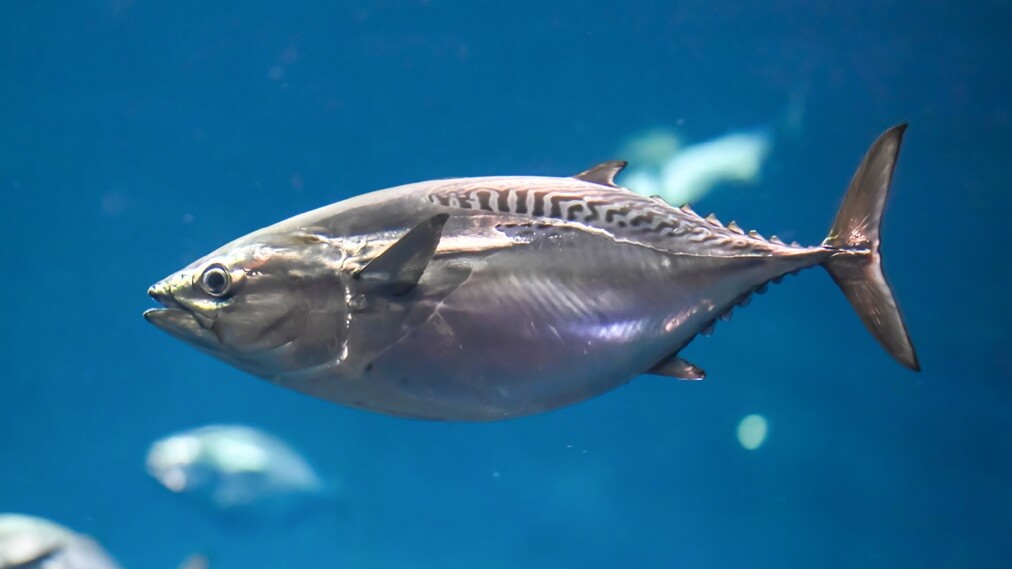
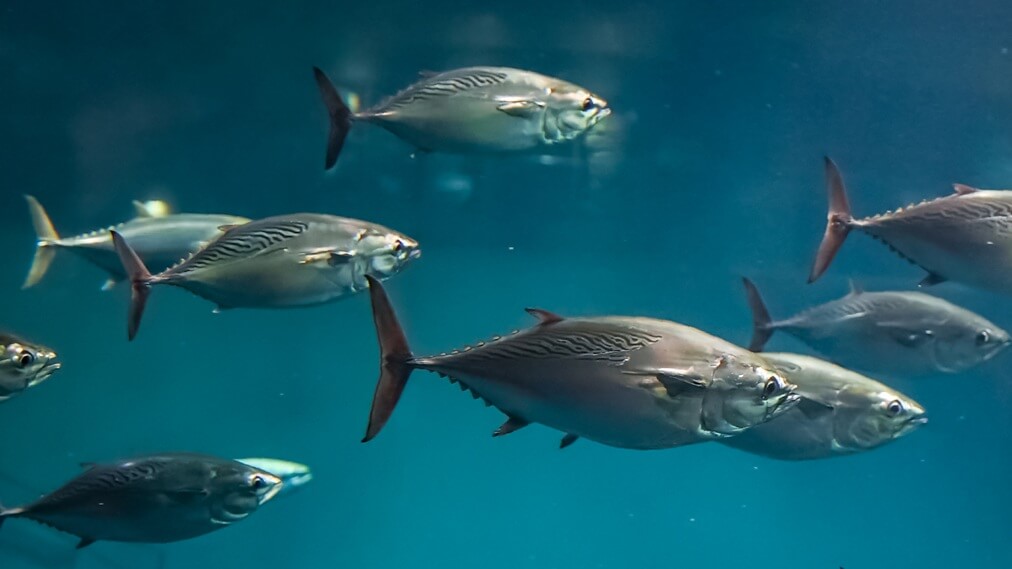
It belongs to the tuna family and is characterized by the stripes on the upper part of its back. Like Pacific Bluefin Tuna, it swims continuously throughout its life and can sometimes swim at high speeds. Even when fully grown, it only reaches a length of about 1 meter and does not grow as large as Pacific Bluefin Tuna. It catches and swallows small fish such as horse mackerel and sardines, as well as squid, whole. You can observe features that are convenient for a life of continuous swimming in its spindle-shaped body, body color, and fin structure.
| classification | Actinopterygii, Perciformes, Scombridae |
|---|---|
| English name | Kawakawa |
| distribution | Widely distributed in the temperate and tropical regions of the Indian and Pacific Oceans |
| Residence | Surface to middle layers in coastal areas |
| Size |
Total length: 100cm
|
| food | Small fish, squid |
| Red List |
IUCN: LC (Least Concern)
|
Find the secret fin!
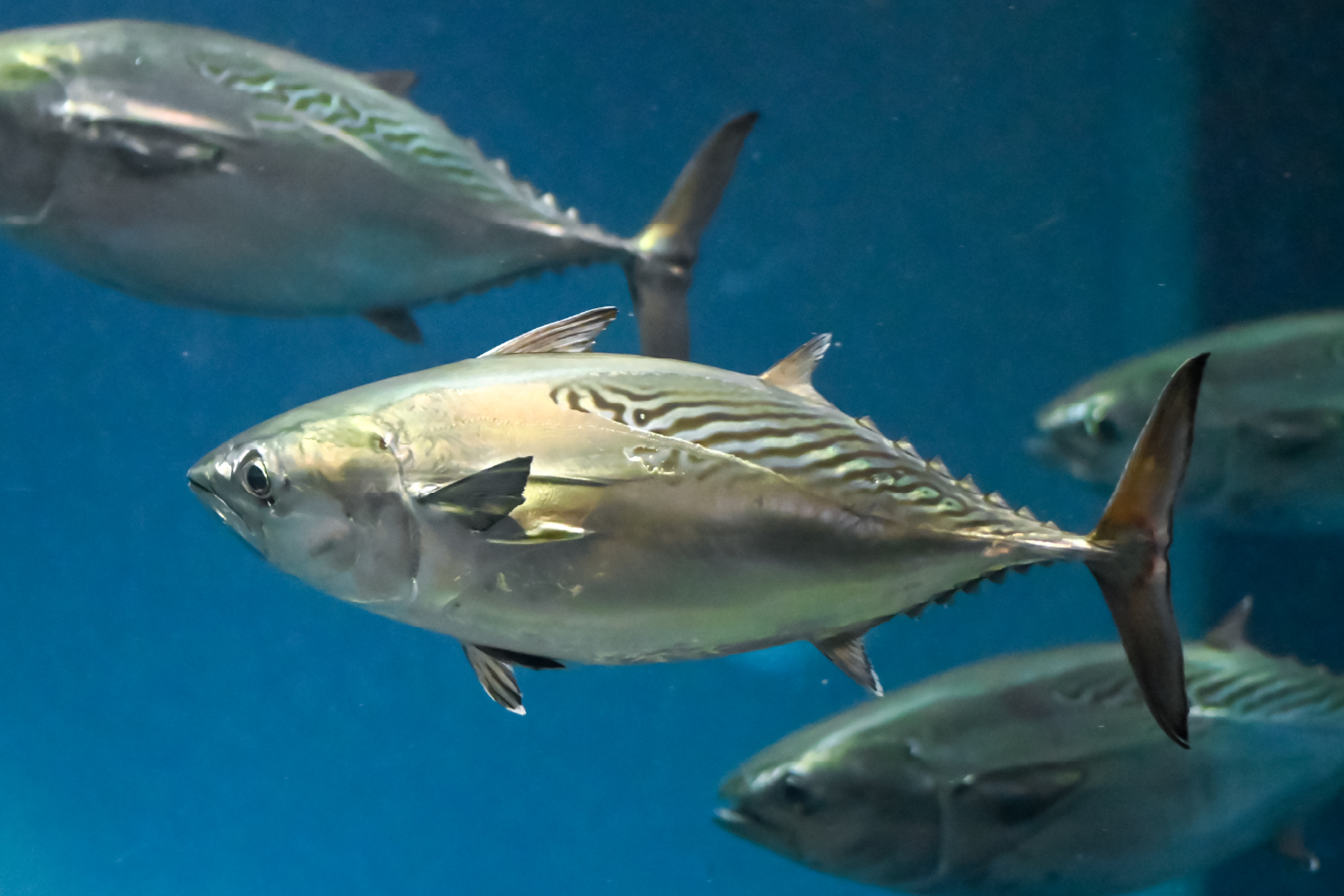
The fins of Pacific Bluefin Tuna and Kawakawa swimming in the aquarium are called "secret fins." When swimming straight, these fins are tucked away in pockets or recesses in the body, but pop out when turning. In order to minimize water resistance, these fins are tucked away when swimming fast and pop out when braking, enabling them to swim skillfully.
What is the purpose of chasing?
When you look at the aquarium, you might see a chase break out amongst the school of Kawakawa. One fish will chase another, or sometimes several fish will chase one, causing them to swim tangled together. This is a breeding behavior called chasing, with the female being chased and the male doing the chasing. When you see a white band from the heated group, it is the scene of spawning and sperm release.
Recently popular delicious fish
Among fishermen who catch them, Kawakawa is known as a very tasty fish. However, due to reasons such as its tendency to lose freshness quickly and the small catch volume, it has rarely been distributed until now. In recent years, its deliciousness has attracted attention and aquaculture is progressing. Some people say Kawakawa is even tastier than Pacific Bluefin Tuna, so you may have the opportunity to eat it.