

Zoo Stock Species and the Red List
Zoo Stock Species and the Red List
Zoo Stock
This indicates that the species is included in the Second Zoo Stock Plan, which was formulated by the Tokyo Metropolitan Government in 2018. The plan sets goals for the next 10 years in three areas: "species conservation," "contribution to wildlife conservation," and "environmental education and conservation awareness." 124 animal species are included.
What is the Red List?
Based on scientific research, this is a list of wildlife classified by rank (category) indicating the degree of risk of extinction.
Livng Things Encyclopedia shows the categories (mainland and islands) assessed by the IUCN (International Union for Conservation of Nature) at the global level, the Ministry of the Environment for Japan, and the Tokyo Metropolitan Government for Tokyo.
The higher the category in each table, the higher the risk of extinction, and CR, EN, and VU are the three categories known as "endangered species." In Tokyo, species that are not at the NT (near threatened) level but are relatively rare are considered "species of concern."
|
IUCN categories |
|
|---|---|
|
EX |
extinction |
|
EW |
Extinction in the wild |
|
CR+EN |
— |
|
CR |
Serious crisis |
|
EN |
crisis |
|
VU |
emergency |
|
NT |
Near Threatened |
|
LC・○ |
Low Concern |
|
DD |
Data shortage |
|
LP |
— |
|
Japan (Ministry of the Environment) Category |
|
|---|---|
|
EX |
extinction |
|
EW |
Extinction in the wild |
|
CR+EN |
Endangered species |
|
CR |
Critically Endangered |
|
EN |
Endangered species |
|
VU |
Endangered species |
|
NT |
Near Threatened |
|
LC・○ |
— |
|
DD |
Lack of information |
|
LP |
Endangered |
|
Tokyo Category |
|
|---|---|
|
EX |
extinction |
|
EW |
Extinction in the wild |
|
CR+EN |
Endangered species |
|
CR |
Critically Endangered |
|
EN |
Endangered species |
|
VU |
Endangered species |
|
NT |
Near Threatened |
|
LC・○ |
Unranked |
|
DD |
Lack of information |
|
LP |
Endangered |
Creatures at Tokyo Sea Life Park
Creatures at Tokyo Sea Life Park
Japanese Pilchard
Sardinops melanostictus
Japanese Pilchard
Sardinops melanostictus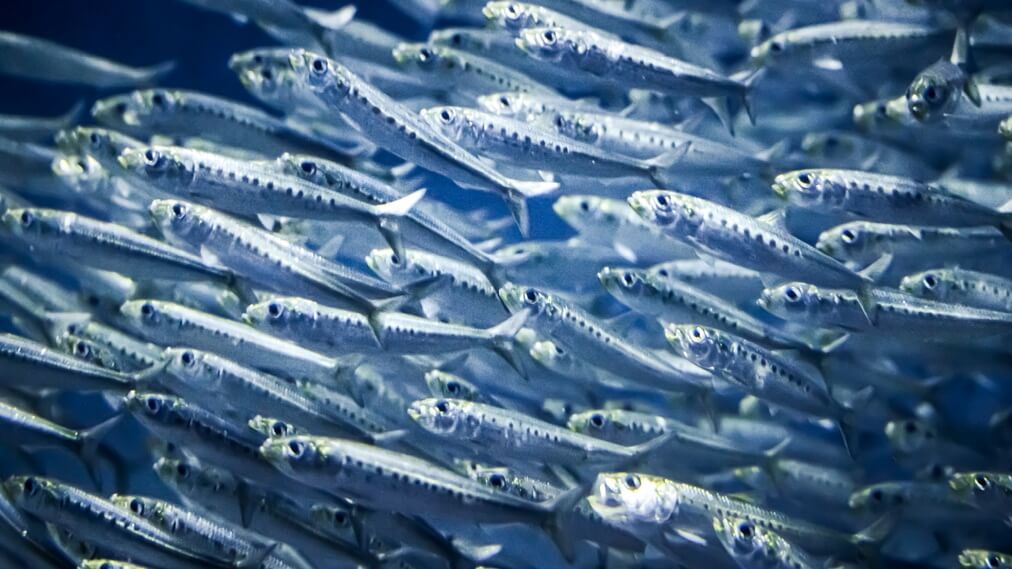
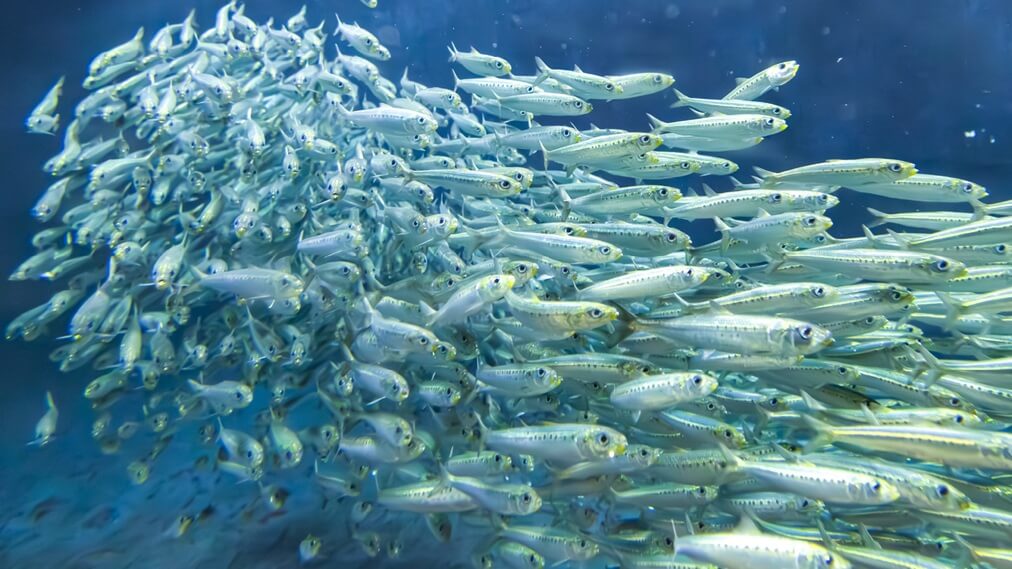
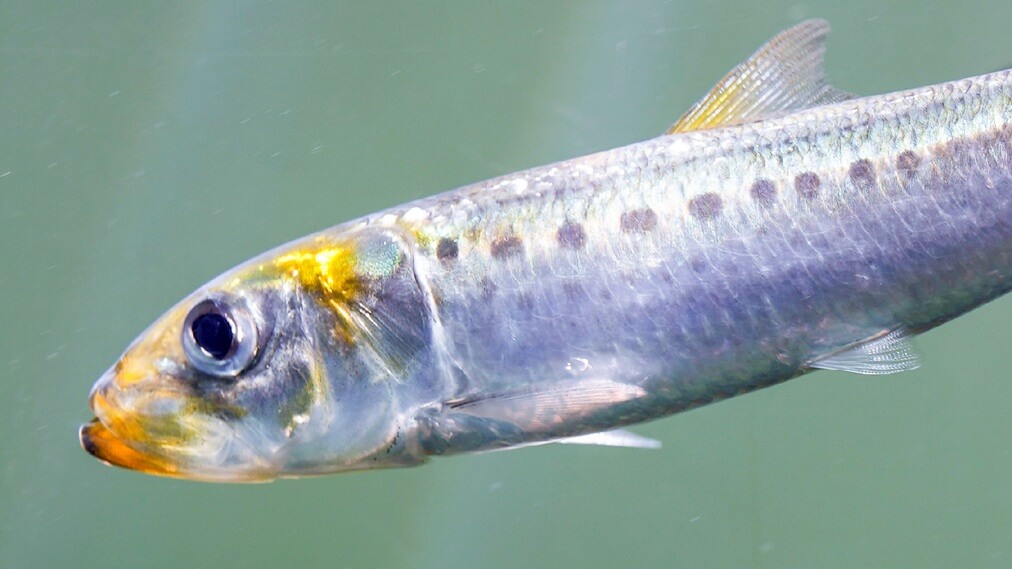
They migrate in large schools near the shore and close to the surface of the sea offshore. They swim with their mouths wide open and mainly feed on zooplankton, filtering it with their gills. They are an important fish in the fishing industry and are caught in large quantities using purse seines and set nets. In addition to being used as food, they are also used as fish feed and fertilizer. The juvenile form of Japanese Pilchard sardine, called shirasu, is also used as food.
| classification | Actinopterygii, Clupeidae |
|---|---|
| English name | Japanese Pilchard |
| distribution | Coast of Japan, Korean Peninsula, Primorye, Coast of China |
| Residence | Surface to mid-layers from the coast to offshore |
| Size |
Total length: 30cm
|
| food | plankton |
| Red List |
Unrated
|
Form large flocks
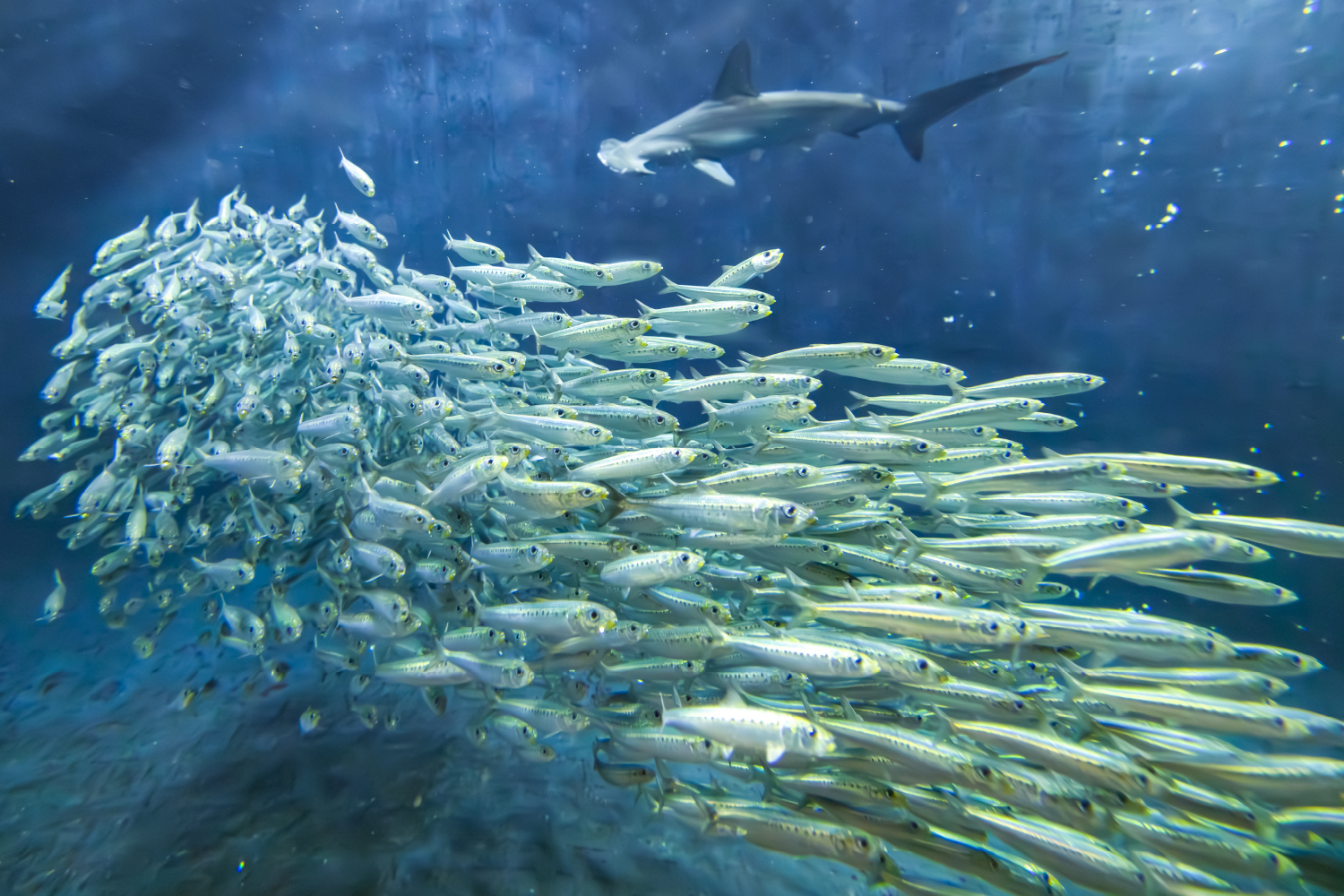
Let's observe a school of Japanese Pilchard. When fish of the same shape and size school together, it becomes difficult to target a single individual. Also, having many eyes allows them to quickly spot approaching predators. The dense school changes shape, separates, and sometimes even resembles one large creature. By forming schools, they deceive predators, making it difficult for them to target them, thus protecting themselves. Imagine yourself as an enemy and follow Japanese Pilchard with your eyes.
Use of Japanese Pilchard
Japanese Pilchard have long held an important place in Japanese food culture. They are used not only as food, but also as feed for farmed fish, fertilizer, and for fish oil.