Zoo Stock Species and the Red List
Zoo Stock Species and the Red List
Zoo Stock

This indicates that the species is included in the Second Zoo Stock Plan, which was formulated by the Tokyo Metropolitan Government in 2018. The plan sets goals for the next 10 years in three areas: "species conservation," "contribution to wildlife conservation," and "environmental education and conservation awareness." 124 animal species are included.
What is the Red List?
Based on scientific research, this is a list of wildlife classified by rank (category) indicating the degree of risk of extinction.
Livng Things Encyclopedia shows the categories (mainland and islands) assessed by the IUCN (International Union for Conservation of Nature) at the global level, the Ministry of the Environment for Japan, and the Tokyo Metropolitan Government for Tokyo.
The higher the category in each table, the higher the risk of extinction, and CR, EN, and VU are the three categories known as "endangered species." In Tokyo, species that are not at the NT (near threatened) level but are relatively rare are considered "species of concern."
|
IUCN categories |
|
|---|---|
|
EX |
extinction |
|
EW |
Extinction in the wild |
|
CR+EN |
— |
|
CR |
Serious crisis |
|
EN |
crisis |
|
VU |
emergency |
|
NT |
Near Threatened |
|
LC・○ |
Low Concern |
|
DD |
Data shortage |
|
LP |
— |
|
Japan (Ministry of the Environment) Category |
|
|---|---|
|
EX |
extinction |
|
EW |
Extinction in the wild |
|
CR+EN |
Endangered species |
|
CR |
Critically Endangered |
|
EN |
Endangered species |
|
VU |
Endangered species |
|
NT |
Near Threatened |
|
LC・○ |
— |
|
DD |
Lack of information |
|
LP |
Endangered |
|
Tokyo Category |
|
|---|---|
|
EX |
extinction |
|
EW |
Extinction in the wild |
|
CR+EN |
Endangered species |
|
CR |
Critically Endangered |
|
EN |
Endangered species |
|
VU |
Endangered species |
|
NT |
Near Threatened |
|
LC・○ |
Unranked |
|
DD |
Lack of information |
|
LP |
Endangered |
Creatures at Tokyo Sea Life Park
Creatures at Tokyo Sea Life Park

Japanese Newt
Japanese Newt
Cynops pyrrhogaster
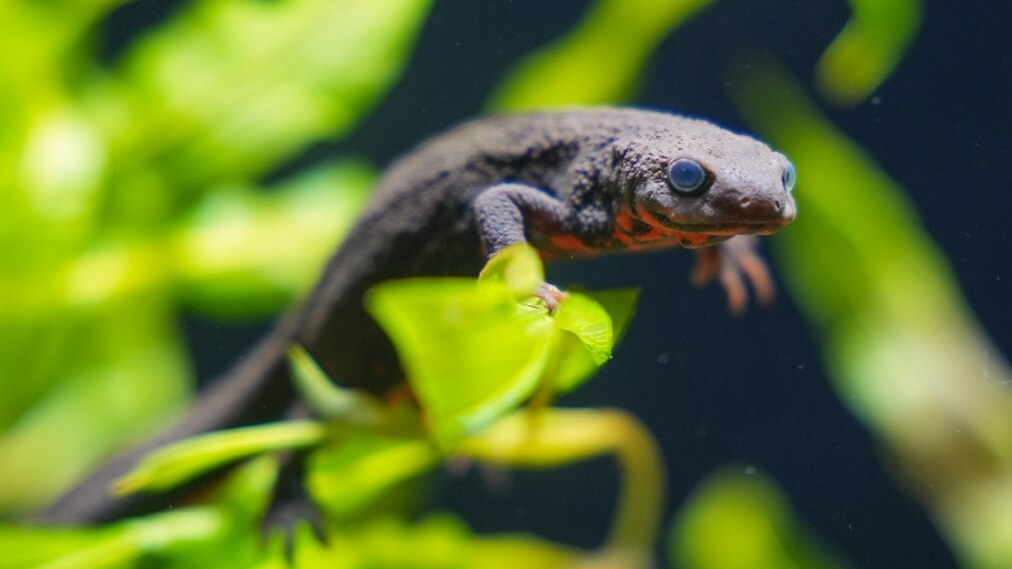
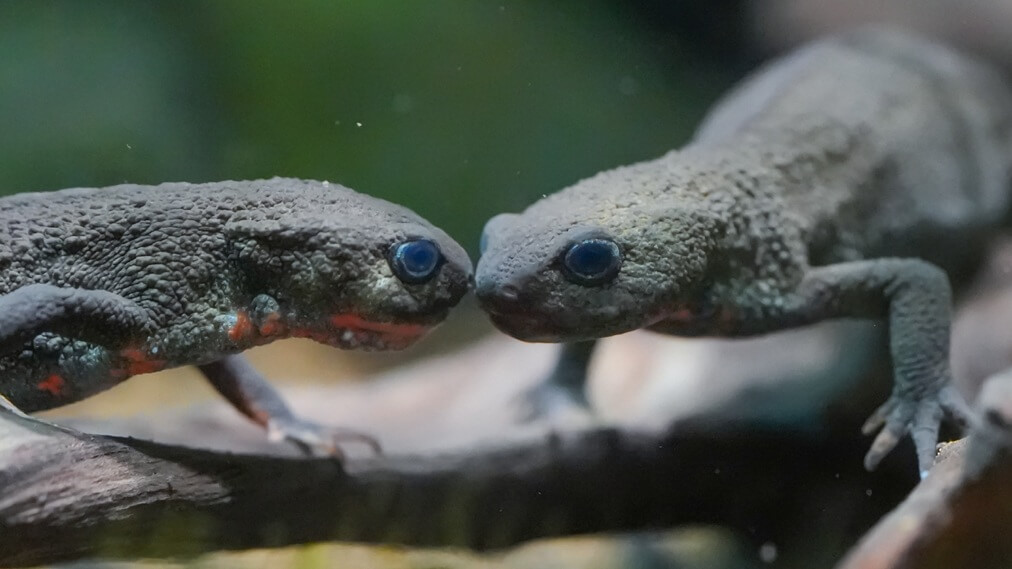
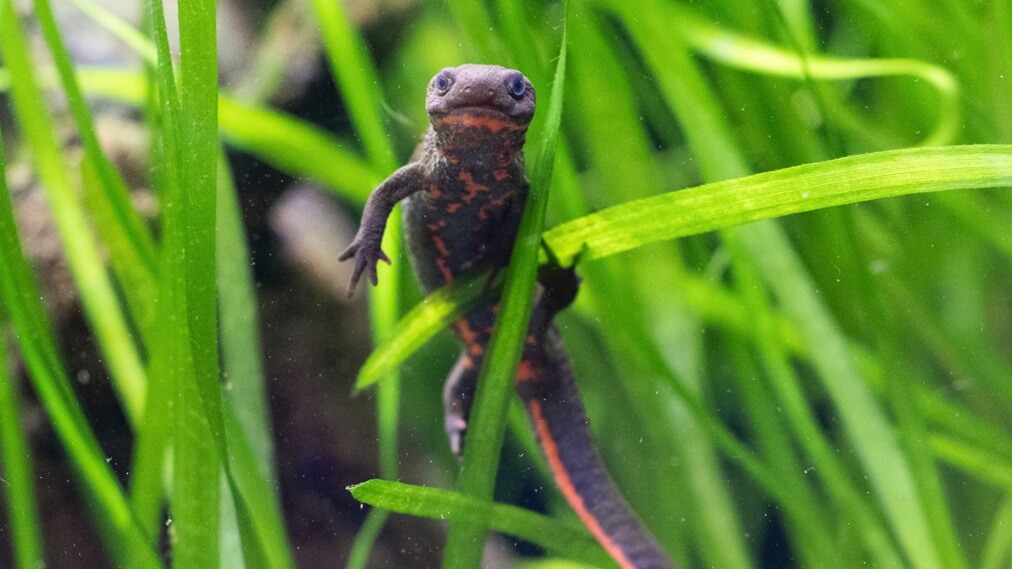
Japanese Newt lives in a variety of waterside areas, including rice paddies, irrigation channels, and streams. It was once a common and familiar creature. Its back is blackish, but its belly is a conspicuous red. This color is a warning sign that it is poisonous, and it contains Crested Ibis, the same poison found in pufferfish.
| classification | Amphibians, Caudata, Salamandridae |
|---|---|
| English name | Japanese Newt |
| distribution | Rice fields, ponds, streams, etc. in Japan (excluding Hokkaido, Okinawa, Tsushima, and the Ogasawara Islands) |
| Residence | Larvae: Underwater Juveniles: Forests and woodlands near water Adult: Mainly underwater |
| Size |
Total length: Males 7-11.5 cm, females 8-14 cm
Weight: 3-12g |
| food | They are carnivorous and swallow tadpoles and aquatic insects whole. |
| Red List |
IUCN: NT (Near Threatened)
Japan: NT (Near Threatened) Tokyo: EN (Endangered) |
The belly pattern varies depending on the individual.
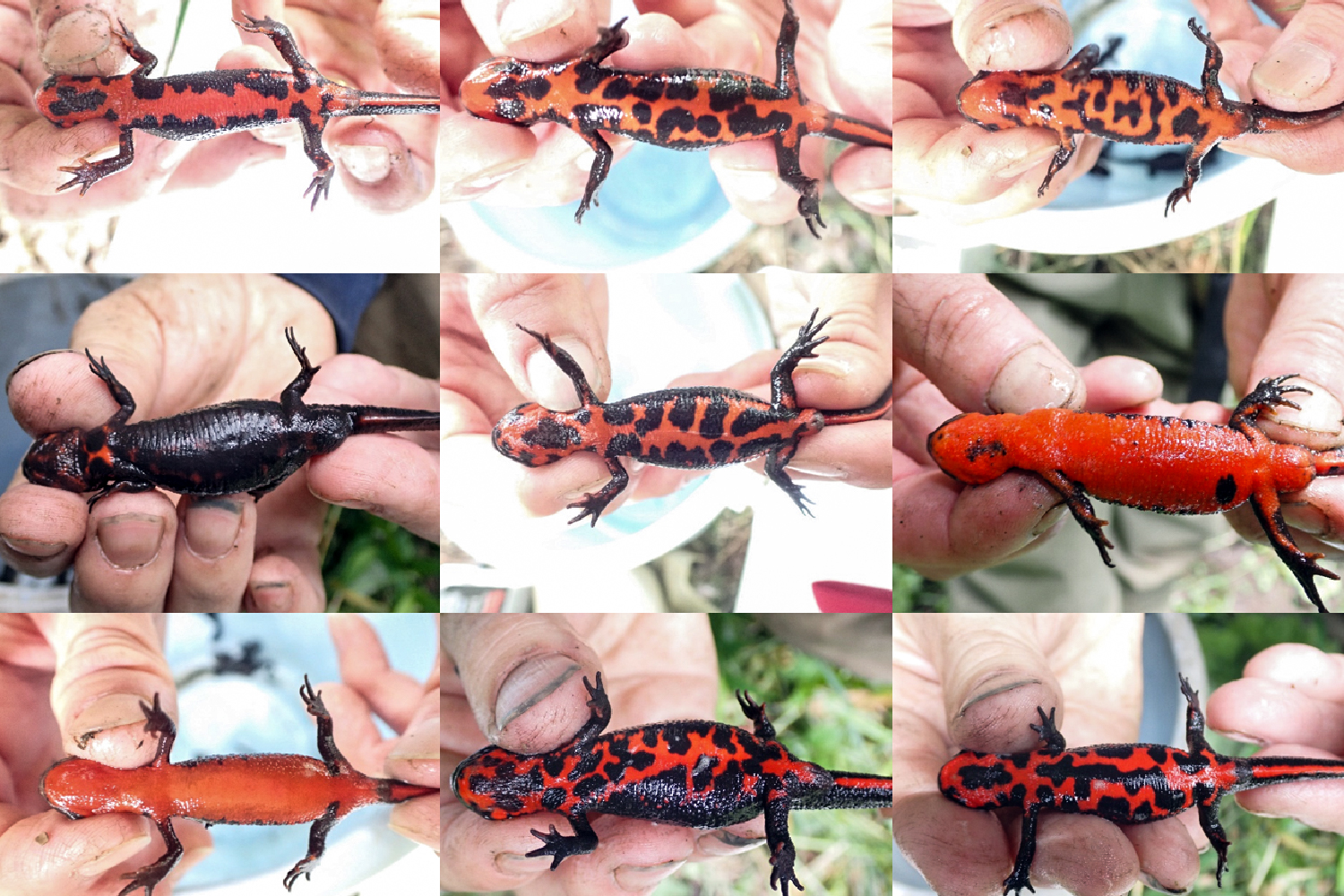
The name Japanese Newt comes from the bright red pattern on its belly. In fact, this belly pattern is different for each individual. The color also varies slightly, from orange to deep red to dull red. The Tokyo Metropolitan Zoo and Aquarium conducts research with the aim of conserving wild newts, and uses the belly pattern to identify individual newts.
Japanese Newt is an amphibian
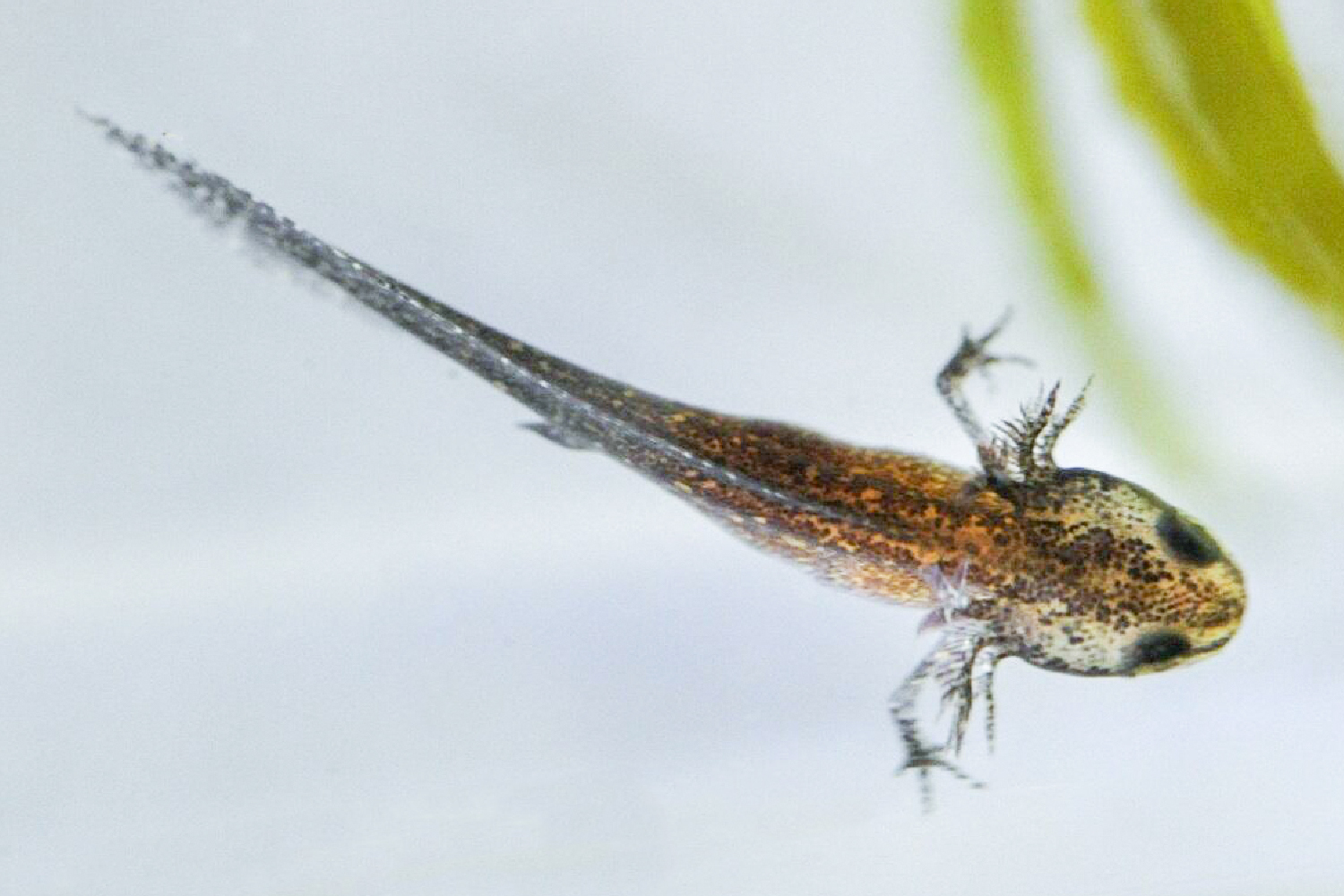
Although they are often mistaken for the reptile gecko, Japanese Newt is an amphibian, just like a frog. The larvae have branched gills (external gills) on the sides of their heads, and spend their time in water. As they grow, the tadpoles metamorphose into frogs, and they begin to breathe with lungs. They also have another thing in common with frogs: the number of fingers. If you're curious, try counting them.
Wagging his tail
You can distinguish between male and female Japanese Newt newts by the shape of their tails. Male tails are wide and flat from top to bottom, while female tails are long and slender. During the breeding season, male tails develop a whitish blue to purple nuptial coloring. They also show off their tails to females as a courtship behavior, waving them around.