

Zoo Stock Species and the Red List
Zoo Stock Species and the Red List
Zoo Stock
This indicates that the species is included in the Second Zoo Stock Plan, which was formulated by the Tokyo Metropolitan Government in 2018. The plan sets goals for the next 10 years in three areas: "species conservation," "contribution to wildlife conservation," and "environmental education and conservation awareness." 124 animal species are included.
What is the Red List?
Based on scientific research, this is a list of wildlife classified by rank (category) indicating the degree of risk of extinction.
Livng Things Encyclopedia shows the categories (mainland and islands) assessed by the IUCN (International Union for Conservation of Nature) at the global level, the Ministry of the Environment for Japan, and the Tokyo Metropolitan Government for Tokyo.
The higher the category in each table, the higher the risk of extinction, and CR, EN, and VU are the three categories known as "endangered species." In Tokyo, species that are not at the NT (near threatened) level but are relatively rare are considered "species of concern."
|
IUCN categories |
|
|---|---|
|
EX |
extinction |
|
EW |
Extinction in the wild |
|
CR+EN |
— |
|
CR |
Serious crisis |
|
EN |
crisis |
|
VU |
emergency |
|
NT |
Near Threatened |
|
LC・○ |
Low Concern |
|
DD |
Data shortage |
|
LP |
— |
|
Japan (Ministry of the Environment) Category |
|
|---|---|
|
EX |
extinction |
|
EW |
Extinction in the wild |
|
CR+EN |
Endangered species |
|
CR |
Critically Endangered |
|
EN |
Endangered species |
|
VU |
Endangered species |
|
NT |
Near Threatened |
|
LC・○ |
— |
|
DD |
Lack of information |
|
LP |
Endangered |
|
Tokyo Category |
|
|---|---|
|
EX |
extinction |
|
EW |
Extinction in the wild |
|
CR+EN |
Endangered species |
|
CR |
Critically Endangered |
|
EN |
Endangered species |
|
VU |
Endangered species |
|
NT |
Near Threatened |
|
LC・○ |
Unranked |
|
DD |
Lack of information |
|
LP |
Endangered |
Creatures at Tokyo Sea Life Park
Creatures at Tokyo Sea Life Park
Japanese Carpet Shell
Japanese Carpet Shell
Ruditapes philippinarum
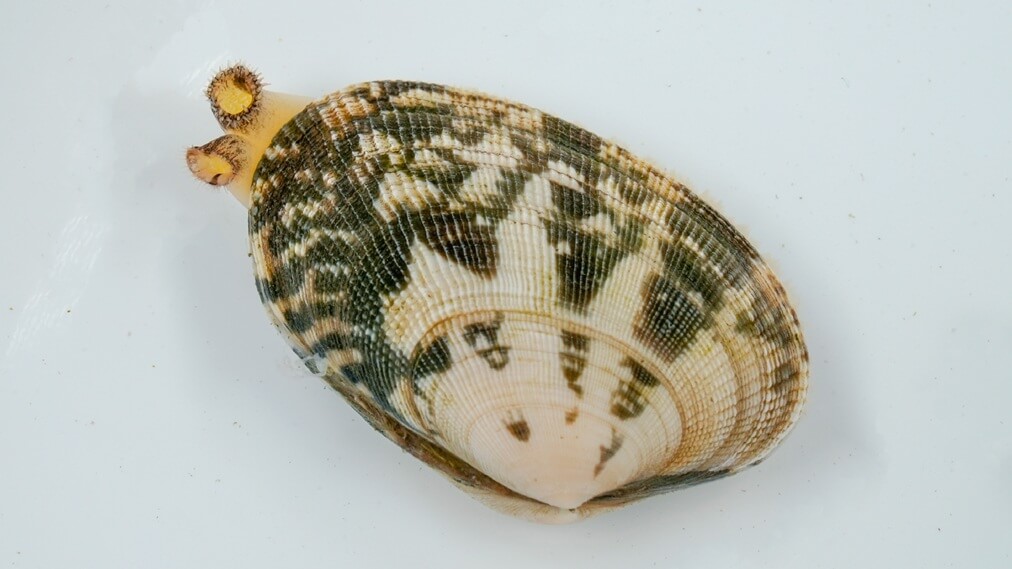
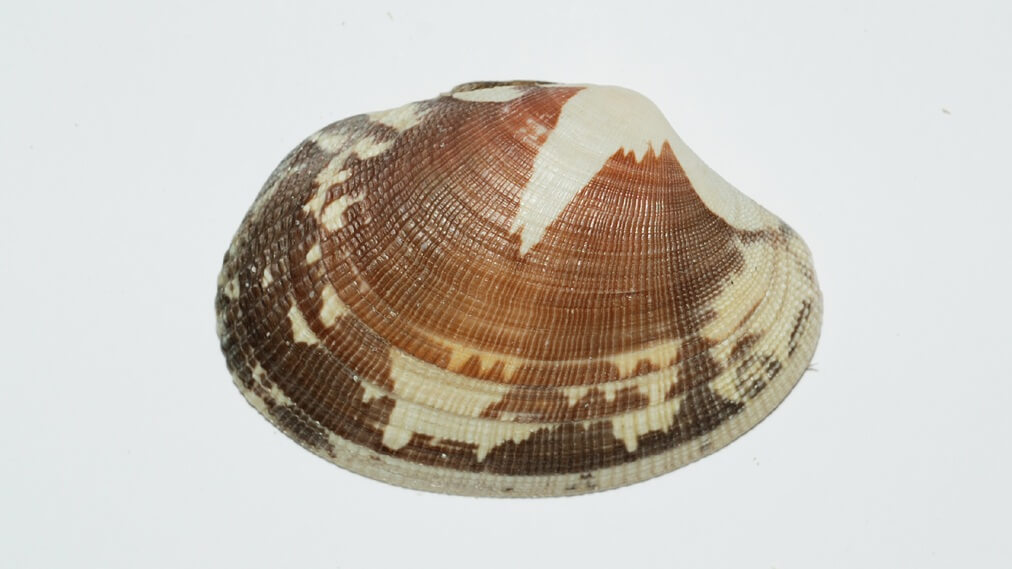
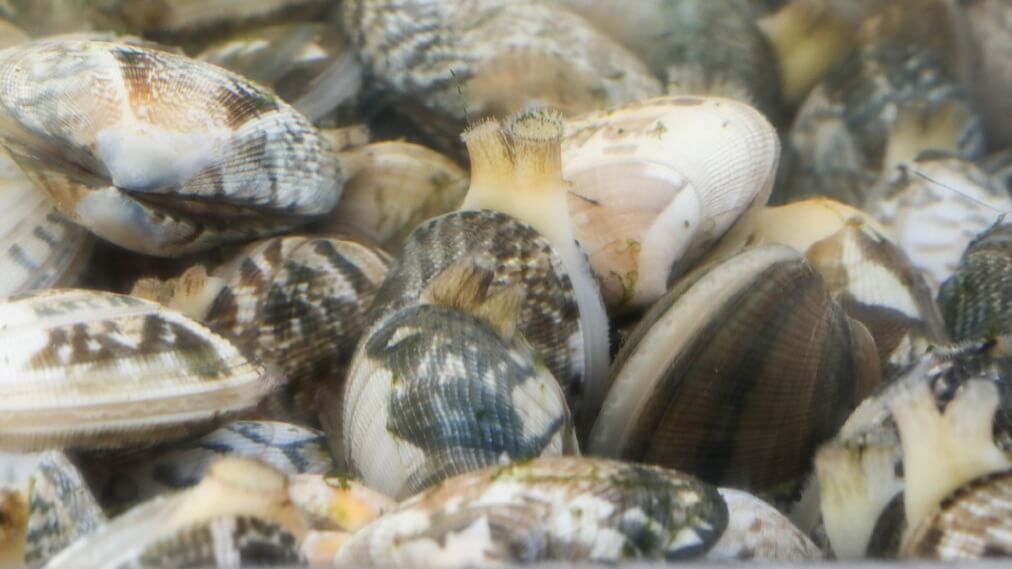
They live in tidal flats and shallow areas at the mouths of rivers, burrowing to the seabed. They are a type of bivalve with two hard shells, and are a popular shellfish for clam digging, along with clams and cockles. They have two chimney-like water tubes extending from between their shells, drawing in water through one and expelling it through the other. They filter out tiny plankton and organic matter in the water and eat it.
| classification | Bivalve, Order Veneridae, Family Veneridae |
|---|---|
| English name | Japanese Carpet Shell |
| distribution | Coastal areas from Hokkaido to Kyushu |
| Residence | Tidal flats in inner bays, etc. |
| Size |
Shell length (length from front to rear): about 40 mm
|
| food | Phytoplankton, organic matter |
| Red List |
Unrated
|
Japanese Carpet Shell clean the ocean!?
In the tank displaying Japanese Carpet Shell, you can see how Japanese Carpet Shell purify the water (their purifying action). The water, which has turned green due to chlorella (phytoplankton), gradually becomes clearer thanks to Japanese Carpet Shell. Many bivalves, such as Japanese Carpet Shell, cockles, and cockles, live on the tidal flats. These bivalves filter out organic matter from the water and eat it, thereby helping to purify the ocean.
Various Japanese Carpet Shell patterns
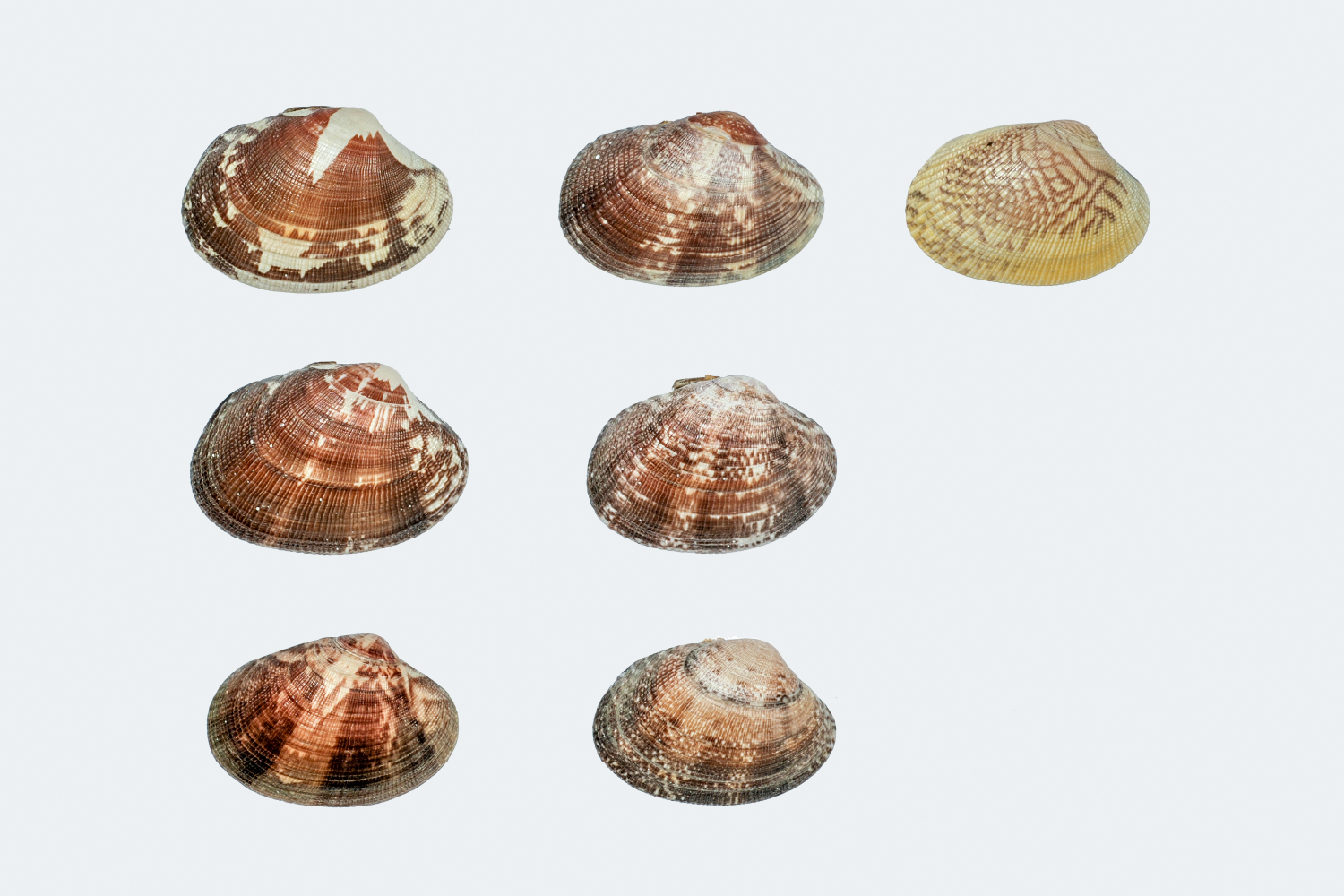
Let's take a look at Japanese Carpet Shell shells. They come in a variety of colors, including black, black and white, brown and white, and blue and white, and their patterns are also diverse. Even among the brown and white types like the one in the picture, each one has a different color and pattern. The fact that each shell has a different color and pattern is a characteristic of Japanese Carpet Shell, and it is said that these vary depending on the region and environment in which they live. Japanese Carpet Shell from Tokyo Bay are said to have many "stylish" patterns with a clear contrast between black and white.
Will I no longer be able to eat Japanese Carpet Shell?
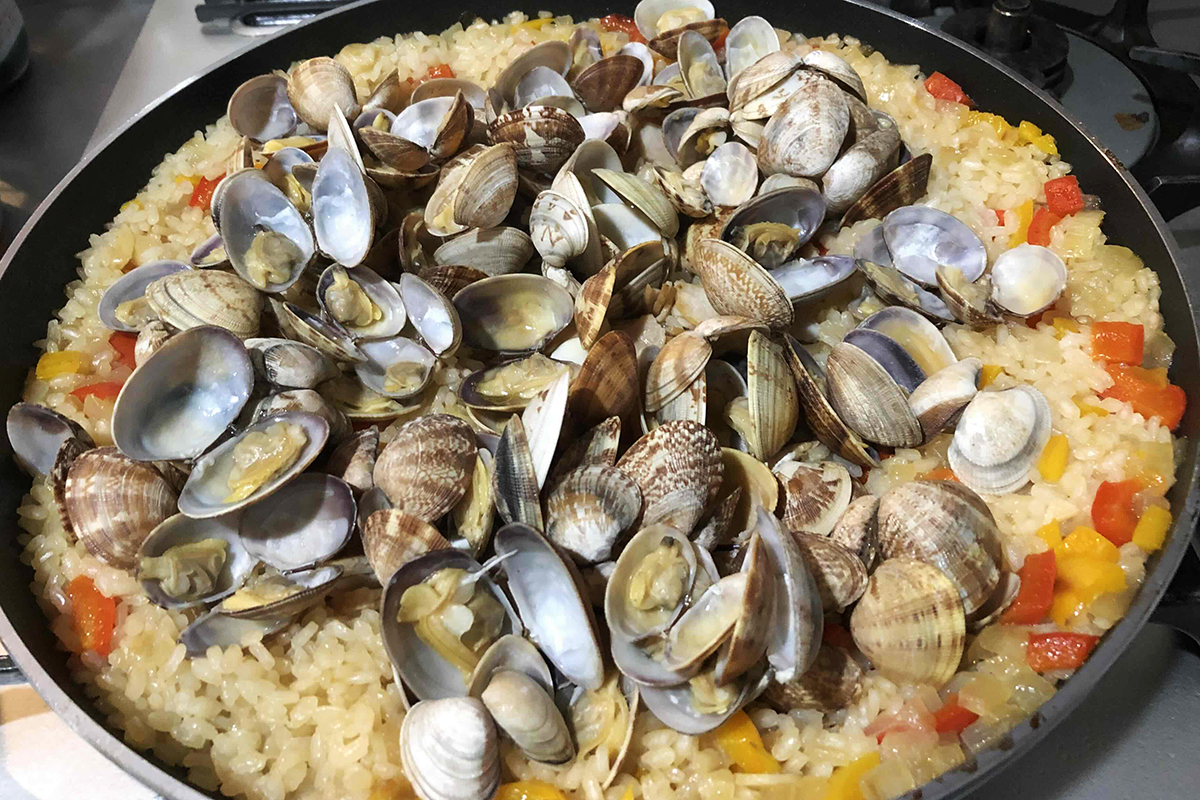
The relationship between Japanese people and Japanese Carpet Shell is ancient, with many clam shells having been found in shell mounds from the Jomon period. However, Japanese Carpet Shell are currently in decline. Production has fallen to one-fortieth of its peak in the 1980s, and most of Japanese Carpet Shell we eat are imported from China and Korea. In order to restore Japanese Carpet Shell production, it is necessary to restore lost tidal flats and shallow areas.