

Zoo Stock Species and the Red List
Zoo Stock Species and the Red List
Zoo Stock
This indicates that the species is included in the Second Zoo Stock Plan, which was formulated by the Tokyo Metropolitan Government in 2018. The plan sets goals for the next 10 years in three areas: "species conservation," "contribution to wildlife conservation," and "environmental education and conservation awareness." 124 animal species are included.
What is the Red List?
Based on scientific research, this is a list of wildlife classified by rank (category) indicating the degree of risk of extinction.
Livng Things Encyclopedia shows the categories (mainland and islands) assessed by the IUCN (International Union for Conservation of Nature) at the global level, the Ministry of the Environment for Japan, and the Tokyo Metropolitan Government for Tokyo.
The higher the category in each table, the higher the risk of extinction, and CR, EN, and VU are the three categories known as "endangered species." In Tokyo, species that are not at the NT (near threatened) level but are relatively rare are considered "species of concern."
|
IUCN categories |
|
|---|---|
|
EX |
extinction |
|
EW |
Extinction in the wild |
|
CR+EN |
— |
|
CR |
Serious crisis |
|
EN |
crisis |
|
VU |
emergency |
|
NT |
Near Threatened |
|
LC・○ |
Low Concern |
|
DD |
Data shortage |
|
LP |
— |
|
Japan (Ministry of the Environment) Category |
|
|---|---|
|
EX |
extinction |
|
EW |
Extinction in the wild |
|
CR+EN |
Endangered species |
|
CR |
Critically Endangered |
|
EN |
Endangered species |
|
VU |
Endangered species |
|
NT |
Near Threatened |
|
LC・○ |
— |
|
DD |
Lack of information |
|
LP |
Endangered |
|
Tokyo Category |
|
|---|---|
|
EX |
extinction |
|
EW |
Extinction in the wild |
|
CR+EN |
Endangered species |
|
CR |
Critically Endangered |
|
EN |
Endangered species |
|
VU |
Endangered species |
|
NT |
Near Threatened |
|
LC・○ |
Unranked |
|
DD |
Lack of information |
|
LP |
Endangered |
Creatures at Tokyo Sea Life Park
Creatures at Tokyo Sea Life Park
Humphead Wrasse
Humphead Wrasse
Cheilinus undulatus
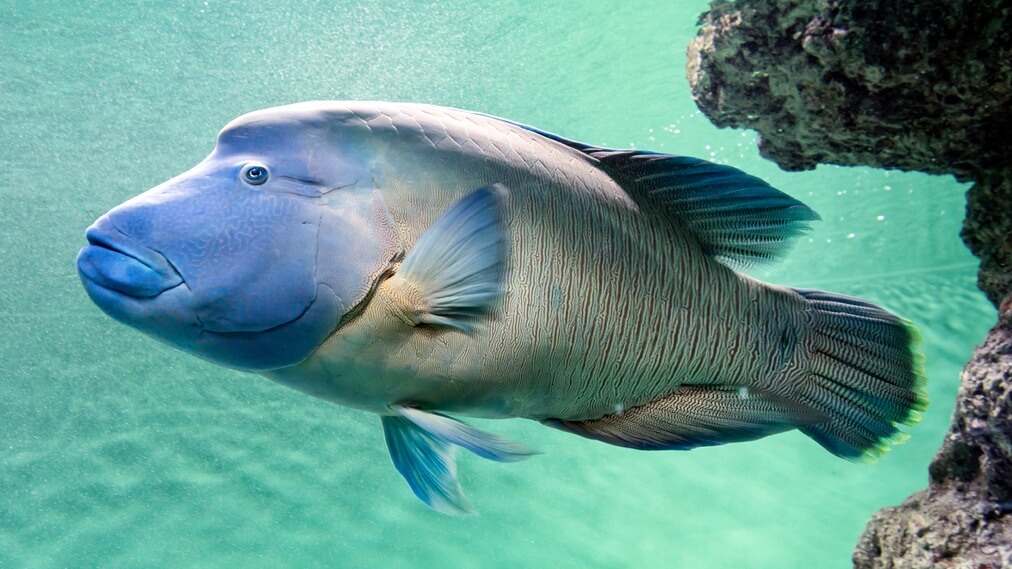
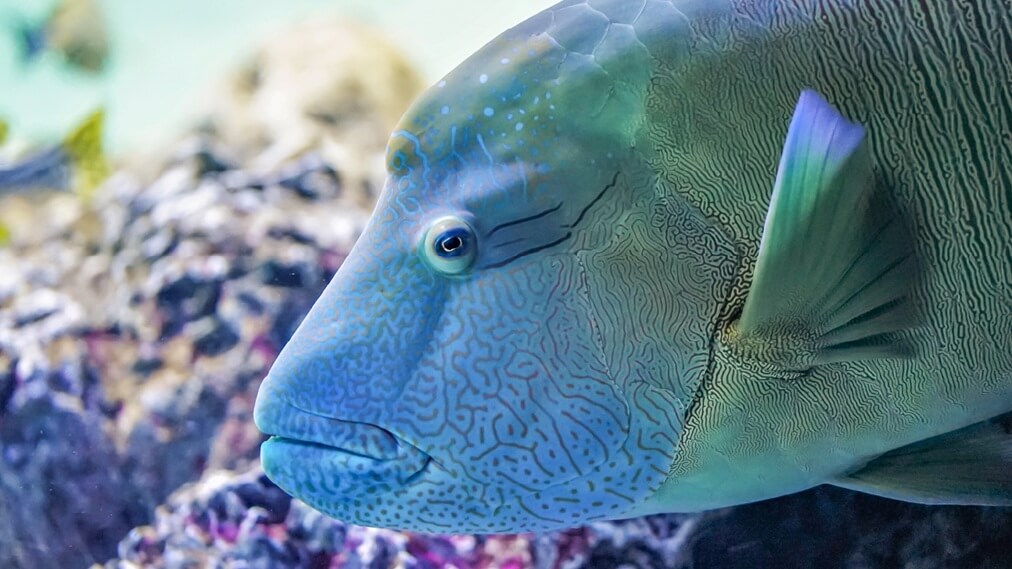
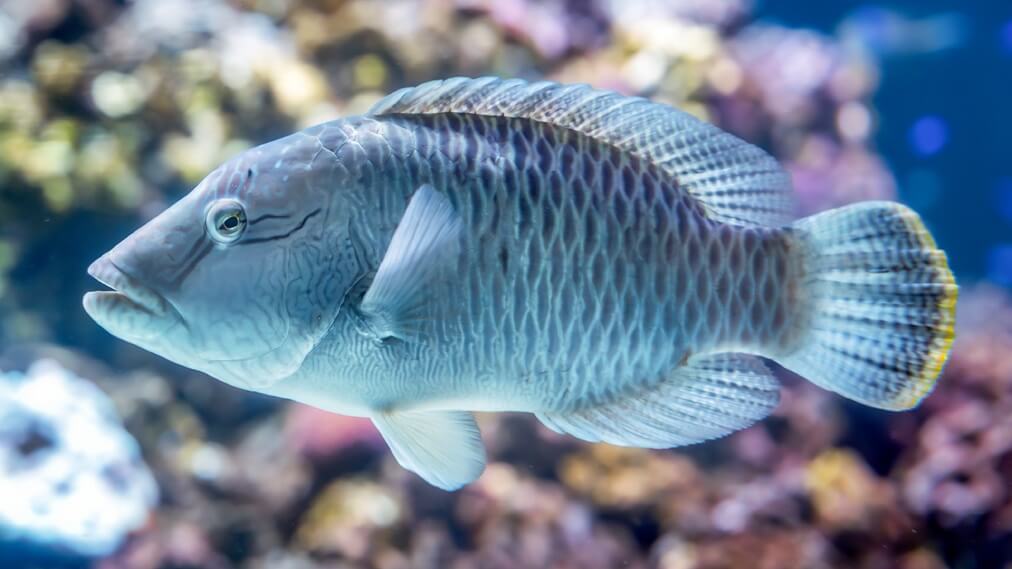
This is the world's largest wrasse species, growing up to 2 meters in length. Mature males develop a large, imposing hump on their heads. The black band behind their eyes in their youth resembles glasses, hence their name. They are known to change sex from female to male as they mature.
| classification | Actinopterygii, Perciformes, Labridae |
|---|---|
| English name | Humphead Wrasse |
| distribution | Tropical and subtropical waters of the Indian and Pacific Oceans |
| Residence | Rocky reefs and coral reefs |
| Size |
Total length: 2m
|
| food | Benthic organisms and fish |
| Red List |
IUCN: EN (crisis)
|
The hump is a sign of a good male
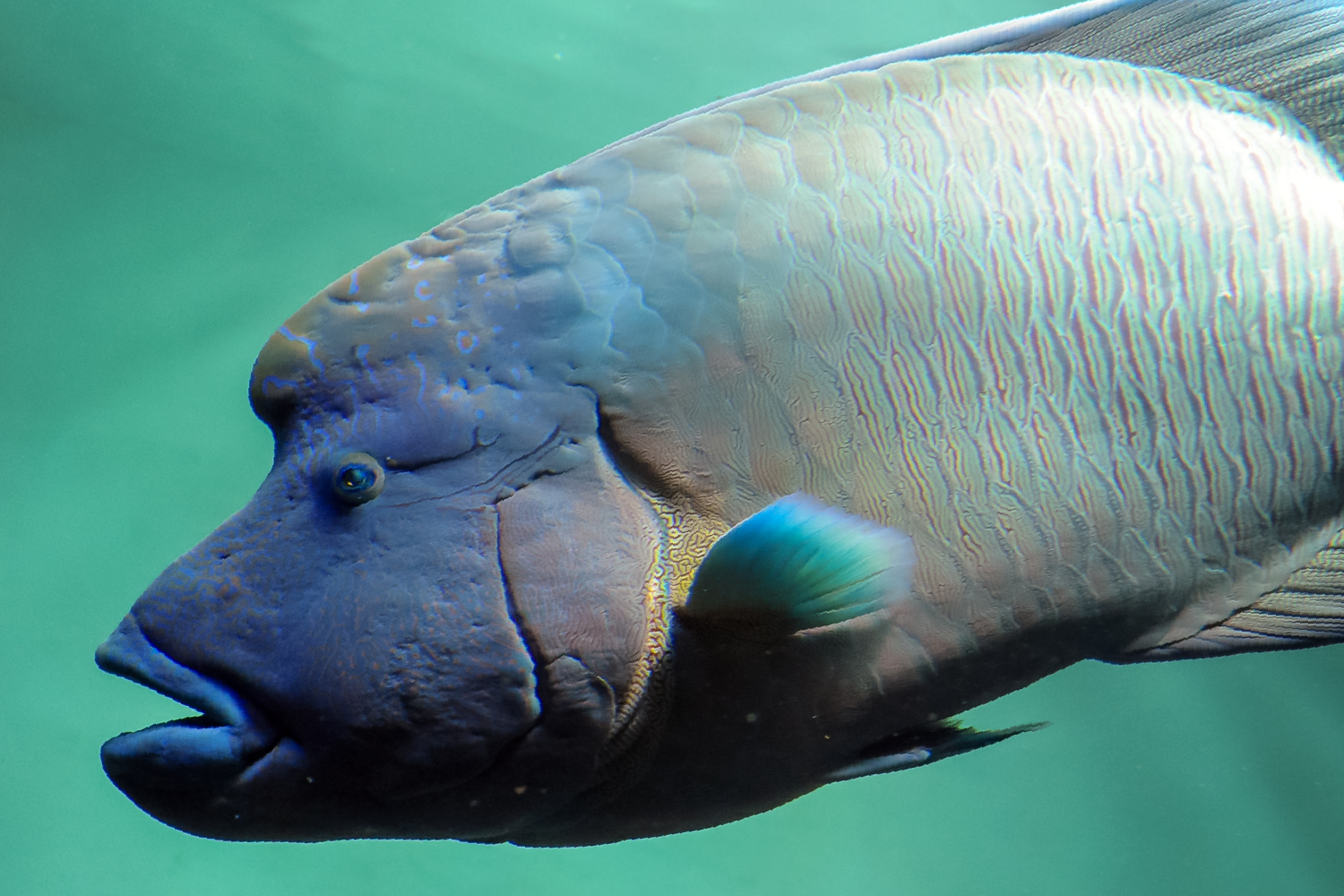
Humphead Wrasse change sex from female to male as they grow. Take a look at the front of their head. If you see a protruding hump, it's a male. Males have a dark green body, and the larger and older they are, the more impressive the hump becomes. Because their appearance resembles the hat worn by Napoleon, they are called "Napoleon fish," and are popular among divers.
Aiming to breed Humphead Wrasse
Humphead Wrasse are used as food in Asia and Oceania, including the Ryukyu Islands. However, in recent years, their wild population has been declining, and international trade is restricted by the Convention on International Trade in Endangered Species of Wild Fauna and Flora (CITES). As part of a plan for Tokyo Metropolitan Zoos and Aquariums to protect rare animals, Humphead Wrasse is working to breed humphead wrasse in its aquariums.