

Zoo Stock Species and the Red List
Zoo Stock Species and the Red List
Zoo Stock
This indicates that the species is included in the Second Zoo Stock Plan, which was formulated by the Tokyo Metropolitan Government in 2018. The plan sets goals for the next 10 years in three areas: "species conservation," "contribution to wildlife conservation," and "environmental education and conservation awareness." 124 animal species are included.
What is the Red List?
Based on scientific research, this is a list of wildlife classified by rank (category) indicating the degree of risk of extinction.
Livng Things Encyclopedia shows the categories (mainland and islands) assessed by the IUCN (International Union for Conservation of Nature) at the global level, the Ministry of the Environment for Japan, and the Tokyo Metropolitan Government for Tokyo.
The higher the category in each table, the higher the risk of extinction, and CR, EN, and VU are the three categories known as "endangered species." In Tokyo, species that are not at the NT (near threatened) level but are relatively rare are considered "species of concern."
|
IUCN categories |
|
|---|---|
|
EX |
extinction |
|
EW |
Extinction in the wild |
|
CR+EN |
— |
|
CR |
Serious crisis |
|
EN |
crisis |
|
VU |
emergency |
|
NT |
Near Threatened |
|
LC・○ |
Low Concern |
|
DD |
Data shortage |
|
LP |
— |
|
Japan (Ministry of the Environment) Category |
|
|---|---|
|
EX |
extinction |
|
EW |
Extinction in the wild |
|
CR+EN |
Endangered species |
|
CR |
Critically Endangered |
|
EN |
Endangered species |
|
VU |
Endangered species |
|
NT |
Near Threatened |
|
LC・○ |
— |
|
DD |
Lack of information |
|
LP |
Endangered |
|
Tokyo Category |
|
|---|---|
|
EX |
extinction |
|
EW |
Extinction in the wild |
|
CR+EN |
Endangered species |
|
CR |
Critically Endangered |
|
EN |
Endangered species |
|
VU |
Endangered species |
|
NT |
Near Threatened |
|
LC・○ |
Unranked |
|
DD |
Lack of information |
|
LP |
Endangered |
Creatures at Tokyo Sea Life Park
Creatures at Tokyo Sea Life Park

Humboldt Penguin
Humboldt Penguin
Spheniscus humboldti
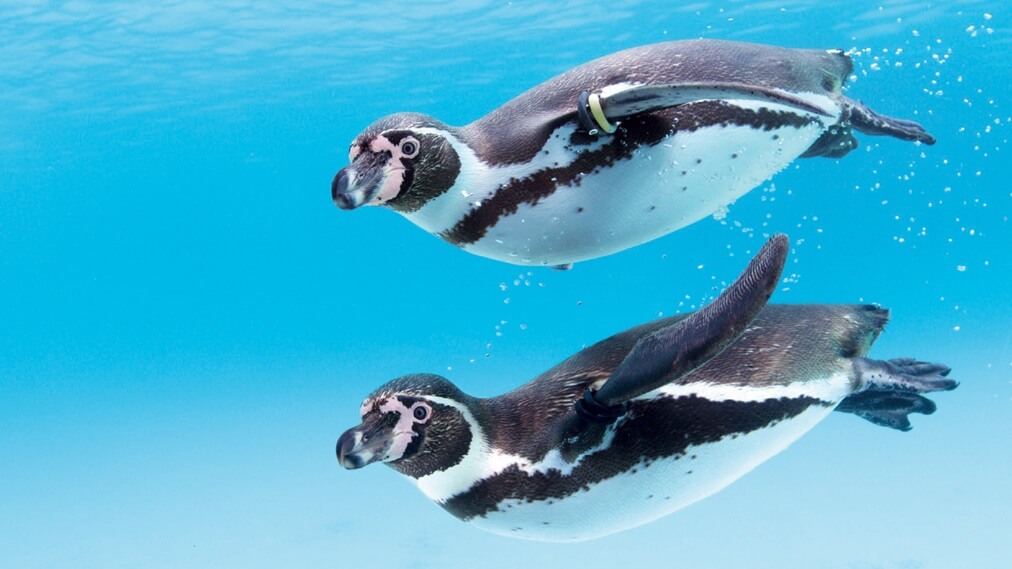
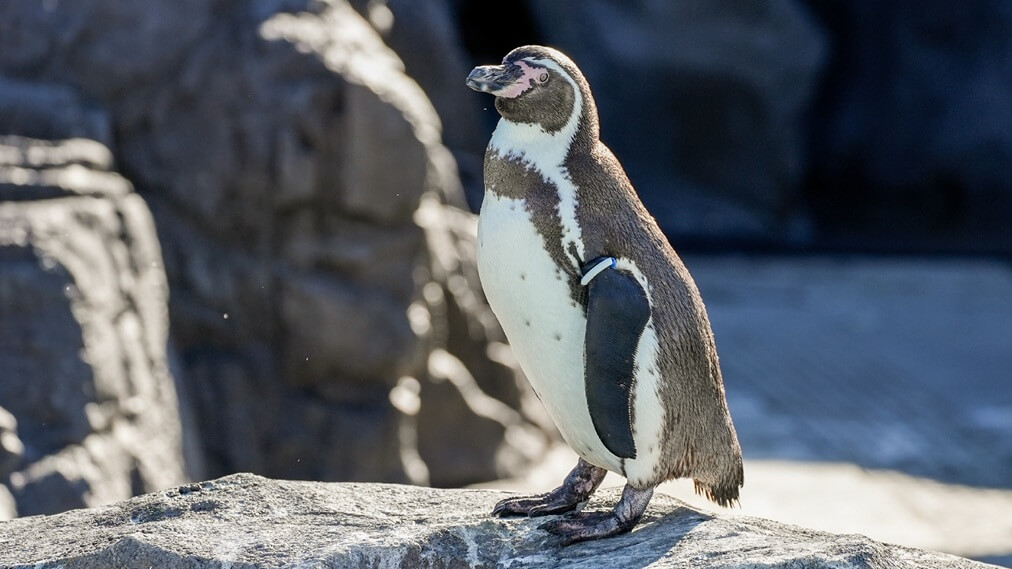
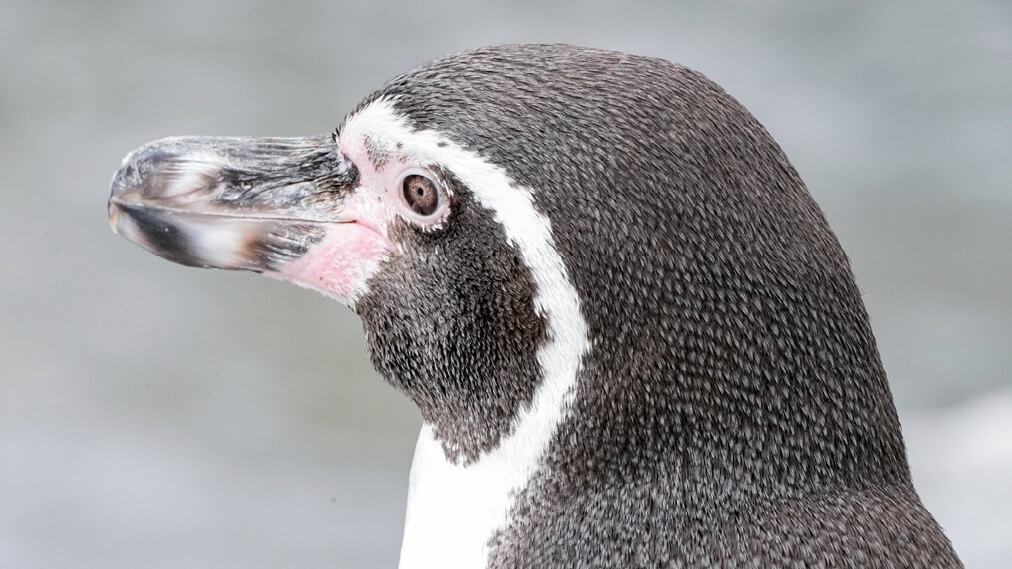
This is the most commonly kept penguin species in Japanese zoos and aquariums. They are distributed along the Humboldt Current, which flows from south to north along the Pacific coast of South America, and live in burrows dug in the roots of cacti and other plants on dry coastlines. Their population is declining in their native habitat, and they are endangered.
| classification | Aves, Sphenisciformes, Penguinidae |
|---|---|
| English name | Humboldt Penguin |
| distribution | South America's Pacific coasts of Peru and Chile |
| Residence | Nesting near the coast |
| Size |
Length from tip of beak to tip of tail: approx. 68cm
Weight: Approximately 4kg |
| food | They mainly eat fish such as anchovies. |
| Red List |
IUCN: VU (Very)
|
Let's observe penguins from underwater!
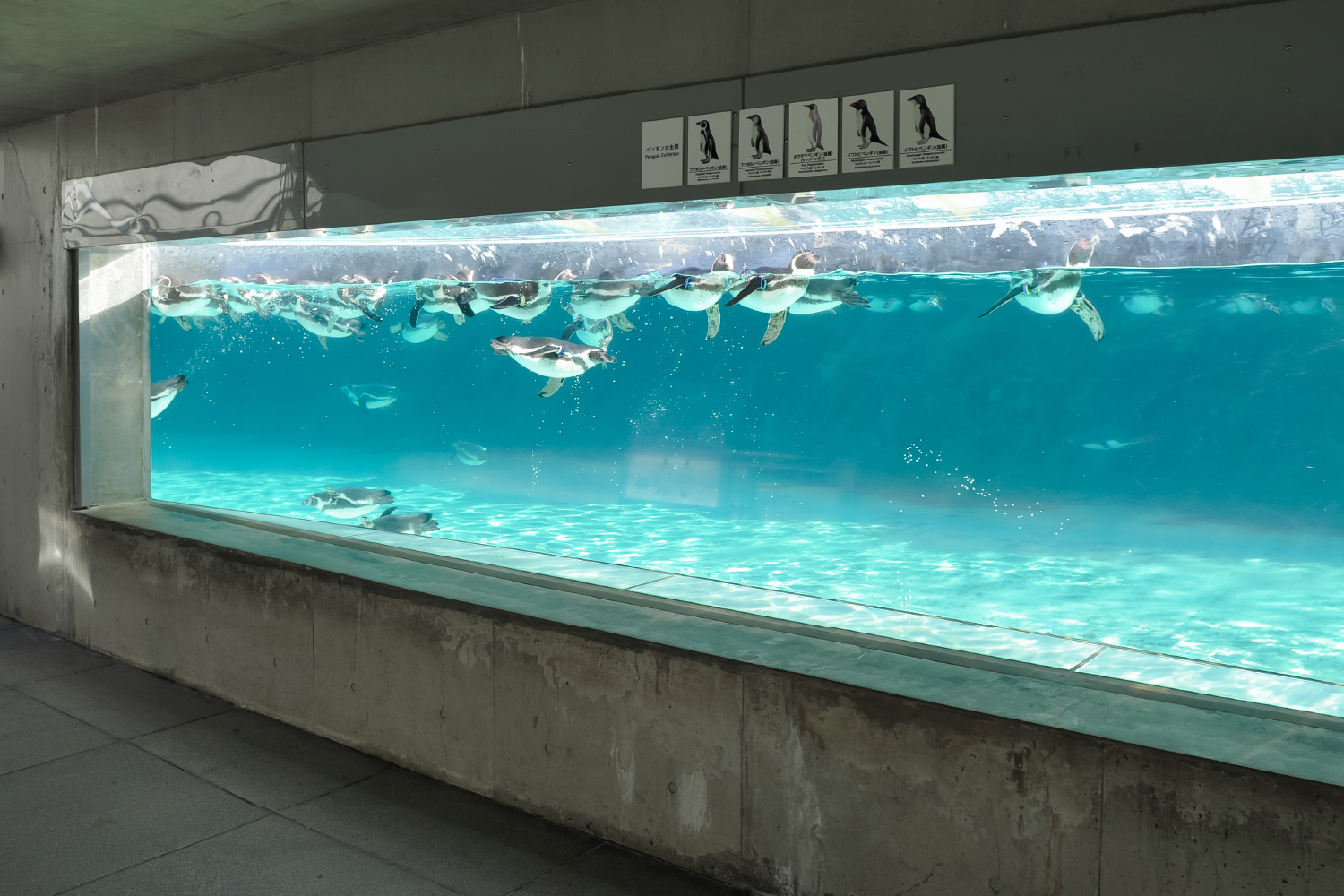
In the "Penguin Ecology" tank, there's a place where you can descend a staircase and observe the penguins from underwater. Take a look at the bellies of Humboldt Penguin floating on the surface and how they swim around using their wings (flippers). On land, they look rather stocky, but when they adopt a swimming posture, you'll see that their bodies are streamlined, making them well-suited to moving through the water.
A rocky area that recreates the habitat
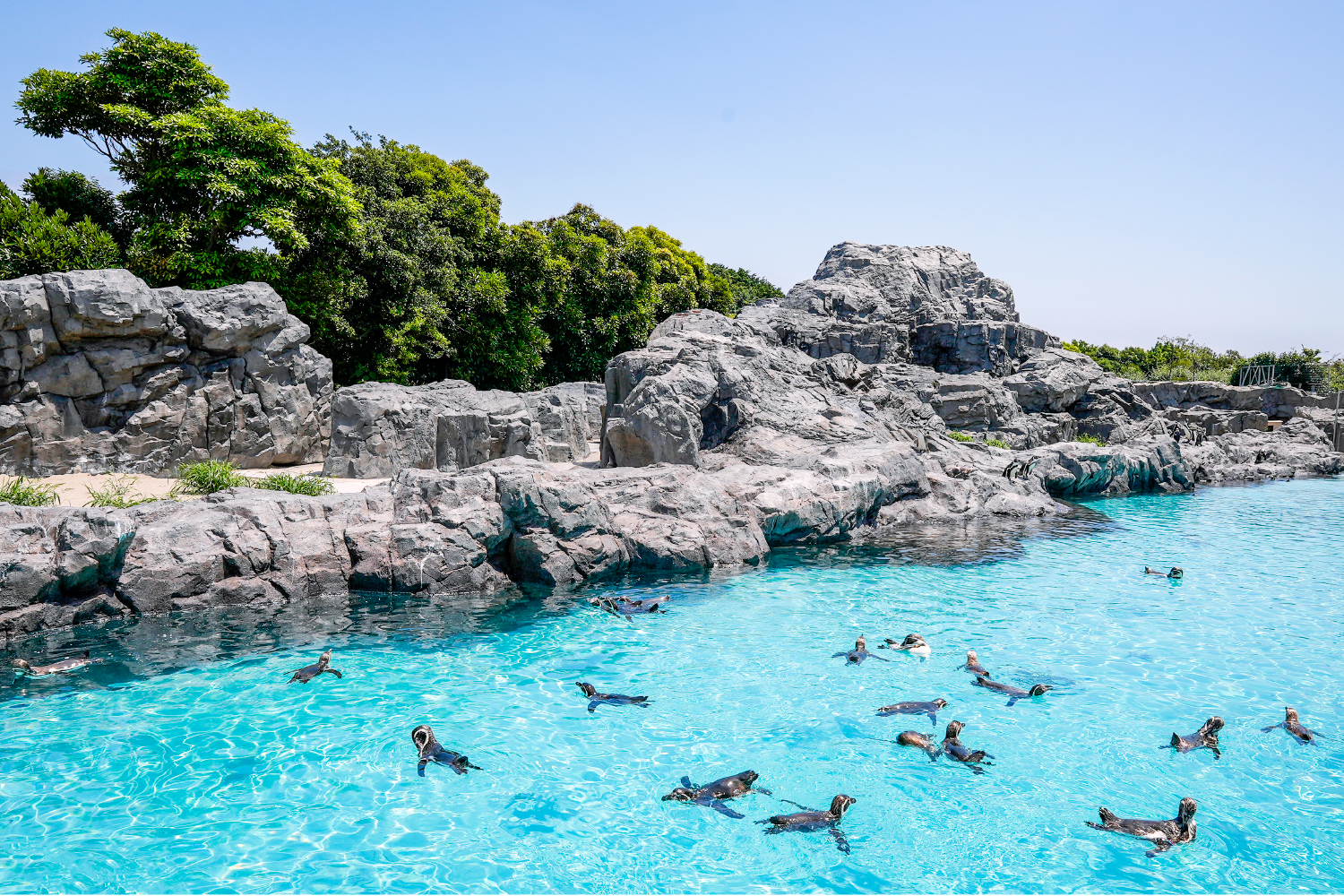
The "Penguin Ecology" tank features a large area of rugged rocks on land. This recreates the habitat of Humboldt Penguin. In their actual habitat, there is a soft layer of soil called "guano," which is made up of accumulated droppings from Humboldt Penguin and other seabirds. During the breeding season, they dig holes in this guano to build their nests. Because guano is an excellent fertilizer, humans have been mining it extensively, which has historically led to a reduction in their breeding grounds.
The reason for the colors black and white
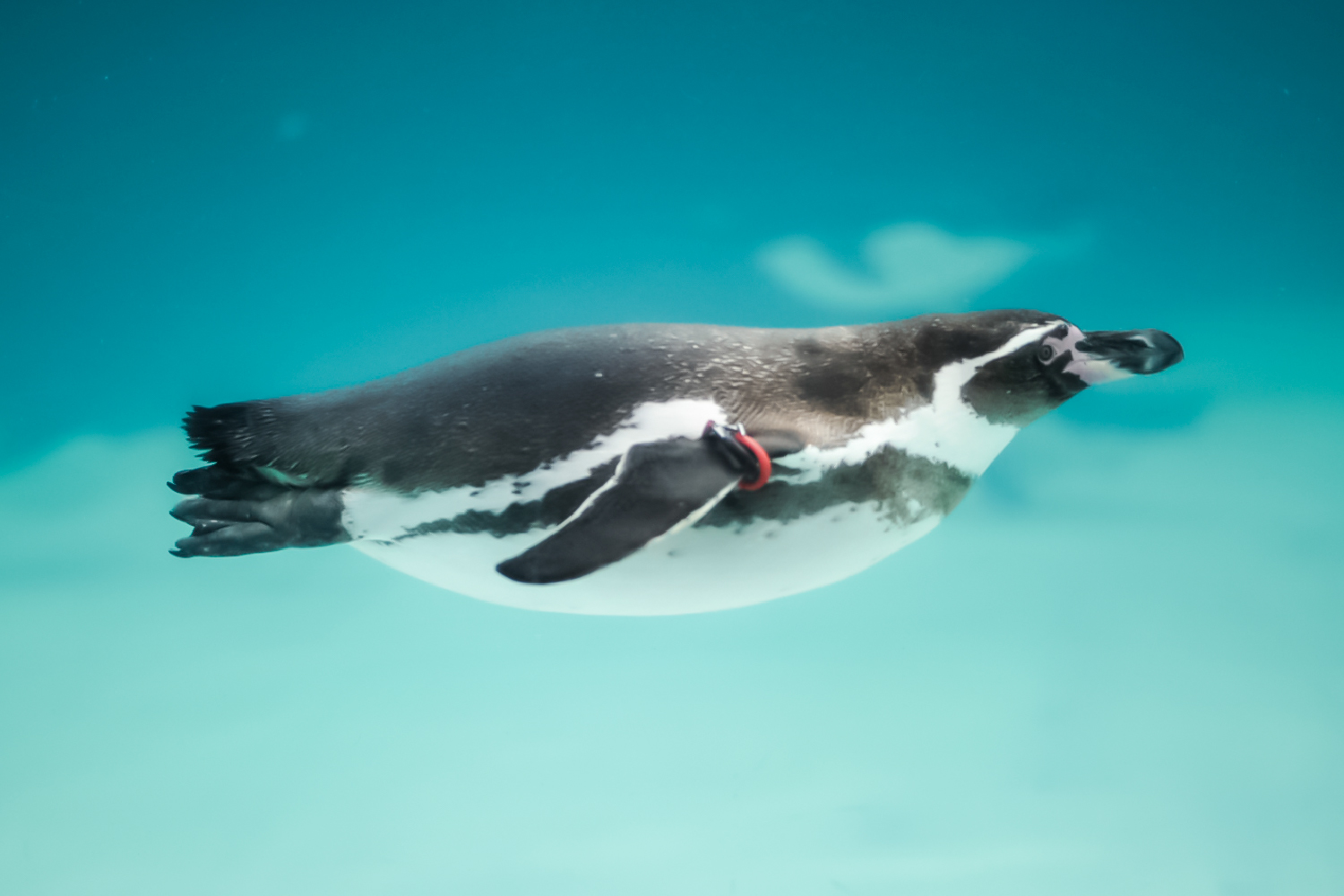
The body coloration, which is dark on the back and light on the belly, is called countershading, and is thought to make it difficult for predators approaching from above or below to spot the creature. This pattern is common to many marine creatures, so try looking for it in other animals as well. In penguins, some studies suggest that this black and white pattern has the effect of confusing schools of fish that serve as their prey.