

Zoo Stock Species and the Red List
Zoo Stock Species and the Red List
Zoo Stock
This indicates that the species is included in the Second Zoo Stock Plan, which was formulated by the Tokyo Metropolitan Government in 2018. The plan sets goals for the next 10 years in three areas: "species conservation," "contribution to wildlife conservation," and "environmental education and conservation awareness." 124 animal species are included.
What is the Red List?
Based on scientific research, this is a list of wildlife classified by rank (category) indicating the degree of risk of extinction.
Livng Things Encyclopedia shows the categories (mainland and islands) assessed by the IUCN (International Union for Conservation of Nature) at the global level, the Ministry of the Environment for Japan, and the Tokyo Metropolitan Government for Tokyo.
The higher the category in each table, the higher the risk of extinction, and CR, EN, and VU are the three categories known as "endangered species." In Tokyo, species that are not at the NT (near threatened) level but are relatively rare are considered "species of concern."
|
IUCN categories |
|
|---|---|
|
EX |
extinction |
|
EW |
Extinction in the wild |
|
CR+EN |
— |
|
CR |
Serious crisis |
|
EN |
crisis |
|
VU |
emergency |
|
NT |
Near Threatened |
|
LC・○ |
Low Concern |
|
DD |
Data shortage |
|
LP |
— |
|
Japan (Ministry of the Environment) Category |
|
|---|---|
|
EX |
extinction |
|
EW |
Extinction in the wild |
|
CR+EN |
Endangered species |
|
CR |
Critically Endangered |
|
EN |
Endangered species |
|
VU |
Endangered species |
|
NT |
Near Threatened |
|
LC・○ |
— |
|
DD |
Lack of information |
|
LP |
Endangered |
|
Tokyo Category |
|
|---|---|
|
EX |
extinction |
|
EW |
Extinction in the wild |
|
CR+EN |
Endangered species |
|
CR |
Critically Endangered |
|
EN |
Endangered species |
|
VU |
Endangered species |
|
NT |
Near Threatened |
|
LC・○ |
Unranked |
|
DD |
Lack of information |
|
LP |
Endangered |
Creatures at Tokyo Sea Life Park
Creatures at Tokyo Sea Life Park
Flapnose Ray
Flapnose Ray
Rhinoptera javanica
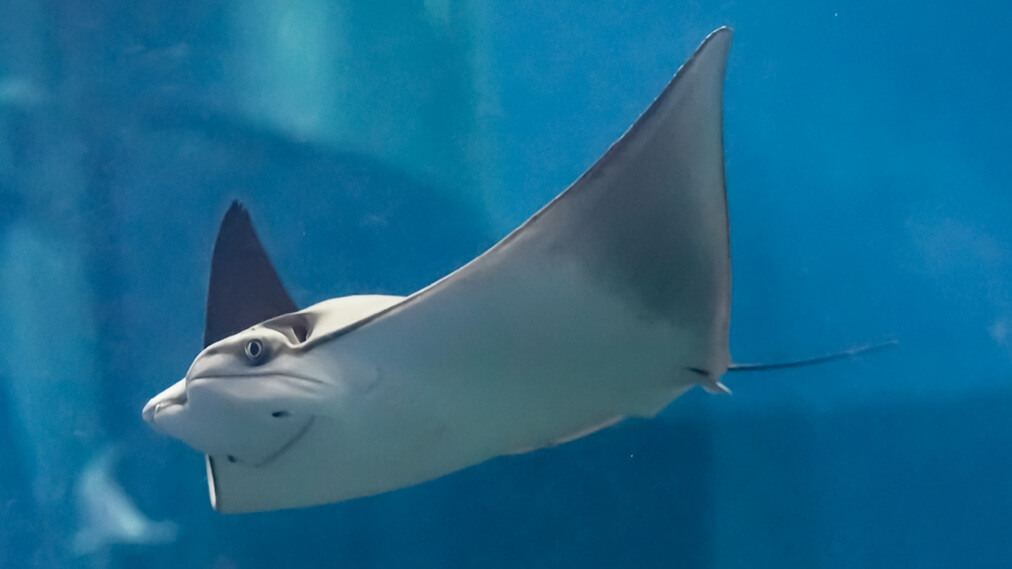
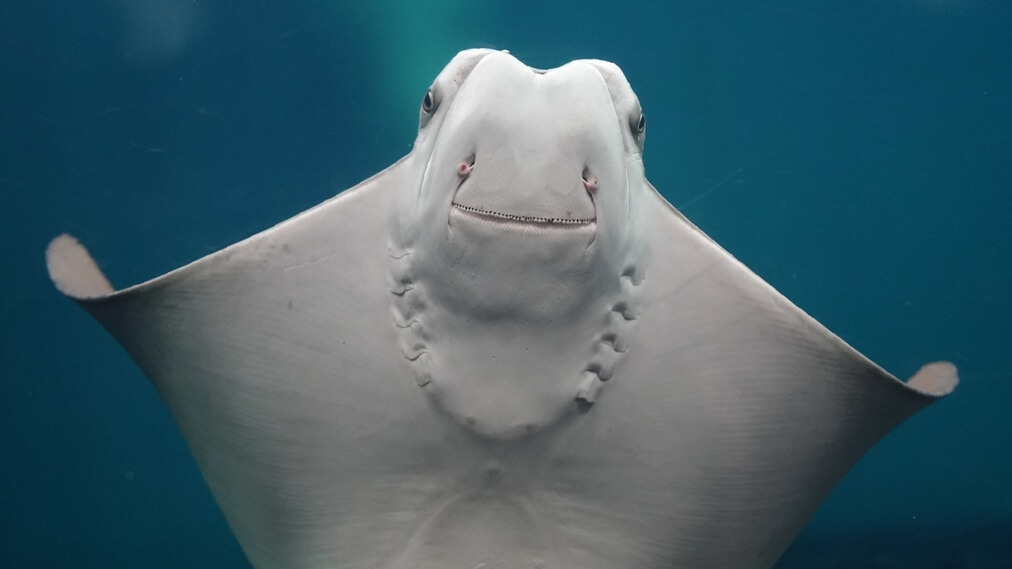
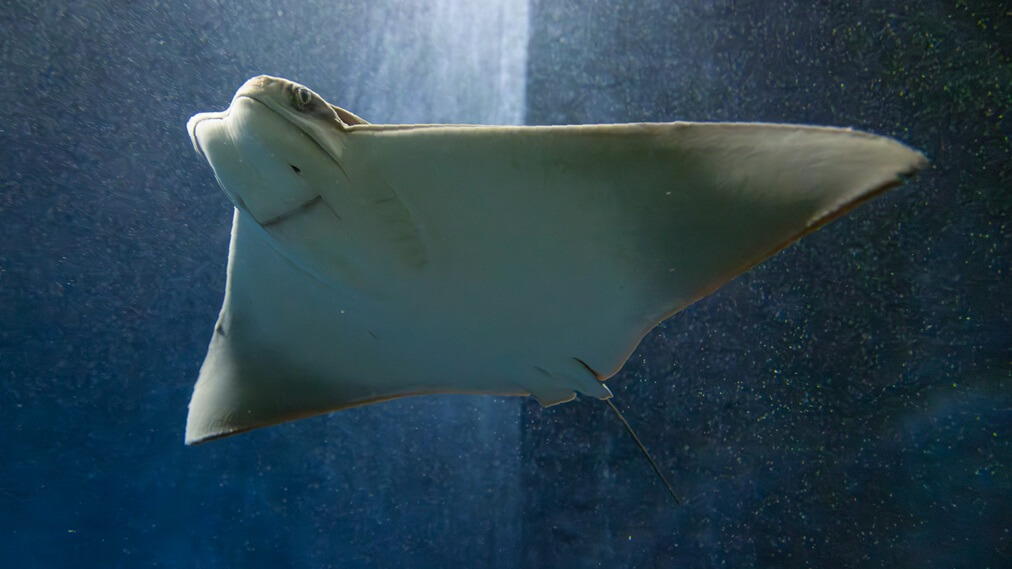
It is a type of ray. It swims by flapping its large triangular pectoral fins, giving the impression of "flying" rather than "swimming." It uses the "cephalic fins" in front of its mouth to search for prey hidden in the sand on the seabed. It eats shrimp, crabs, shellfish, and other creatures with its flat teeth that can bite through even hard foods.
| classification | Chondrichthyes, Order Aquilegia, Family Aquilegia |
|---|---|
| English name | Flapnose Ray |
| distribution | Widely distributed in warm coastal waters from the Ogasawara Islands and the Nansei Islands to the Indian Ocean and the western Pacific Ocean. |
| Residence | Mid-level coastal waters |
| Size |
Body width: 150cm
|
| food | Shrimp, crabs, and shellfish |
| Red List |
IUCN: EN (crisis)
Tokyo: Species of note |
Unique cranial fin
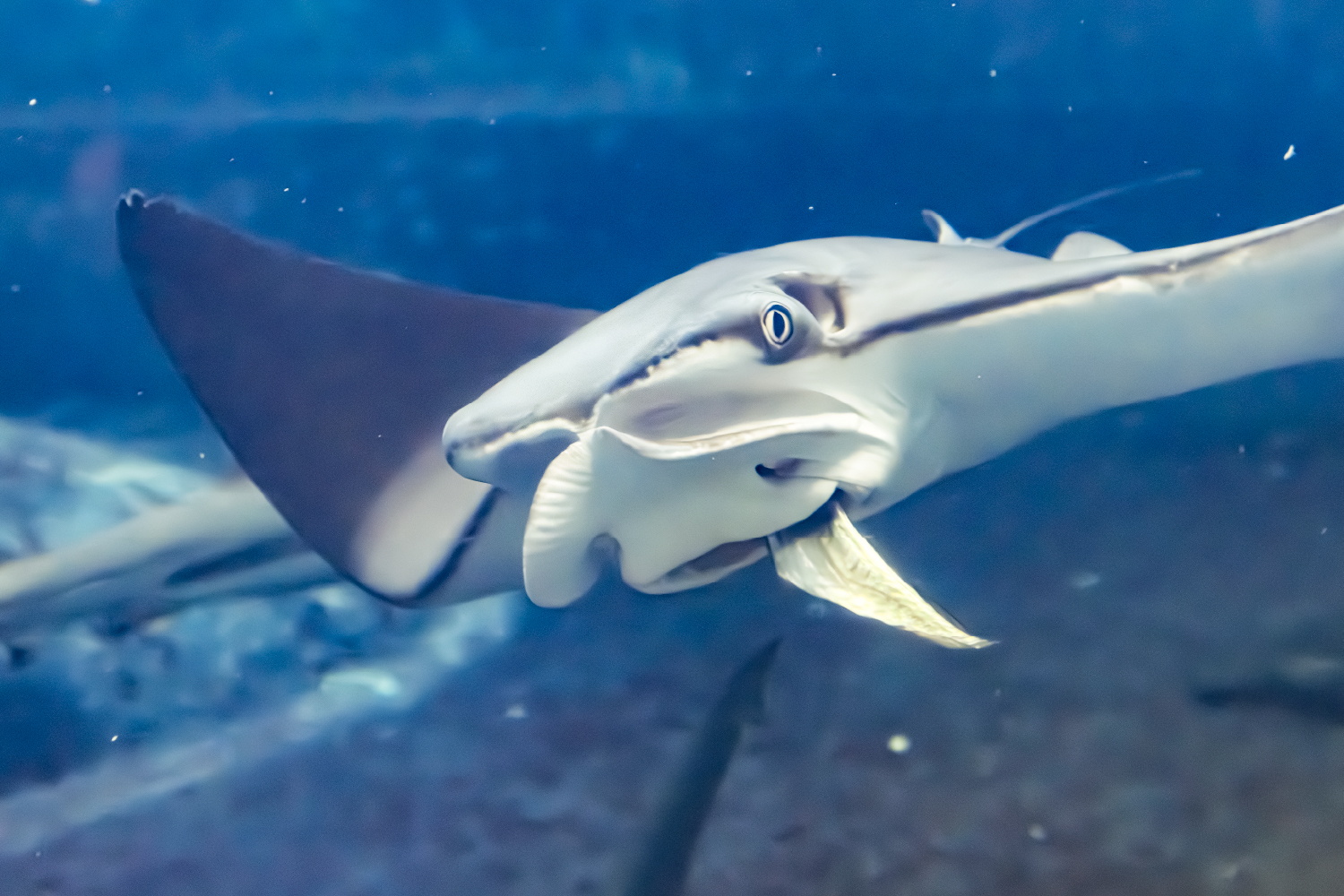
When you look at Flapnose Ray you will notice that it extends and folds a fin-like structure in front of its mouth. This is its "cephalic fin." This fin looks like a cow's nose, hence the name "cownose." It uses its cephalic fin to dig up sand and mud from the seabed, searching for and eating prey, mainly bivalves.
Form large flocks
Flapnose Ray are known to swim in huge shoals of hundreds to thousands of individuals, which are thought to be for protection from predators, for reproduction, and for efficient feeding.