

Zoo Stock Species and the Red List
Zoo Stock Species and the Red List
Zoo Stock
This indicates that the species is included in the Second Zoo Stock Plan, which was formulated by the Tokyo Metropolitan Government in 2018. The plan sets goals for the next 10 years in three areas: "species conservation," "contribution to wildlife conservation," and "environmental education and conservation awareness." 124 animal species are included.
What is the Red List?
Based on scientific research, this is a list of wildlife classified by rank (category) indicating the degree of risk of extinction.
Livng Things Encyclopedia shows the categories (mainland and islands) assessed by the IUCN (International Union for Conservation of Nature) at the global level, the Ministry of the Environment for Japan, and the Tokyo Metropolitan Government for Tokyo.
The higher the category in each table, the higher the risk of extinction, and CR, EN, and VU are the three categories known as "endangered species." In Tokyo, species that are not at the NT (near threatened) level but are relatively rare are considered "species of concern."
|
IUCN categories |
|
|---|---|
|
EX |
extinction |
|
EW |
Extinction in the wild |
|
CR+EN |
— |
|
CR |
Serious crisis |
|
EN |
crisis |
|
VU |
emergency |
|
NT |
Near Threatened |
|
LC・○ |
Low Concern |
|
DD |
Data shortage |
|
LP |
— |
|
Japan (Ministry of the Environment) Category |
|
|---|---|
|
EX |
extinction |
|
EW |
Extinction in the wild |
|
CR+EN |
Endangered species |
|
CR |
Critically Endangered |
|
EN |
Endangered species |
|
VU |
Endangered species |
|
NT |
Near Threatened |
|
LC・○ |
— |
|
DD |
Lack of information |
|
LP |
Endangered |
|
Tokyo Category |
|
|---|---|
|
EX |
extinction |
|
EW |
Extinction in the wild |
|
CR+EN |
Endangered species |
|
CR |
Critically Endangered |
|
EN |
Endangered species |
|
VU |
Endangered species |
|
NT |
Near Threatened |
|
LC・○ |
Unranked |
|
DD |
Lack of information |
|
LP |
Endangered |
Creatures at Tokyo Sea Life Park
Creatures at Tokyo Sea Life Park
Common Octopus
Common Octopus
Octopus vulgaris
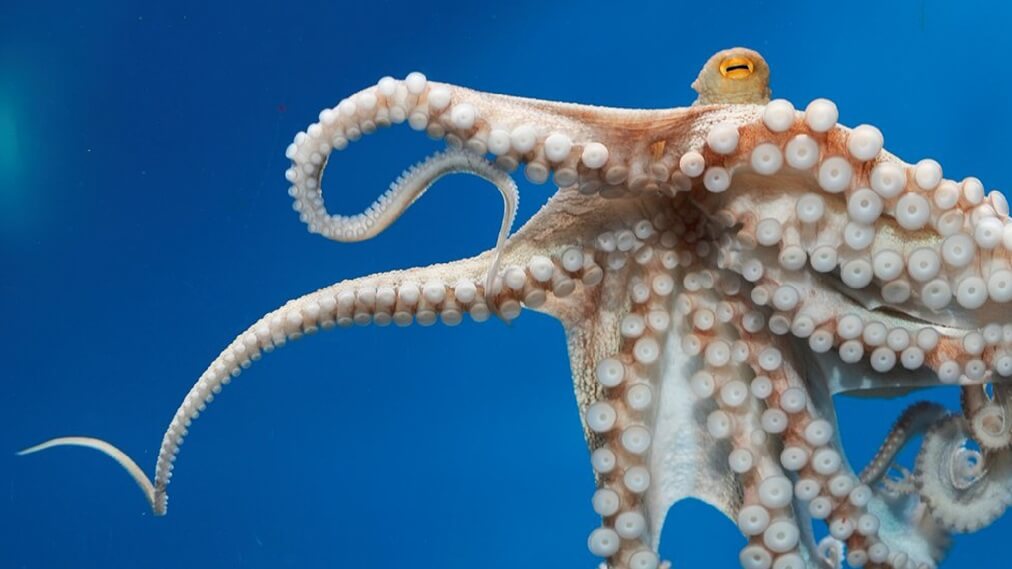
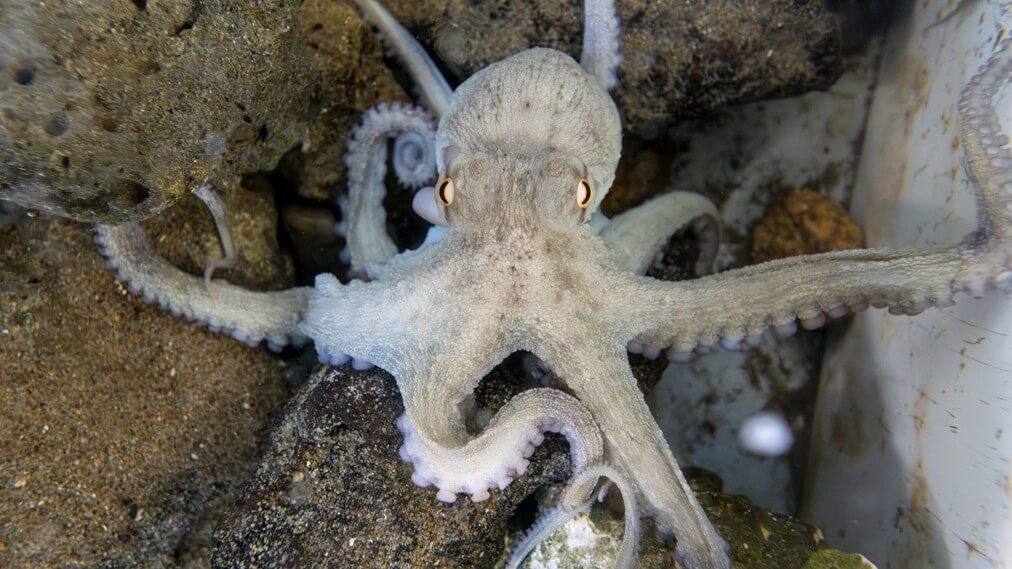
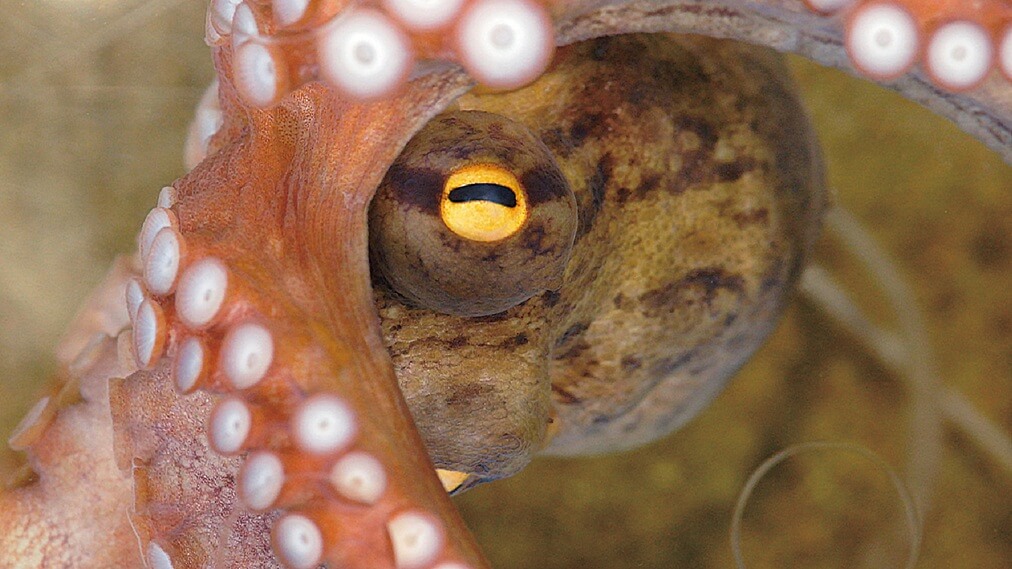
This is the most common type of octopus found along the Japanese coast. It is widely distributed as food, used in dishes such as sashimi, takoyaki, and takomeshi (octopus rice). It has a soft body and eight arms, each with suckers. It lives in rocky areas of shallow seas, utilizing crevices in the rocks. Its prey includes crustaceans such as spiny lobsters and shellfish such as abalone, and discarded seashells at the entrance serve as markers for its burrow.
| classification | Cephalopoda Octopoda Family Common Octopus |
|---|---|
| English name | Common Octopus |
| distribution | Coasts all over Japan except Hokkaido |
| Residence | Rocky areas |
| Size |
Total length: 60cm
|
| food | Crustaceans and shellfish |
| Red List |
IUCN: LC (Least Concern)
|
The suckers shed their skin!?
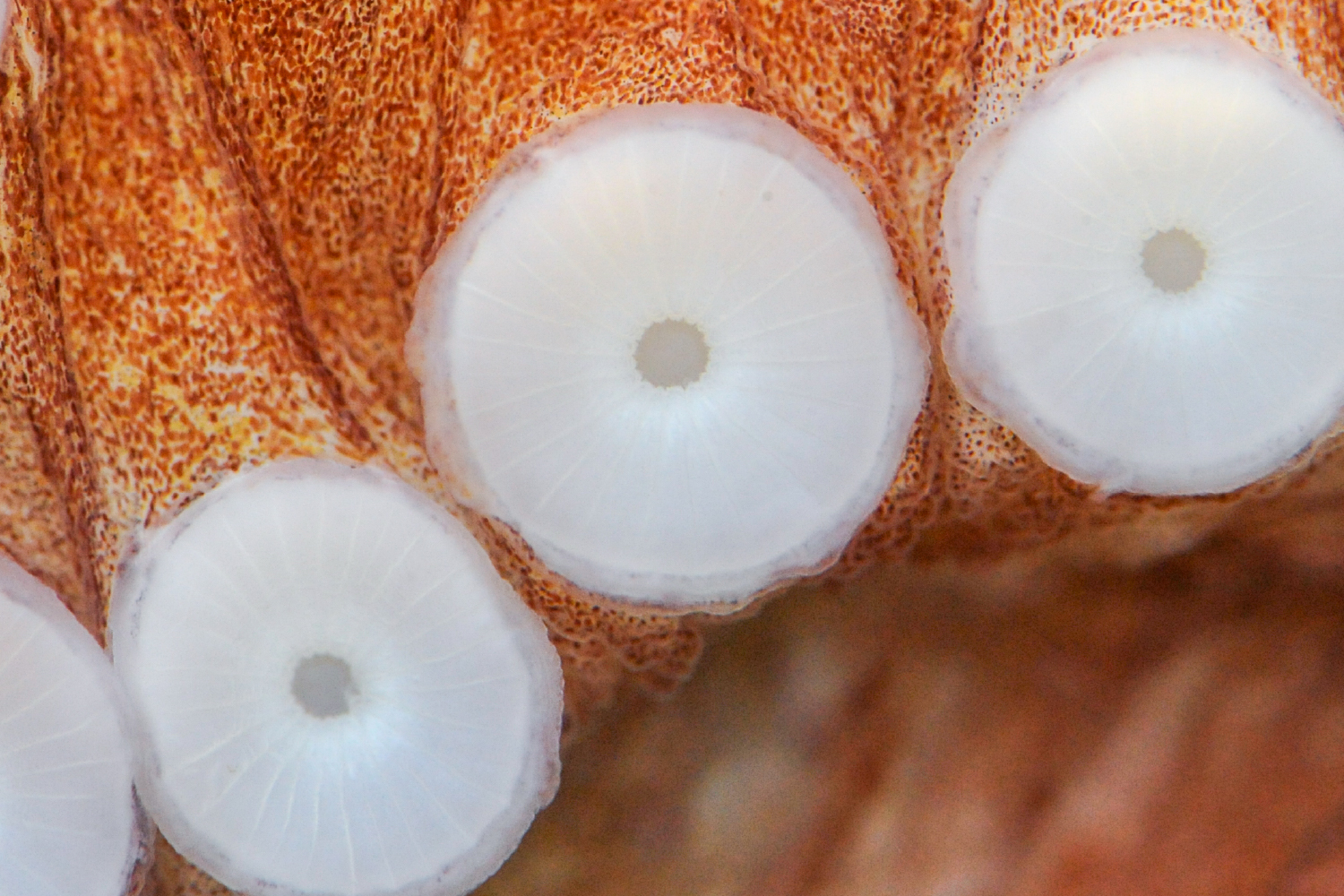
If you see something translucent and skin-like floating in the water of Common Octopus tank, it might be a molted sucker. Octopuses have many suckers lined up on their arms, and these suckers can attach themselves with great force, which is useful when moving around or catching prey. To maintain strong adhesive power, it's important for the suckers to molt and keep the adhesive surface clean at all times.
Octopus ink is used for smoke screen techniques, squid ink is used for cloning techniques.
Both octopuses and squid release ink to protect themselves, but their inks have different properties. Octopus ink is watery and spreads like mist when released. Squid ink, on the other hand, is highly viscous and floats around, taking shape as if another living creature were there. Perhaps this difference in properties is one reason why there is no octopus ink pasta.
Is an octopus headband a waist wrap?
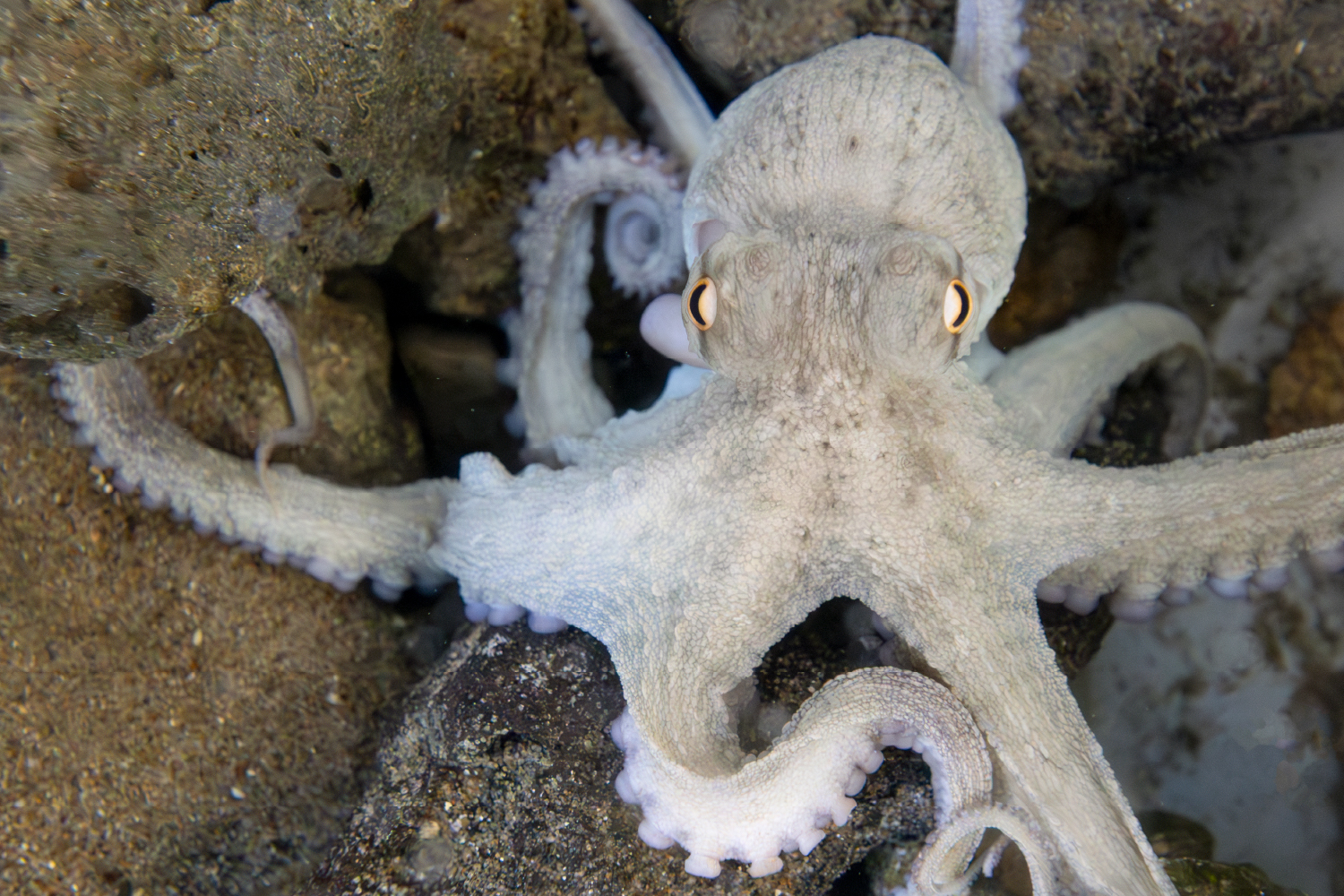
Have you ever seen a picture of an octopus wearing a headband? Actually, the part that looks like a headband is the body, which contains the internal organs, and below that is the head, which has its eyes and mouth. Octopuses and squid belong to a group called cephalopods, and their body structure is different from humans; the head is below the body, and the arms (legs) are below the head. Let's take a look at their body structure.