

Zoo Stock Species and the Red List
Zoo Stock Species and the Red List
Zoo Stock
This indicates that the species is included in the Second Zoo Stock Plan, which was formulated by the Tokyo Metropolitan Government in 2018. The plan sets goals for the next 10 years in three areas: "species conservation," "contribution to wildlife conservation," and "environmental education and conservation awareness." 124 animal species are included.
What is the Red List?
Based on scientific research, this is a list of wildlife classified by rank (category) indicating the degree of risk of extinction.
Livng Things Encyclopedia shows the categories (mainland and islands) assessed by the IUCN (International Union for Conservation of Nature) at the global level, the Ministry of the Environment for Japan, and the Tokyo Metropolitan Government for Tokyo.
The higher the category in each table, the higher the risk of extinction, and CR, EN, and VU are the three categories known as "endangered species." In Tokyo, species that are not at the NT (near threatened) level but are relatively rare are considered "species of concern."
|
IUCN categories |
|
|---|---|
|
EX |
extinction |
|
EW |
Extinction in the wild |
|
CR+EN |
— |
|
CR |
Serious crisis |
|
EN |
crisis |
|
VU |
emergency |
|
NT |
Near Threatened |
|
LC・○ |
Low Concern |
|
DD |
Data shortage |
|
LP |
— |
|
Japan (Ministry of the Environment) Category |
|
|---|---|
|
EX |
extinction |
|
EW |
Extinction in the wild |
|
CR+EN |
Endangered species |
|
CR |
Critically Endangered |
|
EN |
Endangered species |
|
VU |
Endangered species |
|
NT |
Near Threatened |
|
LC・○ |
— |
|
DD |
Lack of information |
|
LP |
Endangered |
|
Tokyo Category |
|
|---|---|
|
EX |
extinction |
|
EW |
Extinction in the wild |
|
CR+EN |
Endangered species |
|
CR |
Critically Endangered |
|
EN |
Endangered species |
|
VU |
Endangered species |
|
NT |
Near Threatened |
|
LC・○ |
Unranked |
|
DD |
Lack of information |
|
LP |
Endangered |
Creatures at Tokyo Sea Life Park
Creatures at Tokyo Sea Life Park
Common Murre
Common Murre
Uria alge
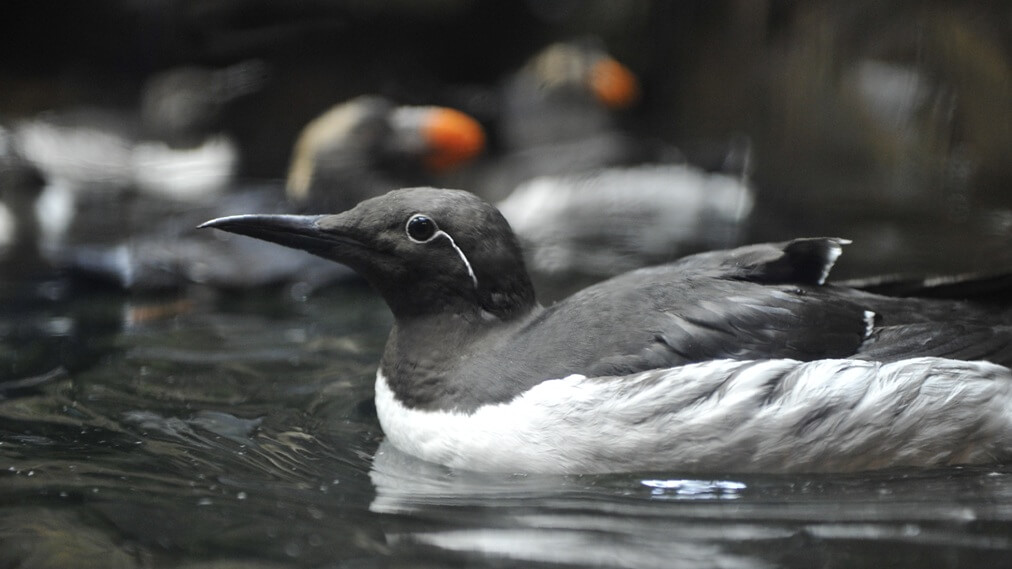
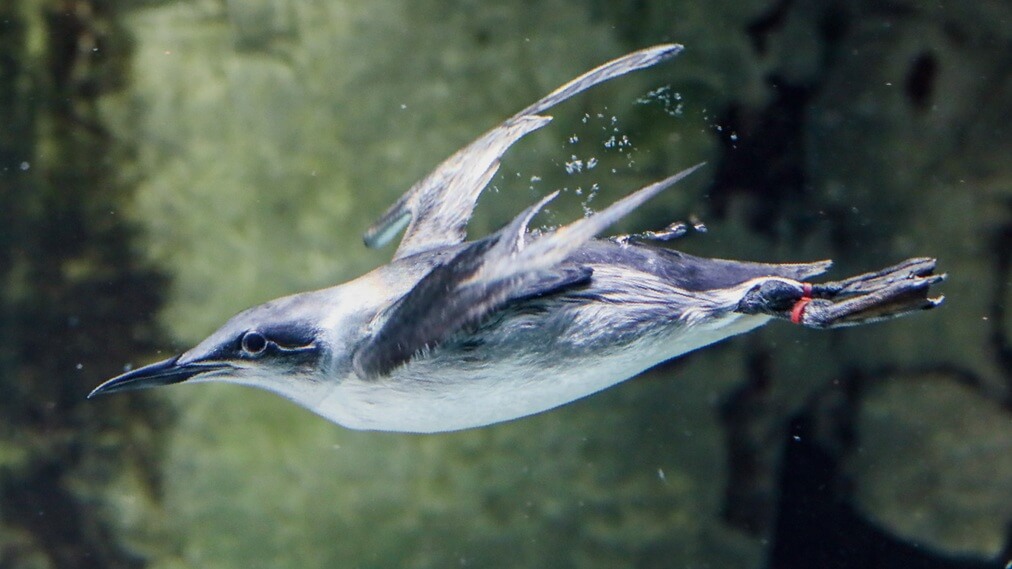
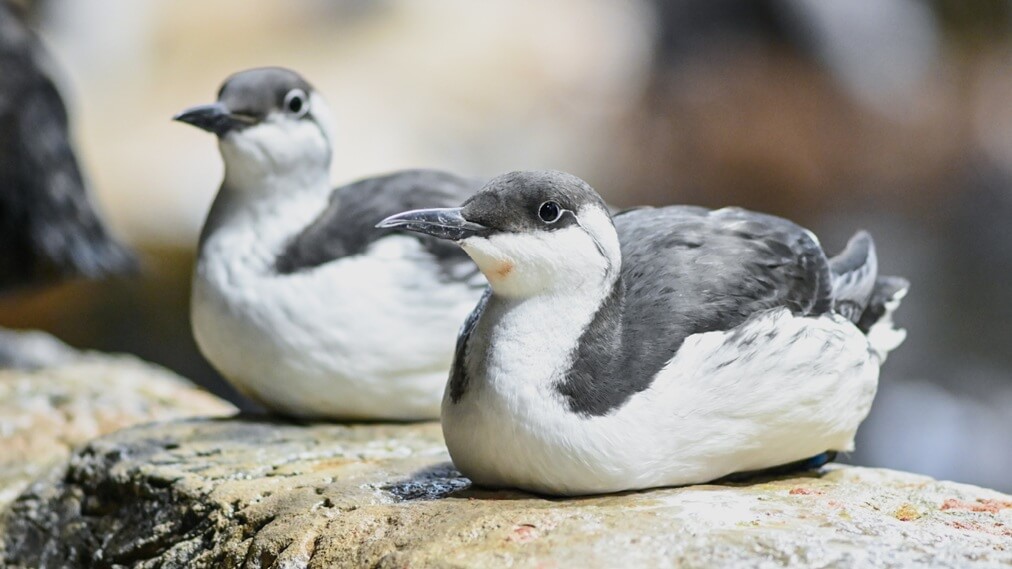
With their white bellies, black backs, and upright posture, they resemble penguins, but they are not penguins. Not only can they use their wings to fly, but they can also swim incredibly fast in the ocean. They breed in groups on steep cliffs on islands. They lay one egg per year. The chicks leave the nest in about a month and are raised by the male parent for 40 to 60 days at sea.
| classification | Aves, Charadriiformes, Auklidae |
|---|---|
| English name | Common Murre |
| distribution | North Pacific Ocean, North Atlantic Ocean, Arctic Ocean |
| Residence | At sea (non-breeding season), coastal cliffs (breeding season) |
| Size |
Total length: 40cm
|
| food | Crustaceans, fish, etc. |
| Red List |
IUCN: LC (Least Concern)
Japan: CR (Critically Endangered) |
How is it different from a penguin?
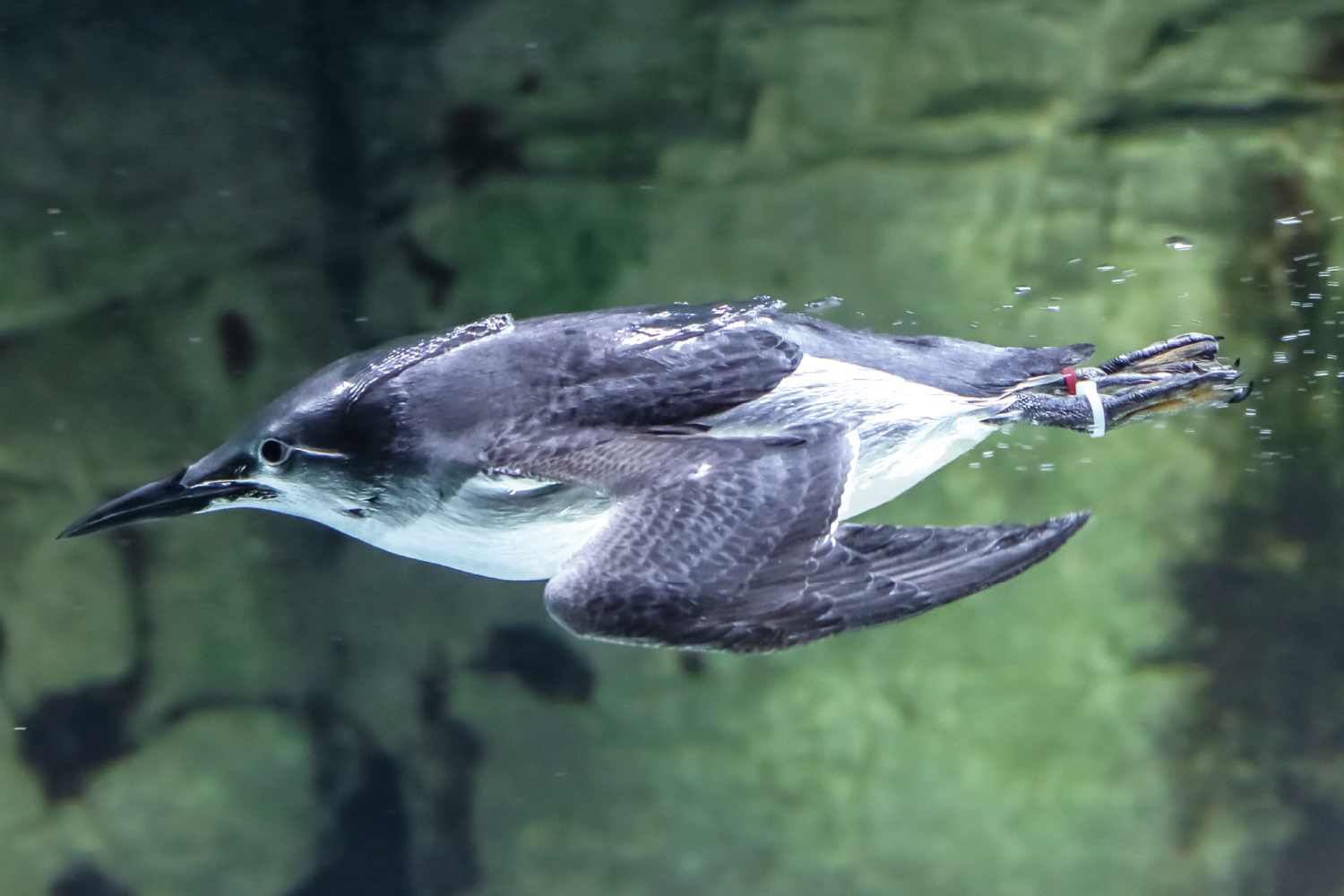
Common Common Murre are often mistaken for penguins, but what is the difference? The biggest difference is their wings. Penguins have hard, plate-like wings called flippers, while common Common Murre have large wings relative to their bodies, just like other flying birds.